30 January 2026


Introduction to Savings and Interest Rates in the Netherlands
Savings accounts are an essential part of personal finance, offering a safe and stable way to grow your money. The Dutch banking system, regulated by de Nederlandsche Bank (DNB), provides robust options for individuals, ranging from traditional institutions like ABN AMRO to digital challengers like bunq, a Dutch bank operating under Dutch financial regulations. The safety of these accounts is further ensured by the Deposit Guarantee Scheme, which protects deposits up to €100,000 per person, per bank. In 2022, the European Central Bank started raising interest rates, which encouraged Dutch banks to increase their interest rates on savings accounts.
A key feature of Dutch banks is the widespread use and acceptance of debit cards, which are essential for everyday transactions and digital banking services in the Netherlands.
However, while the Netherlands offers excellent options for individual wealth accumulation, a gap remains for social saving. When friends, families, or colleagues need to save together for a holiday, a wedding gift, or a shared household expense, traditional individual savings accounts often become a logistical headache. Group saving is managed through shared digital pots or joint accounts offered by various banks and apps in the Netherlands. Traditional banks like ING and Rabobank offer basic joint accounts for group savings, providing a simple and secure option. This is where specialized group saving platforms like Potje are changing the landscape.
Overview of the Dutch Banking System
The Dutch banking system is known for stability and is regulated by both the Dutch Central Bank and the European Central Bank, with oversight from the Dutch Authority for Financial Markets (AFM) as the main Dutch authority for financial regulation. Traditional banks offer a wide range of services, including savings accounts and investment options protected by the Deposit Guarantee Scheme up to €100,000. Residents or citizens of an EU country can access a broad range of Dutch banking and investment products under EU regulations.
While platforms like Trade Republic offer some of the highest interest rates for individual investors, they are not designed for collaborative finance. Attempting to manage a group trip using a personal investment account often leads to confusion regarding who contributed what. For 2025, the trend is shifting toward dedicated tools that sit on top of the banking infrastructure to facilitate better group coordination. Key platforms for group savings in 2025 include bunq, Potje, and traditional banks like ING, ABN AMRO, and Rabobank. When selecting a group saving app, evaluate the fees, user experience, and whether you need to earn interest or simply track expenses. Choosing a group saving platform in the Netherlands involves considering primary functions, interest rates, fees, and user experience to ensure it meets your specific needs.
The Rise of Specialized Group Platforms
For groups, the priority is not just interest rates; it is transparency and ease of access. Specialized fintech solutions have emerged to solve the friction of “who owes what.” Expats living in the Netherlands can especially benefit from these solutions for managing shared expenses, as they often need flexible and accessible ways to handle group finances. Apps like Splitwise are dedicated to expense tracking and require an external bank account for payment. Specialized apps like Potje and bunq’s pot features offer automatic reminders and shared progress dashboards for dedicated group saving.
Potje distinguishes itself not as a bank, but as a digital money pot app designed specifically to simplify group money management. While it is not a traditional bank, it offers superior group capabilities that traditional banks struggle to match. It enables users to organize and manage shared funds efficiently without the bureaucracy of opening a joint bank account. Apps like bunq and Potje are known for their user-friendly digital experiences. Potje is fully compatible with mobile devices, allowing users to manage group savings on the go.
Banking Services vs. Group Saving Services
Banking services in the Netherlands generally include current accounts, savings accounts, and investment options. However, using these for a group usually involves one person acting as the “banker,” collecting funds in their private account. This lacks transparency. Traditional banks and digital alternatives integrate group saving and budgeting tools into their banking apps, making it easier for groups to manage shared finances.
Potje offers a modern alternative through specific group-focused features:
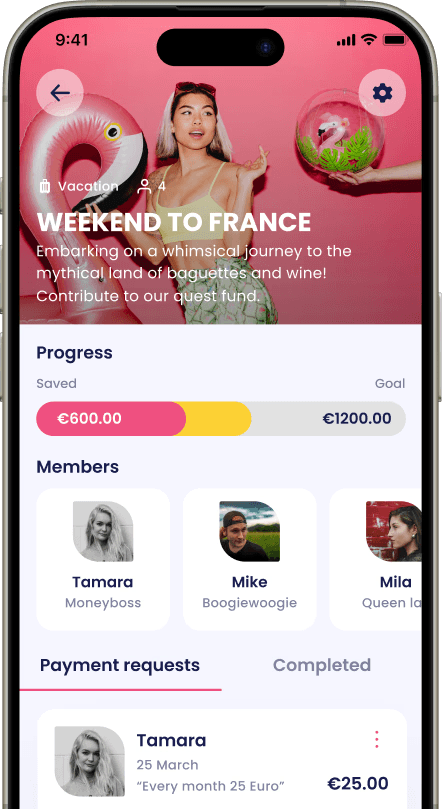
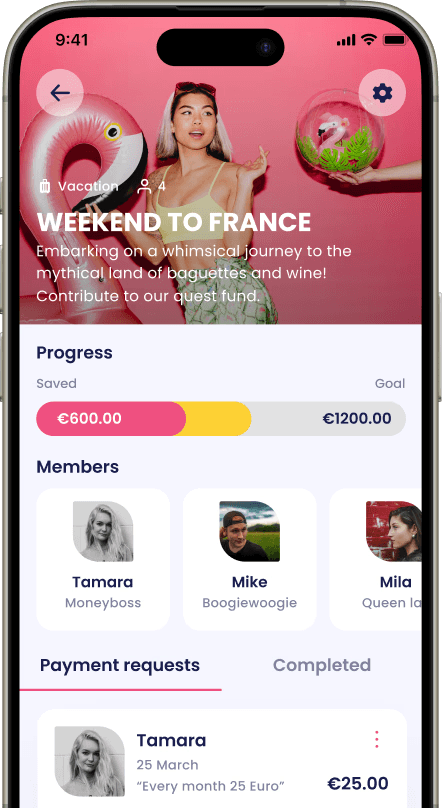
The Shared Pot: Create a digital pot for a specific goal (e.g., “Summer Holiday 2025”).
Transparency: Every member can track progress in real-time, ensuring everyone knows who has paid.
Payment Requests: The app allows for automated payment requests, eliminating the awkwardness of chasing friends for money. Savings account interest rates in the Netherlands were previously low, even threatening to go negative, but have since improved, making group saving more appealing.
Some group saving platforms also offer spare change features, automatically rounding up transactions to help groups save small amounts effortlessly.
Unlike investment platforms where steep learning curves are involved, Potje provides an intuitive app that makes it easy for users to collaborate financially with zero friction.
Best Savings Accounts in the Netherlands
Finding the best savings accounts in the Netherlands can significantly impact your ability to grow your money and achieve your financial goals. With a wide range of options available from both traditional banks and innovative digital banks, Dutch investors have access to some of the most attractive interest rates and flexible banking services in Europe. Trade Republic offers 2% interest on savings of up to €100,000. Interest rates on savings accounts in the Netherlands have increased due to actions by the European Central Bank, making it an opportune time to explore your options. The current best interest rates for savings accounts in the Netherlands can reach up to 3% for promotional offers.
When evaluating a savings account, it’s crucial to look beyond just the interest rate. Consider management fees, account fees, and the overall financial health of the bank. Traditional banks like ABN AMRO remain popular for their reliability and offer a variety of savings accounts, such as the well-known Spaarrekening account, which combines low fees with a competitive interest rate and easy access to your funds. These accounts are protected by the Deposit Guarantee Scheme, ensuring your deposits up to €100,000 are secure.
Digital banks are also making waves in the Dutch market. Trade Republic, for example, has quickly become a favorite among Dutch investors by offering a high-interest savings account with a 2% interest rate and a user-friendly, low-cost platform. Bunq offers up to 2.01% interest on personal savings accounts of up to €100,000. Regulated by the Estonian Financial Supervision Authority, Trade Republic’s services provide a high level of security and transparency, making it a strong contender for those seeking higher yields without the complexity of traditional investment platforms. Many digital banks in the Netherlands offer higher interest rates than traditional banks, making them an attractive option for savers.
For those looking to diversify their investment portfolio, many Dutch banks and financial institutions offer a wide range of financial products, including mutual funds and access to international markets like UK stocks. Some savings accounts also provide higher interest rates for fixed-term deposits, though it’s important to check for minimum deposit requirements and any penalties for early withdrawal.
Accessibility is another key factor. Many of the best savings accounts now feature intuitive apps and mobile device compatibility, allowing users to manage their accounts, start investing, and monitor their financial assets on the go. Educational resources are often available to help new users navigate the options and make informed decisions, minimizing the steep learning curve that can come with more complex financial instruments.
Comparison: Costs and Fees
When choosing a platform, fees are a critical factor.
Traditional Banks: Often charge monthly fees for additional accounts or joint accounts, plus transaction fees for non-Euro payments.
Investment Platforms: Platforms like Trade Republic or eToro may charge trading fees, commission fees on trades, or withdrawal fees that are unsuited for short-term group spending. For active users, commission fees can add up quickly.
Potje: Offers a straightforward model with a flat fee of €5.00 per group account each month.
Some platforms may also impose additional fees if a group's monthly turnover exceeds specified thresholds, so it's important to monitor total transaction amounts.
This flat-fee structure is often cheaper than the cumulative costs of international bank transfers or the hidden costs of converting currencies within traditional banks. By operating solely online, Potje passes savings on to its customers, providing a cost-effective solution for short-term saving goals.
Types of Group Saving Use Cases
To choose the best platform, you must identify your goal.
1. The Gift Pot
One of the standout features of Potje is the Gift Pot. Collecting money for a colleague’s farewell or a friend’s birthday via a traditional bank transfer is cumbersome. Potje streamlines this by allowing you to send a payment link, collect funds in a visible pot, and transfer the total directly to the recipient or buy the gift. Some platforms also allow groups to set up savings plans, enabling regular contributions toward shared gifting goals.
2. Travel and Holidays
For group trips, reliance on a single credit card is risky. A Potje group account acts as a central reservoir. Members contribute monthly to the pot leading up to the trip. When it is time to book flights or villas, the money is ready. Savings plans can make it easier for groups to save systematically for travel, with low minimum commitments and automated contributions.
3. Household Expenses
Roommates often struggle with shared bills. Instead of constant Venmo or Tikkie requests, a shared pot allows for a “deposit and forget” method where household bills are paid from a pre-funded central balance.
When saving as a group, remember not to put all your savings in one basket. Consider diversifying your group saving strategies for added security.
Security, Protection, and the Deposit Guarantee Scheme
Security is non-negotiable. While traditional banks rely on the Deposit Guarantee Scheme, modern fintechs like Potje prioritize security through compliance and technology.
Potje ensures that all pooled funds are safe and accounted for by adhering to strict European financial regulations. The app uses secure payment processing and provides transparency so that the “Money Boss” (the group admin) and all contributors have a clear audit trail of every cent. Uninvested cash within group accounts is kept secure and easily accessible, ensuring that idle funds remain protected until they are needed for group expenses.
Conclusion: Choosing the Right Platform in 2025
If your goal is individual wealth accumulation and earning high interest on long-term capital, a traditional savings account or an investment platform like Trade Republic remains a strong choice.
However, if your goal is to manage money socially—to save with friends for a holiday, organize a group gift, or manage a team budget—traditional banks fall short.
Potje is the clear winner for group accountability and ease of use in the Netherlands. By combining the security of compliant financial processing with the flexibility of a social app, it allows groups to focus on the experience rather than the expense.
Before choosing a group saving platform, compare features, fees, and suitability to your specific needs to make an informed decision.
Stop stressing about the spreadsheet. Start a Potje today and make group saving simple, transparent, and fair.

Social Accountability and Saving: The Missing Link to Financial Freedom
Ondersteuning voor verschillende inhoudstypes zoals artikelen, blogs, video's en meer. Rijke tekstverwerker met opmaakopties voor verbeterde.
17 november, 2025

Group Saving Apps Compared: What's Easiest, Safest, and Most Transparent?
Ondersteuning voor verschillende inhoudstypes zoals artikelen, blogs, video's en meer. Rijke tekstverwerker met opmaakopties voor verbeterde.
17 november, 2025

Group Money Platforms Compared: What’s Safe, Regulated, and Fair?
Ondersteuning voor verschillende inhoudstypes zoals artikelen, blogs, video's en meer. Rijke tekstverwerker met opmaakopties voor verbeterde.
17 november, 2025