16 January 2026



Introduction to Saving Money
Saving money is a crucial step in achieving financial stability and security. While setting personal financial goals is key, achieving large or complex goals—like a shared trip or a big group purchase—often requires collective effort. Traditional individual saving methods can fall short when a group is involved, making it difficult to maintain shared momentum and accountability. Group saving challenges can support your financial journey by making the process more engaging and collaborative.
Potje is designed to take the collective challenge and make it simpler and more fun. By creating a transparent, shared money pot, the platform helps groups move past individual tracking and work seamlessly toward a shared savings goal. The money saved in these group challenges can help participants save money consistently and work toward their money goals, making progress toward better financial health. The money saved can be used for a shared experience or donated to a chosen charity, adding a meaningful purpose to the effort and helping everyone achieve their saving goals.
Understanding Financial Situation
Before diving into any savings challenge, it’s essential to get a clear picture of your financial situation. Start by reviewing your income, expenses, and any outstanding debts. Take a close look at your spending habits to spot unnecessary expenses that can be trimmed or eliminated. This step not only helps you find money to save but also ensures you’re setting realistic financial goals for your group.
Make a list of all your debts, including credit cards, loans, and mortgages, and prioritize them based on interest rates and urgency. Understanding where your money goes each month will help you choose a savings challenge that fits your lifestyle and financial needs. Consider opening a high-yield savings account to make your savings grow faster—these accounts offer higher interest rates than standard savings accounts, making them ideal for building an emergency fund or working toward a specific savings goal. By knowing your financial situation inside and out, you’ll be better prepared to take on any challenge and watch your savings grow.
Types of Engaging Group Saving Challenges
Money saving challenges are effective because they turn saving into a focused, sometimes gamified, activity. When done in a group, the mutual accountability significantly boosts success rates and helps participants manage their finances while building extra savings for the near future.
The Shared No-Spend Challenge: The group agrees to cut back on a specific non-essential expense (e.g., takeaway coffees, eating out) for a month. For example, members can pause monthly subscriptions or streaming services to save extra money. The money saved by each member is then immediately contributed to the collective Potje.
The £5 Challenge: Every time a member receives a £5 note, or every time they make a purchase that rounds down to the nearest five pounds, that amount goes into the shared pot. Similar challenges can be done with dollar bills, such as saving every $1 or $5 bill received, making the process tangible and engaging.
The Group Percentage Challenge: The group agrees to contribute a certain percentage or specific amount of their side income (e.g., from selling old items, or small bonuses) directly to the Potje to accelerate the collective savings goal. Setting a specific amount or percentage helps everyone work toward a specific goal. Selling items is also a good habit for boosting group finances.
The 52-Week Money Challenge: This involves saving an increasing amount of money each week, starting with £1 in the first week and ending with £52 in the last week, totaling £1,378 by the end of the year. This challenge can also be done with dollar amounts and is a popular year money saving challenge. If group members are paid weekly, they can structure their contributions by weeks.
The 100-Envelope Challenge: Label 100 envelopes with numbers 1 to 100 and save the corresponding amount of money in each envelope. This method can help participants save over $5,000, making it a highly effective and rewarding challenge.
The Round-Up Rule: Each time a member makes a purchase, they round up the transaction to the nearest dollar and transfer the differences to savings. This method makes saving automatic and effortless.
The Spare Change Challenge: Members save all their physical bills and coins, which can add up to significant dollars over time.
The Roll Dice Challenge: Each day, a member rolls dice to determine the specific amount to save, making it a fun and interactive way to build savings.
After the challenge descriptions, consider using high yield savings accounts to store the group’s extra savings for a rainy day, as these accounts offer higher interest and easy access to funds.
Tracking what is spent on new clothes or other non-essentials can help identify extra money to save. The group can also transfer funds automatically to the savings pot, making the process seamless.
Here are a few tips for success: Set a specific goal for your challenge, and use easy money saving challenges like saving a specific amount each day to build good habits. Celebrate milestones as you complete the challenge, and make a plan to continue saving even after the challenge ends. This will help you stay motivated and disciplined, ensuring long-term financial benefits.
Setting Up a Saving Challenge with Potje
The process of setting up a group challenge is straightforward when you use a dedicated platform. Potje handles the logistics, so the group can focus on the fun and competition.
Define the Goal: Start by setting a specific, inspiring savings goal (e.g., ‘£1,500 for the Amsterdam Weekend’ or another specific goal like Christmas gifts). Determine how much each person needs to contribute.
Create the Pot: Open your Potje account and create a dedicated pot for the challenge. This immediately gives the group a single, secure destination for their funds.
Automate Transfers: Set up automatic or recurring transfers from each member’s personal bank account to the Potje. Members can schedule these transfers to ensure regular contributions, making saving easier and less prone to being neglected.
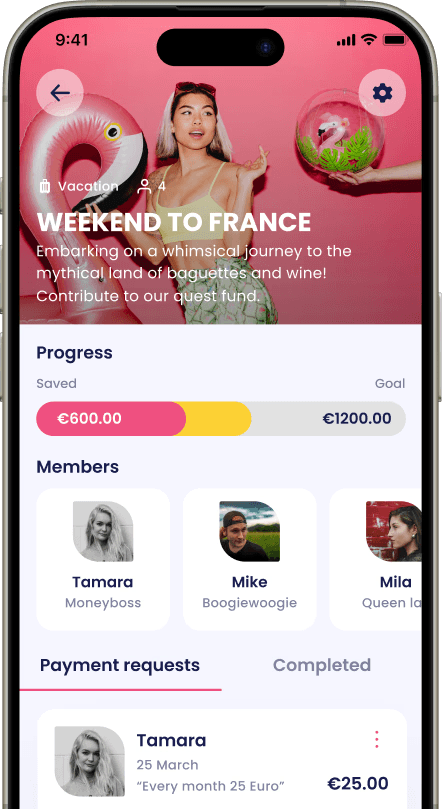
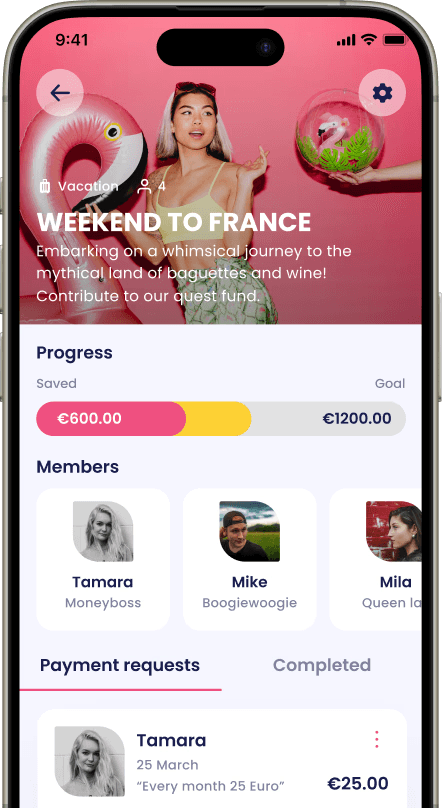
Track Progress Transparently: This is where Potje’s services excel. The real-time dashboard allows every member to see the collective momentum. This visual progress provides constant motivation and keeps everyone accountable without the organiser having to manually check balances.
Creative Ways to Boost Group Savings
To keep the momentum going during a long challenge, groups can introduce creative contribution rules:
Roll-the-Dice Challenge: Each day, a member will roll dice and save the amount rolled into the group pot. This can lead to savings between £365 and £2,190 over a year, adding an element of surprise and fun to the process.
Round-Up Rule: Use the nearest pound rule where purchases are rounded up to the nearest dollar, and the differences are transferred to the group pot. This method helps accumulate extra savings from everyday spending.
Selling Items: Use money generated from selling items you no longer need or use to boost the group fund. This can result in extra money and extra savings for the group, turning decluttering into a collective win.
Spare Change Challenge: Save physical spare change or use an app that rounds up digital purchases to contribute to the group pot. This is a good habit for boosting savings, as small amounts add up over time.
Automating the transfer of these extra savings to the group pot can help maintain momentum and make it easier to stick to your savings goals.
Group Saving Challenges and Accountability
Joining a savings challenge group is one thing; maintaining commitment is another. Potje builds accountability directly into the process, addressing the limitations of simple group chats or shared spreadsheets.
Visibility = Accountability: Sharing tips and advice in a group chat is motivational, but seeing exactly who has contributed and how close the total pot is to the goal is far more powerful. Potje ensures this visibility for all participants. Watching your progress helps motivate everyone to complete the challenge, as each step brings the group closer to the finish line.
Automatic Reminders: Instead of the organiser having to send awkward messages asking for payment, Potje handles automated payment requests. This is a crucial feature that maintains team spirit by removing social friction.
Reward System: Once you hit a major milestone shown on the Potje dashboard, the group can celebrate. Celebrating these milestones encourages everyone to continue saving, even after reaching a goal, helping to build lasting financial habits. The secure withdrawal feature means the money is instantly ready to pay for the shared reward or purchase.
Savings Bingo: Creating bingo cards with money-saving actions can make saving fun and competitive, encouraging participation and creativity.
Overcoming Obstacles
Every savings challenge comes with its own set of obstacles, but with the right strategies, you can overcome them and stay on track. One of the most common hurdles is the urge to spend money on non-essential items. To tackle this, try a no spend challenge for a set period—commit to only spending money on necessities and see how much you can save. This spend challenge can help reset your spending habits and free up extra cash for your savings goal.
Another obstacle is staying motivated, especially during longer challenges. Break your financial goals into smaller, achievable tasks and celebrate each milestone. For example, the 52 week money challenge is a great way to build momentum: save $1 in week one, $2 in week two, and so on, gradually increasing the amount of money you save each week. Alternatively, try the reverse 52-week savings challenge, where you start by saving the largest amount in the first week and decrease the amount saved each week until reaching $1 in the last week. Or try the envelope challenge, where you save a certain amount of money each week in a labeled envelope—this visual approach makes your progress tangible and rewarding. Remember, every week and every amount saved brings you closer to your goal, so keep the challenge fun and stay committed.
Measuring Progress
Tracking your progress is key to staying motivated and reaching your savings goals. Set up a system that works for your group, whether it’s a simple spreadsheet, a budgeting app, or a savings tracker. Regularly monitor your spending habits and adjust your budget as needed to keep your savings plan on track. Using a piggy bank or a separate savings account can help you see your money grow and keep your savings separate from your spending money.
For a fun twist, try the envelope challenge—label envelopes with different amounts or days, and fill each one as you go. This method not only helps you save a certain amount of money but also makes the process interactive and engaging. Make it a habit to review your progress regularly, celebrate your achievements, and tweak your approach if needed. By keeping a close eye on your savings, you’ll stay motivated and make steady progress toward your financial goals.
Avoiding Burnout
Participating in a savings challenge should be rewarding, not exhausting. To avoid burnout, start with small, manageable goals and gradually increase the amount of money you save over time. Don’t be afraid to take breaks if you need to—saving money is a marathon, not a sprint. Celebrate your milestones, no matter how small, and reward yourself for sticking to your savings plan.
If you’re looking for a fun way to keep things interesting, try the roll-the-dice challenge: each day, roll a die and save the corresponding amount. This adds an element of surprise and keeps the challenge fresh. Remember, it’s okay to miss a day or week in a savings challenge—what matters is getting back on track and continuing to save. Stay patient, be consistent, and enjoy watching your savings grow as you work toward your goals.
Long-Term Financial Planning
Achieving financial stability and security requires a solid long-term plan. Start by setting specific, measurable financial goals, such as saving for a down payment, a big purchase, or retirement. Use savings challenges like the 52 week money challenge or a no spend challenge to help you build good saving habits and reach your targets. A high yield savings account can boost your savings by offering higher interest rates, making it easier to reach your goals faster.
Regularly review and adjust your financial plan to stay on track, and don’t hesitate to seek advice from a financial advisor if you’re planning for major milestones. Stay focused on your savings goals, monitor your spending habits, and use creative money challenges to keep things interesting. With patience, consistency, and the right savings account, you’ll be well on your way to achieving your long-term financial dreams.
Conclusion
Saving money is easier and more enjoyable when you have a team behind you. While setting clear goals and understanding your financial situation are vital first steps, using the right digital tool is essential for managing the group dynamic.
By leveraging Potje to automate contributions, track progress transparently, and handle gentle reminders, groups can turn any saving idea into a successful collective challenge.
Ready to turn your group's challenge into reality? Create your first engaging Potje today.

Social Accountability and Saving: The Missing Link to Financial Freedom
Ondersteuning voor verschillende inhoudstypes zoals artikelen, blogs, video's en meer. Rijke tekstverwerker met opmaakopties voor verbeterde.
17 november, 2025

Group Saving Apps Compared: What's Easiest, Safest, and Most Transparent?
Ondersteuning voor verschillende inhoudstypes zoals artikelen, blogs, video's en meer. Rijke tekstverwerker met opmaakopties voor verbeterde.
17 november, 2025

Group Money Platforms Compared: What’s Safe, Regulated, and Fair?
Ondersteuning voor verschillende inhoudstypes zoals artikelen, blogs, video's en meer. Rijke tekstverwerker met opmaakopties voor verbeterde.
17 november, 2025
