26 November 2025


Introduction to Group Financial Accountability
Managing money within a group—whether for a vacation, a shared gift, or a household budget—is often the biggest source of friction between friends. The key to a stress-free experience lies in accountability. The question is: what is the best way to achieve it?
Groups typically rely on one of two methods: Shared Saving (collecting money upfront) or Shared Spending (settling debts later). Both have their merits, but without the right tools, both can lead to confusion.
Using a dedicated platform like Potje can bridge the gap between these two methods, ensuring that whether you are saving up or paying back, everyone remains accountable and the finances stay transparent.
The Case for Shared Saving in the Medicare Shared Savings Program (The Pot Method)
Shared saving is a proactive approach. This involves the group contributing funds into a central pool before any expenses are incurred. The model typically involves pooling resources, like a joint bank account or shared budget, to cover collective expenses. This approach requires upfront investments from all members to ensure the necessary funds are available. In healthcare policy, ACO design features—such as risk arrangements, shared savings models, and patient assignment methods—play a crucial role in determining how effectively Accountable Care Organizations (ACOs) can generate savings and maintain accountability for cost and quality outcomes.
How it works: The group agrees on a budget (e.g., for a summer holiday or a wedding gift) and sets a deadline. Everyone transfers their share into a holding account. Shared saving involves setting well-defined, common goals that the entire group works towards, such as accumulating an emergency fund or a down payment.
Why it ensures accountability: Progress toward the shared savings goal is easily measurable, providing positive reinforcement and a clear indicator of accountability. Success in shared savings requires regular check-ins and open communication about progress, fostering transparency and collective responsibility. Well-designed ACOs are able to generate savings for the Medicare program by meeting performance thresholds and maintaining high-quality care.
Commitment: Once money is deposited, group members are financially committed to the plan.
No Debt: Expenses are paid from the pot, meaning no single person is left out of pocket waiting for reimbursements.
Transparency: Everyone knows exactly how much budget is available. Separating savings from spending and limiting access to funds helps groups avoid temptation for non-essential purchases.
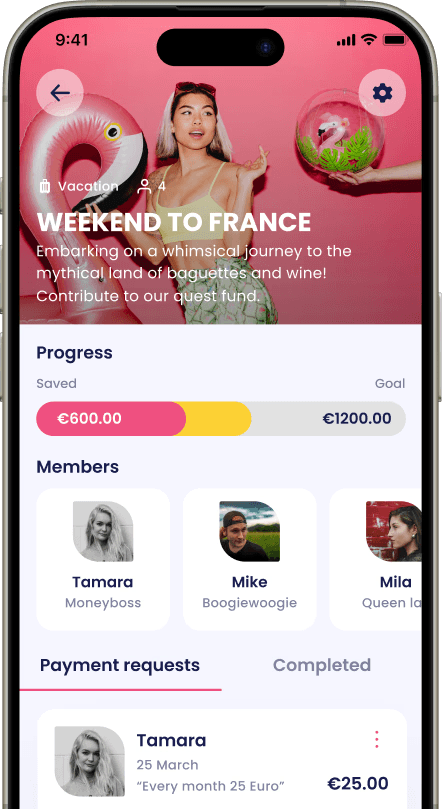
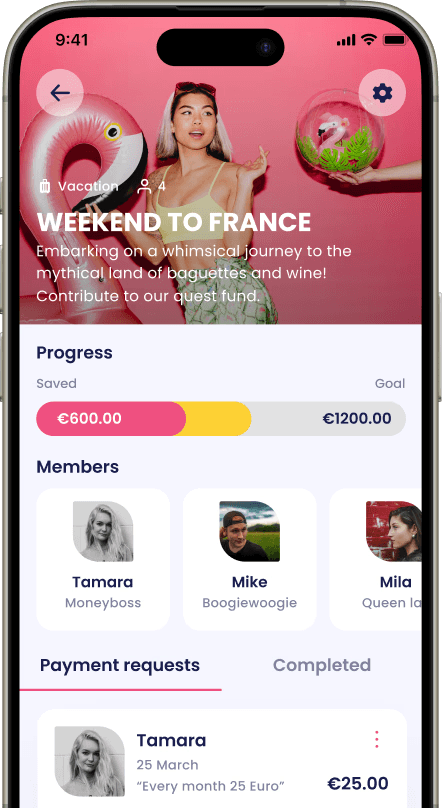
With Potje, you can create a “Shared Pot” specifically for this purpose. By inviting friends to the pot, you can track who has contributed and ensure the necessary funds are ready before you book that villa or buy that concert ticket. In the Medicare Shared Savings Program, ACOs that have generated savings are rewarded, illustrating the importance of upfront commitment and clear goals.
The Reality of Shared Spending for Accountable Care Organizations (The Reimbursement Method)
Shared spending is the reactive approach. This is the traditional “I’ll get this, you get that” method, where one person pays for an expense and requests repayment from the group later.
How it works: An individual covers a cost—like a dinner bill or an Airbnb booking—and calculates what others owe them.
The Accountability Challenge: While flexible, this method is prone to “financial amnesia.” Without a digital record, it is easy to lose receipts or forget who paid for what. This often places an unfair burden on the organizer, who effectively acts as the bank for the group. In shared spending models, accountability is also strengthened by keeping patients engaged and at the center of care delivery, ensuring that everyone remains involved and responsible for their part.
The Solution: To make shared spending work, you need immediate digital tracking. Potje allows you to send specific payment requests instantly. Instead of relying on verbal promises, you have a clear digital record of who owes what, making it easy to settle debts immediately via your favorite payment methods. In healthcare evaluations, a control group is often used to measure the effectiveness of shared spending models and ensure accurate assessment of savings.
Medicare Advantage and Payment Models
When it comes to managing Medicare spending and improving health outcomes, two major payment models stand out: the Medicare Shared Savings Program (MSSP) and Medicare Advantage (MA). Both are designed to encourage high quality care and cost savings for Medicare beneficiaries, but they take very different approaches to achieving these goals.
The Medicare Shared Savings Program empowers Accountable Care Organizations (ACOs) to coordinate care for assigned beneficiaries under a fee-for-service model. Here, health care providers are rewarded with shared savings payments and bonus payments if they can reduce total spending below a set benchmark while meeting rigorous quality measures. This savings program has proven effective at generating savings for the Medicare program, with high performing ACOs often achieving greater savings and improved quality scores. The MSSP’s structure, which includes a minimum savings rate and downside risk for underperformance, creates strong incentives for ACOs to deliver efficient care and invest in strategies that improve quality and reduce unnecessary spending.
In contrast, Medicare Advantage operates by paying private health plans a fixed, risk adjusted amount per beneficiary—regardless of the actual cost of care delivered. This capitated payment model gives health plans flexibility in care delivery, but it can also create weak incentives to control costs, as plans may focus on maximizing profit rather than driving down average spending. While Medicare Advantage has been associated with improved patient satisfaction and some gains in quality reporting, studies and health affairs blog analyses have raised concerns about overpayments and the potential for gaming the risk adjustment system. In fact, some data suggest that Medicare Advantage plans may be overpaid by as much as 10%, leading to increased Medicare spending compared to traditional Medicare and the MSSP.
To address these challenges, the Centers for Medicare & Medicaid Services (CMS) and policymakers are exploring payment reform options. These include refining the risk adjustment methodology, introducing downside risk for health plans, and piloting new models like the Next Generation ACO program. The goal is to ensure that both payment models—whether through provider sponsored organizations, delegated capitation, or other providers—promote high quality care, efficient care delivery, and sustainable cost savings for the Medicare program.
Ultimately, both the Medicare Shared Savings Program and Medicare Advantage have roles to play in the future of health care. By learning from the financial results and quality data of each program, and by continually refining program design, policymakers can move in the right direction to ensure that Medicare beneficiaries receive the best possible care at the lowest possible cost. As the landscape evolves, ongoing innovation and accountability will be key to achieving the dual goals of improving quality and reducing spending across the Medicare program.
Accountable Care Organizations and Their Impact on Group Accountability
Accountable Care Organizations (ACOs) have transformed the way healthcare providers approach group accountability, especially under the Medicare Shared Savings Program (MSSP). These organizations bring together doctors, hospitals, physician groups, and other health care providers to coordinate care for Medicare beneficiaries, with the shared goal of delivering high quality care while reducing unnecessary spending. The ACO model is designed to promote care coordination, cost savings, and quality improvement by aligning incentives for providers to work together and share responsibility for patient outcomes.
The savings program is designed to reward ACOs that can generate cost savings for the Medicare program without sacrificing quality. Medicare ACOs operate under federal regulation and are evaluated for their ability to reduce costs and improve quality within the Medicare system. When ACOs succeed in lowering Medicare spending below a set benchmark—and meet rigorous quality measures—they receive shared savings payments, often in the form of bonus payments. Participating ACOs are measured annually, with their performance assessed each performance year based on cost savings and quality outcomes. Shared savings payouts are generally contingent upon quality performance to ensure that ACOs are not withholding needed services. This model not only incentivizes efficient care delivery but also encourages providers to focus on improving health outcomes for their assigned beneficiaries.
Data suggest that high performing ACOs can achieve significant cost savings, with some studies showing reductions in Medicare spending of up to $673 per beneficiary. Most Accountable Care Organizations (ACOs) reduced Medicare spending compared to their benchmarks, achieving a net spending reduction of nearly $1 billion over the first three years of the Medicare Shared Savings Program (MSSP). However, only a few ACOs achieve significant savings or meet all performance metrics, highlighting the challenges in widespread success. These savings are not just financial; ACOs that receive bonus payments for meeting quality targets often see improvements in patient care and overall health outcomes. The shared savings program has become a cornerstone of payment reform, pushing providers to work collaboratively and be accountable for both the cost and quality of care.
The organizational structure of ACOs varies, with physician group ACOs and physician groups playing a key role in coordinating care and achieving savings, often in contrast to hospital-based or integrated delivery systems. The performance year serves as the specific period for measuring ACO outcomes, with benchmarks and evaluation criteria set for each year of participation.
In the context of quality and bonus payments, the quality score is calculated using a weighted methodology that combines multiple performance measures across domains, and this score is used to determine shared savings payouts.
Evidence and data from ACO performance have been influenced by the Fisher ES model, which has shaped the design and evaluation of ACOs through evidence-based, data-driven approaches to improve cost and quality outcomes.
While the impact of accountable care organizations on group accountability is promising, the landscape is complex. The effectiveness of ACOs can vary based on program design, baseline spending, and the ability to coordinate care across different providers. The Affordable Care Act played a pivotal role in establishing the Medicare Shared Savings Program and regulating ACOs, providing the legislative framework for integration, cost containment, and quality improvement. As the Medicare Shared Savings Program continues to evolve, ongoing research and innovation will be essential to maximize both cost savings and high quality care for Medicare beneficiaries.
Downside Risk and Accountable Care: What Happens When Groups Miss the Mark?
While the Medicare Shared Savings Program (MSSP) offers the potential for shared savings and bonus payments, it also introduces the concept of downside risk for accountable care organizations (ACOs). Downside risk means that if an ACO fails to meet its spending targets or falls short on quality measures, it may be required to pay back a portion of the losses to the Medicare program. This approach is designed to ensure that ACOs remain truly accountable—not just for generating savings, but for maintaining high standards of care. Health aff (health affordability) is a key consideration in designing payment models that balance cost containment with quality care, ensuring that both providers and patients benefit from efficient, value-driven healthcare.
However, taking on downside risk can be a significant challenge for many ACOs. If spending exceeds the target benchmark or quality performance lags, the financial penalties can be substantial. This risk can be especially daunting for organizations that lack the resources or infrastructure to coordinate care effectively or invest in advanced health information technology.
To navigate these challenges, ACOs are increasingly focusing on strategies to improve care coordination, invest in data analytics, and enhance quality reporting. Policymakers are also exploring ways to refine the program design, such as phasing in downside risk more gradually or offering additional support to ACOs that are struggling to meet their goals. By addressing the realities of downside risk, the Medicare Shared Savings Program aims to strike a balance between encouraging innovation and ensuring that providers remain accountable for both spending and quality.
Ultimately, understanding and managing downside risk is crucial for the long-term success of accountable care organizations. With the right support and strategies, ACOs can continue to deliver cost-effective, high quality care—benefiting both Medicare beneficiaries and the broader health care system.
Integrating Payment Models for Maximum Efficiency
The most successful groups often use a hybrid approach. They utilize Shared Saving for large, predictable costs (like accommodation and flights) and Shared Spending for daily, variable costs (like drinks and taxis). Shared saving programs generally offer stronger, more direct positive incentives for collaboration compared to shared spending.
However, both methods require a centralized system to work effectively. Reliance on mental math or messy spreadsheets is where accountability breaks down. Just as 'claims data' is essential in other industries for accurate benchmarking, reconciliation, and accountability—ensuring every transaction is tracked and verified—digital records in group expenses serve the same critical purpose.
By using Potje, you can seamlessly switch between these modes. You can build a pot for the main event while simultaneously managing ad-hoc payment requests for smaller items. This dual capability ensures that no matter how your group prefers to handle money, the ledger is always accurate.
Conclusion
Whether your group prefers to save in advance or settle up later, the goal remains the same: fair contribution and zero arguments.
Shared saving offers peace of mind by securing funds upfront, while shared spending offers flexibility on the go. The shared saving approach generally offers better mechanisms for groups to stay accountable to their financial goals. The common denominator for success in both scenarios is the tool you use to manage it.
Stop relying on verbal IOUs and start using a system that keeps everyone honest. With transparent tracking, easy payment requests, and secure shared pots, you can focus on the fun rather than the finances.
Ready to bring true accountability to your friend group? Download Potje today and experience the easiest way to manage shared expenses.

Social Accountability and Saving: The Missing Link to Financial Freedom
Ondersteuning voor verschillende inhoudstypes zoals artikelen, blogs, video's en meer. Rijke tekstverwerker met opmaakopties voor verbeterde.
17 november, 2025

Group Saving Apps Compared: What's Easiest, Safest, and Most Transparent?
Ondersteuning voor verschillende inhoudstypes zoals artikelen, blogs, video's en meer. Rijke tekstverwerker met opmaakopties voor verbeterde.
17 november, 2025

Group Money Platforms Compared: What’s Safe, Regulated, and Fair?
Ondersteuning voor verschillende inhoudstypes zoals artikelen, blogs, video's en meer. Rijke tekstverwerker met opmaakopties voor verbeterde.
17 november, 2025
