14 July 2026



Collecting money for a group trip is one of those things that sounds simple until you're actually doing it.
Someone needs to book the Airbnb. The deposit is due Friday. Half the group hasn't paid yet. You've sent three reminders. One person says they'll "sort it tonight." It's now Sunday.
Sound familiar?
Group money becomes messy quickly. Not because people are unreliable, but because there's no clear system. Everyone assumes someone else is keeping track. Nobody wants to be the one chasing.
The good news: most of the chaos is avoidable. These are the seven mistakes groups make most often when collecting money for a trip, and exactly what to do instead.
Quick answer: The biggest mistakes when collecting group trip money are starting too late, letting one person front the cash, using informal payment methods with no visibility, and never agreeing on a clear goal upfront. All of them are fixable before your next trip.
Mistake 1: One Person Fronts All the Money
This is the classic setup. One organised person books everything, pays upfront, and then spends the next three weeks chasing everyone else for their share.
It's stressful. It's unfair. And it almost always causes tension.
Why it happens: Booking platforms require one card. One person steps up. Everyone else assumes they'll pay them back later.
The problem: "Later" is vague. People forget. Life gets in the way. The person who paid starts to feel like the group's unofficial bank.
What to do instead: Collect the money before anything gets booked. Set a shared savings goal, agree on a deadline, and only book once the funds are in.
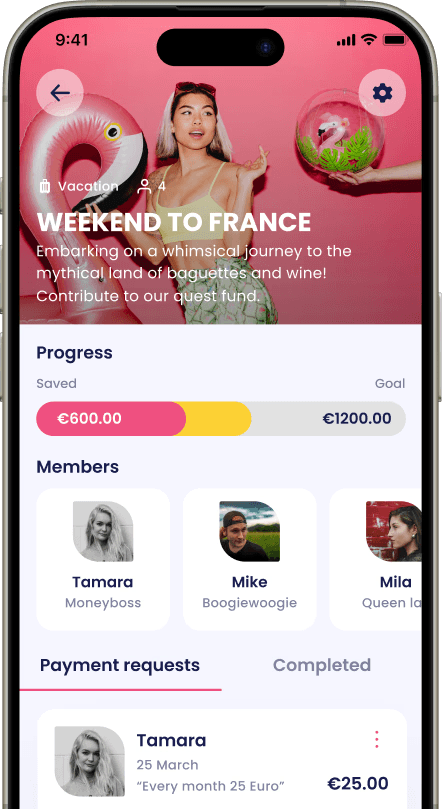
Rather than focusing on repayments, Potje helps groups collect money before spending begins. Everyone contributes to a shared money pot upfront. When the goal is reached, the organiser books. No fronting. No chasing.
Mistake 2: No Clear Budget From the Start
Everyone's excited about the trip. Nobody wants to be the one who brings up money.
So the conversation gets skipped. Or it's vague. "Let's keep it affordable." What does that mean? To one person it's €150. To another it's €400.
Why it matters: Without a clear budget, people contribute different amounts, book different things, and argue later about who owes what.
What to do instead: Agree on a total budget before anything else. Break it down:
Accommodation
Transport
Activities
Food and drinks
A small buffer for unexpected costs
Once everyone knows the number, collecting contributions becomes straightforward. There's no ambiguity. Everyone knows what they're signing up for.
Groups that set a shared goal upfront spend less time arguing and more time planning the fun parts.
Mistake 3: Using Group Chats to Collect Money
WhatsApp is great for sharing memes and debating where to eat. It is not a payment system.
But groups use it for money all the time. "Can everyone send me €80 by Thursday?" gets buried under 47 other messages. Someone sends the wrong amount. Someone sends it to the wrong person. Three people swear they already paid.
Why group chats fail for money collection:
Messages get lost in conversation threads
There's no record of who has and hasn't paid
The organiser has to manually track everything in their head (or a spreadsheet)
Reminders feel awkward and passive-aggressive
What to do instead: Keep the social conversation in WhatsApp. Move the money collection somewhere with actual visibility.
When everyone can see a progress bar showing how close the group is to the goal, you don't need to send reminders. The transparency does it for you.
Mistake 4: Starting the Collection Too Late
The trip is in six weeks. You've only just started asking people to pay.
Now everyone has to come up with their share in one go. Some people can. Some people can't. Someone drops out. The budget changes. The booking gets complicated.
The fix is simple: Start collecting early.
If the trip is three months away, open the collection now. Let people contribute in smaller amounts over time. €30 a month feels very different from €120 all at once.
Early collection also gives you real confirmation of who's actually coming. If someone isn't contributing, that's a sign they're not committed. Better to know now than two weeks before departure.
Key takeaway: The earlier you open a shared savings goal, the less financial pressure everyone feels, and the fewer last-minute dropouts you'll deal with.
Mistake 5: No Visibility on Who Has Paid
You've collected some money. You think most people have paid. But you're not totally sure.
You check your bank. You try to match up transfers. Three of them just say "payment" with no name. One person sent the exact right amount but you can't remember if that was for the trip or something else.
This is what happens when money collection has no structure.
The organiser ends up:
Manually cross-referencing bank statements
Messaging people individually to confirm
Keeping a running total in their notes app
Feeling like an unpaid accountant
What actually works: A shared collection where everyone can see progress in real time. No spreadsheet. No manual tracking. No awkward "did you pay yet?" messages.
When the goal and the contributions are visible to the whole group, everyone stays accountable without anyone having to say a word.
Mistake 6: Mixing Trip Money With Personal Money
Someone collects €600 for the group trip. It goes into their personal account. Then they pay their rent. Then they buy groceries. Then the trip comes around and they're short.
Not because they stole it. Just because money sitting in a personal account doesn't feel ringfenced. It gets spent.
This creates real problems:
The organiser has to top up from their own pocket
The group loses trust in the process
Awkward conversations happen at the worst time (right before the trip)
The better approach: Keep trip money separate from personal money from day one.
A dedicated money pot for the holiday means the funds are clearly set aside. Everyone can see the balance. The organiser isn't tempted to dip into it. And when it's time to book, the money is exactly where it should be.
One platform taking a different approach is Potje. Groups can create a dedicated joint money account for their trip, completely separate from personal finances. The money stays in the pot until the group is ready to spend it.
Mistake 7: No Plan for Last-Minute Dropouts
Someone drops out two weeks before the trip. Their share was already factored into the booking. Now the remaining group either splits the extra cost or the organiser eats it.
Nobody planned for this. Nobody wants to deal with it. But it happens on almost every group trip.
How to handle it before it becomes a problem:
Agree upfront on a refund policy (or no-refund policy) before anyone pays
Collect contributions early so you have time to find a replacement
Keep a small buffer in the group savings goal to absorb unexpected gaps
Be clear about which costs are fixed (accommodation deposits) versus flexible (activities)
The groups that handle dropouts best are the ones that had the conversation before the trip, not during it.
Setting a clear shared goal with a defined deadline makes these conversations easier. Everyone knows what they've committed to from the start.
The Better Way to Collect Money for a Group Trip
All seven mistakes share the same root cause: money was collected reactively instead of proactively.
One person paid. Everyone promised to sort it later. Someone kept score. Someone got annoyed.
The groups that avoid all of this do one thing differently: they collect before they spend.
Set a goal. Share a payment link. Everyone contributes. The money sits in a dedicated shared savings pot. When the goal is reached, the organiser books. No fronting. No chasing. No spreadsheets.
That's exactly what Potje is built for. Groups can create a dedicated money pot for their trip in minutes. Everyone sees progress towards the goal. The organiser doesn't carry the financial burden alone.
Ready to stop chasing and start planning?
Create a pot for your next trip and let everyone contribute in their own time, towards a shared goal.
Frequently Asked Questions
What is the best way to collect money for a group trip?
The best way to collect money for a group trip is to set a clear shared goal upfront, agree on each person's contribution, and collect the money before booking anything. Using a dedicated shared money pot keeps funds separate from personal accounts, gives everyone visibility on progress, and removes the need for one person to front the cost.
How do I avoid chasing people for money on a group trip?
Start collecting early and use a platform where everyone can see progress towards the goal. When contributions are visible to the whole group, people are more likely to pay without being asked. Automated payment reminders also help, so the organiser doesn't have to send awkward messages personally.
What is a shared money pot for a group trip?
A shared money pot is a dedicated collection where everyone in the group contributes their share towards a specific goal, like a holiday, festival, or weekend away. The funds are kept separate from personal accounts and released when the group is ready to spend. It's designed to replace the "one person pays, everyone repays" model.
Should I use WhatsApp to collect money for a group trip?
WhatsApp works well for planning conversations, but it's not designed for money collection. Payment requests get buried in chat threads, there's no record of who has paid, and the organiser has to track everything manually. A dedicated group savings tool gives everyone visibility and keeps the process organised.
How does Potje work for group trip money collection?
With Potje, a group organiser creates a money pot with a clear savings goal and deadline. A payment link is shared with the group. Everyone contributes in their own time. The organiser can track progress, and the funds stay in the shared pot until the group is ready to book. No one person carries the financial burden. Learn more and create a pot here.
When should I start collecting money for a group trip?
As early as possible. Ideally three to four months before the trip. Starting early lets people contribute smaller amounts over time instead of a large lump sum all at once. It also helps confirm who is genuinely committed before any bookings are made.

Social Accountability and Saving: The Missing Link to Financial Freedom
Ondersteuning voor verschillende inhoudstypes zoals artikelen, blogs, video's en meer. Rijke tekstverwerker met opmaakopties voor verbeterde.
17 november, 2025

Group Saving Apps Compared: What's Easiest, Safest, and Most Transparent?
Ondersteuning voor verschillende inhoudstypes zoals artikelen, blogs, video's en meer. Rijke tekstverwerker met opmaakopties voor verbeterde.
17 november, 2025

Group Money Platforms Compared: What’s Safe, Regulated, and Fair?
Ondersteuning voor verschillende inhoudstypes zoals artikelen, blogs, video's en meer. Rijke tekstverwerker met opmaakopties voor verbeterde.
17 november, 2025