31 August 2026



Planning a bachelor or hen party is one of the most exciting things you can do for someone you love. It is also, if you have ever been the organiser, one of the most financially stressful.
Someone has to front the money for the Airbnb. Someone else books the activities. A third person pays for the dinner reservation. And then comes the part nobody enjoys: chasing ten different people to pay you back, weeks after the weekend is already over.
The real problem is not the spending. It is the collecting.
Most groups try to figure out the money after the fact. That is exactly why things get awkward. With Potje, you flip the process. Everyone contributes to a shared money pot before a single booking is made. The budget is there. The awkwardness is not.
This guide walks you through how to plan your bachelor or hen party group budget properly, and how Potje makes the whole thing significantly less painful.
Why Group Budgets Fall Apart Before the Party Even Starts
Every group has one person who ends up carrying the financial load. They book the accommodation. They pay for the activities. They create the spreadsheet. And then they spend the next three weeks sending polite-but-increasingly-desperate messages asking people to transfer their share.
Sound familiar?
The issue is structural. When one person fronts costs and others repay later, you are relying on goodwill, memory, and social pressure to get your money back. According to research on group financial behaviour, chasing payments after an event is the single biggest source of conflict in friend groups.
The typical hen or bachelor party budget breakdown
For a European weekend away, costs generally fall into four buckets:
Category | Typical share of total budget |
Accommodation | 40-60% |
Activities | 15-25% |
Food and drinks | 20-30% |
Transport | 5-15% |
Accommodation almost always needs to be booked first, and it is almost always the biggest deposit. That means one person is out of pocket for the largest cost, the longest.
For a group of 10 heading somewhere like Prague or Budapest, you are looking at €150-250 per person for an Eastern European weekend, or €250-400 for destinations like Barcelona or Lisbon. At ten people, that is a pot of €1,500 to €4,000 that someone has to manage.
Collecting that money reactively, after bookings are made, is where things go wrong.
The better approach: collect everything upfront, before any booking is confirmed.
How Potje Works for Bachelor and Hen Party Planning
Potje is a shared money pot built for exactly this kind of situation. Instead of one person fronting everything and chasing repayments, the group collects money together before any bookings are made.
Here is how it works in practice:
The organiser creates a money pot on Potje and sets a contribution amount per person.
A payment link is shared with the whole group via WhatsApp, email, or however you communicate.
Everyone contributes upfront, before the accommodation is booked or the activities are confirmed.
The pot fills up, and the organiser can see exactly who has paid and who has not.
Bookings are made from the shared pot, not from one person's personal account.
No spreadsheets. No awkward reminders. No one person carrying the financial risk.
What makes this different from just doing a bank transfer
When someone transfers money to a friend's personal account, it disappears into that person's finances. There is no shared visibility. Nobody else knows if the pot is full. Nobody can see the progress.
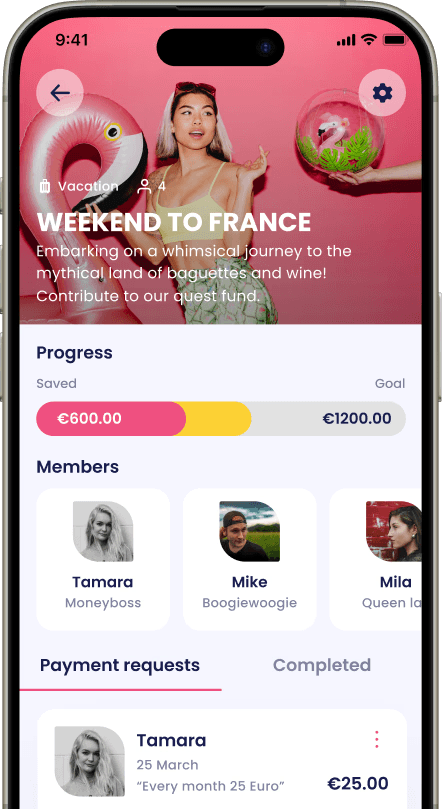
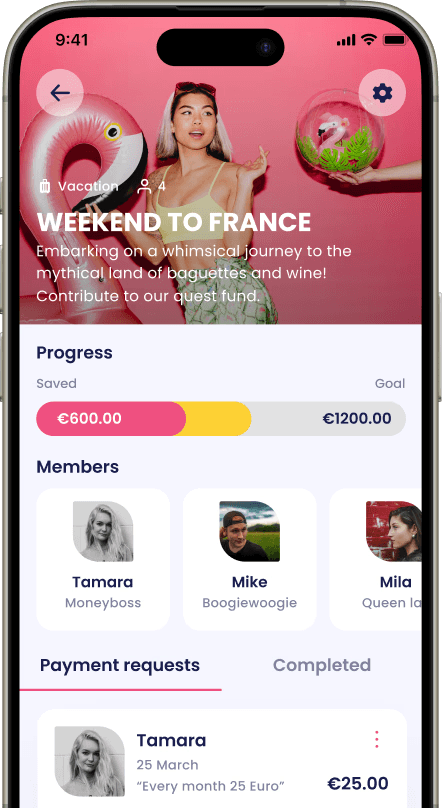
Potje keeps the money separate and transparent. Every contributor can see how much has been collected and how close the group is to the goal. That shared visibility is what makes people actually follow through.
The psychology is simple: when you can see the progress bar filling up, you feel motivated to contribute. When it is just a request in a WhatsApp message, it is easy to forget.
For more on why this works, read our piece on the psychology of group saving.
How much does Potje cost for a group?
Potje costs €5.00 per month per active money pot, shared automatically across the group. The first month is free.
Group of 5: €1.00 per person per month
Group of 10: €0.50 per person per month
Group of 20: €0.25 per person per month
For a weekend event where you only need the pot for a month or two, the cost is negligible compared to the time and stress it saves. And since the first month is free, most groups pay nothing at all.
Step-by-Step: Setting Your Bachelor or Hen Party Budget
Before you create the pot, you need a number. Here is how to work it out without the guesswork.
Step 1: Agree on the destination and rough format
The destination changes everything. A weekend in Prague looks very different from a weekend in Amsterdam. Nail down the city and whether you are doing one night or two before you try to set a per-person budget.
According to planning guides for European stag and hen weekends, most groups fall into one of three budget tiers:
Budget (€30-50 per person): Local activities, home-based celebration, day trip
Standard (€80-150 per person): One activity, dinner out, bar evening in your home city
Premium (€200-400 per person): City trip abroad, overnight stay, multiple activities
Step 2: Decide who covers the guest of honour
Tradition says the hen or groom does not pay. Their share gets split across the rest of the group.
If you have 9 guests plus the bride or groom, and the total cost is €1,800, each of the 9 guests pays €200 to cover both their own share and a portion of the guest of honour's costs.
Build this into your per-person contribution from the start. It is much easier to set the right number upfront than to come back to the group asking for more later.
Step 3: Add a buffer
Things come up. Someone upgrades the restaurant booking. The group decides to add a boat tour at the last minute. Build in a 10-15% buffer on top of your estimated costs.
If your base estimate is €150 per person for a group of 10, set the pot target at €1,650 rather than €1,500. The buffer either gets used, or it gets returned. Either way, you are not scrambling for extra cash mid-weekend.
Step 4: Create the pot and set a contribution deadline
Once you have your number, create the Potje money pot and set a clear deadline for contributions. Two to three weeks before any booking needs to be made is the sweet spot.
This is also where Potje's automatic payment reminders do the work for you. Instead of you personally chasing people, the platform sends reminders to anyone who has not yet contributed. The awkward ask becomes a system task, not a personal one.
For more detail on how automated reminders work, see our guide on collecting money from friends automatically.
Common Group Budget Problems (and How to Avoid Them)
Even well-planned parties run into money friction. Here are the most common issues and how to handle them before they become problems.
"Not everyone can afford the same amount"
This is the most common tension in any group. Someone always has a tighter budget than others, and nobody wants to say it out loud.
The best approach: set the budget at a level where the majority of the group is comfortable, then let anyone who wants to contribute more do so voluntarily. Potje lets individual contributors add more than the minimum if they choose. People who want to upgrade the experience can, without making others feel pressured.
"Someone always pays late"
Late contributions are the organiser's biggest headache. The accommodation deposit is due, but three people have not paid yet.
With Potje, automatic reminders handle this. You do not have to send the awkward "just checking in" message for the fourth time. The platform does it for you, and everyone can see the pot progress, which creates natural accountability.
"What happens if someone drops out?"
Set your refund policy before you share the payment link. Potje keeps contributions in the shared pot, so the organiser controls when and how money is returned if someone cancels.
Being clear about this upfront (for example, contributions are non-refundable after the accommodation is booked) removes ambiguity and protects the group financially.
"Who keeps track of what we have spent?"
This is where having a dedicated pot, rather than a personal account, makes a real difference. The money in the Potje pot is ring-fenced for the event. When you spend from it, the remaining balance is visible to everyone. Nobody has to trust that one person is managing the spreadsheet correctly.
For a deeper look at why this matters, see why group money management always gets messy.
Frequently Asked Questions
How much should a bachelor or hen party cost per person in Europe?
For a European weekend away, expect to budget €150-250 per person for Eastern European destinations like Prague, Budapest, or Krakow, and €250-400 for cities like Barcelona or Lisbon. Amsterdam and Ibiza tend to run €400 or more. These figures cover accommodation, two to three activities, and nights out, excluding flights.
Who pays for the bride or groom at a hen or bachelor party?
Traditionally, the guest of honour does not pay. Their costs are split equally across the rest of the group. When setting your per-person contribution in Potje, factor in the guest of honour's share from the start so you only need to ask once.
How do I collect money from the group without it being awkward?
Create a Potje money pot, set a clear contribution amount and deadline, then share the payment link. Potje sends automatic reminders to anyone who has not yet contributed, so you are not the one chasing. Everyone can see the progress, which creates natural accountability without personal pressure.
Can I use Potje if not everyone is in the Netherlands?
Potje is built for European groups. Contributors do not need to download an app to pay into the pot. They simply follow the payment link, which makes it easy for everyone in the group regardless of where they are based.
What if we collect more than we need?
Any remaining balance in the pot can be returned to contributors or rolled into a final group activity. The organiser controls how the pot is used, so there are no surprises.
How early should I start collecting money for a hen or bachelor party?
Start collecting at least 6-8 weeks before the event, and ideally 3-4 months ahead if you are planning a trip abroad. Book accommodation first, since it typically represents 40-60% of the total budget and the best places fill up fast. Having the pot funded before you start booking removes all the financial stress from the planning process.
Ready to Plan Without the Financial Stress?
The best bachelor and hen parties are the ones where the organiser actually gets to enjoy the weekend too.
When the money is sorted upfront, you are not spending the trip mentally calculating who owes what. You are there, in the moment, celebrating someone you care about.
That is what Potje is built for.
Create your money pot and start collecting contributions today. Your first month is free. Set the amount, share the link, and let the pot fill up before a single booking is made. When you are ready to spend, instant payouts mean the money hits your account immediately, and you can deduct any amount you need.
No spreadsheets. No awkward asks. Just a great weekend ahead.

Social Accountability and Saving: The Missing Link to Financial Freedom
Ondersteuning voor verschillende inhoudstypes zoals artikelen, blogs, video's en meer. Rijke tekstverwerker met opmaakopties voor verbeterde.
17 november, 2025

Group Saving Apps Compared: What's Easiest, Safest, and Most Transparent?
Ondersteuning voor verschillende inhoudstypes zoals artikelen, blogs, video's en meer. Rijke tekstverwerker met opmaakopties voor verbeterde.
17 november, 2025

Group Money Platforms Compared: What’s Safe, Regulated, and Fair?
Ondersteuning voor verschillende inhoudstypes zoals artikelen, blogs, video's en meer. Rijke tekstverwerker met opmaakopties voor verbeterde.
17 november, 2025