26 June 2026



The absolute easiest way to execute flawless group trip budget planning is to systematically collect money before any bookings are ever made.
Most group travel problems inevitably begin when one generous person starts paying for accommodation, flights, or activities before everyone in the group has officially contributed. Group trip budget planning becomes exponentially simpler when the group collects money first, agrees on a transparent budget, and then starts booking. This proactive approach drastically reduces financial pressure on the organizer, improves overall budget transparency, and helps everyone firmly commit to the trip from the very beginning.
In this comprehensive guide, we will break down the mechanics of modern travel finance, expose the flaws of traditional expense splitting, and reveal why upfront funding is the secret to a stress-free group holiday.
The Group Trip Mistake Almost Everyone Makes
A group holiday always starts with a rush of excitement.
Someone finds an incredible, sprawling apartment in Barcelona. Someone else discovers a cheap, perfectly timed flight. Another friend enthusiastically shares a curated list of must-visit tapas restaurants and beach clubs in the group chat. Within a few days, everybody agrees that they are ready to go.
Then, harsh reality arrives.
The apartment requires an immediate 50% security deposit.
The budget flights are actively increasing in price by the hour.
Premium group activities need to be reserved weeks in advance.
Suddenly, one person has to actually pay. Usually, it is the designated trip organiser—the highly responsible friend who volunteered to make things happen. Now, they are blindly spending hundreds or even thousands of euros on their personal credit card while desperately hoping everyone pays them back promptly.
The holiday hasn't even officially started yet, and the dreaded money stress has already arrived. This is the fundamental flaw in traditional group trip budget planning.
Why Repayments Create Unnecessary Friction (And Ruin Friendships)
Most people assume the most difficult part of a group trip is deciding where to go or finding dates that work for eight different schedules. In reality, the hardest part is deciding who pays for what, and when.
When expensive bookings happen before the money is securely collected, a few incredibly common—and highly frustrating—problems appear:
Some highly organized people pay their share immediately.
Some people genuinely forget and need awkward WhatsApp reminders.
Some people suddenly face personal cash flow issues and ask to delay payment.
Some people change their minds and drop out, leaving the group to cover their share.
Meanwhile, the primary organiser is left carrying 100% of the financial risk.
The core issue here isn't a lack of trust among friends. It is entirely an issue of timing. The group is attempting to awkwardly organise repayments after massive financial commitments have already been locked in. A vastly superior, modern approach is to rigorously organise the money before the spending begins.
What Effective Group Trip Budget Planning Actually Looks Like
Strong group trip budget planning does not start with browsing Airbnb or Skyscanner. It starts with one foundational question: "How much money do we actually have available to spend right now?"
Instead of booking first and stressing later, successful travel groups usually follow a structured, four-step process.
1.Estimate the Total Expected Cost:
Sit down and realistically estimate the primary travel pillars: accommodation, flights or transport, major activities, daily food budgets, local transport (taxis/trains), and an emergency spending buffer. The goal at this stage isn't mathematical perfection; it is creating a highly realistic financial target.
2.Agree on the Budget as a Group:
Before anyone spends a single euro, everyone must understand and explicitly agree to the expected cost. If the budget is €800 per person, everyone needs to confirm they are comfortable with that figure. This helps avoid highly uncomfortable conversations later when it's time to book dinner.
3.Collect Contributions Upfront:
Once the target is crystal clear, the group can begin contributing their share into a dedicated pool. At this exact point, everyone transitions from "interested" to "financially invested" in the plan.
4.Start Booking with Confidence:
Only after the budget begins taking tangible shape should any non-refundable bookings be confirmed. Because the money is already secured, this reduces the organizer's risk to zero and increases the group's overall confidence.
The Psychological and Practical Benefits of Collecting Money First
There are deep, practical reasons why more modern friend groups, sports teams, and travel communities are rapidly moving toward upfront collection methods.
It Completely Removes Pressure from One Person
Nobody should be forced to cover a massive accommodation cost while nervously waiting for overlapping reimbursements. Upfront pooling democratizes the financial burden instantly.
It Creates Genuine Commitment
Contributing actual money creates immediate accountability. People who have already transferred their funds into a shared pot are significantly more likely to stay actively engaged with the itinerary planning and much less likely to flake at the last minute.
It Dramatically Improves Decision Making
When the money is pooled beforehand, the group can make swift, confident choices based on actual available funds rather than vague assumptions or promises. If a luxury villa goes on sale, you can book it immediately because the capital is already there.
It Reduces Awkward Social Friction
The organiser spends significantly less time chasing annoying payments and significantly more time planning the actual fun elements of the experience. It preserves friendships by keeping finances transparent and neutral.
Potje vs Traditional Tools: Collctiv, Revolut, and Joola
When groups realize they need to pool money, they often look at the fintech landscape. However, not all tools are designed specifically for the nuances of group travel. Let's compare how Potje works against notable competitors like Collctiv, Revolut, and Joola.
Feature / Platform | Potje | Collctiv | Revolut (Group Vaults) | Joola |
Core Philosophy | Upfront shared savings goals | Quick, one-off group collections | Full digital banking & vaults | Savings and investment pools |
Requires Full Bank Signup? | ❌ No (Link-based for contributors) | ❌ No | ✅ Yes (High friction for groups) | ✅ Yes |
Joint Money Account Structure | ✅ Yes | ❌ No | ⚠️ Yes (But requires app for all) | ⚠️ Primarily for community ROSCAs |
Best Used For | Travel planning & shared goals | Buying a quick office gift | Long-term shared finances | Rotating savings associations |
While Revolut is a powerhouse for multi-currency spending, forcing your entire travel group to download a banking app and pass KYC identity verification just to pool money for an Airbnb is massive overkill. Collctiv is great for a quick whip-around, but lacks the robust goal-tracking features needed for a multi-month travel build-up. Joola caters heavily to structured community savings circles rather than casual travel groups.
Potje strikes the perfect balance: it provides a robust joint money account structure without forcing contributors to jump through complex banking hoops.
How Potje Supports Seamless Group Trip Planning
Potje was meticulously designed around a simple, powerful idea: shared experiences work significantly better when the money is seamlessly organised first.
Through a secure digital joint money account, groups can easily create a dedicated digital money pot and start collecting contributions weeks or months before major bookings happen.
Instead of an organiser constantly asking the group chat:
"Can everyone please send their share for the flights today?"
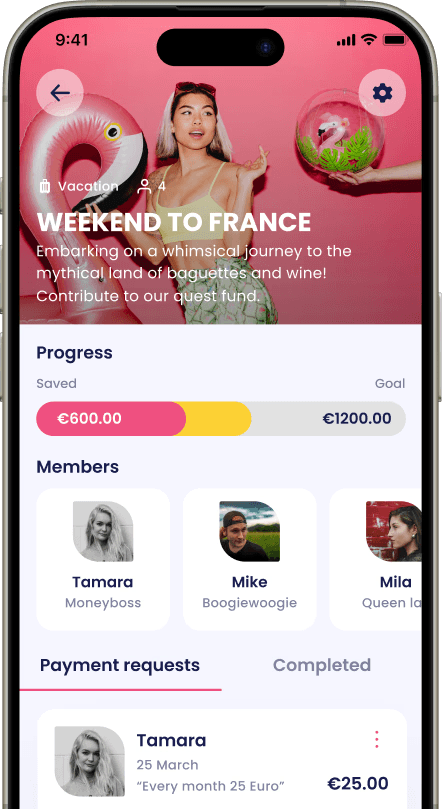
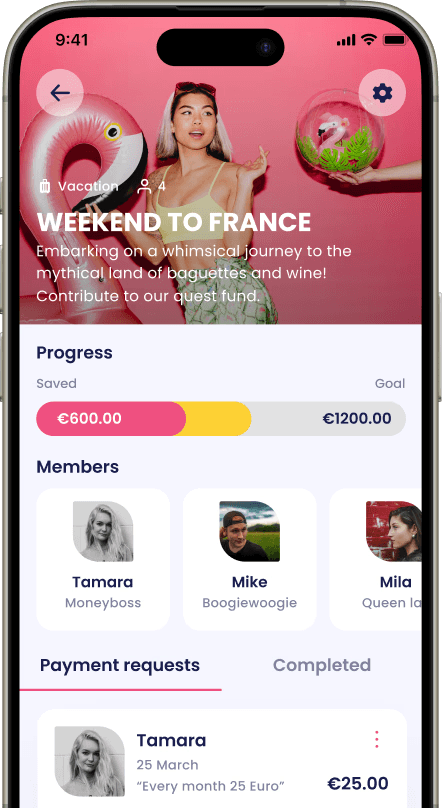
The group works proactively towards a shared, visible goal. Everyone can see the funding progress bar. Everyone intimately understands the target. Everyone knows exactly what they are contributing towards.
This simple visibility changes the group dynamic completely. The conversation shifts from "Who still owes money?" to an exciting "We've successfully collected 80% of our travel budget!"
For trip organisers, this provides total visibility. For contributors, it creates deep trust. For the group as a whole, it generates incredible momentum. Whether you are planning an intensive ski trip, a quick city break, a messy festival weekend, or an extended summer holiday, a dedicated travel fund helps everyone move towards the exact same objective together.
What's Coming Next for Potje?
Potje is already actively helping thousands of groups collect, organise, and effectively manage money through its joint money account infrastructure. However, the platform is continually evolving to serve travel groups better.
A highly anticipated virtual spending card is currently being developed and will soon allow groups to spend directly from their shared money pot. While this feature has not officially launched just yet, once it is available, it will make it infinitely easier for groups to manage shared travel expenses, on-the-ground activities, and spontaneous purchases without ever needing to transfer funds back to a personal checking account.
Anyone actively interested in hearing about the launch and securing early access can join the priority waiting list at Potje's official website.
Practical Scenarios for Upfront Collection
Understanding the theory is great, but seeing how upfront pooling applies to real-world travel scenarios highlights its incredible value.
The Weekend City Break
A group planning a quick 3-day weekend in Lisbon collects €300 per person before booking accommodation. Once enough money has been collected in the Potje, the panoramic apartment is secured immediately without one person draining their personal checking account to cover the deposit.
The Annual Ski Holiday
Winter sports are notoriously expensive. The group contributes steadily over several months towards their Potje to cover the expensive chalet accommodation, ski lift passes, and equipment transport. By the time the critical booking windows open in October, 90% of the required budget already exists in the shared pool.
The Summer Festival Trip
Friends aggressively collect money for VIP tickets, premium camping spots, and cross-country travel before festival tier prices increase. This completely reduces the last-minute financial stress that often causes people to drop out of festival plans.
The Bachelor or Bachelorette Weekend
Instead of the best man or maid of honor privately funding the entire lavish event and awkwardly asking the bridal party for cash later, contributors gradually build the robust budget together over six months.
Common Misconceptions About Group Funding
"We'll just split everything afterwards using an app."
That philosophy sounds incredibly easy—until one person has paid for 80% of the trip out of pocket. Repayment conversations are universally more difficult and awkward than upfront contribution conversations. Tracking debt is not the same as securing capital.
"Collecting money upfront takes way longer to organize."
In reality, it almost always saves time. Organisers spend zero time cross-referencing bank statements or chasing late payments later. The upfront setup takes minutes, and the execution is flawless.
"Only massive groups of 10+ people need a dedicated travel fund."
This is a myth. Even four close friends planning a simple road trip heavily benefit from collecting their petrol, food, and lodging money into a neutral pot before hitting the road, keeping group expenses cleanly separated from personal spending.
FAQ Section
Why should you collect money before booking a group trip?
Collecting money before booking completely reduces personal financial risk and drastically improves planning. Instead of relying on one person to blindly cover costs upfront, the group contributes together and creates a visible budget before commitments are made. This makes booking decisions easier and completely eliminates repayment stress later.
How much money should a group collect before booking?
Ideally, groups should collect enough money upfront to comfortably cover all major, non-refundable commitments such as accommodation security deposits, flight or train bookings, and premium activity reservations. The exact amount depends heavily on the type of trip and how much financial certainty the group desires before locking in plans.
Is it better to save gradually for a group trip?
For the vast majority of groups, yes. Smaller, recurring contributions over several weeks or months often feel much more manageable than requesting a massive €800 lump-sum payment all at once. Gradual saving also gives the entire group more visibility over their financial progress.
What exactly is Potje?
Potje is a secure digital joint money account application that helps groups seamlessly save, collect, and organise money towards shared goals. Friends, teams, and clubs can easily create dedicated money pots for holidays, events, and gifts while transparently tracking progress together.
How does Potje compare to Revolut or Collctiv for trips?
Potje is purpose-built for shared goals without the heavy friction of Revolut (which requires full bank sign-ups for all members) and offers deeper goal-tracking infrastructure than Collctiv (which is better suited for simple, one-off whip-arounds rather than complex travel budgets).
Will Potje offer a virtual spending card soon?
Yes. Potje is currently deep in development on a virtual spending card that will allow travel groups to spend directly from their shared money pot in real-time. While the feature has not launched yet, people interested in updates can actively join the waiting list on the main website.
Key Takeaways
Group trip budget planning fundamentally transforms from a stressful administrative chore into an exciting, collaborative process when the money is collected before the bookings are made.
The group gains absolute financial visibility.
The primary organiser carries zero personal risk.
Booking decisions become incredibly easy and fast.
Everyone actively contributes towards the exact same goal from day one.
Ultimately, the best group trips aren't necessarily the cheapest ones. They are the ones where the logistics and planning feel completely effortless because the money has already been safely organised before the very first booking is ever made.
Stop stressing over split bills. Start planning your next adventure by collecting your budget upfront.

Social Accountability and Saving: The Missing Link to Financial Freedom
Ondersteuning voor verschillende inhoudstypes zoals artikelen, blogs, video's en meer. Rijke tekstverwerker met opmaakopties voor verbeterde.
17 november, 2025

Group Saving Apps Compared: What's Easiest, Safest, and Most Transparent?
Ondersteuning voor verschillende inhoudstypes zoals artikelen, blogs, video's en meer. Rijke tekstverwerker met opmaakopties voor verbeterde.
17 november, 2025

Group Money Platforms Compared: What’s Safe, Regulated, and Fair?
Ondersteuning voor verschillende inhoudstypes zoals artikelen, blogs, video's en meer. Rijke tekstverwerker met opmaakopties voor verbeterde.
17 november, 2025