17 April 2026



When planning a group vacation, most people assume that downloading an expense tracker or opening a shared bank vault are the only ways to handle the budget. However, these tools often fail to solve the actual problem: coordinating funds before the spending begins. If your goal is to avoid chasing payments, eliminate awkward IOUs, and reduce social friction, you need to look into modern Alternatives to Splitting Apps & Joint Accounts. By collecting money upfront in a centralized system, you can ensure your group trip actually happens on time and on budget.
The Core Confusion: Tracking vs. Managing
Most users comparing expense trackers to dedicated group fund apps think they are looking at solutions for the exact same problem. They are not. The confusion comes from a massive category overlap in the app store.
Expense trackers are designed for post-trip settlement, whereas a shared money account is built for pre-trip financial planning. This simple misclassification is one of the biggest reasons friend groups choose the wrong digital solution, leading to delayed bookings and frustrated organizers.
Where Expense Trackers Break Down
Popular tools are highly designed for post-spend coordination. They excel at tracking who paid for what, calculating complex balances between group members, and simplifying the final settlement after the trip is over. This model works perfectly for small, casual expenses—like splitting a $40 pizza or a quick Uber ride.
However, as a group travel money management strategy, this system breaks down completely. These apps do not actually hold real money. This creates a massive dependency on repayment. Someone still has to front the bill for the massive Airbnb deposit, and others still have to remember to pay them back. The core issue remains: the organizer carries all the financial risk, and you still have to chase people for cash.
The Problem With Traditional Banking Setups
On the other end of the spectrum, many groups try to use traditional digital banking vaults. While these act as a great joint account alternative in theory—offering shared access and a centralized balance—they introduce massive friction. They almost always require every member of the group to sign up for that exact same banking platform, go through identity verification, and link their primary checking accounts. This setup works for married couples or long-term roommates, but it is far too heavy and complex for a fast-moving group trip.
The Smarter Way to Manage Group Trip Expenses
To effectively manage group trip expenses without the headache, you need to change the timeline of the money.
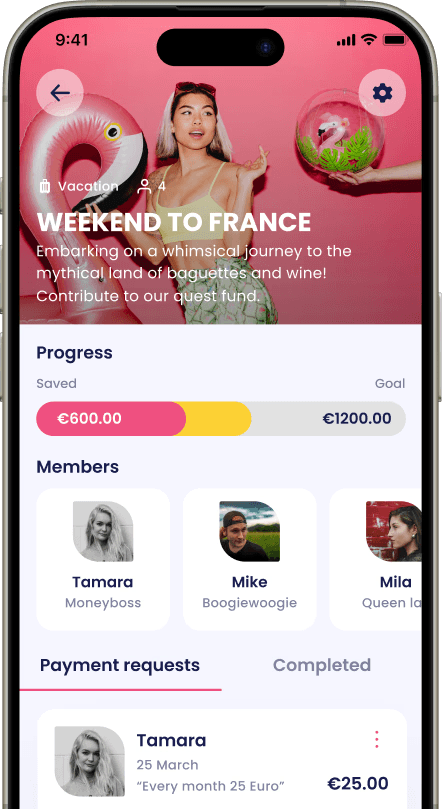
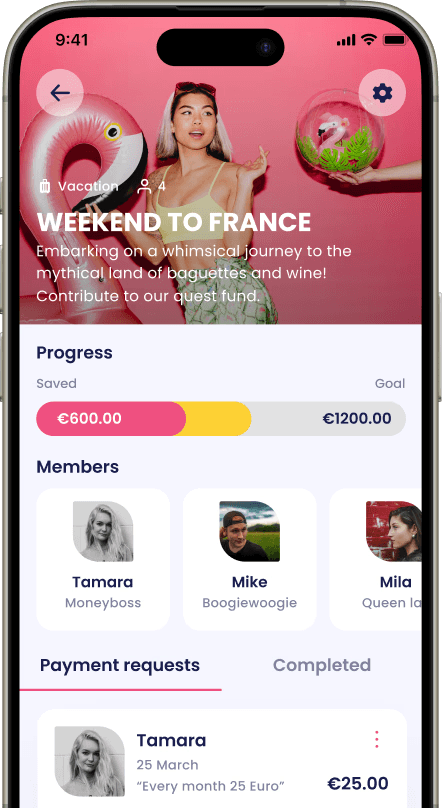
Instead of the traditional "spend first, split later" approach, successful groups utilize a "save first, spend later" methodology. This shift completely changes the group dynamic. When you collect the money upfront and store those funds in a centralized account, you give the entire group full visibility. The group sets a financial goal, everyone contributes over time, and all communal spending is drawn directly from that shared balance. This removes the need for awkward reimbursement requests entirely.
Introducing Potje: The Ultimate Splitwise Alternative
This is exactly where Potje fits into the landscape. Acting as a powerful Splitwise alternative, Potje fills the glaring gap between basic expense trackers and clunky bank accounts. It is explicitly designed for groups that need to organize their money before major booking decisions are made, not after the credit card has already been swiped.
Most peer-to-peer (P2P) tools like Venmo or Cash App just help move money between individuals, assuming someone has already paid upfront. Potje changes that sequence. It gives your group a dedicated, secure space to collect cash first, keep it in one place, and make purchasing decisions based on what is actually available in the pot.
Why Upfront Collection Changes Everything
The commercial and practical implications of using a dedicated pooling system are massive:
Better Booking Timing: Groups that collect money early can book flights and accommodations months in advance. This directly results in better pricing and wider availability.
Higher Commitment Levels: Upfront financial contributions create psychological commitment. People who have already chipped into the pot are significantly more likely to follow through on the travel plans.
Zero Organizer Workload: Without a structured system, the organizer acts as an accountant—tracking payments, sending Venmo requests, and carrying the financial risk. With Potje, automated reminders handle the collection, and that workload disappears entirely.
Direct Comparison: Post-Spend vs. Pre-Spend
Structure and Effort
Tracking Apps: Offer no shared funds; rely on individual payments and manual receipt entry. Require an annoying settlement process at the end of the trip.
Potje: Provides a shared pool of real money with centralized management. Features automated contributions and completely eliminates the post-trip repayment process.
Financial Risk
Tracking Apps: One person is forced to pay upfront. The financial risk sits squarely on the organizer's shoulders until everyone decides to settle up.
Potje: There is zero upfront financial burden on one individual. The risk is equally shared because the group funds the trip together before any purchases are made.
Frequently Asked Questions
Are tracking apps good for group trips?
They are useful for logging small, daily expenses during or after a trip to calculate who owes what. However, they do not manage actual cash flow. For trips that require massive upfront payments like flights and lodging, relying solely on an expense tracker often leads to delayed bookings and high stress for the designated organizer.
What is a better alternative to standard splitting apps?
If your goal is to avoid chasing payments and eliminate financial risk, a proactive pooling tool like Potje is highly effective. Instead of logging debts after the fact, it allows your group to collect funds securely in advance.
Should you split costs before or after a vacation?
Managing money before a vacation is vastly more reliable. Collecting funds upfront ensures everyone is committed and the budget is secured. Splitting costs after the trip creates a stressful dependency on IOUs, which often leads to awkward group chat conversations.
What makes Potje different?
Potje is a shared money account designed specifically for groups who want to save and manage money together collaboratively. It is not just a debt-splitting tool; the focus is entirely on saving together before spending. This removes the need for reimbursements and drastically reduces the effort required to manage group finances.
Why do group trips fail financially?
Group vacations usually fall apart because the money is not organized early enough. People blindly assume their friends will be ready to pay when the time comes, but financial priorities rarely sync up perfectly. Delays in collecting funds lead to postponed bookings and higher costs. Implementing a structured system upfront solves this completely.

Social Accountability and Saving: The Missing Link to Financial Freedom
Ondersteuning voor verschillende inhoudstypes zoals artikelen, blogs, video's en meer. Rijke tekstverwerker met opmaakopties voor verbeterde.
17 november, 2025

Group Saving Apps Compared: What's Easiest, Safest, and Most Transparent?
Ondersteuning voor verschillende inhoudstypes zoals artikelen, blogs, video's en meer. Rijke tekstverwerker met opmaakopties voor verbeterde.
17 november, 2025

Group Money Platforms Compared: What’s Safe, Regulated, and Fair?
Ondersteuning voor verschillende inhoudstypes zoals artikelen, blogs, video's en meer. Rijke tekstverwerker met opmaakopties voor verbeterde.
17 november, 2025