19 May 2026



Which App is Better for Family Money?
When evaluating Splitser vs Potje: The best way to manage a family savings pot, the decision ultimately comes down to proactive versus reactive finance. Splitser is a highly effective expense tracker designed to help families calculate debts after money has already been spent. Potje, however, is a comprehensive shared family money account that helps families securely manage a collective savings pot before and during the spending process. If your goal is to actually build, hold, and utilize a shared family fund without forcing one person to front the cash and chase reimbursements, Potje solves the fundamental coordination problems that simple tracking tools like Splitser cannot.
The Real Problem: Family Money is About Coordination, Not Just Saving
Almost every family starts with the exact same optimistic financial goal: "Let’s all save together."
Whether the objective is booking a massive summer holiday, funding a significant household purchase, or pooling money for the kids’ extracurricular activities, the intention is always collaborative.
But almost immediately, the administrative problems start showing up. They are rarely massive financial disputes; they are small, repetitive logistical hurdles that slowly break the system. The fundamental issue is that modern families struggle immensely with financial coordination.
Let's break down the five most common friction points in managing a family savings pot, and compare exactly how a tracking app (Splitser) versus a proactive funding app (Potje) handles them.
Problem 1: “Did everyone actually contribute this month?”
This is where the friction always begins. A family agrees to a shared household budget, perhaps deciding that everyone will put €50 into the pot this month.
Then reality hits: One sibling forgets. One parent pays late. Someone asks for a WhatsApp reminder. Suddenly, one single person becomes the unofficial family accountant, burdened with tracking contributions, sending awkward follow-ups, and keeping the group financially aligned.
How Splitser Handles This: Splitser does not handle this. It is an IOU calculator that only tracks data after money has been spent. Therefore, monthly contributions and upfront funding still happen completely manually outside the app.
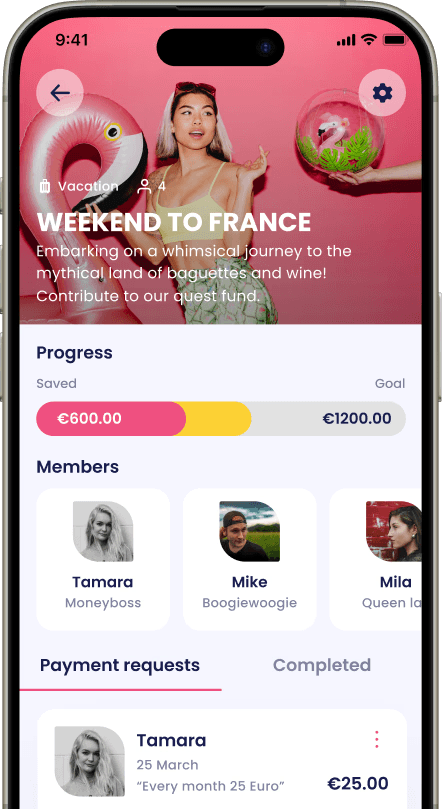
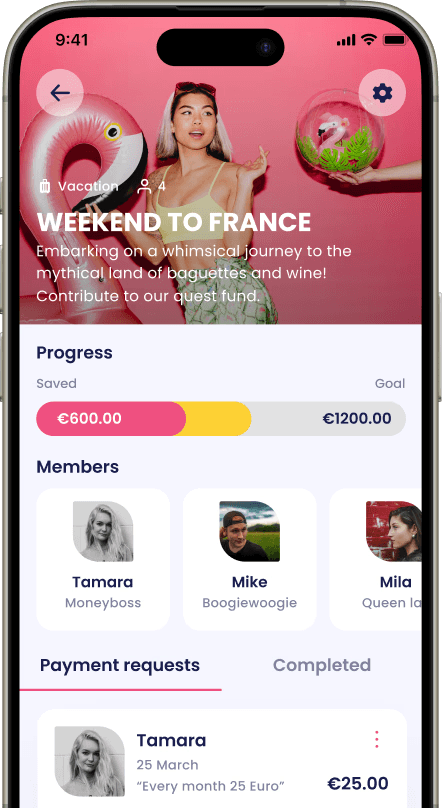
How Potje Solves It: Potje creates a secure, centralized shared pot where everyone contributes directly into one single place. Payments are tracked automatically by the system. The entire family can instantly see who has successfully paid and who has not. There is absolutely no chasing, no spreadsheets, and no guessing.
Problem 2: “How much money do we actually have right now?”
This question comes up far more often than it should, primarily because the answer is almost never clear. Money sits scattered across different personal bank accounts. Some people have paid their share, some still owe money, and some peer-to-peer (P2P) bank transfers are still pending. The "family savings pot" is not an actual, tangible thing; it is a fragmented illusion.
With Splitser: You can clearly see what people owe each other historically, but you cannot see what liquid cash the family actually has available to spend right now.
With Potje: There is exactly one indisputable number: the total available balance sitting securely in the pot. Everyone in the family sees the exact same dashboard. That radical financial transparency completely changes how purchasing decisions are made.
Problem 3: “Can we afford to book this yet?”
This is exactly where exciting family plans start to stall. You want to book the non-refundable flights for the family reunion. However, because not everyone has transferred their cash and the total budget is unclear, the organizer hesitates.
Waiting to book travel or events almost always results in higher prices, missed availability, and lost opportunities.
With Splitser: The organizer is forced to book first, front the massive cost on their personal credit card, and painfully sort out the debts later.
With Potje: The family securely collects the funds first. The organizer then books with absolute confidence because the liquid money is already sitting there.
Problem 4: “Why am I always the one paying upfront?”
Every single family has this designated role: The Organizer. They are the ones who plan the trips, pay the massive upfront deposits, track the receipts, and send out the payment requests.
Over time, this creates deep resentment and reimbursement fatigue. It ceases to be a shared family responsibility and morphs into one person acting as a micro-manager for everyone else's finances.
With Splitser: That stressful dynamic does not change. Someone still has to take on the financial liability and pay first.
With Potje: The proactive system entirely removes that burden. The money is pooled collectively in advance, meaning absolutely no one is forced to carry the cost or the credit card debt alone.
Problem 5: “Where did our money actually go?”
Even after a successful family trip or event, there is often lingering confusion. What did we actually spend the budget on? Was that expensive dinner included? Are we over our household budget? This confusion happens because traditional tracking is purely reactive.
With Splitser: You must manually log every single expense, categorize it, and split it after it happens. It requires constant administrative upkeep.
With Potje: The platform intrinsically shows the incoming contributions, the real-time remaining balance, and the spending context—all centralized in one beautifully organized place.
Where Other Alternative Tools Fit Into Family Money
While comparing expense trackers to shared wallets is vital, it is also important to understand where traditional banking and investment apps fit into the ecosystem.
Acorns / Micro-Investing Apps: Platforms like Acorns are brilliantly built for individual saving and passive wealth generation. They help one specific person grow their personal money; they do not help a family manage a collective, liquid spending budget.
Monzo Pots (or Legacy Bank Vaults): Monzo provides excellent savings pots inside a modern banking app, which adds great personal structure. However, it is fundamentally tied to one individual's bank account. Shared usage is highly limited, making it completely unsuited for flexible, multi-person family coordination.
Potje: Potje is purpose-built from the ground up for shared family money. It natively supports multiple active contributors, one centralized digital pot, and complete, uncompromising financial visibility.
The Monumental Shift: From Tracking to Managing
Most families mistakenly believe their core financial problem is tracking their expenses. It is not. Their actual problem is a total lack of structure.
Tracking tools (like Splitser) merely organize the mess after it has been made. Management systems (like Potje) actively prevent the mess from occurring in the first place.
What proactive family finance looks like when it actually works:
Contributions happen early and securely.
The total available budget is always crystal clear to everyone.
Purchasing decisions are made exponentially faster.
No one acts as a debt collector chasing down relatives.
The family savings pot transforms from a theoretical spreadsheet into a real, actionable asset.
The Next Evolution: Seamlessly Spending From the Pot
Even when families manage to save successfully, the actual act of spending those funds often creates friction all over again. Because standard savings pots do not issue payment cards, the cycle inevitably repeats: one person pays the merchant, withdraws the money from the pot, and the administrative headache continues.
What Potje is Building Next to Solve This: Potje is actively solving this final hurdle by developing a virtual debit card connected natively to the family pot.
This upcoming, revolutionary feature will allow:
Direct Payments: Seamless transactions directly from the shared family fund.
Apple Pay & Google Wallet Compatibility: Tap-to-pay convenience for the modern world.
Real-Time Visibility: Instant deduction tracking for the whole family.
This means the exact same transparent system utilized for saving is now flawlessly used for spending.
(Important Note for Transparency: The group card and Apple Pay functionality are currently in active development and are not live just yet. However, once launched, families will be able to add the shared card to their mobile wallets and spend directly from their shared funds in stores globally. Forward-thinking families can join the Potje virtual card waitlist to secure early access).
The Commercial and Emotional Implications of Structured Finance
When family money is unstructured and reactive, the hidden costs are severe. It shows up as delayed holiday plans, missed early-bird booking discounts, and hours of frustrating logistical coordination.
When family finances are properly structured through a dedicated family savings pot:
Liquid money is available upfront.
Financial decisions happen instantly without hesitation.
The entire shared experience improves because financial anxiety is eliminated.
This is exactly where families feel the profound difference between surviving a group expense and actually enjoying it.
Frequently Asked Questions (FAQ)
Why is it so inherently hard to manage a family savings pot?
The difficulty strictly stems from social coordination, not the act of saving itself. Multiple people need to contribute, track their payments, and collectively agree on spending. Without a centralized, shared digital system, this process becomes highly manual and inconsistent. One person usually assumes the financial responsibility, which creates immense friction, delays, and resentment. A structured, proactive approach completely removes this burden by centralizing both contributions and visibility.
Is Splitser a good option for managing family savings?
Splitser is a phenomenal tool for tracking shared expenses after the money has already been spent. It perfectly organizes who owes money to whom. However, it does not actually manage upfront contributions, nor does it hold your funds. For a true family savings pot, this means someone still must pay upfront and wait for reimbursements, which fails to solve the core coordination challenges.
What is the absolute best way to manage shared family money?
The most effective and stress-free way is to utilize a dedicated fintech system (like Potje) where all participant contributions go directly into one secure, shared pot. This creates a clear total balance, entirely reduces the need for awkward payment follow-ups, and empowers the family to make rapid decisions based on real, available cash. Managing shared money upfront is exponentially more effective than retroactively tracking debts.
Can multiple family members contribute to one digital savings pot?
Yes, absolutely. A true shared financial system natively allows multiple authorized contributors to add money to the exact same pot via their preferred payment methods. This makes it vastly easier to coordinate holiday savings across an extended family and ensures every member has full visibility into the total budget, completely removing the reliance on one single organizer to manage the funds.
What is Potje and how does it fundamentally help families?
Potje is an innovative shared money account designed specifically for groups and families. It empowers users to create a digital pot, invite family contributors, and securely collect money in one centralized place. The system tracks all contributions automatically and provides total transparency of the balance. Highly anticipated upcoming features will also allow families to spend directly from the pot using Apple Pay, creating the ultimate, complete system for managing family wealth and shared experiences.
Conclusion: The Problem is Not Saving, It is the System
Families generally already know how to save money. What they desperately struggle with is making the process consistent, fair, and transparent for everyone involved.
When shared money is scattered across personal accounts and tracked on messy spreadsheets, the entire process breaks down. But when that money is properly structured within a dedicated, shared ecosystem, the process works flawlessly. That is the profound difference between merely tracking a savings pot, and actually utilizing it together to build better family experiences.
If you're saving up as a group for a trip, event, or gift, Potje makes it easy to collect money into one shared digital pot instead of chasing people for their share. Start a pot through this link and get your first month free. After that it's €5 a month per pot, taken straight from the pot balance, so there's nothing to pay upfront to start saving together.

Social Accountability and Saving: The Missing Link to Financial Freedom
Ondersteuning voor verschillende inhoudstypes zoals artikelen, blogs, video's en meer. Rijke tekstverwerker met opmaakopties voor verbeterde.
17 november, 2025

Group Saving Apps Compared: What's Easiest, Safest, and Most Transparent?
Ondersteuning voor verschillende inhoudstypes zoals artikelen, blogs, video's en meer. Rijke tekstverwerker met opmaakopties voor verbeterde.
17 november, 2025

Group Money Platforms Compared: What’s Safe, Regulated, and Fair?
Ondersteuning voor verschillende inhoudstypes zoals artikelen, blogs, video's en meer. Rijke tekstverwerker met opmaakopties voor verbeterde.
17 november, 2025