15 June 2026



The absolute easiest way to avoid group money arguments, protect friendships, and guarantee a stress-free experience is to agree on the financial rules before the spending starts.
A comprehensive Group Money Agreement Template helps friend groups, families, and teams firmly decide on shared budgets, individual contributions, financial responsibilities, and spending expectations long before anyone actually pays out of pocket. Most group money problems do not happen because of the amount of money involved; they happen because vague assumptions are made instead of concrete agreements. A simple, effectively communicated money agreement creates instant clarity, proactively prevents misunderstandings, and entirely removes the massive pressure typically placed on the one person organizing the group.
Why Groups Rarely Argue About "Money" Itself
People often confidently say: "Money causes arguments."
In reality, confusion causes arguments.
Most group spending problems occur simply because nobody sat down and thoroughly discussed financial expectations beforehand. When communication is lacking, everyone operates on their own internal logic.
For example:
One person automatically assumes all costs will be split perfectly evenly at the end of the trip.
Another participant fully expects to pay only for exactly what they personally consume or use.
Somebody goes ahead and books premium, luxury accommodation without asking.
Someone else was mentally expecting a strict budget trip and is shocked by the nightly rate.
In almost all of these scenarios, nobody is intentionally trying to create conflict or take advantage of their friends. The group simply never explicitly agreed on the rules of engagement. That is exactly why every successful group holiday, shared house, sports team, festival weekend, or massive group gift heavily benefits from establishing a basic group money agreement.
What is a Group Money Agreement?
Let's clear up a common misconception right away: A Group Money Agreement is not a formal legal contract. You do not need a lawyer, and nobody needs to sign a binding document in blood.
It is simply a documented, shared understanding.
Before a single dollar is spent or a single reservation is confirmed, everyone in the group transparently agrees on:
What exactly the pooled money is being used for.
How much each person is expected to financially contribute.
Who is taking the responsibility for executing the payments.
What the protocol is if estimated costs suddenly change.
How shared group expenses and daily purchases are managed.
The agreement can be incredibly simple—often just a single well-structured message in the group chat or a shared note. The ultimate goal is absolute clarity. Not complexity.
Why Agreements Matter Before Anyone Pays
The exact moment someone pulls out their personal credit card and pays for a group expense, unwritten expectations immediately begin.
The person who generously pays the deposit often assumes that immediate, full reimbursement from everyone is guaranteed. However, the other contributors may have completely different assumptions about the repayment timeline, wondering if they should pay now, next week, or after the trip is over. That silent gap in expectations creates immediate friction.
The larger the financial expense, the larger the potential relationship problem. This upfront agreement strategy is especially critical for high-cost collaborative events, including:
Massive group holidays and international travel
Multi-family Airbnb or vacation rental trips
Bachelor and bachelorette party weekends
Multi-day music festivals
Amateur sports teams and tournament travel
Shared accommodation (roommate expenses)
High-value group gifts for weddings or milestone birthdays
Taking just a few minutes of proactive planning can entirely prevent weeks of awkward, passive-aggressive repayment conversations later.
The Ultimate Group Money Agreement Template
Before the group spending begins, every single participant should be aligned. Use this step-by-step checklist to answer these core questions and build your group's customized agreement.
1. What is the explicit purpose of the money?
Be as specific as possible. Vague goals lead to vague contributions. Examples:
"Miami Spring Break 2026 - Accommodation and Flights"
"Annual Colorado Ski Trip - Cabin and Lift Passes"
"Dad's 60th Birthday Surprise Gift - Golf Clubs"
"Summer Softball Team Tournament - Registration and Hotel"
A clearly defined, named goal helps everyone implicitly understand exactly what their hard-earned contributions are actively funding.
2. What is the total estimated budget?
The group must aggressively agree on a realistic, estimated budget before booking anything. If you don't set a ceiling, costs will naturally inflate. Your budget outline should transparently include:
Accommodation: (Include nightly rates, platform fees, taxes, and security deposits)
Travel: (Flights, rental cars, train tickets, or gas money)
Activities: (Excursion tickets, VIP tables, or guided tours)
Food & Drink: (Shared grocery runs or communal dinner funds)
Emergency Funds: (A small buffer for unexpected hurdles)
Groups that establish a strict budget first generally make vastly better, more democratic spending decisions later.
3. How will the contributions work?
You must explicitly decide the mechanics of how the money will be collected to avoid the dreaded "repayment drama." Decide on the format:
Equal contributions: Everyone pays the exact same flat amount upfront.
Variable contributions: People pay different amounts based on their specific needs (e.g., someone taking a master bedroom vs. a couch).
Monthly deposits: For trips planned a year in advance, setting up a monthly installment plan.
One-time payments: A single deadline where all funds are due.
The entire group should completely understand exactly how and when the money will be collected. Utilizing a joint money account makes this step seamless.
4. Who is officially responsible for organizing?
Every group fundamentally needs a leader coordinating the logistics.
However, that person should not automatically become responsible for personally financing the entire group. The role of the "organizer" should be to book the logistics using the group's pre-collected funds, not to act as a personal credit provider. Agreeing on these distinct responsibilities early prevents unnecessary financial pressure and resentment.
5. What happens if the projected costs increase?
Travel costs change dynamically. Activities get added to the itinerary on a whim. Unexpected travel expenses appear out of thin air.
If the Airbnb you wanted gets booked and the backup option is $400 more expensive, who makes the call? Discussing these very real possibilities beforehand—and establishing a shared "contingency fund"—prevents future disagreements and panicked group chat messages.
6. What happens if somebody unexpectedly leaves the group?
This is universally one of the most overlooked, yet critical, conversations in group travel planning. Life happens; people drop out. Before any financial contributions begin, the group must firmly decide:
Are upfront deposits strictly non-refundable?
Can the person who dropped out find a replacement participant to buy their spot?
If they drop out late, are the remaining participants willing to absorb and split the remaining shared costs?
The earlier these tough expectations are discussed and agreed upon, the easier the future administrative decisions become.
Why Most Groups Foolishly Skip This Step
People often mistakenly believe that actively discussing money with friends will make things instantly awkward. The absolute opposite is usually true. Money conversations become incredibly awkward when they happen too late.
Most groups will happily and enthusiastically discuss destinations, luxury accommodation options, top-tier restaurants, and exciting activities for weeks on end. But they actively avoid discussing the cold, hard budgets.
The reality is that the money conversation will happen eventually. If you don't have it upfront, it usually happens during a heated disagreement after someone feels financially taken advantage of. Planning early creates a much smoother, happier group experience.
Why Potje Helps Groups Put Agreements Into Action
A Group Money Agreement is ultimately only useful if the group can actually execute and follow it.
Potje actively helps turn these financial plans into reality through a modern joint money account ecosystem designed specifically for shared group goals.
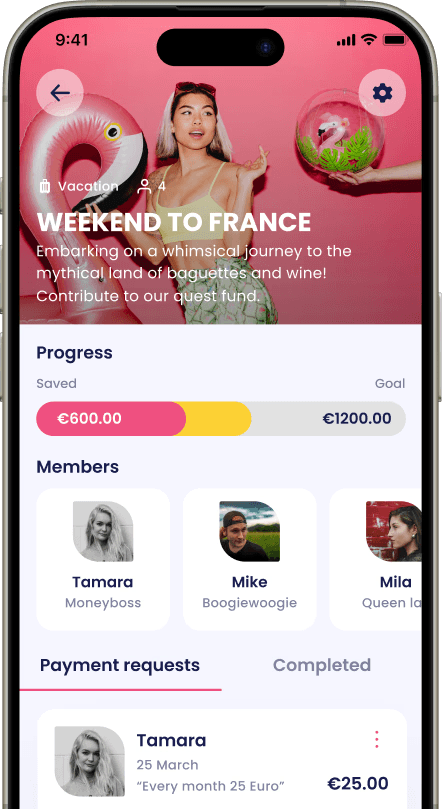
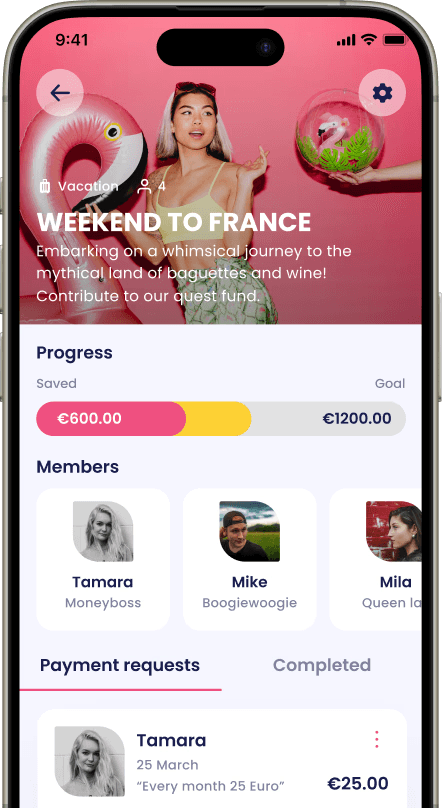
Once a group formally agrees on the budget, contribution amounts, deadlines, and shared expenses, they don't have to rely on messy spreadsheets. They can instantly create a dedicated digital money pot and begin collecting contributions immediately.
Create a Dedicated Shared Goal
Whether it's a massive international holiday, a premium group gift, a sports tournament, or a shared apartment budget, the group organizer creates a crystal-clear financial objective inside the app.
Collect Money Before Spending
This is the ultimate game-changer. Instead of relying on one brave person to pay first and hope for the best, contributors can proactively add money toward the agreed goal before any major purchases or bookings are made. This mechanism aligns perfectly with the core principles of a Group Money Agreement. You decide before anyone pays.
Keep Everyone Totally Accountable
When funding progress is visible to the entire group, all contributors instantly know:
Exactly how much money has been successfully collected.
How close the group currently is to its target budget.
Whether additional top-up contributions are needed due to price changes.
This absolute transparency entirely reduces financial uncertainty and makes expectations clearer for everyone involved. The direct result is a vastly fairer process and significantly less emotional pressure on the organizer.
How This Compares to Common Group Finance Alternatives
When searching for group travel apps to manage your group's money agreement, you'll encounter a few different tools. Here is how they differ in intent:
Splid
Splid is an incredibly useful application for tracking shared expenses and calculating complex end-of-trip repayments. However, it is fundamentally designed to help after the spending has already occurred. It tells you exactly who owes whom, but it does not facilitate the upfront collection of funds.
Tikkie
Tikkie is fantastic for simplifying quick peer-to-peer payment requests (like splitting a dinner bill). However, it is purely a request tool. Groups using Tikkie still need to completely decide their budgets and complex expectations entirely separately, and someone still has to front the money first.
TravelSpend
TravelSpend is geared toward helping travelers meticulously track their daily travel expenses during the actual trip. It is primarily focused on real-time spending management and category tracking rather than proactive contribution planning or upfront money pooling.
Potje
Potje deliberately focuses on helping groups organize, pool, and collect their money before any spending actually begins. This proactive approach makes it particularly powerful and uniquely useful for groups actively trying to enforce and follow a shared group money agreement.
Common Misconceptions About Group Money
"We're all great friends; we don't need a formal agreement." Deep friendship unfortunately does not magically remove the possibility of financial misunderstandings. In fact, clear expectations are exactly what protect those relationships from unnecessary resentment.
"Money agreements are too formal and corporate." Most successful group agreements can easily fit into a single bulleted group chat message or a shared digital note. The primary goal is achieving clarity, not creating intimidating legal paperwork.
"We'll just work all the money stuff out later." "Later" is universally the exact moment when problems, hidden costs, and disagreements appear. The absolute best time to thoroughly discuss money is before anyone opens their wallet.
FAQ Section
What is a Group Money Agreement?
A Group Money Agreement is a proactive, shared understanding between all contributors regarding estimated budgets, shared expenses, financial responsibilities, and specific payment expectations. It heavily helps prevent confusion and creates total transparency before any group spending begins.
When exactly should a group create a money agreement?
The ideal time to formalize the agreement is immediately after the destination or goal is chosen, but strictly before anyone pays for anything. Once personal money has already been spent on deposits, expectations become drastically harder to manage and disagreements become far more likely.
Does a group money agreement need to be a formal document?
No. Most groups simply need a clear, written understanding (often just a message in the group chat) covering the total budgets, individual contribution amounts, payment deadlines, and who is responsible for booking. Even a remarkably simple agreement can prevent major financial misunderstandings later.
What is Potje?
Potje is a modern shared money pot and joint money account that specifically helps groups organically organize, collect, and manage money together. Users can effortlessly create dedicated money pots, collect upfront contributions toward specific goals, and maintain real-time visibility over group progress and shared finances.
Why is collecting group money before spending so important?
Collecting money before spending entirely reduces the severe financial pressure placed on group organizers, creates a much clearer, realistic travel budget, and explicitly ensures that all contributors are financially committed to the plan before major, non-refundable expenses occur.
Key Takeaways
Most group money problems begin long before a single dollar is actually spent.
Financial conflicts begin the exact moment when expectations are assumed but never formally discussed.
A simple Group Money Agreement creates vital clarity around total budgets, individual contributions, booking responsibilities, and future spending decisions.
The more people involved in the trip or event, the more incredibly important these upfront conversations become.
When everyone proactively agrees on the rules before anyone pays, group experiences instantly become easier to organize, vastly easier to budget, and far more enjoyable for everyone involved.

Social Accountability and Saving: The Missing Link to Financial Freedom
Ondersteuning voor verschillende inhoudstypes zoals artikelen, blogs, video's en meer. Rijke tekstverwerker met opmaakopties voor verbeterde.
17 november, 2025

Group Saving Apps Compared: What's Easiest, Safest, and Most Transparent?
Ondersteuning voor verschillende inhoudstypes zoals artikelen, blogs, video's en meer. Rijke tekstverwerker met opmaakopties voor verbeterde.
17 november, 2025

Group Money Platforms Compared: What’s Safe, Regulated, and Fair?
Ondersteuning voor verschillende inhoudstypes zoals artikelen, blogs, video's en meer. Rijke tekstverwerker met opmaakopties voor verbeterde.
17 november, 2025
