2 November 2026



Friendsmas should feel like a good night with friends, not a silent accounting exercise afterwards.
The easiest way to keep it that way is to agree the budget before anyone shops, then pool the money upfront so the host is not left covering the lot. That one change removes most of the stress, keeps the evening fair, and makes it much easier to enjoy the actual dinner.
If you have ever hosted a group meal, you will know the pattern. One person books the ingredients, buys the drinks, grabs the candles, and somehow ends up paying for most of it. Everyone means to chip in later. Then the group chat goes quiet, the receipts get lost, and the host is left carrying the balance.
That is exactly why a pooled budget works better than vague promises. For a Friendsmas dinner, the goal is not to make the maths complicated. It is to make the money conversation happen early, while everyone is still relaxed.
A shared Potje pot changes the whole tone of the night. Everyone contributes before the shop. The organiser buys what the group agreed. Any leftover goes back to the people who paid in. No awkward chasing. No "I will sort you later". No host quietly subsidising dinner for eight.
This guide covers everything you need: how to set a realistic budget, whether to include drinks, how to split fairly, and the simplest way to collect money before anyone sets foot in a supermarket.
Why the host usually ends up paying
Hosting often starts as a generous act and ends as a personal expense.
That happens for a few predictable reasons:
The host is usually the one who knows the menu.
Someone has to do the first shop before anything can happen.
Small extras add up fast, especially drinks, ice, napkins, candles and desserts.
People assume the bill will be split later, but nobody agrees the exact amount in advance.
The host often does the invisible work too, such as planning, timing and cleaning.
Once the event feels personal, it becomes very easy to forget that the costs are real. A bottle of wine here, a tray of snacks there, then a few decorations and a dessert top-up, and the total climbs quickly.
Even a simple dinner for six can cost the host well over €100 once food, drinks and decorations are added up. That is a lot of financial goodwill to absorb quietly.
That is why pooling the cost before Friendsmas works so well. It turns the dinner into a group decision instead of a host expense with a vague repayment plan.
Potluck or pooled budget?
Both can work. The right choice depends on how much control you want over the food and how much effort you want the host to carry.
Potluck
A potluck means each guest brings something. That might be a starter, main, dessert, drinks, or even just one part of the meal.
Pros:
Lower cost for the host
Everyone contributes something personal
The table feels varied and fun
Good for groups that enjoy cooking
Cons:
The menu can become unbalanced
Some people bring too much, others bring too little
Dietary planning gets messy if nobody is coordinating
The host still often ends up handling drinks, tableware and the main logistics
Pooled budget
A pooled budget means everyone pays an agreed amount before the event, then the host shops and pays from the pot.
Pros:
Fairer for the host
Easier to plan a coherent menu
Better for decorations, drinks and shared extras
Simpler if you want one person to handle the shopping
Cons:
It needs a clear agreement up front
Someone has to organise the pot
A few people may prefer to bring food instead of paying cash
For most Friendsmas dinners, we recommend the pooled budget. It is cleaner, easier to coordinate, and much better when you want the evening to feel relaxed rather than improvised.
A practical cost per person for Friendsmas
If you are hosting at home in Europe, a useful starting point is around €20 to €35 per person for food, drinks and decorations combined.
That will obviously change depending on your menu, but it is a realistic range for a home dinner that feels festive without getting out of hand. For context, Euronews reports that consumers in Germany spent around €166 per person on Christmas in 2023, and in France around €159, so a well-planned Friendsmas dinner at €20 to €35 is genuinely good value if you organise it properly.
Here is a simple example for six people:
Category | Estimated total | Per person |
Food | €60 to €90 | €10 to €15 |
Drinks | €30 to €60 | €5 to €10 |
Decorations and extras | €15 to €30 | €2.50 to €5 |
Buffer for surprise costs | €15 to €30 | €2.50 to €5 |
Total | €120 to €210 | €20 to €35 |
If you want a more generous spread, add a bit more for wine, cocktails, or a nicer dessert. If you want to keep it stripped back, a lower-budget Friendsmas can still feel warm and thoughtful with candles, simple food, and one or two signature dishes.
A good rule is to agree one number before the shopping starts. Do not let the budget emerge from the receipts at the end. That is how people feel awkward.
How to pool the money before the shop
This is the part that makes the whole thing work.
Agree the guest list first.
Decide the menu and whether drinks are included.
Set a per-person amount.
Collect the money before anyone shops.
Let the host buy everything from the shared pot.
Return any leftover money after the dinner.
That process sounds basic, but basic is exactly what works.
The key is timing. If people pay after the event, the host has already taken on the risk. If people pay before the event, everyone shares the responsibility from the start.
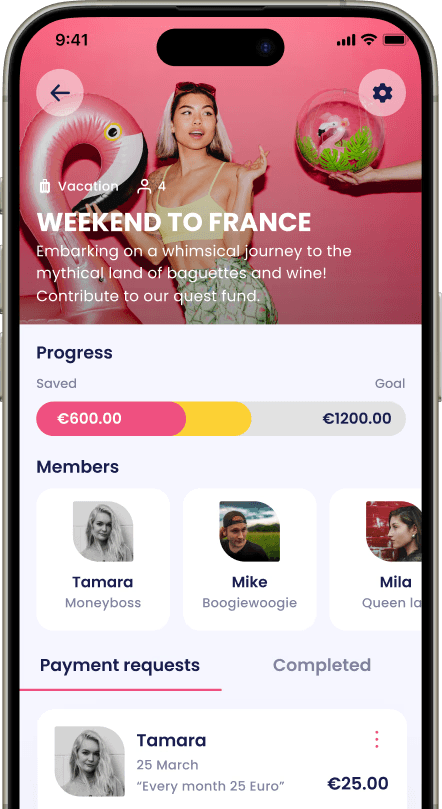
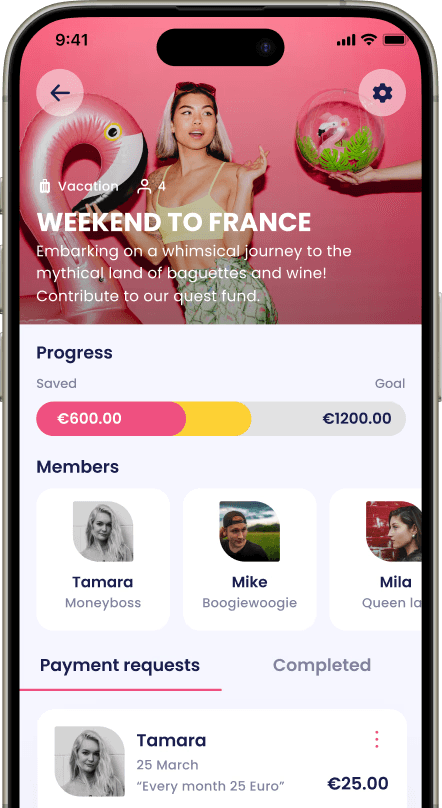
That is where Potje fits naturally. Instead of chasing payments manually, you create a shared money pot, set the contribution amount, and share a payment link with the group. Everyone pays in before the shop. The host pays from the pot. Done.
Potje offers your first month free, instant payouts of any amount, and no fee on partial payouts. If you are organising more than one group event this season, you can run a separate pot for each one, so nobody ends up absorbing costs and hoping to be paid back.
The group fee is shared automatically too. For a group of six, that works out at less than €1 per person per month.
Should drinks be included?
Yes, but only if you make the rules clear.
You have two sensible options:
Option 1: Drinks included in the shared budget
This is the easiest approach. Everyone pays the same amount, and the host buys soft drinks, wine, beer, or a simple cocktail ingredient set from the pot.
Best for:
Small groups
Mixed drinkers and non-drinkers
Hosts who want the night to feel seamless
Option 2: Drinks as a separate contribution
If your group has a mix of heavy drinkers and non-drinkers, split drinks out separately.
For example:
Everyone contributes to food and decorations
Only those who want alcohol add an extra drinks amount
Best for:
Bigger groups
Groups with different drinking habits
People who want to keep the core dinner fair
If in doubt, keep drinks simple. A few bottles of wine, some soft drinks, sparkling water and one festive non-alcoholic option are usually enough. You do not need a full bar to make Friendsmas feel special.
A simple planning formula that keeps everything calm
The most useful thing you can do is decide the date, menu and budget in one go.
That removes the endless back-and-forth that usually slows these things down.
Try this:
Pick the date in the group chat.
Confirm the headcount.
Agree the menu style, whether that is potluck, buffet or shared dinner.
Set the total budget per person.
Collect contributions before the shop.
That is the whole system.
If you want the evening to be easy, do not make food decisions in isolation. The menu affects the budget. The budget affects the drinks. The drinks affect the host’s workload. Get all three agreed together and the rest becomes simple.
A Friendsmas menu that works on a realistic budget
You do not need anything fancy.
A solid Friendsmas menu could look like this:
Starter: bread, dips, olives or a simple soup
Main: lasagne, roast vegetables, traybake chicken, pasta bake, or a big seasonal bake
Side: salad, potatoes or seasonal veg
Dessert: brownies, tiramisu, cheesecake or a bought pudding
Drinks: wine, soft drinks, sparkling water and one non-alcoholic option
If you are buying for a group, pick dishes that scale well. Big trays and dishes are cheaper, easier to serve and much less stressful than individual plates.
That is also where pooled money helps most. Once the whole group has paid in, the host can buy for the event instead of trying to stretch their own budget to cover everyone else's appetite.
What about dietary requirements?
Agree these at the same time as the menu.
Ask the group one question in the chat: any dietary requirements? Then plan around the answers before you finalise the budget. It is far easier to adjust the menu before the shop than to buy twice because something was missed.
If you have a mix of vegetarians, meat-eaters and anyone with allergies, a build-your-own format works well. A pasta bar, a mezze spread, or a taco-style setup lets everyone eat what suits them without the host needing to cook five separate dishes.
How Potje compares to splitting costs the old way
Most groups fall back on one of three approaches: one person pays and chases everyone later, the group uses a spreadsheet to track who owes what, or someone sends a Tikkie after the fact.
All three have the same problem. The host carries the financial risk until everyone has paid. And in a group of eight, there is almost always one person who takes a week to sort it.
Potje works differently. The money is collected before anything is bought. Nobody is owed anything. The host is not a lender. The group is not a debtor.
For one-off payments, Tikkie is fine. But for a shared event where the host needs to buy everything upfront, a shared money pot is the cleaner solution. The host does not have to front the cash, and the group does not have to remember to pay back later.
If you are planning other group events this year, whether that is a group holiday fund, a shared birthday gift, or a weekend trip, Potje works for all of them, with a separate pot for each.
Why pooled money feels better than chasing people later
The biggest advantage is not just financial. It is emotional.
When everyone contributes first, the organiser does not feel like a lender. The group does not feel like it is being reminded after the fact. And nobody ends up wondering whether they "owe" the host something.
That matters because the best Friendsmas dinners are the ones where people relax quickly. Once the money piece is sorted, everyone can focus on the food, the conversation and the fact that someone has gone to the trouble of hosting.
That is also why upfront pooling works so well for Europe-based groups with mixed budgets. It keeps things transparent and avoids the slightly awkward dance of "we should split that later".
What happens to leftover money?
If the host spends less than the pot, the leftover should go back to the group.
With Potje, instant payouts mean any unspent balance can be returned immediately after the dinner, with no fee on partial payouts. So if the group put in €200 and the shop came to €170, the host pays out the €30 remainder straight away. No awkward conversation. No one wondering where the change went.
The easiest way to think about it
Friendsmas is about the people, not the bill.
If you treat the evening like a shared plan rather than a favour from the host, everything gets easier. The group agrees the budget. The money gets collected before the shop. The host buys from the pot. The dinner happens without financial tension hanging over it.
That is the version worth organising.
The whole process takes about ten minutes to set up. Agree the date, set a per-person amount, share the pot link, and let contributions come in before anyone opens a supermarket app. Once the money is in, the host shops with confidence and the group eats without guilt.
Your first month is free. Instant payouts of any amount. No fee on partial payouts.
Create your Friendsmas money pot and get the money sorted before the shopping starts.
FAQ
How much should each person pay for Friendsmas dinner?
A good starting point is €20 to €35 per person for food, drinks and a few decorations. That range works for a simple home dinner across much of Europe. If you want better wine, a fuller menu or more decoration, build in a little extra buffer.
Is a potluck cheaper than pooling money?
Usually, yes, but it is not always easier. A potluck can lower the cost for the host, but it often creates uneven effort and awkward gaps in the menu. A pooled budget is often the cleaner choice if you want one person to organise the evening.
Should drinks be part of the shared budget?
They can be. If your group drinks roughly the same amount, include drinks in the shared pot. If there is a big difference between drinkers and non-drinkers, make drinks optional and collect a separate amount from those who want alcohol.
When should the money be collected?
Before anyone shops. That is the simplest rule and the one most likely to prevent awkward chasing later. Once the budget is agreed, collect the contributions, then let the host buy everything from the shared pot.
What if someone cannot pay the full amount?
Agree the budget early and keep the amount realistic. If someone genuinely cannot pay, it is better to adjust the menu or offer a lower-cost version than to leave them out. The point of pooling money is to make the dinner fair, not stressful.
Why use Potje for Friendsmas planning?
Potje makes it easy to collect money upfront, track the shared balance and pay out what you need without chasing people. Your first month is free, payouts are instant for any amount, and there is no fee on partial payouts. It is especially useful if you are organising more than one group event and want a simple way to keep everything transparent.
What is the difference between Friendsmas and Friendsgiving?
Friendsmas is a Christmas-themed dinner with friends, usually held in December. Friendsgiving is the same concept but tied to Thanksgiving, more common in the US. Both involve the same challenge: one person usually ends up hosting and paying for most of it. A pooled budget solves that problem for either occasion.
How do I remind people to pay into the pot?
The simplest approach is to set a payment deadline in the group chat at the same time you share the pot link. Something like "please pay in by [date] so I can do the shop" is clear and low-pressure. With Potje, everyone can see the progress towards the goal, which creates natural accountability without anyone having to chase individually.

Social Accountability and Saving: The Missing Link to Financial Freedom
Ondersteuning voor verschillende inhoudstypes zoals artikelen, blogs, video's en meer. Rijke tekstverwerker met opmaakopties voor verbeterde.
17 november, 2025

Group Saving Apps Compared: What's Easiest, Safest, and Most Transparent?
Ondersteuning voor verschillende inhoudstypes zoals artikelen, blogs, video's en meer. Rijke tekstverwerker met opmaakopties voor verbeterde.
17 november, 2025

Group Money Platforms Compared: What’s Safe, Regulated, and Fair?
Ondersteuning voor verschillende inhoudstypes zoals artikelen, blogs, video's en meer. Rijke tekstverwerker met opmaakopties voor verbeterde.
17 november, 2025