15 January 2026


Introduction to Social Saving
We are often told that peer pressure is bad for our wallets. We associate it with “keeping up with the Joneses”—buying expensive clothes, ordering another round of drinks, or booking trips we cannot afford just because our friends are doing it. Social influences can significantly shape our financial behaviors and lifestyle choices, often driving us to adopt spending patterns that align with those around us.
But what if that same psychological force could be used to build wealth instead of draining it? Social pressure encourages saving through social norms, comparison, and support networks, leading to individual financial stability and broader economic growth.
Saving money alone requires immense willpower. However, saving money as a group introduces a powerful motivator: accountability. Group saving can positively influence financial behaviors by encouraging better habits and shared goals. Positive social influences create support networks for sharing experiences and seeking advice in financial journeys. By shifting the focus from individual struggle to collective effort, platforms like Potje are proving that social pressure can actually be the secret ingredient to financial stability.
The Two Sides of Social Norms
Psychologists define social norms as the unwritten rules of how we behave. In finance, these usually fall into two categories:
Spending Norms: The pressure to spend money to fit in (e.g., buying a round at the pub).
Saving Norms: The shared expectation to act responsibly with money.
For example, under a spending norm, someone might buy an expensive coffee just because their friends are doing so, even if they would prefer to save the money. Under a saving norm, a person might contribute to a group savings goal because everyone else is doing it, even if they would rather spend the money elsewhere.
Often, people are acting in accordance with these social expectations rather than following their own true preferences or beliefs about saving and spending.
Most people struggle with saving because it is usually a private activity. When you skip a transfer to your savings account, nobody knows but you. There is no immediate social consequence.
However, when you bring that activity into the open—using a Shared Pot on Potje—you trigger a “positive” social norm. Suddenly, your contribution (or lack thereof) is visible to your group. This isn’t about shaming; it is about using healthy social expectations to ensure everyone reaches the goal.
How Transparency Boosts Commitment
When you agree to save for a group holiday or a wedding gift using traditional bank transfers, the process is opaque. Only the organiser (the person collecting the money) knows which participants have paid.
Potje changes this dynamic through total transparency.
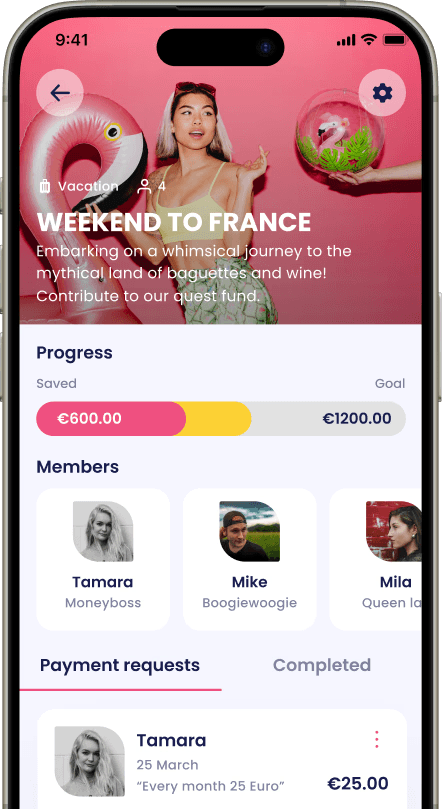
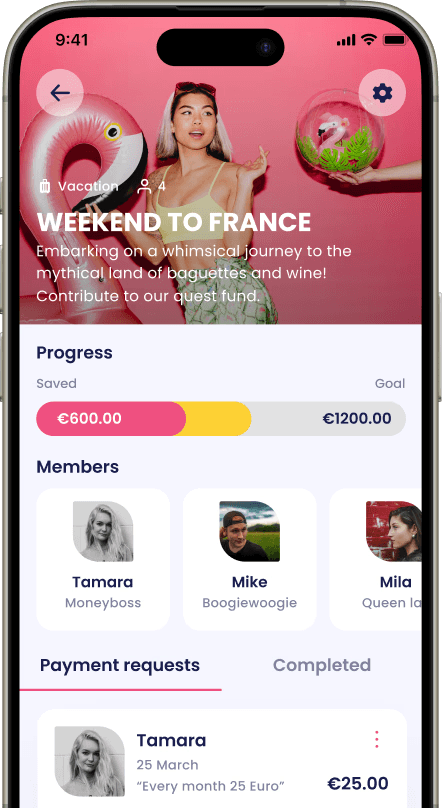
In a Potje group pot, all participants can see the progress bar moving towards the goal. If the group agrees to contribute £50 each month for a summer holiday, the app makes it clear who has contributed.
This transparency creates a “commitment contract.” Participants may sometimes be tempted to skip a contribution, but knowing everyone can see the progress helps keep everyone accountable and ensures the group's success. This form of positive peer pressure ensures that the group stays on track, making it easier to hit targets that might be difficult to achieve alone.
The Role of the "Money Boss"
In every social circle, there is usually one person who is better with numbers or more organised than the rest. In the Potje app, this person acts as the “Money Boss.”
Rather than being a nagging debt collector, the Money Boss simply sets up the pot and invites the group. The app does the heavy lifting. Because the social expectation is set within the app—“we are all contributing X amount by Y date”—the Money Boss doesn’t have to send awkward text messages chasing money. The structure of the app provides the necessary social nudge.
Clear communication from the Money Boss helps group members understand their roles and responsibilities, making it easier to maintain consistent saving habits. Maintaining good relationships within the group is also key to ongoing group saving and a positive experience for everyone involved.
Ready to lead your group? Become the Money Boss and start a pot today.
Overcoming the "Free Rider" Problem
One of the biggest issues with group finance is the “free rider”—the person who commits to the trip but delays paying until the last minute, forcing others to front the cash.
By utilising a dedicated platform like Potje, you eliminate this issue. The platform utilises “injunctive norms”—the perception of what is socially approved behaviour. Because the norm in Potje is pre-payment (putting money in before the event), the free rider problem is solved by the system itself. Compared to two treatments—pre-payment versus post-payment—pre-payment has proven more effective at preventing free riding and encouraging responsible group saving.
If the money isn’t in the pot, the booking isn’t made. This aligns the group’s incentives: if we want the reward (the holiday), we must all adhere to the saving behaviour. Agreeing on a fair deal for everyone is crucial for group harmony, and Potje makes this process transparent. Relying on loans or credit cards to cover group expenses can lead to financial instability, which Potje helps avoid by encouraging upfront contributions.
The Benefits of "Gamified" Saving
Saving alone can feel like a chore. Saving together feels like a challenge.
When you use Potje, watching the total balance rise creates a sense of collective achievement. It turns financial discipline into a team sport.
Motivation: Seeing others contribute motivates you to do the same.
Support: If someone is struggling, the group can discuss it openly rather than finding out later that a payment was missed.
Celebration: Hitting the target becomes a shared victory.
Setting a group budget helps everyone stay on track and prevents overspending, making it easier to manage financial boundaries together. Achieving your savings goals as a group can make you feel good, boost your financial well being, and reduce financial stress. Financially secure individuals experience less stress and better mental health, potentially leading to increased productivity. Responsible group saving not only supports your financial goals but also positively impacts your lives and overall quality of life.
Making Saving a Habit
Building a habit of saving is one of the most powerful steps you can take toward financial stability and a secure financial future. While it’s easy to be influenced by peer pressure to spend money—especially on luxury items or unplanned purchases—understanding how social norms shape our financial decisions can help us turn that influence into a force for good. Accumulating savings allows individuals to make independent choices, take calculated risks, and pursue a higher standard of living.
Research shows that our spending habits and actual behavior are often shaped by the people around us. When most people in our social circle are focused on saving, we’re more likely to follow suit. This is the power of descriptive norms: seeing friends or colleagues prioritize their financial goals, set aside money for an emergency fund, or pay off debt can motivate us to do the same. On the other hand, negative peer pressure can tempt us to overspend or neglect our savings, leading to financial strain and stress. A population with adequate savings is less vulnerable to economic shocks, helping to mitigate systemic financial crises during downturns.
To make saving a habit, start by setting clear financial goals. Whether you want to build an emergency fund, save for a big purchase, or invest in your future, having a specific target makes it easier to stay focused and resist the desire to spend impulsively. Financial experts recommend starting small—set aside a manageable amount of money each month, and gradually increase it as your income or confidence grows. Automating your savings, such as setting up a standing order or using an app, can help you stick to your plan without having to think about it every time.
Support from friends or groups with similar financial goals can make a big difference. When you surround yourself with people who value saving and financial planning, you’re more likely to stay motivated and accountable. In fact, studies have found that when individuals are randomly assigned to groups where saving is the norm, they’re much more likely to adopt those habits themselves. This highlights the importance of both descriptive and injunctive norms—what most people do, and what people believe is the right thing to do—in changing behavior and encouraging more savings.
Of course, it’s not always easy to resist the pressure to spend, especially when faced with social events or the latest trends. But by understanding the different types of social norms and being mindful of your own financial situation, you can make choices that are in your best interest. Focus on your long-term goals, avoid impulsive spending, and remember that every small step you take toward saving adds up over time.
Ultimately, making saving a habit is about taking control of your financial decisions and building a foundation for your future. With the right mindset, strategies, and support, you can overcome negative peer pressure, reduce financial strain, and achieve your financial goals—one step, and one pound, at a time.
Conclusion
Peer influence doesn’t have to result in an empty bank account. By choosing the right environment and the right tools, you can harness the power of your social circle to improve your financial health.
Don’t try to fight human nature. We are social creatures who care what our peers think. Use that to your advantage. Stop saving in secret and start saving together.
Turn social pressure into your superpower. Download Potje and start building your group wealth today.
If you are interested in learning more about the research behind social saving and peer influence, explore our additional resources for deeper insights.

Social Accountability and Saving: The Missing Link to Financial Freedom
Ondersteuning voor verschillende inhoudstypes zoals artikelen, blogs, video's en meer. Rijke tekstverwerker met opmaakopties voor verbeterde.
17 november, 2025

Group Saving Apps Compared: What's Easiest, Safest, and Most Transparent?
Ondersteuning voor verschillende inhoudstypes zoals artikelen, blogs, video's en meer. Rijke tekstverwerker met opmaakopties voor verbeterde.
17 november, 2025

Group Money Platforms Compared: What’s Safe, Regulated, and Fair?
Ondersteuning voor verschillende inhoudstypes zoals artikelen, blogs, video's en meer. Rijke tekstverwerker met opmaakopties voor verbeterde.
17 november, 2025
