24 August 2026



You know the feeling.
The trip is booked. Everyone is excited. And then, quietly, without anyone voting on it, you become the group's unofficial debt collector.
You paid for the Airbnb. You covered the first dinner. You sent the reminder. Then another reminder. Then a slightly more pointed reminder that you tried to make sound casual.
Sound familiar? You are not alone. According to etiquette experts at CNBC, chasing friends for money is one of the most common sources of financial awkwardness in social groups, and it rarely gets easier the longer you wait.
The real problem is not that your friends are bad people. The problem is the system.
When one person fronts the money and everyone else pays later, you have already created a debt dynamic. Someone has to track it. Someone has to follow up. And that someone is almost always the one who was organised enough to book everything in the first place.
There is a better way. And it starts before anyone spends a single euro.
What Does "Unofficial Debt Collector" Actually Mean?
In most friend groups, one person ends up carrying the financial load for shared experiences. They book the accommodation. They pay the deposit. They cover the group dinner.
Then comes the part nobody talks about in the group chat: the follow-up.
Sending payment requests days or weeks after the event
Chasing the one person who "forgot"
Feeling awkward about asking for your own money back
Watching friendships get quietly strained over amounts that should never have been a big deal
This is the unofficial debt collector role. You did not apply for it. But here you are.
Why Chasing Payments Always Feels Awkward
There is a psychological reason why asking friends for money feels uncomfortable, even when you are completely in the right.
Once money has been spent and time has passed, the mental accounting shifts. The person who owes you money has already moved on emotionally. The experience is over. The debt feels like a disruption to a good memory.
Research on social money dynamics consistently shows that the longer the gap between a shared expense and the request for repayment, the more resistance and awkwardness builds on both sides.
The result: You feel like you are pestering someone. They feel like you are bringing up something they would rather forget. Nobody is happy.
This is not a people problem. It is a timing problem.
The Fix: Collect Before You Spend
The single most effective way to avoid becoming the group's debt collector is to stop collecting debts at all.
Instead of paying first and chasing later, flip the order. Collect contributions upfront, before any money is spent.
This is not a new concept. Sports clubs have done it for years. Event organisers do it as standard. The problem is that friend groups have never had a simple tool that makes it feel natural rather than formal.
How Upfront Collection Changes Everything
When everyone contributes to a shared pot before the trip or event, three things happen:
No one is out of pocket. Nobody fronts money for the group.
No reminders needed. The money is already there before a single booking is made.
Everyone is equally invested. When you have already paid in, you are more committed to the plan.
Compare that to the traditional approach:
Approach | Who carries the risk? | When does chasing start? | Friendship impact |
One person pays upfront | The organiser | Immediately after | High tension |
Everyone pays their share after | The organiser (still) | Days or weeks later | Moderate tension |
Everyone contributes upfront | Nobody | Never | Zero tension |
The upfront model does not just solve a money problem. It solves a social problem.
What a Shared Money Pot Looks Like in Practice
Imagine your group of six is planning a weekend away.
Old way: You book the Airbnb on your card (€720). You send five payment requests. Three people pay within a week. One pays three weeks later after a reminder. One "forgets" until you bring it up in person.
New way: You create a shared money pot before booking. You share the link in the group chat. Everyone contributes their €120 before the booking is confirmed. The money is sitting in the pot, ready to use.
No one owes you anything. No one has to be chased. The trip happens because the money was already organised.
That is the difference between managing group debt and managing a group goal.
How Potje Helps You Stop Being the Debt Collector
One platform taking a different approach to this problem is Potje.
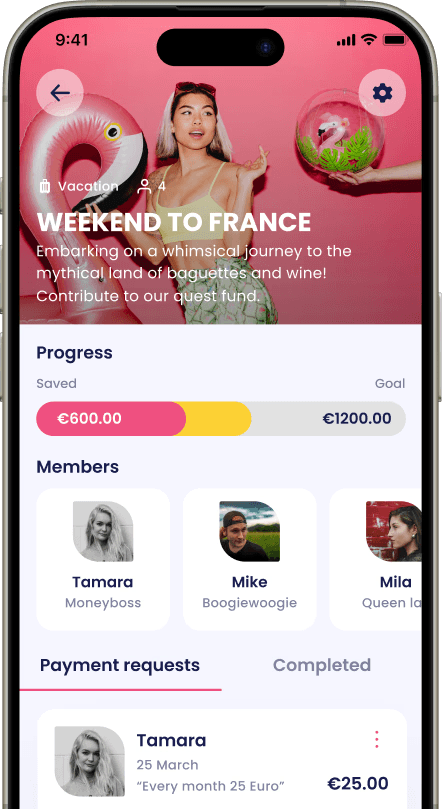
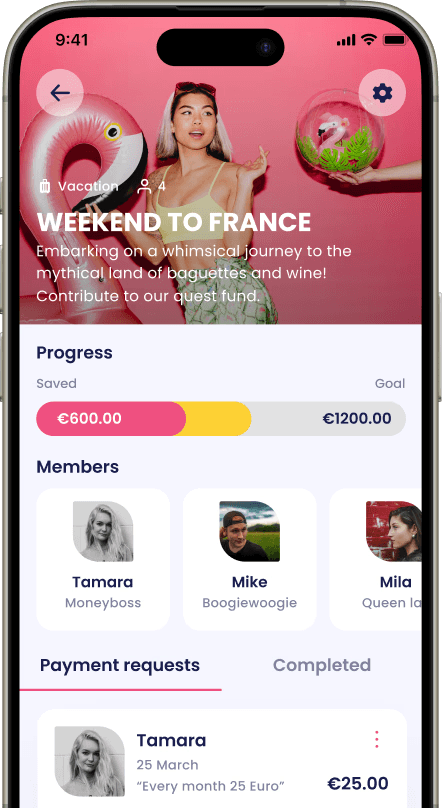
Rather than tracking who owes what after the fact, Potje helps groups collect money before spending begins. You create a shared money pot, set a goal amount, and share a payment link with your group. Everyone contributes at their own pace, and the pot fills up before any bookings are made.
There is no spreadsheet. No payment requests after the fact. No awkward follow-ups.
What Makes Potje Different
Potje is built around one core idea: collect before you spend.
Create a money pot in minutes. Set a goal, name your pot, and share the link.
Everyone contributes directly. No one person fronts the money for the group.
Transparent progress. Everyone can see how close the group is to the goal.
Automated reminders. If someone has not contributed yet, Potje handles the nudge so you do not have to.
That last point matters more than it sounds. The reminder does not come from you. It comes from the system. That removes the personal awkwardness entirely.
Key takeaway: When the reminder is automated, nobody feels singled out. And you stop being the one who has to ask.
Potje costs €5.00 per month per pot, shared automatically across the group. With 10 people, that is €0.50 each. With 5 people, it is €1.00 each. You can read more about how Potje works for group savings and explore what a shared money pot can be used for.
When to Use a Shared Money Pot
A shared money pot works well for almost any group situation where money needs to be collected before spending happens:
Group holidays and weekend trips (Airbnb deposits, flights, activities)
Birthday gifts (collecting from colleagues or friends before buying)
Festival tickets (splitting costs before booking)
Sports team fees (monthly contributions to a shared club pot)
Shared household costs (flat deposits, communal purchases)
If your group has ever had a conversation about money that ended awkwardly, a shared pot would have prevented it.
Frequently Asked Questions
What is an unofficial debt collector in a friend group?
An unofficial debt collector is the person in a group who ends up tracking and chasing shared expenses after they have already been paid. This usually happens when one person books or pays for something on behalf of the group and then has to follow up with everyone else to get repaid. It is a common dynamic in group holidays, shared gifts, and social events.
How do I stop being the one who chases payments?
The most effective way is to collect contributions before any money is spent. Set up a shared money pot, share the payment link with your group, and only proceed with bookings once everyone has contributed. This removes the need for follow-up entirely.
Is it awkward to ask friends to pay into a pot before a trip?
Not at all. Asking people to contribute upfront to a shared goal is far less awkward than chasing them for repayment weeks later. Most people find it easier to commit early when there is a clear goal and a simple way to pay in. Research on group saving psychology shows that shared goals increase commitment and follow-through.
What is a shared money pot?
A shared money pot is a digital account where multiple people contribute towards a common goal. It works differently from a split-payment app because money is collected upfront rather than tracked as debt. Everyone can see the progress towards the goal, which creates transparency and shared accountability. You can learn more at What is a digital money pot?
How much does Potje cost?
Potje costs €5.00 per month per active money pot. That fee is split automatically across everyone in the group. For a group of 5, that is €1.00 each per month. For a group of 10, it is €0.50 each.
Can Potje send reminders on my behalf?
Yes. Potje includes automated payment reminders, so the nudge comes from the platform rather than from you personally. This removes the social awkwardness of having to chase your friends yourself.
Stop Chasing. Start Collecting.
Nobody sets out to become the group's debt collector. It just happens when the system is set up the wrong way.
The fix is not to get better at chasing people. It is to build a setup where chasing is never needed.
Collect the money before you spend it. Use a shared pot that everyone can see and contribute to. Let automated reminders do the follow-up if needed.
Your friendships will thank you.
Ready to stop being the unofficial debt collector? Create your first money pot with Potje and start your next group plan the right way.

Social Accountability and Saving: The Missing Link to Financial Freedom
Ondersteuning voor verschillende inhoudstypes zoals artikelen, blogs, video's en meer. Rijke tekstverwerker met opmaakopties voor verbeterde.
17 november, 2025

Group Saving Apps Compared: What's Easiest, Safest, and Most Transparent?
Ondersteuning voor verschillende inhoudstypes zoals artikelen, blogs, video's en meer. Rijke tekstverwerker met opmaakopties voor verbeterde.
17 november, 2025

Group Money Platforms Compared: What’s Safe, Regulated, and Fair?
Ondersteuning voor verschillende inhoudstypes zoals artikelen, blogs, video's en meer. Rijke tekstverwerker met opmaakopties voor verbeterde.
17 november, 2025