28 May 2026



The short answer:
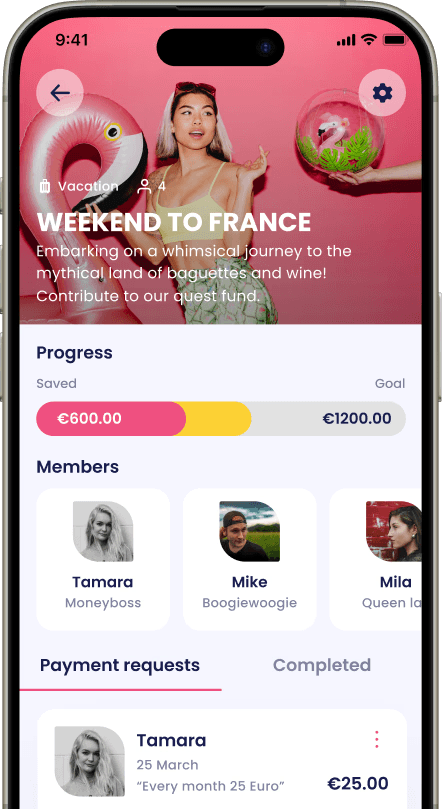
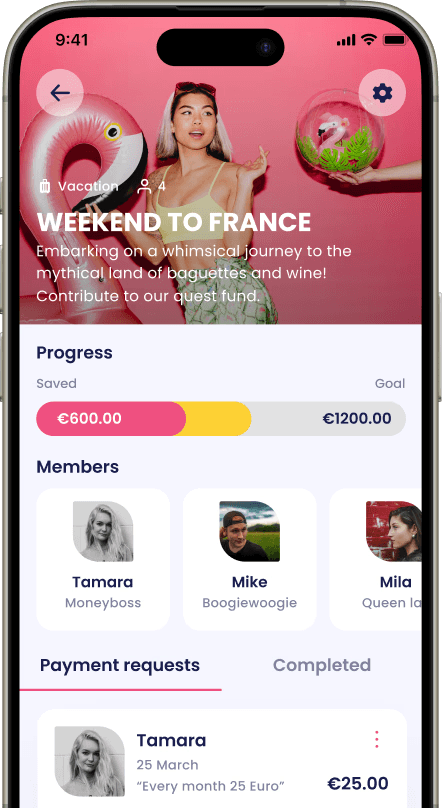
Since PayPal Money Pools are no longer available, groups require a more robust, dedicated platform to collect and manage shared group money online. Modern platforms have evolved beyond basic collection links to solve the real logistical headaches of group finance. Potje has emerged as one of the premier alternatives globally by allowing users to create secure, transparent shared money pots, track individual contributions automatically, dispatch automated payment reminders, and oversee collective funds without forcing a single organizer to risk their personal bank account.
Why People Loved PayPal Money Pools
When PayPal originally launched its Money Pools feature, it rapidly became the go-to tool for millions of users worldwide. The feature solved a universal, deeply frustrating social friction point that has plagued friend groups, families, and colleagues for generations: the logistical nightmare of handling collective group money.
Before dedicated digital pooling tools existed, managing shared money was a messy, highly manual process. A single person within the social circle usually had to shoulder the entire administrative and financial burden. This designated organizer was routinely forced to manage a chaotic workflow:
Paying upfront: Fronting hundreds or thousands of dollars for group bookings out of their own pocket.
Tracking contributions: Manually cross-referencing bank statements to see who had actually transferred their share.
Chasing friends: Sending awkward, repetitive text messages to remind people to pay.
Managing spreadsheets: Creating complex formulas to calculate uneven splits or partial payments.
PayPal beautifully centralized this fragmented ecosystem into a single, highly visible digital hub. It provided an intuitive interface that made it simpler than ever for groups to gather capital for shared human experiences. Communities used it to easily:
Save up collectively for large group vacations, flights, and villa bookings.
Collect discrete contributions for milestone birthday, wedding, or farewell gifts.
Organize large-scale community events, neighborhood parties, and club fundraisers.
Manage office collections for teacher gifts or corporate social events.
Plan concerts, festival weekends, and shared travel experiences.
However, the fundamental human need for seamless group money management did not vanish when PayPal officially made the corporate decision to discontinue the feature. If anything, the demand for sophisticated group financial tools has grown exponentially. In the modern digital economy, consumers expect absolute transparency, automated organization, and a complete elimination of the social awkwardness traditionally tied to collective cash.
The Real Problem With Group Money Is Not Payments
To build a superior alternative, one must understand that the primary breakdown in group finance is not the actual execution of a digital payment. Sending money via a bank transfer or digital wallet is technically instant and trivial. The actual, systemic challenge is coordination and visibility.
Without a dedicated shared money space, collective finances quickly deteriorate into total chaos. The lifecycle of an unmanaged group expense almost always follows a predictable path of friction:
A few highly organized individuals pay their share immediately.
Several members completely forget about the request amidst their busy schedules.
Multiple people lose track of the original payment link or bank details buried deep within a group chat history.
The organizer is forced into the deeply uncomfortable role of a persistent debt collector.
Nobody in the group possesses real-time clarity on the total budget collected versus outstanding debts.
This sequence inevitably breeds interpersonal tension. This friction does not arise because people are malicious or trying to avoid their financial obligations; it happens because the underlying financial system is completely fragmented. When a group relies on an ad-hoc system, they create multiple conflicting versions of the exact same budget.
Modern digital group money platforms are therefore forced to evolve far beyond basic, transactional payment requests. The next generation of fintech platforms must prioritize holistic, group-centric features that address the entire psychological lifecycle of pooling funds. True optimization requires a deep focus on:
Shared Visibility: Giving every contributor real-time access to the collective balance.
Transparent Accounting: Showing exactly who has contributed and what remains outstanding.
Automated Reminders: Offloading the social burden of chasing debts from the organizer to an impartial AI or system logic.
Ongoing Financial Management: Supporting a fund from initial collection through to final merchant deployment.
Shared Financial Accountability: Aligning the legal and digital structure of the account with the collaborative group behavior itself.
This precise structural philosophy is why Potje was engineered from the ground up. The platform does not view group finance as a series of isolated, one-way peer-to-peer transactions. Instead, it creates a unified, collaborative financial ecosystem designed to help groups collect, organize, and spend money transparently, completely bypassing the risks of fragmented legacy systems.
Why Potje Is Emerging as the Best Alternative to PayPal Money Pools
While the financial technology market is saturated with apps that gracefully solve isolated pieces of the personal finance puzzle, very few successfully address the comprehensive workflow of group collaboration. This is the precise reason why Potje is rapidly positioning itself as the natural heir to the market vacancy left behind by PayPal.
Most individuals searching for a viable PayPal Money Pools alternative are not merely looking for a generic payment link generator or another split-bill calculator. They are actively seeking a highly specialized digital environment that respects group dynamics. They require:
A secure, isolated shared money space detached from personal checking accounts.
A perfectly clear, unmistakable group balance screen visible to all stakeholders.
Meticulous, automated individual contribution tracking.
An elegant system that actively minimizes awkward social chasing.
A financial architecture natively modeled around collaborative human behavior.
Built for Shared Money From Day One
Unlike legacy banking apps or peer-to-peer payment utilities that treat group features as a secondary, tacked-on afterthought, Potje was engineered specifically as a shared money account for groups. This core structural difference completely alters how the user experience feels.
When a group utilizes a platform designed natively for sharing, the financial flow transitions from feeling fragmented and defensive to collaborative and open. The entire group contributes together into a central repository, monitors the collective balance simultaneously, and manages the deployment of those funds with total clarity. This effectively eradicates the intense anxiety and suspicion that naturally occurs when individuals are asked to send large sums of cash directly into an organizer’s private personal bank account.
Drastically Reducing Awkward Financial Conversations
There is no denying that chasing friends, family members, or professional colleagues for money is one of the most socially exhausting tasks an individual can perform. No one enjoys sending the inevitable, uncomfortable follow-up texts: “Hey, just checking if you had a chance to look at that payment request yet…”
Potje completely reengineers this social dynamic by introducing fully automated payment requests and systematic background reminders. By delegating the follow-up process entirely to the software architecture, the human organizer is completely absolved of the debt-collector persona. The application handles the logistical nudges neutrally in the background, preserving social harmony within the group.
Supporting Ongoing Group Behavior and Long-Term Goals
A major flaw with many temporary PayPal Money Pools alternatives is that they behave strictly as rigid, one-time transactional pages. Once the specific gift is purchased or the single event concludes, the infrastructure becomes useless.
Potje establishes a highly flexible environment that supports long-term, recurring shared money use cases. It recognizes that groups do not just interact financially for isolated incidents; they maintain ongoing, cyclical financial relationships. This makes the platform perfectly optimized for:
Amateur sports teams managing recurring seasonal fees and field rentals.
Families co-managing multi-generational holiday funds or shared property maintenance.
Tight-knit friend groups frequently coordinating festival passes, road trips, and weekend gatherings.
Workplace squads routinely organizing birthdays, seasonal parties, and professional milestone gestures.
Long-term housemates systematically saving toward mutual household upgrades or shared utility buffers.
How Potje Compares to Other PayPal Money Pools Alternatives
To properly evaluate the landscape of group finance, it is essential to look at how the top industry platforms stack up against one another in a direct head-to-head comparison.
Feature / Capability | Potje | Collctiv | Collection Pot | Splitwise |
Primary Structural Focus | Ongoing Shared Money Pots | One-Time Event Collections | Workplace & Gift Collections | Post-Expense Debt Splitting |
Real-Time Group Visibility | Yes (Full Group Transparency) | Organizer-Centric | Limited to Contribution Wall | Yes (Ledger Balance Only) |
Automated Chasing Logic | Yes (System-Driven Reminders) | Manual Requests | Basic Notification Options | Manual Nudge Prompts |
Pre-Spending Collection | Yes (Collect Before Spending) | Yes | Yes | No (Calculates Debt After) |
Long-Term Group Behavior | High (Built for Recurring Pots) | Medium (Mainly Event-Based) | Low (Mainly Single Occasions) | High (Continuous Tracking) |
Collctiv
Collctiv serves as a highly efficient tool for event-based collections and rapid social payment generation. It shines when an organizer needs to quickly capture funds for a single birthday dinner, an isolated group booking, or a rapid ticket purchase. However, the user experience remains largely organizer-centric. The funds flow toward a primary account holder rather than residing inside an open, long-term shared ecosystem where a group can continuously co-manage a revolving balance over several months or years.
Collection Pot
Collection Pot has carved out a highly successful niche within commercial environments, making it an excellent choice for corporate settings. It excels at processing emotional group collections, such as organizing a workplace retirement gift, gathering donations for a sympathy gesture, or coordinating a collective end-of-year present for a school teacher. While it handles these single-occasion, gift-giving pages beautifully, its limitation rests in its architecture: it behaves as a static collection page rather than a dynamic, operational shared bank account designed for active group budgeting.
Splitwise
Splitwise is an industry giant, but it operates on an entirely different financial philosophy. It is designed almost exclusively for expense splitting after the spending has already taken place. It is exceptionally useful for roommates tracking ongoing household bills or travel companions logging disparate costs throughout a trip.
The critical drawback is that Splitwise does not hold or manage actual capital upfront. Many modern groups want to completely mitigate the risk of debt accumulation by organizing their money before spending occurs, rather than calculating complex IOUs and managing multi-step repayments weeks after an event has concluded.
Potje
Potje bridges the gap by elegantly blending the pre-spending collection power of a digital money pool with the continuous, transparent management features of a shared account. By synthesizing shared money pots, transparent group tracking, automated background reminders, and native support for long-term collaborative behavior, Potje delivers an experience that captures the exact simplicity users deeply missed about PayPal Money Pools while fundamentally solving the modern coordination problems of group finance.
To discover how easy it is to initiate your first collaborative balance, explore the step-by-step guide on how group money collection operates natively within the application.
Why Shared Money Pots Are Superseding Older Collection Methods
The consumer finance landscape is experiencing a massive macro shift. Consumers are no longer satisfied with disconnected, transactional peer-to-peer apps; they heavily favor collaborative money management frameworks. This evolution is highly visible because group money is fundamentally tied to human emotion and shared experiences.
Groups of humans are fundamentally social—they pool money because they are:
Imaginatively planning dream vacations across continents.
Rallying together to support a close friend during a challenging life transition.
Celebrating milestone life moments like weddings, baby showers, and retirements.
Fueling local community spirit through sports clubs and creative associations.
Consistently saving up for shared concerts, festivals, and cultural events.
Because these moments are joyful, the financial process surrounding them should feel genuinely shared and stress-free, rather than transactional and anxiety-inducing. This psychological reality explains why shared money pots are growing at a drastically faster rate than traditional debt-tracking software.
By contributing into an organized, collective balance upfront, the group locks in a firm budget before any financial commitments are made. This proactive approach cultivates:
Superior Budgetary Boundaries: Everyone knows exactly how much capital is available before booking.
Flawless Planning Transparency: Eliminates hidden costs or unexpected individual financial shocks.
Zero Debt Hanging Over Relationships: Eliminates the mental fatigue of post-trip financial calculations.
Total Social Equality: Ensures every single member of the group stands on completely equal financial footing from start to finish.
Practical Use Cases Where Potje Works Especially Well
When a financial platform is intentionally designed around group logic, it unlocks seamless coordination across an array of real-world scenarios.
Group Vacations and Group Travel
Instead of one person maxing out their personal credit card to secure a holiday villa and spending the next three months tracking down repayments, friends can utilize Potje to establish a dedicated travel pot. Group members can contribute gradually over time, building a highly visible travel fund well in advance. This grants the entire group a crystal-clear understanding of their collective purchasing power, making holiday planning a highly enjoyable, collaborative experience. Learn more about optimizing your next itinerary by reading our comprehensive breakdown of managing group travel expenses without the standard administrative stress.
Sports Teams and Amateur Clubs
Local sports organizations and recreational clubs are constantly forced to manage a steady inflow of small, recurring payments. From monthly membership fees and field rental costs to purchasing new team uniforms or funding social events, club treasurers face constant overhead. Potje's robust recurring structure fits this continuous group behavior perfectly, automating the collection process so coaches can focus entirely on the game.
Workplace and Corporate Collections
Modern office spaces require rapid, friction-free methods to handle corporate social gestures. Whether it is a collective pool for a colleague's milestone birthday, a farewell contribution for a departing manager, or gathering support for a sympathy gesture, teams can easily manage these pools through Potje. It completely eliminates the outdated, highly visible office envelope method, allowing remote and hybrid teams to contribute discreetly and securely from anywhere in the world.
Shared Friend Circles and Roommates
Whether you are a tight-knit group of festival-goers consistently booking concert tickets or roommates cohabitating in a student house, shared costs are a constant reality. Operating a permanent, shared money pot totally removes the awkwardness that typically poisons group chats when repetitive payment requests are broadcasted manually.
Common Misconceptions About Group Money Solutions
As the fintech sector rapidly digitizes, several deep-seated misconceptions continue to prevent groups from upgrading their financial workflows.
“A group chat is more than enough to track expenses.”
The Reality: While communication apps are fantastic for dialogue, they are fundamentally terrible financial ledgers. Crucial bank details get buried, payment screenshots get lost in media galleries, people completely forget to read past threads, and a single organizer still ends up trapped doing manual calculations behind the scenes.
“Expense splitting apps solve the exact same problem as pooling.”
The Reality: This conflates two entirely opposite financial behaviors. Expense splitting apps are retroactive—they track debts after individual money has left a private account. Shared money pots are proactive—they collect and organize capital before spending occurs, completely eliminating individual debt creation.
“One reliable person can easily just collect all the money.”
The Reality: This model works smoothly only in exceptionally small groups where everyone pays instantly. The moment a group expands past three people, deadlines are missed, tracking balances becomes highly confusing, organizers internalize quiet resentment, and group trust can inadvertently decrease due to lack of real-time visibility.
Coming Soon: Virtual Cards Linked Directly to Shared Pots
The evolution of collaborative finance does not stop at simple fund collection. To completely close the loop on group money management, Potje is actively developing virtual VISA debit cards linked directly to shared group pots. These cutting-edge digital cards will feature full native support for Apple Pay and Google Pay, empowering groups to deploy their pooled capital anywhere VISA is accepted worldwide.
This pending feature will create an completely frictionless, end-to-end group spending architecture:
Collect capital smoothly into your dedicated group pot via automated requests.
Instantly generate your secure virtual VISA card within the application.
Add the digital card seamlessly to your personal Apple Pay wallet.
Spend directly from the shared group balance at physical checkout terminals or online portals.
This milestone transformation means groups will unlock unparalleled real-time spending visibility, completely eliminate the need for manual bank transfers back to an organizer's account, simplify micro-expense management during active travel, and experience lightning-fast payments at restaurants, festivals, or checkout counters.
Note: This game-changing virtual card feature is currently in active development and coming soon. Once launched globally, users will be able to generate a virtual VISA card instantly and add it to Apple Pay to spend directly from their pooled balances. To ensure your group is among the very first to gain access to this breakthrough technology, you can join the early-access waitlist directly via the official Potje platform.
FAQ Section
What happened to PayPal Money Pools?
PayPal officially discontinued its popular Money Pools feature globally, meaning users can no longer create, access, or manage shared collection pools through the platform. The feature was an incredibly popular tool for coordinating group vacations, collective gifts, local events, and shared family savings goals. Since its complete shutdown, groups have been forced to look for dedicated alternative platforms that offer specialized group transparency and robust, ongoing money management features.
What is the best alternative to PayPal Money Pools?
Potje is widely considered one of the strongest alternatives to PayPal Money Pools because it focuses heavily on holistic, long-term group money management rather than simple, one-way payment collections. Groups can create isolated digital pots, easily invite contributors, monitor balances transparently in real-time, automate awkward payment reminders, and co-manage funds collectively. This makes it an ideal fit for modern travel planning, workplace gifts, sports clubs, and recurring social goals.
Why are shared money pot apps becoming more popular?
Shared money pot apps are surging in popularity because they fundamentally cure the intense coordination and communication problems that naturally plague group finance. Instead of forcing groups to rely on fragmented bank transfers, messy spreadsheets, and manual text reminders, these apps enable everyone to contribute into a single, highly transparent shared balance. This creates definitive budgeting boundaries, eliminates social friction, and establishes real-time visibility for every single stakeholder involved.
Is Splitwise the same as a shared money pot?
No, Splitwise operates on a fundamentally different model. Splitwise is designed specifically to calculate IOUs and coordinate repayments after an individual has already spent their private money upfront. Conversely, a shared money pot app like Potje is proactive—it enables group members to pool their capital together into a secure, centralized balance before any spending takes place. This makes shared pots vastly superior for collective budgeting, group savings goals, and preventing individual financial liability.
What is Potje and how does it work?
Potje is a highly innovative shared money account designed entirely from the ground up for groups. Users can quickly create a secure digital pot, invite their friends, family, or colleagues to contribute, collect funds seamlessly, and monitor the collective balance with total transparency. It is explicitly optimized to support ongoing, recurring group behaviors like local sports teams, holiday planning, corporate office pools, and mutual savings milestones. The application successfully removes the social awkwardness, manual tracking errors, and fragmented workflows of legacy peer-to-peer apps.
Conclusion: Group Money Natively Reimagined
Ultimately, group money management functions flawlessly only when every single contributor shares access to the exact same centralized system.
People did not fall in love with PayPal Money Pools because they harbored a deep passion for sending digital transactions; they loved the feature because it stripped away the profound stress and fragmentation of handling group dynamics manually. That human need for financial simplicity remains completely unchanged.
The critical difference in today's digital landscape is that modern groups rightfully demand far more than a basic payment link. They expect deep financial transparency, automated organization, zero text-based chasing, and true peer-to-peer collaboration. That is the exact space where Potje is positioning itself—reimagining the market to deliver the ultimate next-generation alternative to PayPal Money Pools.
If you're saving up as a group for a trip, event, or gift, Potje makes it easy to collect money into one shared digital pot instead of chasing people for their share. Start a pot through this link and get your first month free. After that it's €5 a month per pot, taken straight from the pot balance, so there's nothing to pay upfront to start saving together.

Social Accountability and Saving: The Missing Link to Financial Freedom
Ondersteuning voor verschillende inhoudstypes zoals artikelen, blogs, video's en meer. Rijke tekstverwerker met opmaakopties voor verbeterde.
17 november, 2025

Group Saving Apps Compared: What's Easiest, Safest, and Most Transparent?
Ondersteuning voor verschillende inhoudstypes zoals artikelen, blogs, video's en meer. Rijke tekstverwerker met opmaakopties voor verbeterde.
17 november, 2025

Group Money Platforms Compared: What’s Safe, Regulated, and Fair?
Ondersteuning voor verschillende inhoudstypes zoals artikelen, blogs, video's en meer. Rijke tekstverwerker met opmaakopties voor verbeterde.
17 november, 2025
