28 August 2026



Everyone has been there.
The group chat is buzzing. The plan sounds amazing. Dates are agreed. Then someone says: "I'll send my share later."
And just like that, the momentum dies.
One person ends up fronting the money. Someone else forgets. The organiser sends a reminder. Then another reminder. The trip that was supposed to be exciting starts feeling like a part-time job.
The real problem is not that people are unreliable. The real problem is that the system is broken.
This article explains why group payment delays happen, what you can do about them, and how to set up a shared money pot that keeps everyone moving together from day one.
Why People Are Slow to Pay in Group Plans
It is Not Always About the Money
Here is the thing: the slow payer in your group is probably not irresponsible. They pay their rent on time. They show up when it matters. But research shows that when a task belongs to a group, people naturally assume someone else will handle it first. The urgency just disappears.
It is not a character flaw. It is just what happens when responsibility is shared between multiple people. The bigger the group, the worse it gets. Everyone assumes someone else already sorted it.
Late Payments Quietly Damage Friendships
It goes further than just an annoying wait.
Studies on money between friends show that the longer a payment sits unpaid, the more it affects the friendship, even if nobody says anything out loud. The person waiting starts to feel frustrated. The person who owes starts to feel guilty. Neither of them brings it up. And the vibe shifts.
Worth knowing: That uncomfortable feeling when you have to chase a friend for money? It is not in your head. It genuinely changes how you feel about that person, at least for a while.
The longer a group plan sits in limbo waiting for payments, the more it quietly chips away at the trust that got everyone excited in the first place.
What Goes Wrong With the Usual Approach
Most groups handle money the same way.
One person pays upfront. Everyone else promises to transfer later. The organiser keeps a mental note, or a spreadsheet, or a WhatsApp thread that becomes impossible to follow.
Here is why this breaks down:
No clear deadline makes it easy to deprioritise the payment
No visibility means nobody knows who has paid and who has not
No structure puts all the pressure on one person to chase the rest
Paying after the fact removes the emotional commitment to the plan
That last point matters more than most people realise. When someone contributes money before an experience happens, they are invested. When they are expected to pay after, the psychological connection to the goal is already gone.
How to Keep the Group Moving: 5 Practical Steps
1. Set a payment deadline before anything else is booked
Before you share the Airbnb link or buy the festival tickets, agree on a payment deadline. Make it specific: not "sometime this week" but "by Sunday at 8pm." It sounds simple, but research consistently shows that a clear personal deadline is one of the most effective ways to get people to actually follow through in a group setting.
2. Make the goal visible to everyone
When the group can see progress together, the social dynamic shifts. People do not want to be the one holding things back. Transparency creates gentle, natural accountability without anyone having to send awkward messages.
3. Collect money before spending begins
This is the single most effective change you can make.
Collecting contributions upfront, before any booking is confirmed, removes the "pay later" problem entirely. Everyone is committed before the plan moves forward. If someone cannot contribute, the group knows early enough to adjust.
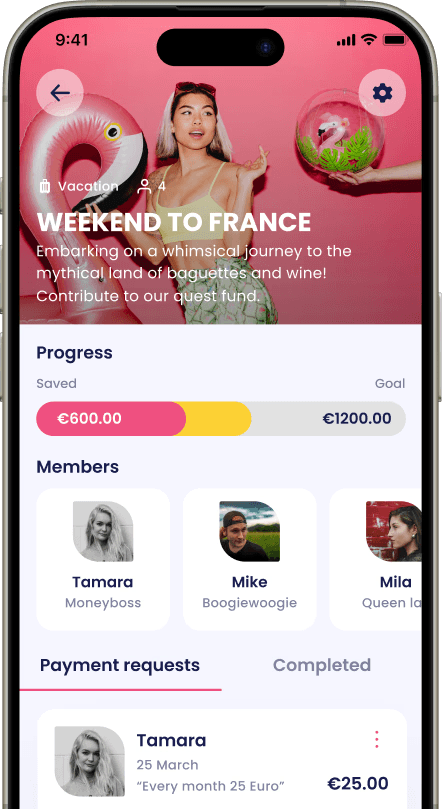
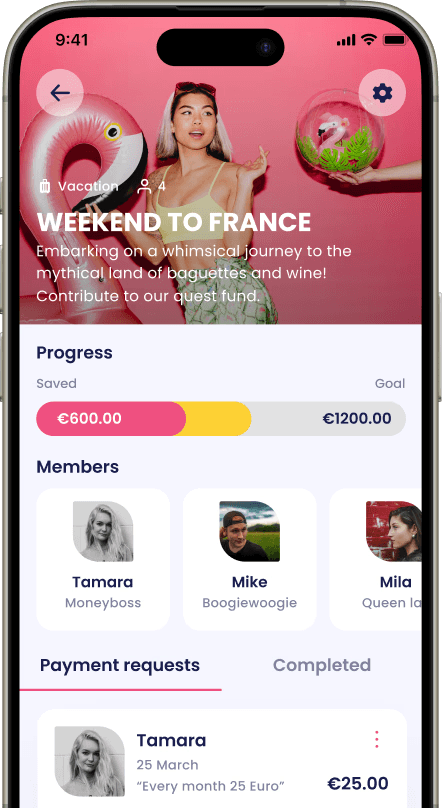
This is exactly how Potje works. Groups create a shared money pot, set a goal, and everyone contributes before the spending starts. No one person carries the financial burden. No one needs to chase anyone.
4. Automate your reminders
Manual reminders are awkward. They put the organiser in an uncomfortable position and often feel passive-aggressive even when they are not meant to be.
Automated reminders, sent by a platform rather than a person, remove that social tension entirely. The system reminds. Not you.
Potje sends automatic payment reminders to group members, which means the organiser never has to be the one chasing. The group just sees a notification from the app.
5. Keep the group small or split into sub-groups
The bigger the group, the easier it is for individuals to go quiet. A study in the Journal of Management found that group size directly affects how much effort individuals put in. If your group is large, split payment responsibilities into smaller clusters. When fewer people share a task, everyone feels more personally responsible for it.
A Better Way to Organise Group Money
The old way looks like this:
One person pays. Everyone promises. Someone forgets. The organiser chases. The plan gets delayed. Someone drops out. The group is smaller than expected. The organiser absorbs the cost.
The new way looks like this:
Everyone contributes to a shared money pot first. The goal is visible. The plan only moves forward when the pot is full. Nobody needs to chase anyone.
Potje is a digital money pot built for exactly this. Groups save together in one shared account. Everyone sees progress. Everyone contributes before spending begins.
The cost is shared too: a Potje money pot costs €5.00 per month in total, split across the whole group. With 5 people, that is €1.00 each. With 10 people, just €0.50 each.
No spreadsheets. No awkward reminders. No one person carrying the weight.
Frequently Asked Questions
Why do people always pay late in group plans?
When a task belongs to a group, the sense of personal urgency drops. Everyone assumes someone else will go first. Without a clear deadline and a structure that collects money upfront, delayed payments are the default outcome, not the exception.
How do I ask friends to pay without it being awkward?
The most effective approach is to remove yourself from the equation entirely. Use a platform that sends reminders automatically, so the system follows up rather than you. This keeps the friendship dynamic intact while still keeping the plan on track.
What is a shared money pot?
A shared money pot is a joint digital account where multiple people contribute towards a common goal. Everyone can see progress in real time. Money is collected before spending begins, which means no one person carries the upfront cost.
How does Potje help with slow group payments?
Potje lets groups create a shared money pot with a defined goal. Contributions are collected upfront. Automated reminders go out to group members who have not yet contributed. The organiser never has to chase manually. Learn more about how Potje works.
The plan does not have to stall because one person is slow to pay.
Set up the structure before the first message goes out. Collect contributions upfront. Let the system handle the reminders. And actually enjoy the trip, the party, or whatever you are planning together.
Create your money pot with Potje and keep the group moving from day one.

Social Accountability and Saving: The Missing Link to Financial Freedom
Ondersteuning voor verschillende inhoudstypes zoals artikelen, blogs, video's en meer. Rijke tekstverwerker met opmaakopties voor verbeterde.
17 november, 2025

Group Saving Apps Compared: What's Easiest, Safest, and Most Transparent?
Ondersteuning voor verschillende inhoudstypes zoals artikelen, blogs, video's en meer. Rijke tekstverwerker met opmaakopties voor verbeterde.
17 november, 2025

Group Money Platforms Compared: What’s Safe, Regulated, and Fair?
Ondersteuning voor verschillende inhoudstypes zoals artikelen, blogs, video's en meer. Rijke tekstverwerker met opmaakopties voor verbeterde.
17 november, 2025