26 May 2026



Planning a trip with friends sounds incredibly exciting at first. You share destination ideas, look up stunning Airbnbs, and send each other TikToks of street food and hidden beaches.
But then, the dreaded money part starts.
Suddenly, the group chat goes quiet. Questions start bubbling up:
Who’s paid for the flights?
Who still owes for the accommodation deposit?
Who exactly is keeping track of all these spreadsheets?
For most groups, this is the exact moment where things start to break down. The excitement of group travel planning quickly morphs into financial anxiety and social awkwardness.
But it doesn’t have to be this way.
“A super handy app to save for my Asia trip together with my friend. We set aside money every month for a year.”
That’s how Esther describes her experience using Potje. Simple. Effective. Stress-free.
But behind that simplicity is something most groups don’t have: A structured, transparent way to save money together.
How do you save money with friends for a trip without chasing them?
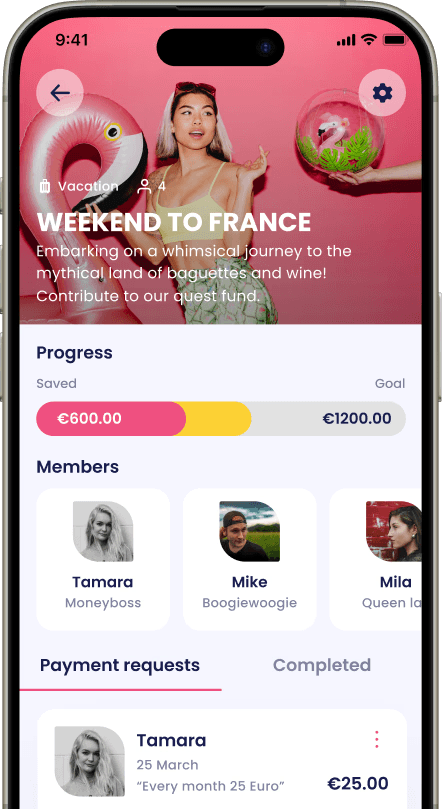
To successfully save money with friends for a trip without the hassle of chasing payments, you must shift from "splitting expenses later" to "saving together beforehand." Set a shared, transparent budget, create a dedicated group money pot using an app like Potje, agree on manageable monthly contributions, and automate the payments. This proactive approach ensures the funds are secured before booking, eliminating awkward IOUs, late payments, and the stress of one person fronting all the costs.
The Real Problem With Group Travel Planning
If you’ve ever tried to organise a holiday with friends, you will instantly recognise this exhausting dynamic:
The "Banker" Burden: One highly organized person ends up managing absolutely everything. They front the money on their credit card, book the flights, and secure the lodging.
The Ghosting Phase: Payments come in late—or sometimes not at all. Excuses pile up, and the group chat suddenly ignores the payment request link.
The Spreadsheets of Chaos: You lose track of who paid what. Was it £50 for the rental car and £120 for the hotel? Or the other way around?
The Awkward IOUs: It gets socially awkward to remind people. No one wants to be the "money nag" in their own friend group.
Most people try to solve this inevitable mess with reactive solutions:
Payment requests (Venmo, PayPal, Tikkie)
Complex Excel Spreadsheets
Expense splitting apps (Splitwise)
But here is the fatal flaw with these methods: Those only work after the money is already spent.
They act as debt trackers. They don’t help you actually save for the trip in the first place, meaning someone still has to take on the financial risk of fronting the cash.
Why Saving Together Works Better Than Splitting Later
Esther and her friend didn’t wait until they were touching down in Asia to deal with money. They completely flipped the traditional process.
Instead of:
❌ Paying first and splitting later (which creates debt and resentment)
They:
✅ Saved together before spending (which creates commitment and excitement)
By using a shared money pot, they transformed a stressful financial obligation into a fun, collaborative goal. They:
Set a clear goal: Their dream Asia trip.
Contributed monthly: Breaking a large expense into bite-sized, manageable pieces.
Tracked everything in one place: Complete transparency for both of them.
No chasing. No confusion. Just visible progress toward the beach.
How to Save for a Trip With Friends (Step-by-Step)
If you’re wondering how to manage money with friends for a holiday without risking your friendships, here is the proven framework that actually works:
1. Set a Shared Goal and Realistic Budget
Before anyone sends a single penny, you need a highly specific target. Decide exactly what you’re saving for and how much you will realistically need. Break the budget down into categories:
Flights and major transport
Accommodation (hotels, Airbnbs, hostels)
Daily food and drink allowances
Activities and excursions
An emergency buffer fund
Actionable Tip: Once you have a total number, divide it by the number of people going. This is your individual target.
2. Create a Group Money Pot
Do not mix group trip money with your personal checking account. It gets messy, and it makes transparency impossible. Use a shared, dedicated system where everyone contributes to the exact same place. A digital group vacation fund keeps the money ring-fenced and safe until it is time to book.
3. Agree on Manageable Monthly Contributions
Not everyone in your friend group earns the same salary, so making the savings process predictable is vital. If the trip costs £1,200 per person and is 10 months away, agree that everyone will contribute £120 per month. Making it predictable makes it manageable.
4. Keep Everything 100% Transparent
Money secrets destroy friendships. When managing group finances, everyone should be able to open their phone and see:
How much is saved in total
Who has actively contributed this month
What is left to reach the final goal
When transparency is baked into the process, peer encouragement naturally takes over, and no one feels left in the dark.
5. Automate the Process
This is the golden rule. No reminders. No awkward WhatsApp messages. No chasing. Set up automated monthly deposits into the shared pot. When the process is automated, saving happens in the background, completely removing the emotional friction of parting with money.
This step-by-step framework is exactly what Potje is meticulously built for.
The Hidden Reason Group Trips Fall Apart
Most trips don’t fail because people don’t want to go. They fail because of a misalignment in financial commitment.
They fail because: Not everyone saves at the exact same time.
When one friend has the money ready to book flights in March, but another friend says they need until May to gather the funds, a domino effect of disaster begins:
Plans get delayed: The booking window is missed.
Prices go up: That £300 flight suddenly costs £650.
People drop out: The higher price tags force people to abandon the trip entirely.
Saving together fixes this systemic issue. When everyone contributes to a joint travel fund simultaneously, the group moves at the same pace. In fact, groups using a shared system to save are statistically far more likely to actually reach their goal and board the plane.
Why Free Tools Don’t Solve This Problem
You might be thinking: “Can’t I just use Splitwise, an Excel sheet, or a standard banking app?”
You can, but you will still be fighting the same fundamental problem: you are tracking debt, not building savings. Here is the critical difference in how these tools operate:
Tool Category | What it actively does | The drawback for group travel |
Splitting Apps (Splitwise) | Tracks expenses after they happen. | Someone still has to front the money, creating IOUs and financial risk. |
Payment Requests (Venmo) | Collects money manually after a booking. | Requires constant chasing, reminding, and social awkwardness. |
Potje | Helps you save together before you spend. | None. The money is secured before a single booking is made. |
That’s why Potje isn’t just another arbitrary finance app. It’s a dedicated shared money account for groups—purposely designed to manage money from the start, rather than trying to fix messy IOUs later.
The Biggest Benefit No One Talks About
Esther didn’t mention this directly in her review—but it’s the ultimate, unspoken outcome of using a shared savings app:
The trip actually happened.
Think about how many group chat ideas die in the planning phase. "We should totally go to Greece next summer!" is a common phrase that rarely materializes.
With a shared pot, the trip happens because:
The money was already there: No one was scrambling on payday.
Everyone was committed: Putting money into a pot creates psychological skin in the game.
There was no last-minute stress: The organizer booked the flights with zero anxiety because the funds were sitting ready.
Without a system, most groups rely entirely on good intentions. And good intentions don't buy plane tickets. With Potje, groups rely on unshakeable structure.
Who This Works Best For
Saving money together isn't just for massive, year-long backpacking trips to Asia. It works exceptionally well for any scenario requiring shared financial commitment:
Group Holidays: Summer beach trips, ski holidays, and weekend city breaks.
Friend Trips: Anniversaries, reunions, and milestone birthday getaways.
Student Travel: Spring breaks and post-graduation celebratory trips where budgets are tight.
Sports Teams: Saving up for away games, tournaments, and end-of-season trips.
Shared Goals: Concert tickets, festivals, large group gifts, or renting a shared summer house.
These are all situations where you need financial consistency over time.
Stop Chasing. Start Saving Together.
If you’re planning something amazing with friends, do not wait until the bitter end to deal with the money. Managing finances shouldn't be the dark cloud hanging over your group chat.
Do exactly what Esther did:
“We set aside money every month for a year.”
Because the easiest, most effective way to avoid money problems with your friends… is to absolutely never create them in the first place.
Start your shared money pot today →
Frequently Asked Questions (FAQ)
What is the best way to save money for a group trip?
The best way to save money for a group trip is to use a shared money pot or dedicated group savings app like Potje. Instead of one person paying for everything and chasing the group for reimbursements, everyone contributes a set amount to the pot every month prior to the trip.
How do you ask friends for trip money without being awkward?
You eliminate the awkwardness by automating the process. By setting up a shared goal in a group savings app, the app handles the monthly contributions and transparency. You never have to send a manual "Hey, can you pay me back?" text again.
Is it better to use Splitwise or a shared savings pot?
Splitwise is great for tracking small, on-the-go expenses (like splitting a dinner bill), but it operates on debt—meaning someone still has to front the money. A shared savings pot (like Potje) is vastly better for planning a trip because it secures the funds before any major bookings are made.
How do you budget for a vacation with friends?
Start by discussing everyone's financial comfort zone. Agree on a maximum budget, then break it down into flights, accommodation, food, and activities. Divide that total by the number of months until the trip to determine your required monthly contribution.
What happens if someone drops out of the group trip?
If you are using a shared money pot before bookings are made, it is incredibly easy to refund their portion of the saved funds without disrupting the rest of the group's finances. If you had already booked non-refundable items on your personal credit card, navigating dropouts becomes much more difficult.

Social Accountability and Saving: The Missing Link to Financial Freedom
Ondersteuning voor verschillende inhoudstypes zoals artikelen, blogs, video's en meer. Rijke tekstverwerker met opmaakopties voor verbeterde.
17 november, 2025

Group Saving Apps Compared: What's Easiest, Safest, and Most Transparent?
Ondersteuning voor verschillende inhoudstypes zoals artikelen, blogs, video's en meer. Rijke tekstverwerker met opmaakopties voor verbeterde.
17 november, 2025

Group Money Platforms Compared: What’s Safe, Regulated, and Fair?
Ondersteuning voor verschillende inhoudstypes zoals artikelen, blogs, video's en meer. Rijke tekstverwerker met opmaakopties voor verbeterde.
17 november, 2025
