14 August 2026


Nobody plans a group event thinking it will get awkward.
But it does. Someone fronts the Airbnb. Someone else forgets to transfer. The group chat goes quiet when the payment reminder lands. And by the time the weekend is over, at least one friendship is slightly strained.
The fix is not a better app for chasing people after the fact. The fix is a five-minute conversation before anyone books anything.
Here is exactly how to have it.
Key stat: According to a 2026 Zelle report cited by Fortune, 76% of people who fronted money for a group event were never fully repaid, and 47% went into debt covering shared expenses they expected to be reimbursed for. The problem is not money. It is the absence of a clear conversation before spending begins.
Why Group Events Get Expensive (and Awkward)
Group events do not get expensive because people are careless with money. They get expensive because nobody agreed on a number upfront.
One person imagines a budget weekend. Another assumes the group is going all-out. A third says yes to everything because they do not want to be the one who kills the vibe. And then the bill arrives.
This is not a money problem. It is a communication problem.
A June 2025 Experian survey found that over half of Gen Z and Millennials have had a money-related disagreement while travelling with friends, and 1 in 5 have ended a friendship over a money issue. Across all generations, the two biggest financial stress points in group travel are unexpected costs and splitting costs fairly when friends have different spending priorities.
The research also found that only 1 in 4 friend groups sets a budget upfront before a trip. That single gap explains almost every awkward post-event money conversation.
The old way always ends the same
Someone pays.
Everyone promises to pay them back.
A few people forget.
The organiser sends reminders.
Everyone feels a bit weird about it.
The new way is simpler: everyone contributes first, the group reaches its goal together, then the money gets spent. No chasing. No resentment. No awkward messages three weeks after the event.
That shift, from collecting after to collecting before, is the single biggest change a group can make. Everything else follows from it.
How to Set Money Expectations Before a Group Event
This does not need to be a formal meeting or an uncomfortable conversation. Five minutes in the group chat, before anyone opens a booking site, is all it takes. Here is the framework.
Step 1: Agree on a total budget range first
Before anyone picks a destination, venue, or activity, ask the group one question: "What is everyone comfortable spending in total?"
Suggest ranges rather than asking for exact numbers. This makes it easier for people to be honest without feeling singled out.
Under €100 per person
€100 to €250 per person
€250 to €500 per person
Open-ended, decide as you go
Plan to the lowest number in the group. If most people say €150 but one person says €80, plan for €80. You can always add optional extras for those who want to spend more. Forcing the group to the highest budget is how people quietly drop out.
Step 2: Separate shared costs from personal costs
Not everything needs to be split equally. Being clear upfront about which costs are shared and which are personal prevents a huge amount of confusion later.
Shared costs (split equally) | Personal costs (each pays their own) |
Accommodation | Individual meals or drinks |
Group transport | Personal activities |
Entry tickets | Souvenirs or shopping |
Shared groceries | Any optional extras |
Agreeing on this before the event means nobody ends up subsidising someone else's expensive habits.
Step 3: Set a contribution deadline
Once you know the shared budget, set a deadline for everyone to contribute. Not "sometime before the trip." A specific date.
This is where most groups fall apart. The money conversation happens, everyone agrees, and then nothing gets collected until the week before. By then someone is short, someone else has changed plans, and the organiser is stressed.
Collect the money before you book anything. If the Airbnb costs €600 and you have six people, do not book it until all six contributions are in. This one rule prevents almost every last-minute crisis.
Step 4: Decide who manages the money
One person needs to be responsible for the shared fund. This is not about trust. It is about clarity.
That person should:
Collect contributions from everyone
Pay for shared expenses from the group fund
Keep a simple record of what was spent
Return any leftover money after the event
The cleaner the process, the less room there is for confusion or resentment.
Step 5: Give everyone visibility
When people can see the group's progress toward the goal, they are far more likely to contribute on time. Transparency removes the awkwardness.
Nobody wants to be the person who has not paid. But if nobody knows who has and who has not, the social pressure that would normally motivate people disappears entirely.
Key takeaway: Agree on a budget range. Separate shared from personal costs. Set a deadline. Assign one organiser. Give everyone visibility. That is the entire framework, and it takes five minutes.
The Conversation Nobody Wants to Have (But Everyone Needs)
Talking about money with friends feels awkward. That is completely normal. But here is the reality: it is far less awkward than chasing someone for €85 three weeks after the event, or being the person who quietly resents the whole trip because they spent more than they could afford.
82% of Gen Z say owing money causes them stress or anxiety, according to the Fortune/Zelle report. And 69% say repayment issues have affected a friendship or relationship. The discomfort of the upfront conversation is nothing compared to the damage of avoiding it.
How to frame the conversation
The key is to frame it around the group, not individual budgets. You are not asking "can you afford this?" You are asking "what works for everyone so we can all enjoy this?"
One message in the group chat is all it takes:
"Before we start booking, can we quickly agree on a per-person budget? I want to make sure it works for everyone."
That is it. One sentence. No drama. The people who find this conversation hardest are usually the ones who end up most resentful afterwards.
For a deeper look at why money conversations in groups feel so loaded, our piece on the hidden psychology behind collecting money from friends explains exactly why this happens and how to handle it gracefully.
How a Shared Money Pot Makes This Easier
Once you have agreed on a budget and a deadline, the next challenge is actually collecting the money without it becoming someone's second job.
Most groups try to manage this through bank transfers to one person's personal account. That person then has to track who has paid, chase the stragglers, and make sure they do not accidentally spend the group's holiday fund on their own groceries.
It works. Barely.
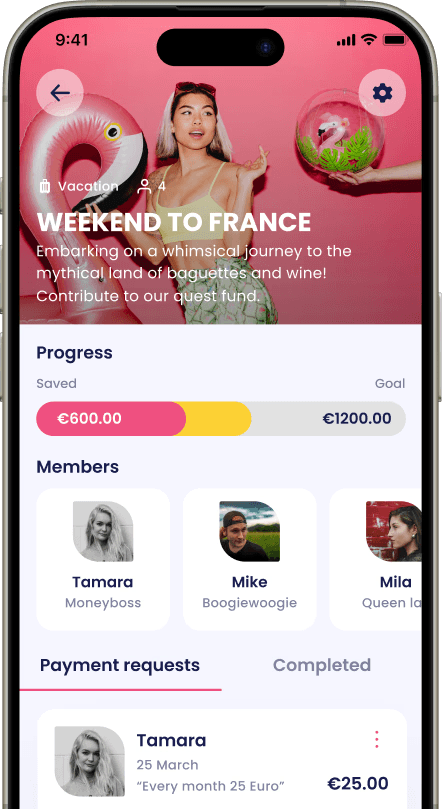
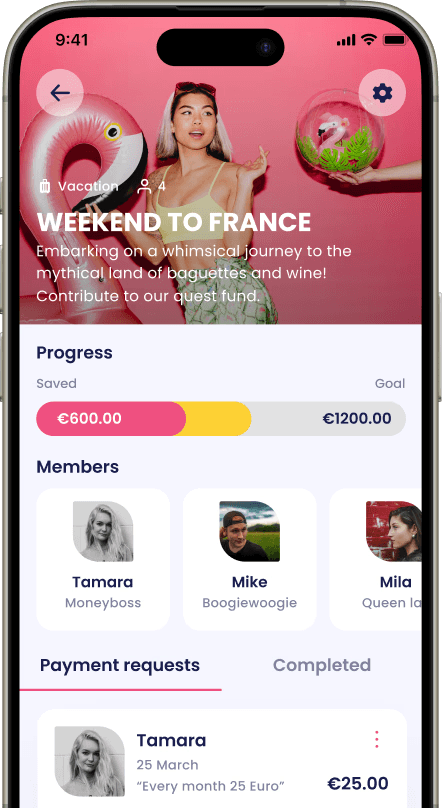
A dedicated shared money pot removes all of that friction. Everyone contributes directly to the pot. Everyone can see the progress. The organiser does not need a spreadsheet or to send awkward reminders.
That is exactly what Potje is built for.
Potje is a joint money account for groups. You create a pot, set a goal, share the link, and everyone contributes. The fee is shared automatically across the group:
2 people: €2.50 each per month
5 people: €1.00 each per month
10 people: €0.50 each per month
Nobody carries the financial burden alone. Everyone sees progress toward the goal in real time. Automated payment reminders handle the chasing so you never have to be the one sending that message.
Most importantly: money is collected before you spend it, not chased after.
You can read more about how it works in our step-by-step guide to setting up a group money pot. If you are weighing up different approaches, our comparison of a digital money pot vs a joint bank account vs a split app breaks down exactly when each option makes sense.
Where This Matters Most: Common Group Event Scenarios
Setting money expectations works for any kind of group event. These are the situations where getting it right makes the biggest difference.
Group holidays and weekend trips
This is where the stakes are highest. Accommodation, transport, and activities all need to be booked in advance, often by one person. Collecting contributions before anyone books anything is non-negotiable.
Practical tip: Set your shared pot goal to include a 15% buffer. Unexpected costs always appear. A buffer means nobody has to chase extra contributions mid-trip. For a 2-3 day European trip, shared costs typically run between €100 and €300 per person depending on accommodation and activities.
Festivals and concerts
Tickets, travel, accommodation near the venue, food and drinks. The costs add up fast, especially for multi-day events like Tomorrowland, Lowlands, or Glastonbury.
Agreeing on a per-person budget before tickets go on sale keeps the group aligned and prevents anyone from dropping out because the total crept past what they expected.
Birthday celebrations
Group dinners, activities, and shared gifts all require upfront alignment. The most common source of tension in birthday planning is not the event itself. It is the unclear expectation about how much everyone is contributing.
Our guide on effortless ways to manage money for group birthday gifts covers this in detail.
Work team events
When money is coming from colleagues rather than close friends, the awkwardness multiplies. A shared pot with a clear goal and transparent progress makes the collection feel professional rather than personal.
Read more about collecting money from colleagues for a farewell gift if this is your situation.
Frequently Asked Questions
What is the best way to bring up money expectations with friends without making it awkward?
Frame it around the group's shared goal, not individual budgets. Instead of asking "can everyone afford this?" try "what budget works for everyone so we can all enjoy this?" One short message in the group chat before planning starts is all it takes. The conversation feels far less awkward than chasing payments weeks later.
How much should a group budget per person for a weekend trip in Europe?
For a 2-3 day European trip, shared costs typically run between €100 and €300 per person depending on accommodation and activities. Add a 15-20% buffer for unexpected costs. Always plan to the lowest budget in the group and offer optional extras for those who want to spend more.
What is a shared money pot and how does it help with group events?
A shared money pot is a joint digital fund that a group contributes to before spending begins. Everyone adds their share, the organiser can see who has contributed, and the money is used directly for group expenses. It removes the need for one person to front costs and chase repayments. Potje is a dedicated shared money pot for groups, with automated reminders and transparent progress tracking.
When should the group collect money for a shared event?
Before booking anything. Once a budget is agreed, set a contribution deadline that falls before any deposits or bookings are made. Collecting money upfront is the single most effective way to avoid financial stress and last-minute dropouts.
What happens if someone cannot contribute their share?
Agree on an opt-out rule upfront. Anyone who cannot contribute their share should be able to step back without judgment, and they should not be expected to pay for shared costs they are not participating in. Agreeing on this before the event prevents resentment on both sides.
Why do group trips so often lead to money problems?
Because most groups skip the budget conversation before planning. According to Experian, only 1 in 4 friend groups sets a budget upfront. Without a shared number agreed in advance, everyone operates on different assumptions, and the gap only becomes visible when the bill arrives.
Start the Conversation Before the Event Does It for You
Group events should be something to look forward to, not something to dread because the money conversation never happened.
Five minutes of clarity before planning starts saves hours of awkwardness afterwards. Agree on a budget range. Separate shared from personal costs. Collect before you book. Give everyone visibility.
The best group events are the ones where nobody had to worry about money. That starts with one conversation, before anyone opens their wallet.
If you want a tool that handles the collecting, tracking, and reminding for you, start a money pot on Potje before your next group event. Create a shared pot, set your goal, and let the group contribute at their own pace, with automated reminders so you never have to be the one sending that message.

Social Accountability and Saving: The Missing Link to Financial Freedom
Ondersteuning voor verschillende inhoudstypes zoals artikelen, blogs, video's en meer. Rijke tekstverwerker met opmaakopties voor verbeterde.
17 november, 2025

Group Saving Apps Compared: What's Easiest, Safest, and Most Transparent?
Ondersteuning voor verschillende inhoudstypes zoals artikelen, blogs, video's en meer. Rijke tekstverwerker met opmaakopties voor verbeterde.
17 november, 2025

Group Money Platforms Compared: What’s Safe, Regulated, and Fair?
Ondersteuning voor verschillende inhoudstypes zoals artikelen, blogs, video's en meer. Rijke tekstverwerker met opmaakopties voor verbeterde.
17 november, 2025