2 June 2026



Friends are sharing more experiences—and more money—than ever before.
Friend groups today rarely navigate social life or spend money purely individually. Modern relationships are built on shared experiences, which naturally require collaborative financial effort. Take a look at any modern friend group, and you will find people splitting a massive variety of costs:
Holiday costs and itinerary bookings
Airbnb reservations and accommodation deposits
Music festival tickets and concert passes
Shared groceries for weekend getaways
Group birthday gifts and milestone celebrations
Apartment expenses and shared household utility bills
Sports club costs and recreational league fees
Spontaneous weekend road trips and group dinners
The fundamental problem is that legacy retail banking tools were never built to handle flexible, dynamic group behaviour. Instead, groups usually revert to an outdated, default system: one person ends up fronting their personal money while everyone else in the group chat promises, "I’ll send you my share later."
That ad-hoc arrangement might work without friction once or twice. However, it quickly devolves into complete financial chaos after the fifth group dinner, the third shared Uber ride, and the second or third forgotten bank transfer. This recurring headache is exactly why joint accounts for friends are becoming increasingly popular among younger generations who want to eliminate the social stress and awkwardness surrounding shared spending.
Why Friend Groups Struggle with Money Management
The root issue within group dynamics is almost never the money itself. Rather, it is a structural failure of coordination. Without a centralized, shared digital space, most friend groups find themselves trapped in the exact same exhausting cycle:
One person pays upfront: A single friend acts as the group's bank, absorbing a massive short-term hit to their personal cash flow.
Receipts get lost: Physical receipts are misplaced, or digital screenshots get buried deep in fast-moving chat histories.
People forget repayments: Busy schedules mean friends genuinely forget to execute their peer-to-peer transfers.
Group chats become accounting threads: Fun social channels transform into messy, tense ledgers of who owes what.
Somebody feels annoyed: The person who fronted the money is forced to become a collection agent, straining friendships.
Over time, shared spending begins to feel incredibly messy, heavy, and transactional. This friction is felt most acutely during high-stress periods like summer holidays, multi-day music festivals, shared housing arrangements, bachelor or bachelorette weekends, and long-term travel plans. To preserve the joy of these moments, friend groups need a dedicated system that feels fundamentally collaborative without becoming overly serious, legally binding, or administratively exhausting.
The Pros and Cons of Traditional Joint Accounts for Friends
When looking for a solution, many friend groups naturally look toward a traditional banking product: the joint checking or savings account. Before jumping in, it is vital to understand the direct advantages and severe drawbacks of attempting to use legacy financial infrastructure with friends.
The Pros of Joint Accounts for Friends
A Single Source of Truth: Everyone contributes toward the exact same financial goal, changing group behaviour immediately. Instead of relying on human memory and scattered chat screenshots, groups can organise money intentionally from the start.
Proactive Funding: For example, everyone can contribute a set amount weekly toward an upcoming trip, keeping shared apartment costs completely organised or ensuring festival budgets are visible months early.
Collective Ownership: Birthday collections stop relying on a single organizer's bank account balance. The money becomes an integrated, positive part of the shared experience rather than an isolated, stressful administrative task.
The Cons of Legacy Joint Accounts
Rigid Legal Commitments: Traditional bank joint accounts require co-signers to be legally tied to one another. If a friend mismanages their finances or incurs a debt, it can directly impact your credit score.
Complete Lack of Privacy: Standard joint accounts give all members full visibility into the entire account's activity, which strips away individual financial privacy.
Bureaucratic Setup and Closure: Legacy banks require extensive identity verification (KYC) paperwork, proof of address, and physical or digital signatures just to open an account—and closing it can be an even greater administrative nightmare.
Assumption of Permanence: Legacy banking systems assume you are a married couple or a permanent household. They are completely unequipped to handle a temporary friend group budget that only needs to exist for a three-day festival weekend or a brief birthday pool.
Why Traditional Shared Money Setups Often Fail Friend Groups
Older shared money systems fail because they are built on the concept of permanence. They were designed strictly around long-term couples, nuclear families, and permanent, lifelong financial commitments.
Friend groups operate under a completely different set of rules. People join trips late, plans change at the last minute, and individual budgets shift constantly. A group holiday might last for one week; a festival budget might last for one month; a birthday collection might only need to exist for three days. Modern friend groups require ultimate flexibility rather than rigid legal structures. This is why younger users are actively turning away from traditional banking setups and moving toward lighter, software-driven collaborative money systems.
What Makes Potje Different from Other Group Money Tools
When looking at alternative digital tools, many expense-splitting apps focus almost entirely on retrospective repayment calculations. They focus heavily on answering the backward-looking question: "Who owes who money after the event is already over?"
Potje completely flips this paradigm. Instead of calculating debt after the damage is done, Potje focuses entirely on the proactive question: "How do we organise our money together from the very start?"
Traditional Expense Apps:
[ Spend Money Upfront ] ──> [ Calculate Debt ] ──> [ Awkwardly Chase Friends ]
Potje's Modern Approach:
[ Set Shared Goal ] ──> [ Pool Funds Proactively ] ──> [ Seamless Group Spending ]
This structural difference creates a completely different, positive financial experience. Through Potje, friend groups can:
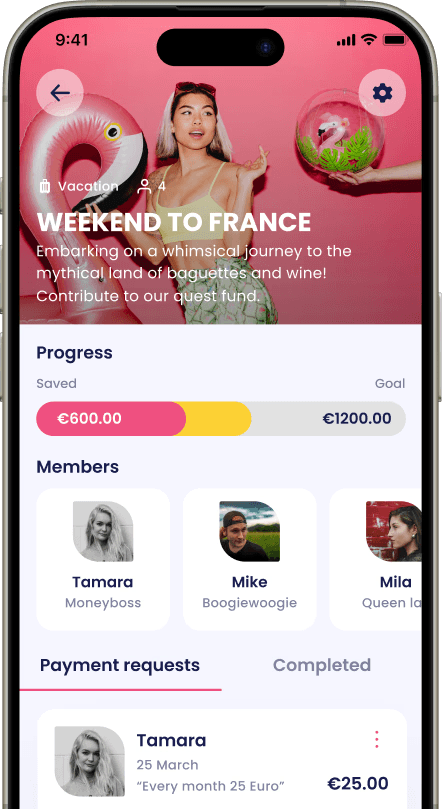
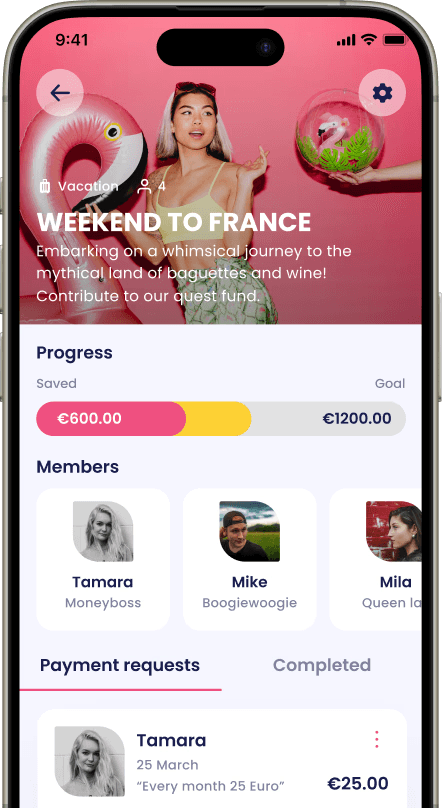
Create dedicated shared money pots for any specific trip, milestone, or event.
Contribute gradually over time to ease the personal cash flow burden on individuals.
Keep money organised together in a secure, transparent environment.
Track shared spending in real time so everyone knows exactly where the budget stands.
Use automatic payment reminders to handle late contributions objectively.
This shifts the entire energetic dynamic of group spending. Instead of an organizer having to tentatively ask, "Can everybody please pay me back?" the experience transforms into, "We already collectively planned and funded this together." That psychological shift makes group interactions feel much more natural, lighthearted, and social.
Why Younger Groups Want Less Financial Awkwardness
Money tension has a unique ability to destroy group energy quickly, creating underlying resentment among even the closest of friends. No one enjoys chasing repayments, sending repeated follow-up texts, manually calculating complicated expense breakdowns, or asking awkward financial questions in a public group chat.
Modern joint money accounts are designed specifically to remove those painful social friction points. Shared experiences should feel profoundly social, not transactional. By introducing a structured system like Potje, you remove the interpersonal politics from group finances, ensuring that the focus remains entirely on making memories rather than managing debts.
How Potje Works for Friend Groups
The Potje ecosystem is designed to be completely lightweight and frictionless, bypassing the traditional hurdles of opening a traditional joint account.
1. Create a Shared Money Pot
Groups can instantly spin up a secure, digital shared pot tailored specifically around their upcoming plan. You can customise it instantly for names like:
"Spain Trip 2026"
"Festival Crew"
"Apartment Utilities & Rent"
"Emma’s 30th Birthday"
"Football Weekend Fund"
This single step gives the entire group an immediate, unified financial space to look at.
2. Invite Contributors
Friends can join the shared pot directly via a secure invite link. Rather than sending random, fragmented bank transfers privately to an individual's personal account, everyone contributes directly into the same target destination. This establishes immediate organization and clear tracking.
3. Manage Spending Together
Once the funds are pooled, the entire group can track ongoing contributions, monitor active spending, and follow live balances collaboratively. Nobody has to shoulder the burden of becoming the group's unpaid, stressed-out accountant.
4. Use Automatic Payment Reminders
One of the most highly rated features of a modern group payment app is automated reminder coordination. Friends rarely skip out on payments maliciously; they simply get busy and genuinely forget. Potje removes the awkwardness of manual follow-ups by allowing the platform to automatically prompt users, removing interpersonal tension entirely.
How Potje Compares to Individual-First Tools: Revolut, bunq, and Collctiv
When evaluating digital finance options, it is helpful to look at how different apps approach group dynamics. Traditional digital banking juggernauts like Revolut and bunq are exceptional, world-class platforms for individual financial management. They excel at personal spending oversight, rapid travel currency exchange, and solo budgeting.
However, because their primary architecture is individual-first, trying to manage a collaborative group budget inside them often feels like forcing a square peg into a round hole. Similarly, platforms like Collctiv are excellent for swift, one-off money pooling (like buying a quick office birthday gift), but they lack the comprehensive, long-term budgeting features and shared tracking systems needed for sustained group expenses or multi-day travel.
Feature / Capability | Revolut & bunq | Collctiv | Potje |
Primary Account Focus | Individual Banking | One-Off Collections | Collaborative Group Pots |
Real-Time Group Balance Visibility | Restricted to Account Holder | Limited Tracker | Fully Transparent to All Members |
Proactive Group Budget Planning | Manual Splitting Required | Basic Pooling | Native Shared Goal Setting |
Automated Peer Reminders | Manual Triggers | Basic Prompts | Native Automated Coordination |
Friend groups require a dedicated financial coordination space. They want shared contribution tracking, collective spending organization, flexible budgeting structures, and simple payment coordination. Potje positions itself specifically around these exact collaborative group dynamics, offering a tailored environment that individual-first tools simply cannot replicate.
Coming Soon: Virtual VISA Debit Cards with Apple Pay Support
To make real-time group spending completely frictionless, Potje is actively developing virtual VISA debit cards tied directly to your shared money pots.
These virtual cards will fully support both Apple Pay and Google Pay, allowing them to be used seamlessly worldwide wherever VISA is accepted. Once launched, this feature will empower friend groups to:
Collect money together seamlessly into their specific pot ahead of time.
Add the virtual Potje card instantly to their Apple Pay or Google Pay mobile wallets.
Spend directly from the shared balance at restaurants, flight booking sites, or festival bars.
Track all group spending in real time, automatically updating the collective balance inside the app.
This completely eliminates the need for anyone to ever front personal cash again. While this feature is currently in development, you can secure early access and jump on the waitlist right now by visiting: https://www.potje.app.
Frequently Asked Questions (FAQ)
Are joint accounts for friends safe to use?
Traditional bank joint accounts carry significant risk because they legally bind your financial standing and credit history to another person. However, using a modern shared money pot system like Potje is completely safe. It offers a secure, isolated digital wallet environment built exclusively for collaborative expense visibility and organization, without any long-term legal or credit ties.
Why do friend groups struggle with shared money?
Most group money problems occur because the spending structure is retrospective and unstructured. When one person pays upfront, receipts inevitably get lost, repayments are delayed, and no one has a clear overview of the total cost. This creates immediate financial confusion and awkward social friction.
What is the smartest way to manage group money?
The smartest approach is organizing and pooling money before the spending actually takes place. Instead of calculating retroactive debts and chasing repayments after an event, modern groups utilize shared money pots to collect funds ahead of trips, events, or activities. This ensures healthy budgeting, reduces personal financial stress, and leads to smoother spending behavior.
How does Potje differ from Revolut, bunq, or Collctiv?
Revolut and bunq are built primarily as individual digital banking accounts, making group tracking cumbersome. Collctiv is optimized for simple, quick, one-time collections. Potje is purpose-built from the ground up for continuous group collaboration, giving all invited friends real-time balance visibility, shared budgeting tools, and automated payment reminders.
What is Potje and how does it work?
Potje is a modern group finance application designed for seamless shared money management. Users create distinct financial pots for trips, events, shared housing, or gifts, and invite friends to join via a secure link. Members can contribute funds gradually, track active balances, and coordinate all shared expenses in one highly organized environment.
Will Potje support Apple Pay?
Yes! Potje’s upcoming virtual VISA debit cards are being built to fully support Apple Pay and Google Pay. This will allow your friend group to pay for expenses directly from your shared pot balance using contactless mobile wallets.
Better Group Experiences Start with Better Money Organisation
Ultimately, most friend groups are already sharing money on a weekly basis. The real question is whether that ongoing process feels inherently stressful or completely effortless.
When your shared money stays disorganized, trips become significantly harder to coordinate, repayments turn into awkward social hurdles, budgets remain entirely unclear, and a single friend is forced to carry far too much financial responsibility.
Modern joint money environments solve this problem from the ground up. Instead of dealing with scattered bank transfers and constant, uncomfortable repayment reminders, groups can finally manage their money together in one secure, transparent space built natively for collaborative experiences. That is exactly why younger, travel-focused groups are rapidly moving toward smarter shared money systems like Potje.
Ditch the spreadsheets and protect your friendships. Start your joint account with Potje today.

Social Accountability and Saving: The Missing Link to Financial Freedom
Ondersteuning voor verschillende inhoudstypes zoals artikelen, blogs, video's en meer. Rijke tekstverwerker met opmaakopties voor verbeterde.
17 november, 2025

Group Saving Apps Compared: What's Easiest, Safest, and Most Transparent?
Ondersteuning voor verschillende inhoudstypes zoals artikelen, blogs, video's en meer. Rijke tekstverwerker met opmaakopties voor verbeterde.
17 november, 2025

Group Money Platforms Compared: What’s Safe, Regulated, and Fair?
Ondersteuning voor verschillende inhoudstypes zoals artikelen, blogs, video's en meer. Rijke tekstverwerker met opmaakopties voor verbeterde.
17 november, 2025
