28 May 2026



The short answer
PayPal Money Pools allowed groups to collect money into one shared balance for trips, gifts, events, and shared expenses. Since the feature officially shut down, users have been searching for PayPal Money Pools alternatives that make collecting and managing group money easier without relying on manual tracking or the "IOU" headache of reimbursements. The best modern alternatives focus on shared visibility, automated contribution tracking, and structured group money management to ensure the burden of organizing never falls on just one person.
Why People Used PayPal Money Pools in the First Place
The appeal of the original PayPal Money Pool feature was rooted in its simplicity. Before its discontinuation, it solved a universal social problem: the "organizer’s tax." This isn't a literal tax, but the emotional and administrative burden placed on the one person who volunteers to manage a group collection.
The Appeal was Simple
People gravitated toward Money Pools because they wanted one centralized location where a group could:
Collect money from multiple sources without mixing it with personal funds.
Track contributions in real-time to see who had paid and who was lagging.
Manage shared expenses together for transparent budgeting.
Eliminate spreadsheets and the manual labor of checking bank statements.
For many social circles and workplace teams, it became the default way to organize:
Group Vacations: Booking villas or Airbnbs.
Birthday Gifts: Pooling funds for a single high-value item.
Shared Events: Funding bachelor parties, baby showers, or community festivals.
Friend Group Expenses: Managing recurring costs like shared subscriptions or season tickets.
The system worked because it reduced friction. Most importantly, everyone could see the same balance. That visibility mattered more than most people realized; it established trust. When everyone sees the pot growing, the psychological pressure on the organizer vanishes.
What Happened When PayPal Money Pools Shut Down?
The shutdown was more than just a minor feature removal; it exposed a massive gap in the fintech market. It highlighted a fundamental truth: most money apps were never actually built for groups.
The majority of traditional banking and payment apps are designed for individuals. They excel at peer-to-peer (P2P) transfers—sending $20 to a friend for pizza—but they fail miserably at the "one-to-many" or "many-to-one" dynamics required for group success.
The Post-Shutdown Reality
After PayPal Money Pools disappeared, groups were forced back into inefficient habits:
Manual Bank Transfers: Organizers had to share their IBAN or handle and manually log every incoming payment.
Third-Party Tracking Apps: Using "IOU" lists that don't actually hold the money, leading to a disconnect between data and cash.
The "Single Payer" Problem: One person pays the full $2,000 for a trip and spends the next three months acting like a debt collector.
This immediately recreated the same old problems: confusion, delays, and uneven responsibility. The "Money Pool" wasn't just a feature; it was a social buffer that kept friendships healthy by removing the awkwardness of money.
What Groups Actually Need from a PayPal Money Pool Alternative
When searching for the best alternatives, most people mistakenly think they just need another payment app. In reality, a payment app is only 20% of the solution. To truly replace the functionality of a money pool, you need a shared money structure.
A proper group money system should provide four core pillars:
Shared Visibility: Every contributor should be able to see the total balance.
Automated Tracking: The system should notify the group when someone pays, removing the need for manual confirmation.
One Clear Balance: Money should be held in a "Pot" or "Vault" separate from personal spending.
Reduced Reimbursement Friction: The ability to spend directly from the fund rather than moving it to a personal account first.
Without these pillars, someone inevitably becomes the "treasurer," which creates immediate stress and potential social friction. If you are looking for a way to manage group money more effectively, you must look beyond simple transfer apps.
The Best Alternatives to PayPal Money Pools
As we enter 2026, the market has fragmented into several different types of tools. Depending on your specific needs—whether it's a one-off gift or a recurring shared house fund—some apps will suit you better than others.
1. Revolut
Revolut has grown into one of the strongest digital payment apps globally. For users who already use Revolut, their "Group Vaults" feature is the closest direct competitor to the old PayPal model.
Pros: Apple Pay support, instant transfers between Revolut users, and the ability to earn interest on some vault types.
Where it works well: It is excellent for fast P2P payments and international travel spending due to competitive exchange rates.
The Downside: The system still fundamentally revolves around individual accounts. If some of your friends don't use Revolut, the "Group" aspect breaks down, and one person often ends up managing the flow manually via external payment links.
2. Split
While technically an expense tracking and coordination tool, Split (and similar apps like Splitwise) remains a staple for groups.
Pros: Excellent for organizing complex spending after the fact. It can handle complicated splits (e.g., someone stayed for 3 nights, another for 5).
The Downside: Split does not hold money. It only tracks who owes what. This means the organizer still has to pay upfront and wait for everyone to settle their debts. It tracks the problem but doesn't provide the liquidity.
3. Collctiv
Collctiv was specifically designed to tackle the "organizer" problem. It allows a leader to create a pool and share a link with anyone—even those who don't have the app.
Pros: Dramatically simplifies the collection of contributions. It’s built for the "collection" phase of group gifting.
The Downside: Once the money is collected, the experience often defaults back to a personal management style. It lacks the ongoing "shared account" feel that long-term groups (like housemates or frequent travelers) often require for transparency.
Why the Future is Moving Toward Shared Money Systems
The inherent flaw in traditional payment apps is ownership. In a standard P2P app, the money belongs to an individual. When you "collect" it, it sits in your bank account. This makes you legally and socially responsible for it.
Shared money systems are different. They move the ownership from the individual to the "Pot."
The Balance Belongs to the Project: Whether it's "Dave’s 30th Birthday" or "Summer Trip 2026," the money is mentally and digitally assigned to that goal.
Spending is Collective: When the money is used, it’s used from the group's funds, not the organizer's personal stash.
This changes the entire dynamic of the group. It turns a "request for money" into a "contribution to a goal." Apps that scan your needs for group financial health are the ones that will win in the long run.
How Potje Approaches Shared Money Differently
Potje wasn't built to be just another payment app; it was designed as a shared visibility platform from day one. We recognized that the "Money Pool" was about more than just digits on a screen—it was about collective confidence.
The Potje Framework:
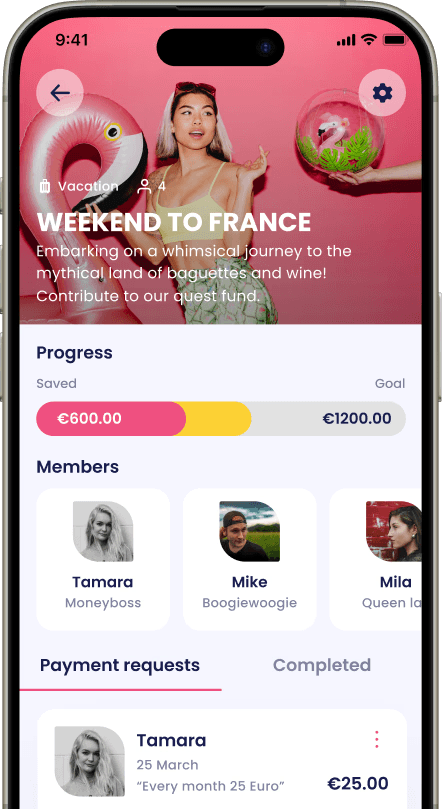
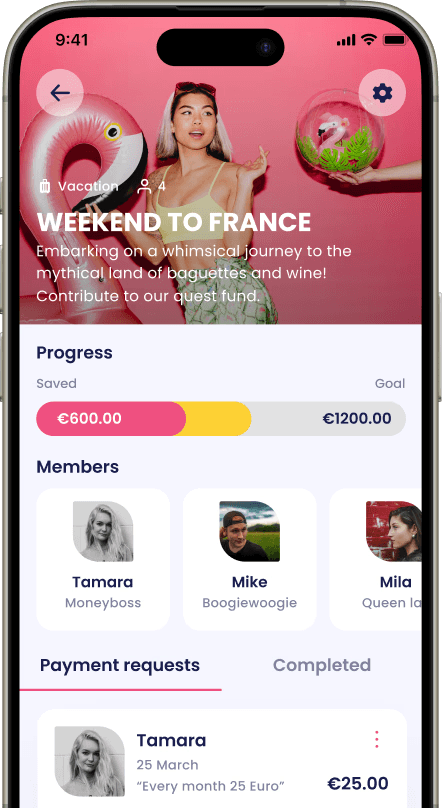
Create a Pot: Users create a dedicated space for a specific goal.
Automated Tracking: No more "Did you get my transfer?" texts. Potje logs it automatically.
Full Transparency: Every member of the pot can see the progress, creating a sense of community and accountability.
The core value here is that the group no longer depends on a single organizer to act as a human ledger. The structure itself handles the coordination.
The Next Step: Shared Spending via Virtual VISA
One of the biggest pain points of the old PayPal Money Pools was the "Withdrawal Phase." You had to move the money to your bank account before you could spend it.
Potje is solving this with a virtual VISA card connected directly to shared group funds. This upcoming feature will revolutionize how groups interact with their money.
Spend Directly: No need to transfer funds to a personal account.
Apple Pay & Google Pay: Use the group's pot at any contactless terminal or online store.
Real-Time Management: The balance updates instantly for everyone in the group as soon as a purchase is made.
Note: The virtual card and Apple Pay functionality are currently in the final stages of development. Once launched, you will be able to generate a virtual card instantly and add it to your digital wallet for a truly shared fund experience.
Practical Use Cases for PayPal Money Pool Alternatives
If you're wondering how to transition your group to a new system, consider these high-impact scenarios:
1. Group Vacations & Road Trips
Booking a house for 10 people requires thousands of dollars upfront. Use a shared fund to collect the total amount before the booking deadline. This ensures you never have to cancel a reservation because one person forgot to pay.
2. The "Ultimate" Birthday Gift
When a group wants to buy a high-end gift (like a designer watch or a new gaming console), the budget needs to be exact. A shared fund allows the group to see exactly when they’ve hit the target so the gift can be ordered immediately.
3. Recurring Group Expenses
For sports teams or social clubs that have monthly costs, a shared pot allows for ongoing contributions. This is much more efficient than restarting a "Money Pool" or payment link every single month.
Commercial Implications: The Evolution of Group Fintech
The shutdown of PayPal Money Pools revealed a larger market gap that fintech giants missed. People don't just want "fast" payments—they want coordinated payments.
In the commercial world, this translates to:
Less Friction: Higher conversion rates for group-based purchases (travel, gifting).
Better Behavior: Reduced social anxiety around debt and reimbursements.
Financial Literacy: A better understanding of how groups can budget collectively.
Apps that only move money are a commodity. The next generation of successful financial tools focuses on managing group financial behavior.
Risks and Misconceptions to Avoid
Before choosing your alternative, be aware of these common myths:
“Expense tracking apps solve the problem.” False. Tracking apps only tell you how much you've already lost. They don't help you collect the cash needed to make the purchase in the first place.
“P2P apps like Venmo or CashApp are enough.” False. They are great for one-off transfers but lack the organizational structure and shared balance views that keep groups aligned.
“One organizer handling the money is simpler.” False. It feels simpler for the contributors, but it is a nightmare for the organizer. Eventually, that person will stop volunteering, and the group activities will dwindle.
FAQ Section
Why did PayPal Money Pools shut down?
PayPal discontinued Money Pools in late 2021 as part of a strategic shift in their product roadmap. While PayPal didn't give a specific reason beyond "streamlining services," the shutdown left a void for millions of users who relied on the feature for collective gifting and travel.
What is the best alternative to PayPal Money Pools in 2026?
The best alternative depends on your needs. For simple peer transfers, Revolut is strong. For collecting money from people who don't want to download an app, Collctiv is a good choice. However, for a true shared money experience with future spending capabilities, Potje is the most specialized solution.
Are expense splitting apps the same as shared money apps?
No. Expense splitting apps (like Splitwise) are "post-payment" tools; they track debt after someone has already spent money. Shared money apps (like Potje) are "pre-payment" tools; they help you collect and manage the money before the transaction occurs.
Can I use Apple Pay with group money apps?
Currently, most apps require you to withdraw the money to a personal bank account first. However, Potje is developing a virtual VISA card that will allow groups to link their shared fund directly to Apple Pay for seamless, real-time group spending.
What is Potje and how does it help groups manage money?
Potje is a specialized shared money account. It allows groups to create a "Pot," invite members, and collect funds with full transparency. It automates the tracking of who has paid, providing a clear dashboard for everyone involved. Potje is currently building features for direct group spending via virtual cards.
Conclusion: Beyond the Payment Link
The shutdown of PayPal Money Pools exposed a much bigger problem: Groups were never struggling with payments alone; they were struggling with coordination.
The "Who pays?", "Who tracks?", and "Who follows up?" questions are the real friction points in our social lives. When those responsibilities stay tied to one individual, resentment and friction appear immediately.
The best alternatives to PayPal aren't just replacing a payment link; they are rebuilding how groups manage money together. By shifting toward shared funds and transparent group accounts, we can return the focus to the experience itself—the trip, the gift, or the party—rather than the admin that supports it.

Social Accountability and Saving: The Missing Link to Financial Freedom
Ondersteuning voor verschillende inhoudstypes zoals artikelen, blogs, video's en meer. Rijke tekstverwerker met opmaakopties voor verbeterde.
17 november, 2025

Group Saving Apps Compared: What's Easiest, Safest, and Most Transparent?
Ondersteuning voor verschillende inhoudstypes zoals artikelen, blogs, video's en meer. Rijke tekstverwerker met opmaakopties voor verbeterde.
17 november, 2025

Group Money Platforms Compared: What’s Safe, Regulated, and Fair?
Ondersteuning voor verschillende inhoudstypes zoals artikelen, blogs, video's en meer. Rijke tekstverwerker met opmaakopties voor verbeterde.
17 november, 2025