2 June 2026



A simpler, smarter way for groups to manage money together.
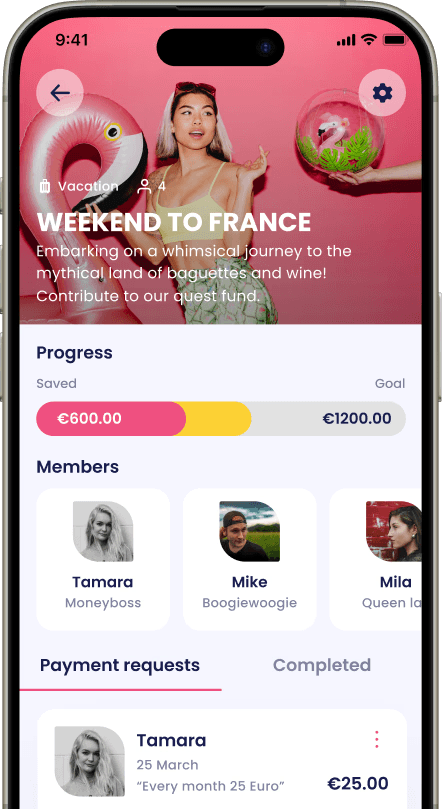
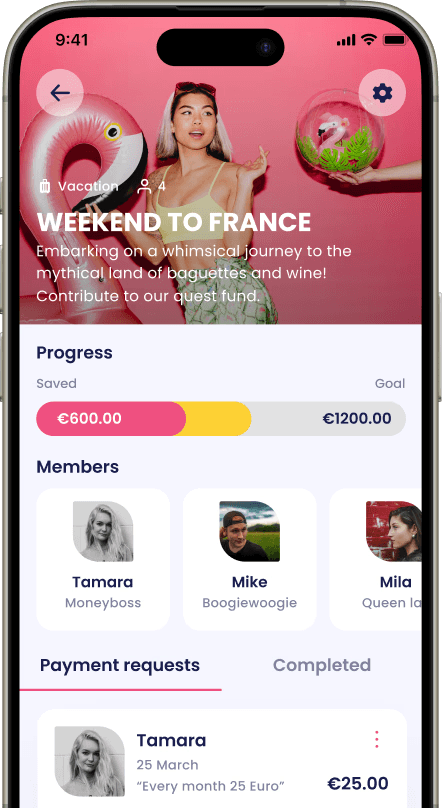
Potje is a modern joint account specifically designed for groups, friends, families, and shared experiences. Instead of relying on one person’s personal finances to manage group expenses, Potje gives groups a secure, shared money environment where contributors can organise, track, and manage money together transparently.
Whether you are splitting bills for a weekend getaway, collecting funds for a team sports club, or managing the recurring costs of a shared apartment, the days of awkward IOUs are over. By leveraging a dedicated digital wallet for group finances, Potje transforms financial stress into seamless collaboration.
Why Traditional Money-Sharing Systems No Longer Fit How Younger Groups Spend Money
Older shared money systems and traditional bank offerings were originally designed with a very specific demographic in mind: married couples and long-term shared households.
But modern shared money behaviour has drastically changed. The way people interact with their finances is now highly social, fluid, and dynamic. Today, people increasingly need to share money and split bills for a wide variety of collaborative experiences:
Group holidays and weekend getaways
Music festivals and concert trips
Shared apartments and flatmate expenses
Team activities and sports clubs
Friend trips and bachelor/bachelorette parties
Birthday collections and group gifts
Family goals and shared milestones
When groups try to navigate these modern scenarios using outdated banking structures, they run into immediate friction. Most of these groups do not want:
Complex setup processes: Filling out extensive paperwork just to open a short-term account.
Shared personal financial access: Sacrificing financial privacy to a group of friends.
Long-term financial commitments: Being tied to a legally binding financial product long after the group holiday has ended.
Complicated administration: Navigating the rigid, slow administration typical of legacy banking.
They simply want an easier way to organise money together. That is exactly where a modern joint money account becomes far more relevant than a legacy bank product. By positioning itself around collaborative money management instead of rigid traditional financial structures, Potje delivers exactly what modern consumers demand.
What Makes Potje a Modern Joint Account?
The biggest difference between legacy banking and a platform like Potje is flexibility.
Older joint money systems usually operate on rigid assumptions:
Two people: They assume the account is for a couple.
One shared household: They assume the users live under the same roof.
Long-term financial merging: They assume both parties want full visibility into each other's entire financial ecosystem.
Potje dismantles these assumptions. It is a shared savings account alternative designed expressly for flexible, modern group behaviour. With Potje, groups can:
Create shared money pots: Instantly spin up a dedicated space for any specific financial goal.
Invite contributors: Seamlessly add friends, family, or teammates.
Track balances transparently: Give everyone real-time visibility into the funds.
Manage group spending: Ensure funds are allocated properly without guesswork.
Organise contributions collaboratively: Let everyone chip in at their own pace.
Use automated payment reminders: Eliminate the need to manually chase down late payers.
This creates a much more social and collaborative financial experience. Instead of the stressful, friction-filled dynamic of "You owe me money," the system naturally shifts the group's mindset to: "We manage money together." That behavioural difference is massive when it comes to preserving friendships and maintaining financial harmony.
Why Shared Money Usually Becomes Stressful
If you have ever organised a group trip, you know that most shared money problems start exactly the same way.
One person pays upfront.
What follows is a slow but inevitable descent into financial disorganisation. People genuinely forget to make their transfers. Account balances become unclear. Payment screenshots disappear into the chaotic void of active WhatsApp group chats.
Eventually, the person who generously offered to pay upfront is unfairly burdened with multiple stressful roles. They become:
The organiser: Trying to keep the itinerary and the budget intact.
The repayment tracker: Monitoring their personal bank account for incoming micro-transactions.
The spreadsheet manager: Creating complex Excel grids to figure out who owes what.
The awkward reminder person: Sending uncomfortable texts asking friends to please pay them back.
That intense, unfair pressure is exactly why younger users are aggressively moving toward a modern group payments app. People do not want to be debt collectors for their friends. They want shared visibility, clear balances, easier contributions, less awkward repayment conversations, and one transparent system. Potje’s collaborative structure was designed specifically from the ground up to support these exact group behaviours.
How Potje Works for Group Spending
The Potje process is intentionally simple, cutting out the red tape associated with opening a traditional joint bank account.
Step 1: Create a Shared Money Pot
Groups start by creating a shared money pot dedicated to a specific purpose. Because it is highly customisable, you can name it whatever fits your needs. Examples include:
"Summer Europe Trip"
"Apartment Expenses"
"Festival Weekend"
"Football Team Fund"
"Birthday Gift Collection"
The group immediately shares one visible financial goal, establishing a clear objective from day one.
Step 2: Invite Contributors
Instead of managing money privately in a siloed bank account, contributors join the shared environment together. This simple act creates:
Shared accountability: Everyone knows they are part of the collective effort.
Better visibility: No hidden numbers; total transparency.
Clearer budgeting: Everyone knows how close they are to the target.
Collaborative financial organisation: The burden is shared, not carried by one person.
Because everyone sees the exact same balance, it dramatically reduces confusion later on.
Step 3: Collect and Manage Money Collaboratively
Groups can contribute gradually into the shared pot instead of waiting until somebody has already paid a massive bill upfront. This proactive approach improves budget planning, group coordination, spending visibility, and shared accountability. Most importantly, it vastly reduces the personal financial pressure placed on a single organiser.
Step 4: Use Automated Reminders
One of the most stressful parts of shared money management is chasing people. Potje helps eliminate this tension through automatic payment reminders.
That changes the group dynamic significantly. The organiser no longer becomes the debt collector, the repayment manager, or the uncomfortable reminder person. The system objectively and politely helps coordinate contributions more naturally, keeping friendships intact.
Why Potje Feels Different from Revolut, bunq, and Collctiv
The fintech landscape is full of excellent tools, but they all serve very different core purposes. When comparing Potje to platforms like Revolut, bunq, and Collctiv, the distinction lies in the underlying architecture of the apps.
Revolut and bunq are both incredibly strong digital money platforms. They perform especially well for:
Personal spending and individual budgeting
International travel payments and currency exchange
Solo financial management
While they offer group features, their DNA is fundamentally built around the individual.
Collctiv, on the other hand, is useful for rapid, simple money pooling (like a quick whip-round for a gift), but often lacks the sustained, transparent financial infrastructure required for ongoing group budgeting or long-term shared expenses.
Potje positions itself differently. The platform focuses specifically and unapologetically on collaborative group money behaviour rather than individual money management. That distinction matters because shared money creates entirely different needs:
Shared visibility: Everyone needs to see the ledger.
Group budgeting: The collective needs to track ongoing goals.
Collaborative balances: The funds belong to the pot, not one user's primary checking account.
Recurring contributions: Perfect for shared households or sports teams.
Transparent group spending: Clear oversight of where the funds are going.
Rather than being a personal bank account with a "split" button tacked onto it, Potje behaves like a dedicated, shared financial coordination system built exclusively for groups.
Why Younger Users Prefer Modern Joint Money Systems
Younger generations—particularly Gen Z and Millennials—increasingly manage money socially. For them, experiences are shared. Trips are shared. Digital subscriptions are shared. Living budgets are shared.
Traditional financial products were simply never built for this highly fluid, collaborative type of behaviour. Opening a joint money account at a legacy bank feels far too heavy, bureaucratic, and invasive for a group of four friends going to a music festival.
Modern joint money accounts solve this problem differently by creating more transparency, better collaboration, easier spending visibility, and simpler group coordination. That is especially valuable for students, friend groups, young families, sports teams, and those in shared living environments who prioritise convenience and financial privacy simultaneously.
Spending Oversight Matters More Than Most Groups Realise
Most financial tension inside groups doesn't stem from malice; it stems from uncertainty. When using fragmented transfer apps, nobody truly knows:
How much money remains in the overall budget.
Who has already contributed and who is lagging behind.
What specific expenses were already covered by the funds.
Whether the remaining budget still works for the rest of the trip.
Shared visibility changes behaviour.
When everyone in the group can simply open an app and follow the group balances, monitor contribution progress, and review spending activity in real-time, the group becomes naturally more financially organised. That overarching visibility is one of the single strongest advantages of modern collaborative money systems. It replaces financial anxiety with absolute clarity.
Coming Soon: Virtual VISA Debit Cards with Apple Pay Support
To make group spending even more seamless, Potje is currently developing virtual VISA debit cards connected directly to your shared money pots.
These cards will fully support Apple Pay and Google Pay, meaning they can be used anywhere in the world that VISA is accepted. This upcoming feature will allow groups to:
Collect money together effortlessly.
Add the virtual Potje card directly to their Apple Pay or Google Pay mobile wallet.
Spend directly from the shared balance at physical stores, restaurants, or online.
Track the collective spending transparently inside the app in real-time.
For group trips, shared dinners, and household expenses, this creates a perfectly smooth payment experience from collection to transaction.
Note: This feature has not launched yet, but the anticipation is high. You can secure your spot and join the waitlist here: https://www.potje.app
Frequently Asked Questions (FAQ)
What is a modern joint account?
A modern joint account is a shared digital money system designed for collaborative financial behaviour. Unlike older shared financial structures that focused mainly on legally bound couples or households, modern joint money accounts support flexible, short-term, or ongoing group spending for friends, teams, families, and shared experiences without compromising personal financial privacy.
How is Potje different from traditional shared money systems?
Potje is designed specifically around collaborative money management for groups from the ground up. Instead of focusing only on individual finances with secondary sharing features, Potje focuses on total shared visibility, group budgeting, collaborative contributions, and transparent spending management for trips, teams, and shared experiences.
Why do groups use modern joint money accounts?
Groups increasingly want simpler ways to organise shared money without relying on one organiser’s personal finances and private bank account. Modern joint money accounts help reduce repayment stress, drastically improve spending visibility, automate awkward payment reminders, and create a much more transparent budgeting environment for shared expenses.
How does Potje compare to Revolut, bunq, or Collctiv?
While Revolut and bunq excel at individual digital banking and currency exchange, and Collctiv focuses on simple one-off collections, Potje is uniquely built as a dedicated shared financial ecosystem. It prioritizes group visibility, recurring collaborative budgeting, and shared accountability, making it ideal for ongoing group financial management.
Will Potje support Apple Pay?
Yes. Potje’s upcoming virtual VISA debit cards are expected to fully support both Apple Pay and Google Pay. This will allow groups to tap and spend directly from their shared balances using their mobile wallets, making paying for group dinners or holiday expenses completely frictionless.
What is Potje and how does it work?
Potje is a modern joint money account designed for groups and shared financial experiences. Users easily create shared money pots, invite contributors via a link, collect money collaboratively, track balances transparently, and organise shared expenses together. The platform removes the friction of group finances by keeping everything visible in one supervised, secure digital environment.
Shared Money Works Better When the System is Designed for Groups
Ultimately, most shared money problems happen because people are still trying to use tools designed for individuals to solve group problems. One person pays. Another forgets. Balances become unclear, and repayments become incredibly awkward.
Modern joint money systems solve that friction entirely. Instead of fragmented bank transfers and lingering financial confusion, groups can finally manage their money together inside one transparent, safe, and shared environment.
That is exactly why collaborative money management is becoming the definitive standard for younger users and shared experiences.
Stop chasing payments and start focusing on the experience. Start your joint account with Potje now.

Social Accountability and Saving: The Missing Link to Financial Freedom
Ondersteuning voor verschillende inhoudstypes zoals artikelen, blogs, video's en meer. Rijke tekstverwerker met opmaakopties voor verbeterde.
17 november, 2025

Group Saving Apps Compared: What's Easiest, Safest, and Most Transparent?
Ondersteuning voor verschillende inhoudstypes zoals artikelen, blogs, video's en meer. Rijke tekstverwerker met opmaakopties voor verbeterde.
17 november, 2025

Group Money Platforms Compared: What’s Safe, Regulated, and Fair?
Ondersteuning voor verschillende inhoudstypes zoals artikelen, blogs, video's en meer. Rijke tekstverwerker met opmaakopties voor verbeterde.
17 november, 2025
