29 May 2026



The Short Answer: Which App is Right for You?
Both Potje and Buut help people manage money digitally, but they fundamentally focus on different behaviours and use cases.
Buut leans much more heavily toward personal and family-focused financial education, making it a great starting point for young children learning the basics of money.
Potje focuses entirely on collaborative shared money management for groups, families, friends, teams, and teens managing money together.
For users looking for dynamic collaborative budgeting, transparent shared money pots, automated payment reminders, and clear group spending visibility, Potje offers a significantly broader and more mature shared money experience.
Why Teens and Families Are Changing How They Manage Money
Money management is rapidly becoming more social. The era of the isolated piggy bank is over.
Teenagers no longer only spend money individually. Families increasingly budget together. Friend groups save collaboratively for shared experiences. Furthermore, parents want better, more organic visibility into their children's spending behaviour without acting like financial dictators.
That massive cultural shift dramatically changes what people expect from modern financial apps.
The older, outdated system looked like this:
One isolated bank account
One physical debit card
One person (usually a parent) managing everything and dispensing cash
Zero visibility for the teen on the broader family budget
The newer, modern financial behaviour looks very different:
Shared budgets: Families allocating funds together.
Group savings goals: Friends saving up for a concert.
Collaborative spending: Multiple people chipping in for a pizza.
Digital money pots: Centralised funds for specific events.
Transparent spending visibility: Everyone sees where the money goes.
Real-time financial tracking: Instant updates on smartphones.
That is exactly where innovative apps like Potje and Buut are becoming increasingly relevant. They bridge the gap between traditional banking and modern social spending.
The Biggest Difference Between Potje and Buut
The easiest and most accurate way to explain the difference is this:
Buut focuses heavily on individual and early-family financial learning. It is a tool designed to teach a child how to hold onto their allowance. Potje focuses on collaborative group money management. It is a tool designed for the reality that people spend money together.
That difference matters deeply because as teenagers grow, they are no longer managing money alone. They are managing money as part of a social ecosystem. Examples of this social financial behaviour include:
Teen friend groups planning a weekend outing.
Families managing a shared household grocery budget.
Shared travel groups booking Airbnbs and flights.
Student houses splitting utility bills and internet costs.
Sports teams collecting weekly match fees.
Parents and older kids budgeting together for university expenses.
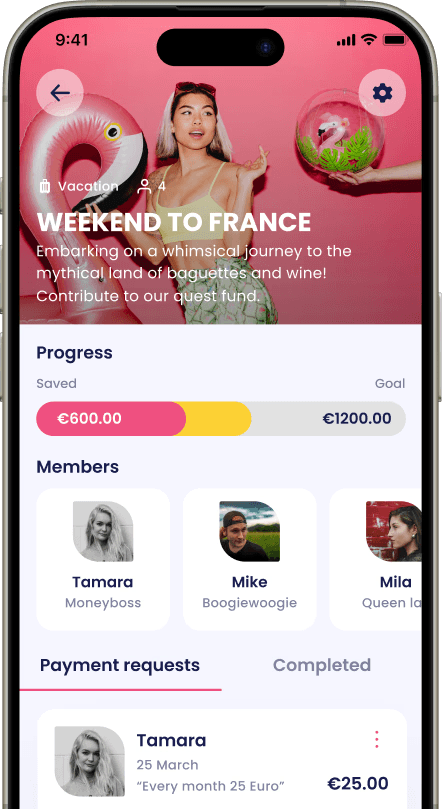
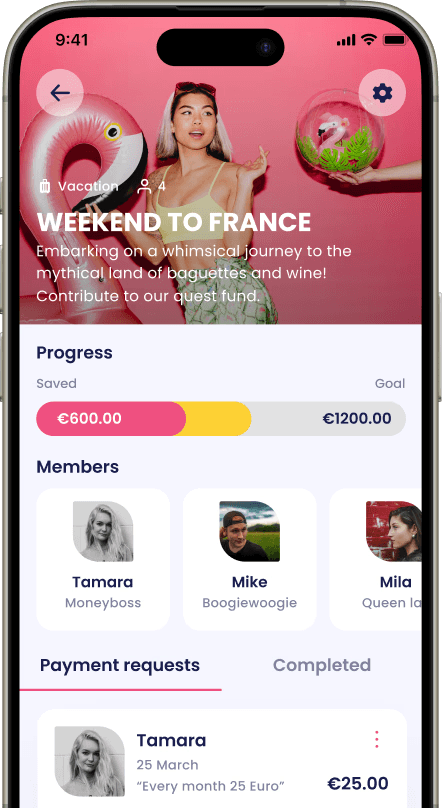
Potje was meticulously designed around this specific shared money behaviour from the very beginning. The platform focuses on helping groups collect, organise, and manage money collaboratively instead of relying on fragmented bank transfers, cash app requests, and manual spreadsheet tracking.
Why Group Money Management is Becoming More Important for Teens
Teen spending has changed dramatically over the last decade. Younger users no longer just walk into a store and hand over a five-dollar bill. They increasingly spend money through:
Digital wallets and mobile payments.
Shared digital subscriptions (like streaming services or gaming servers).
Group activities and escape rooms.
Online group purchases.
Summer music festivals.
Friend trips and graduation holidays.
Shared experiences that require upfront capital.
That creates a brand new challenge for modern households.
Parents want to grant freedom and autonomy to their teenagers. But they also desperately want visibility to ensure safety and responsibility.
This is where collaborative money systems become incredibly valuable. Instead of constantly interrogating their kids by asking, “What are you spending all your money on?”, parents can simply follow the spending visibility transparently inside shared financial systems.
That creates healthier, more mature money conversations. It’s not surveillance. It’s not control. It is visibility.
How Potje Works Better for Collaborative Money Behaviour
This is where Potje becomes especially differentiated from standard teen banking apps. It moves beyond just holding money and actually facilitates how money is used in the real world.
Shared Money Pots Simplify Group Organisation
Groups can effortlessly create shared pots for:
Music festivals and concert tickets
School trips and graduation events
Sports teams and uniform costs
Birthday gifts for teachers or friends
Shared family savings goals
Teen group activities like theme park visits
Instead of one teenager or one stressed parent carrying all the financial responsibility and risk, the entire group contributes together into one transparent digital balance. That removes a massive amount of awkwardness and friction.
Parents Gain Spending Visibility Without Surveillance
One of the strongest behavioural advantages of collaborative money systems like Potje is organic visibility into spending behaviour.
Parents increasingly want to understand:
Where money is actually being spent.
How budgeting decisions happen in real-time.
Whether teens are managing peer pressure and money responsibly.
Potje’s shared visibility structure helps create those vital conversations naturally. Instead of financial management happening invisibly in the background, spending becomes transparent inside the group environment.
That transparency can fundamentally help families:
Teach practical, real-world budgeting.
Encourage financial accountability.
Reduce impulsive, emotional spending.
Build healthier, lifelong financial habits.
All of this happens without turning money management into a constant, overbearing monitoring session.
Automated Reminders Remove the Awkwardness
One of the biggest frustrations in any group money management scenario is chasing people for cash. This is especially true for teenagers who may feel embarrassed asking their peers to pay them back.
Nobody wants to repeatedly send a WhatsApp message asking: “Did you transfer your part for the gift yet?”
Potje helps permanently reduce this friction through automated payment requests and smart reminders. That reduces tension inside families, friend groups, teen social circles, and sports teams. The shared money account does the asking, meaning the organiser no longer has to become the uncomfortable reminder machine.
Why Buut Appeals to Families (And Where It Stops)
Buut is a highly capable app and performs very well for users who are focused primarily on:
Early financial education for younger children.
Basic teen spending awareness.
Top-down family budgeting (parent to child).
Individual money learning.
That positioning works especially well for younger users (tweens) who are learning financial responsibility and the concept of an allowance for the very first time.
However, many families eventually outgrow this model. They move beyond individual money management into collaborative money behaviour as the teenager's social life expands. That is exactly where Potje becomes a much stronger, more capable platform.
Because real life rarely happens financially in isolation. Families plan together. Teens spend socially. Groups save collaboratively.
How Potje and Buut Compare to Collctiv and Splitser
To fully understand the landscape of group and teen finances, it is helpful to look at other tools on the market, such as Collctiv and Splitser.
Collctiv: Excellent for rapid, one-off payment collections (like a quick whip-round for a colleague's leaving gift). However, it lacks the deep, ongoing collaborative budgeting and long-term financial visibility that families and teen groups need. It is highly transactional.
Splitser: Great for calculating "who owes who" after a trip. But Splitser relies on people spending their own money first and settling debts later. This often leads to teens owing each other money, creating debt anxiety. Potje solves this by pooling the money first, eliminating debt entirely.
Buut: Highly educational, but heavily siloed to the individual child and parent relationship.
Potje: The ultimate hybrid. It handles the collection seamlessly (like Collctiv), prevents debt (unlike Splitser), and offers mature collaborative budgeting for teens who are aging out of basic allowance apps (like Buut).
Why Potje Feels More Social Than Traditional Finance Apps
Most traditional financial apps still feel highly individual, sterile, and corporate. Potje feels genuinely collaborative and social. That subtle design difference changes the user experience significantly.
The platform inherently supports:
Shared, visible goals.
Group savings momentum.
Transparent ledger balances.
Collaborative budgeting.
Recurring group contributions.
Instead of the conversation being: “You owe me money,” the experience fundamentally becomes: “We are organising our money together.”
That psychological difference matters emotionally. It removes the stigma of debt and replaces it with the power of teamwork—especially for younger users and tight-knit friend groups.
Practical Use Cases Where Potje Stands Out
How does this actually look in the real world? Here are the most common scenarios where Potje outperforms traditional banking apps.
1. Teen Friend Groups
Friends saving together for festivals, group holidays, concert tickets, or shared gaming purchases benefit massively from having one transparent shared balance instead of a confusing web of fragmented IOUs and repayments.
2. Parents Teaching Budgeting
Parents can actively help teenagers set savings goals, understand spending habits, and track shared budgets. They learn collaborative financial responsibility. The visibility helps create open financial conversations without the parent becoming overly controlling or restrictive.
3. Sports Teams and Clubs
Teen sports teams constantly manage a revolving door of expenses: team registration fees, new equipment, post-game social activities, and tournament travel. Potje’s recurring shared money structure works perfectly for these ongoing, predictable group expenses.
4. Families Managing Shared Goals
Families increasingly save together for summer holidays, back-to-school expenses, major events, and shared activities. Shared money pots simplify that household coordination significantly, allowing everyone (including the kids) to see how close the family is to reaching their Disney World fund.
Why Shared Visibility Changes Spending Behaviour
There is a well-documented psychological effect regarding money: most people spend much more carefully when their spending becomes visible to their peers or group.
That behavioural shift matters immensely. When group members can clearly see shared balances, budget progress, and contribution activity, the group becomes naturally more accountable.
That is one of the core reasons collaborative budgeting tools are becoming so attractive for younger users, parents, sports teams, and shared households. Visibility naturally encourages better financial behaviour without needing to implement aggressive rules or restrictions.
Coming Soon: Virtual VISA Cards with Apple Pay Support
The platform is continuously evolving. Potje is currently developing virtual VISA debit cards linked directly to your shared money pots. These cards will fully support Apple Pay and Google Pay, meaning they can be used effortlessly anywhere VISA is accepted globally.
This will create an even smoother, frictionless experience for:
Teen spending on the go.
Shared group purchases at restaurants.
Family household budgeting at the grocery store.
Group trips and international holidays.
Managing shared digital subscriptions.
Groups will be able to collect money into a shared pot, add the virtual card to their Apple Pay wallet, and spend directly from the shared balance at the point of sale. No more transferring money back to a personal bank account just to buy the group's dinner!
The virtual card feature has not launched just yet. You can secure your spot and join the waitlist here: https://www.potje.app
FAQ Section: Understanding Teen and Group Money Apps
What is the difference between Potje and Buut?
Buut focuses more heavily on personal and early-family financial education, acting as a digital allowance tool. Potje, on the other hand, focuses on collaborative shared money management. Potje is designed for groups, families, teams, and friend circles managing money together through shared pots, transparent balances, automated reminders, and collaborative budgeting.
Why is group money management becoming more important for teens?
Teenagers increasingly manage money socially rather than individually. Friend groups save together for festivals, trips, subscriptions, and shared experiences. Group money management tools help organise those shared financial behaviours more transparently while encouraging accountability, peer support, and better budgeting habits.
Can parents see where teens are spending money?
Yes. Collaborative money systems like Potje provide more visibility into spending behaviour. Parents increasingly value systems where budgeting and shared spending become transparent rather than hidden inside separate, isolated accounts. This helps create healthier conversations around financial responsibility without relying entirely on aggressive restrictions or constant monitoring.
How does Potje compare to expense splitting apps like Splitser?
Apps like Splitser track who owes who after money has been spent, which often leaves teens in debt to their friends. Potje allows groups to pool their money before spending, completely eliminating debt, IOUs, and the stress of chasing friends for reimbursements.
Is Potje only for teenagers?
No. While it is excellent for teens, Potje is designed for all types of shared money behaviour, including families, sports teams, friend groups, shared travel groups, workplace teams, and student roommate groups. The platform works especially well for recurring group money management and collaborative budgeting among adults as well.
What is Potje and how does it work?
otje is a shared money account designed specifically for groups. Users create digital money pots, invite contributors via a simple link, collect money safely together, and manage their balances completely transparently. The platform focuses heavily on collaborative money behaviour like group trips, family savings, sports teams, and shared financial goals.
The Future of Money Management is More Collaborative
Most legacy financial apps were built strictly for individuals. But younger users, modern families, and dynamic groups increasingly manage money socially.
Trips are shared. Experiences are shared. Budgets are shared. Goals are shared.
That fundamental reality changes exactly what people need from a money management app. They do not just need a transaction processor. They need better collaboration, better visibility, less awkwardness, and smarter shared financial organisation.
That is exactly where Potje positions itself differently from traditional finance, allowance, and basic budgeting apps. It isn't just about moving money; it's about managing life, together.
If you're saving up as a group for a trip, event, or gift, Potje makes it easy to collect money into one shared digital pot instead of chasing people for their share. Start a pot through this link and get your first month free. After that it's €5 a month per pot, taken straight from the pot balance, so there's nothing to pay upfront to start saving together.

Social Accountability and Saving: The Missing Link to Financial Freedom
Ondersteuning voor verschillende inhoudstypes zoals artikelen, blogs, video's en meer. Rijke tekstverwerker met opmaakopties voor verbeterde.
17 november, 2025

Group Saving Apps Compared: What's Easiest, Safest, and Most Transparent?
Ondersteuning voor verschillende inhoudstypes zoals artikelen, blogs, video's en meer. Rijke tekstverwerker met opmaakopties voor verbeterde.
17 november, 2025

Group Money Platforms Compared: What’s Safe, Regulated, and Fair?
Ondersteuning voor verschillende inhoudstypes zoals artikelen, blogs, video's en meer. Rijke tekstverwerker met opmaakopties voor verbeterde.
17 november, 2025
