28 May 2026



The short answer:
Both Potje and Collctiv help groups collect money online, but they solve slightly different problems. Collctiv is a strong tool for quick payment collections and event-based contributions. Meanwhile, Potje is designed for longer-term shared money management with transparent digital money pots, automated reminders, recurring contributions, and collaborative budgeting. For groups looking to fully replace the old PayPal Money Pools experience with an upgraded, modern solution, Potje offers a much more complete shared money platform.
If you are trying to figure out how to navigate group finances without the awkwardness of chasing down payments, understanding the difference between a one-off collection app and a dedicated digital money pot is critical.
Why People Are Searching for PayPal Money Pools Alternatives
When PayPal Money Pools officially shut down, groups lost one of the easiest and most familiar ways to organise shared money online.
The feature originally became popular because it heavily simplified group coordination. Instead of one person manually collecting payments into their personal checking account and tracking it all on a chaotic spreadsheet, groups could:
Contribute into one shared pool from anywhere.
Track funding progress together in real time.
Organise shared goals for trips, gifts, or projects.
Reduce awkward repayment conversations by being transparent.
That underlying behaviour and need still exist today. If anything, consumer expectations have evolved, and people now expect even more from their shared money tools. Groups no longer just want a payment link; they want:
Better financial visibility and real-time balances.
Shared collaborative budgeting.
Automated reminders to stop playing the role of debt collector.
Ongoing group money management for recurring activities.
Transparent contribution tracking for all members.
That is exactly why modern platforms like Potje and Collctiv are growing so quickly in the shared money space. However, their approaches are fundamentally different.
The Biggest Difference Between Potje and Collctiv
The easiest way to understand the core difference between these two platforms is this:
Collctiv focuses primarily on collecting money.
Potje focuses on managing money together as a group.
While that might sound like a small semantic difference, it is actually a major shift in how the software functions and how your group interacts with it.
Collctiv is Designed Around Quick Collections
Collctiv operates on a highly transactional model. It works especially well for:
One-time events: Like a quick whip-round for a colleague’s leaving present.
Quick group contributions: Collecting a set amount from multiple people fast.
Birthday collections: Buying a single, one-off gift.
Simple payment requests: Sending out a link or QR code where people can tap to pay via card, Apple Pay, or Google Pay.
If your primary goal is collecting money as fast as possible for a single, isolated purpose, Collctiv does that incredibly effectively. You share a link, people pay in, and the organiser withdraws the cash.
But once groups move into ongoing shared money behaviour, the limitations of a purely collection-based app become clearer. Group money usually becomes more complicated over time.
Potje is Built Around Shared Group Money Behaviour
Potje is designed as a collaborative shared money account for groups, rather than just a one-way payment collection tool. That changes the entire financial experience for the group.
With Potje, the group does not simply contribute money and disappear. Instead:
The money stays organised together: Funds sit securely in a dedicated shared pot.
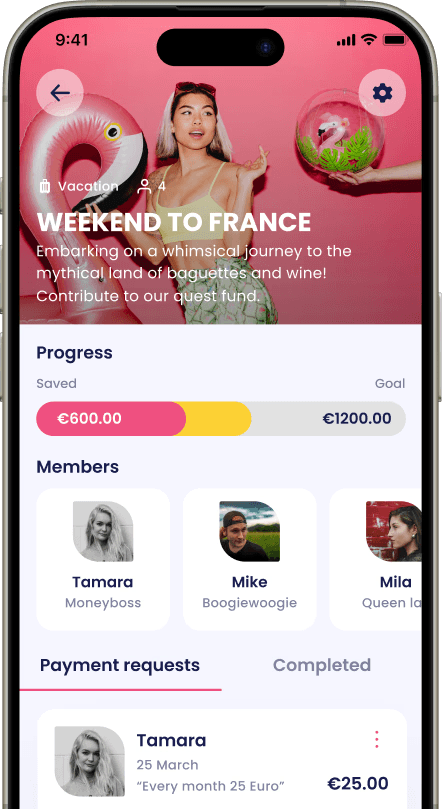
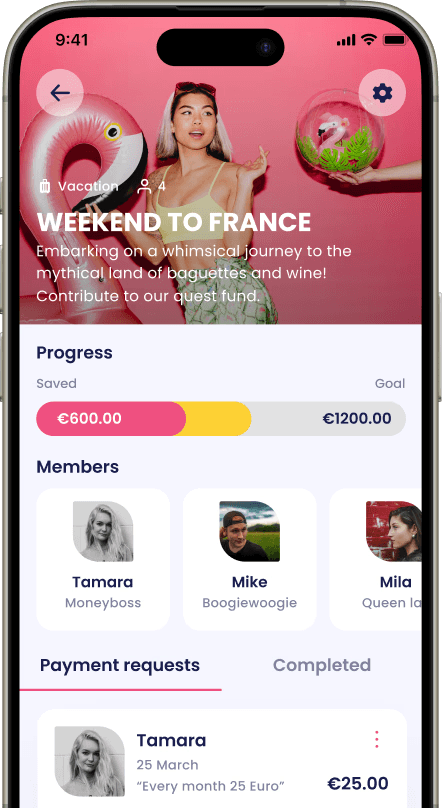
The balance remains visible: All participants can see the current balance and progress.
Contributions are transparent: Everyone knows who has chipped in and who is still pending.
The group manages money collaboratively: Budgeting becomes a group effort, not a solo burden.
That collaborative architecture makes Potje feel much closer to what users originally loved about PayPal Money Pools—plus several modern upgrades designed to protect group harmony.
Why Shared Visibility Matters More Than People Think
Most group money problems are not technical; they are social.
Think about the traditional group funding cycle: One person pays upfront. Another forgets to contribute. Someone else loses track of what they owe. Nobody except the organiser knows the actual budget. Eventually, the organiser becomes frustrated, resentful, and exhausted from sending follow-up texts.
This is where Potje becomes especially strong. Because Potje acts as a transparent shared bank account for managing money (without the strict legal hassle of opening a traditional joint account), everyone inside the group can clearly see:
The shared available balance.
Contribution progress toward the goal.
Group transaction activity.
Overall budget visibility.
That transparency reduces confusion, eliminates financial tension, and reduces awkwardness significantly. For recurring groups—like sports teams or housemates—that shared visibility matters a lot.
Potje Works Better for Recurring Group Money
This is one of the biggest strategic differences between the two platforms.
Collctiv performs incredibly well for single-event collections.
Examples include:
Birthday gifts and farewell presents.
One-off social events.
Quick fundraising moments where the group won't interact financially again.
Potje performs significantly better for recurring group behaviour.
Examples include:
Friend groups travelling together: Managing ongoing travel budgets.
Sports teams: Handling weekly match fees or season-long equipment funds.
Student houses: Managing shared groceries, utilities, and communal supplies.
Workplace collections: Keeping a standing "team fund" for lunches, sympathy collections, and birthdays throughout the year.
Shared savings goals: Couples or friends pooling money together over months to afford a big purchase.
Potje’s product positioning strongly aligns with long-term and recurring group money management. That creates a much smoother experience for groups that repeatedly manage money together.
Why Repayment Apps Are Different From Shared Money Apps
Many users searching for PayPal Money Pools alternatives also compare platforms like Splitwise or Collection Pot. But there is a major behavioural difference you need to consider before choosing your tech stack.
Repayment Apps Focus on Debt Calculation
Apps like Splitwise are brilliant tools, but they mainly calculate:
Who owes whom.
Shared expense breakdowns.
Repayment tracking after spending has occurred.
That works well after the money has already been spent. But it inherently creates a dynamic of debt.
Shared Money Pots Focus on Collaboration Before Spending
Potje focuses much more heavily on proactive financial planning:
Collecting money upfront.
Shared budgeting and setting goals.
Transparent balances that everyone can see.
Group savings behaviour.
This creates significantly less repayment stress later. Instead of starting the conversation with, "You owe me money," the group starts from a place of, "We already planned the budget together, let's pool our funds." That completely changes the social dynamic for the better.
Practical Examples Where Potje Stands Out
Let’s look at real-world scenarios where having a dedicated money pot outperforms a simple collection link:
1. Group Holidays and Trips
Travel groups constantly struggle with shared deposits, accommodation costs, activity planning, and ongoing daily contributions. Potje helps groups organise travel budgets before the trip starts. By pooling funds in advance, you avoid constantly calculating repayments and tracking receipts during the holiday, letting you actually enjoy your vacation.
2. Sports Teams and Clubs
Sports clubs regularly manage equipment fees, team travel, match costs, and post-game social events. Recurring contribution behaviour works especially well inside a shared money pot structure, ensuring the team manager isn't left out of pocket at the end of the season.
3. Workplace Collections
Teams organising birthday gifts, farewell presents, team lunches, or sympathy collections benefit massively from having one organised, transparent fund. Instead of relying on one organiser’s personal bank account (and mixing corporate funds with personal grocery money), Potje keeps it cleanly separated.
4. Friend Groups & Housemates
Festival groups, shared apartments, and recurring social groups often manage money repeatedly throughout the year. Potje helps create continuity around that shared money behaviour.
Automated Reminders Reduce the Worst Part of Group Money
Nobody enjoys chasing their friends or coworkers for money. That awkwardness is one of the biggest reasons group money becomes stressful and why people dread being the designated "organiser."
Potje helps reduce this friction through automated payment requests and reminders. The system handles much of that coordination automatically.
That matters because manual chasing changes group dynamics quickly. Thanks to Potje's automation, the organiser stops feeling like:
The accountant.
The debt collector.
The person carrying all the administrative burden.
Why Potje Feels More Collaborative Than Traditional Collection Tools
Traditional collection tools usually revolve entirely around one organiser. Potje revolves around the group itself.
That difference matters because shared money is deeply emotional. Groups are not simply exchanging raw payments; they are:
Planning core life experiences.
Supporting people they care about.
Saving together for milestones.
Managing shared ambitions.
Building social moments together.
The money process should feel collaborative, not purely transactional. That specific positioning is where Potje becomes especially differentiated from many standard PayPal Money Pools alternatives, including Collctiv and Collection Pot.
Coming Soon: Spending Directly From the Shared Pot with Apple Pay
One of the most exciting developments that sets Potje apart is its upcoming feature: virtual VISA debit cards linked directly to shared pots.
These cards will support Apple Pay and Google Pay, and can be used anywhere VISA is accepted. For groups, that creates a phenomenally smooth end-to-end experience:
Collect money into the shared Potje pot.
Add the virtual card to your Apple Pay / Google Pay wallet.
Spend directly from the shared balance while on the trip or at the store.
This will make group spending significantly easier for holidays, team events, shared activities, and large group purchases, entirely bypassing the need to transfer money back to a personal bank account before spending.
Note: The feature has not launched yet. You can join the waitlist here: https://www.potje.tech/
FAQ Section
What replaced PayPal Money Pools?
Since PayPal Money Pools shut down, many users have moved toward dedicated shared money platforms like Potje, Collctiv, Collection Pot, and Splitwise. These platforms solve different aspects of group money management, including quick collections, collaborative budgeting, expense splitting, and shared savings behaviour.
What is the difference between Potje and Collctiv?
Collctiv mainly focuses on quick payment collection for one-off groups and events (like a leaving gift). Potje focuses much more heavily on ongoing, shared money management. Potje allows groups to create digital shared money pots, track balances transparently, automate reminders, and manage recurring group money behaviour collaboratively, rather than simply collecting payments once.
Why is Potje a strong alternative to PayPal Money Pools?
Potje recreates many of the collaborative behaviours users originally liked about PayPal Money Pools while adding modern transparency and better long-term money management features. Groups can contribute into shared pots, see real-time balances clearly, utilise automated reminders, and manage money collaboratively without relying on fragmented, one-way payment requests.
Is Potje better for group holidays and shared trips?
Yes, for recurring travel groups, Potje often works better because it focuses on budgeting and collecting money before spending happens. Instead of constantly calculating debts and repayments via apps like Splitwise during the trip, the group contributes into one shared travel pot beforehand. That creates better budgeting visibility and significantly less repayment tension during the holiday.
What is Potje and how does it work?
Potje is a shared money account designed specifically for groups. Users create digital money pots, invite contributors, collect money together securely, and manage balances transparently. The platform is designed around recurring shared money behaviour like group trips, sports teams, workplace collections, and shared savings goals.
Conclusion: The Best Group Money Tools Remove Friction Before it Starts
Most people searching for a PayPal Money Pools alternative are not just looking for another generic payment link. They are looking for a better experience.
They want less stress. Less awkwardness. Less chasing. Less confusion. Less financial tension inside the group.
That is exactly where Potje positions itself differently in the market. Instead of only helping groups collect money, it helps groups manage money together more naturally, transparently, and collaboratively. Whether you are funding a weekend getaway, a local sports team, or a shared flat, moving away from transactional tools and towards collaborative money pots is the future of group finances.
If you're saving up as a group for a trip, event, or gift, Potje makes it easy to collect money into one shared digital pot instead of chasing people for their share. Start a pot through this link and get your first month free. After that it's €5 a month per pot, taken straight from the pot balance, so there's nothing to pay upfront to start saving together.

Social Accountability and Saving: The Missing Link to Financial Freedom
Ondersteuning voor verschillende inhoudstypes zoals artikelen, blogs, video's en meer. Rijke tekstverwerker met opmaakopties voor verbeterde.
17 november, 2025

Group Saving Apps Compared: What's Easiest, Safest, and Most Transparent?
Ondersteuning voor verschillende inhoudstypes zoals artikelen, blogs, video's en meer. Rijke tekstverwerker met opmaakopties voor verbeterde.
17 november, 2025

Group Money Platforms Compared: What’s Safe, Regulated, and Fair?
Ondersteuning voor verschillende inhoudstypes zoals artikelen, blogs, video's en meer. Rijke tekstverwerker met opmaakopties voor verbeterde.
17 november, 2025
