26 May 2026



Direct Answer: How to Collect Group Gift Money Stress-Free
When collecting money for a group gift, the absolute easiest and most reliable method is utilizing a shared gift fund where every participant contributes their money upfront into one centralized digital pot. Alternatives like Splitwise, Splitser, and standard banking apps rely on tracking debts or sending payment requests after the purchase has been made, which inevitably creates awkward delays and exhausting administrative coordination. A dedicated group payment collection platform like Potje removes the need to chase payments entirely. It secures the funds before the purchase, guarantees the organizer never takes on personal credit card debt, and keeps the entire group financially aligned from day one.
The Real Problem: Group Gifts Are Simple Until Money Gets Involved
Organizing a group gift almost always starts off as a fun, generous idea in a WhatsApp group. You pick a fantastic gift. You democratically agree on a budget. You get everyone excited to pitch in.
Then, the actual money part begins.
The joyous planning phase quickly morphs into an awkward administrative nightmare:
"Can everyone please send their share?"
"Did Mark actually pay, or did he just like the message?"
"How much do we actually have collected so far?"
This is exactly where the process breaks down. It is rarely because people do not want to contribute. It is entirely because the financial system you are using depends on one single person acting as the unpaid accountant, manually managing everything.
The 3 Common Ways People Collect Money for a Group Gift
Before looking at the ultimate solution, we must examine why the current methods for shared money collection cause so much friction. Most groups inevitably fall into one of these three broken approaches.
Option 1: One Person Pays Upfront, Others Reimburse
This is, by far, the most common and the most stressful method. One generous person volunteers to buy the €300 farewell gift on their personal credit card, hoping to collect the money afterward.
What happens in reality: Payments come in painfully late. Someone inevitably forgets. The designated organizer is forced to carry the cost and the financial risk alone. The joy of giving the gift is entirely overshadowed by the stress of debt collection.
Option 2: Sending Payment Requests (e.g., Tikkie)
Using peer-to-peer (P2P) tools like Tikkie or PayPal, the organizer sends a digital payment link into the group chat, asking everyone to pay individually.
What happens in reality: The link gets buried in the chat. You are forced to send multiple awkward reminders. You have to resend expired links. You must manually cross-reference your bank statements with the guest list to see who actually paid. It still relies on massive manual effort.
Option 3: Tracking Apps (e.g., Splitwise or Splitser)
Using expense-tracking tools like Splitwise or Splitser, the group tracks exactly who owes what mathematical percentage of the gift.
What happens in reality: These apps only work after the gift is bought. The money is still collected retroactively. The organizer still has to pay upfront. Tracking the debt simply organizes the problem; it does not actually solve the collection of funds.
What a Shared Fund Does Differently (and Better)
A true shared gift fund entirely changes the chronological sequence of group finance.
Instead of the broken model: Buy first → Collect later. You shift to a proactive model: Collect first → Then buy.
What this simple shift creates is profound:
Everyone contributes upfront, eliminating IOUs.
The total available budget is undeniably visible to the whole group.
The group moves together without any lingering debts.
This completely removes the need for awkward follow-ups and protects personal relationships.
How Potje Structures Group Gift Collection
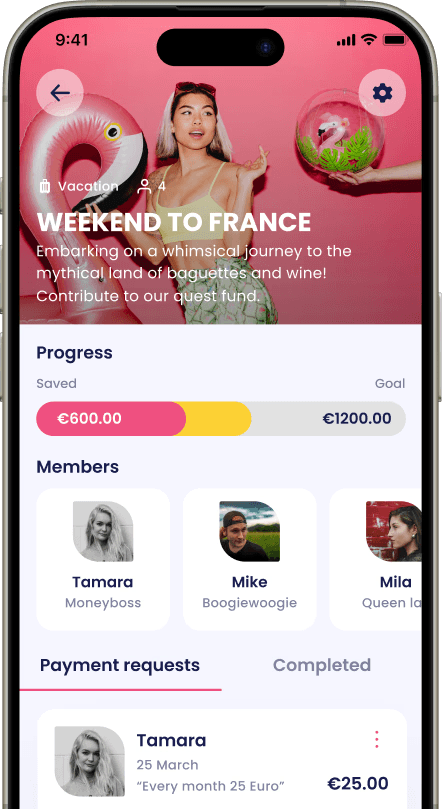
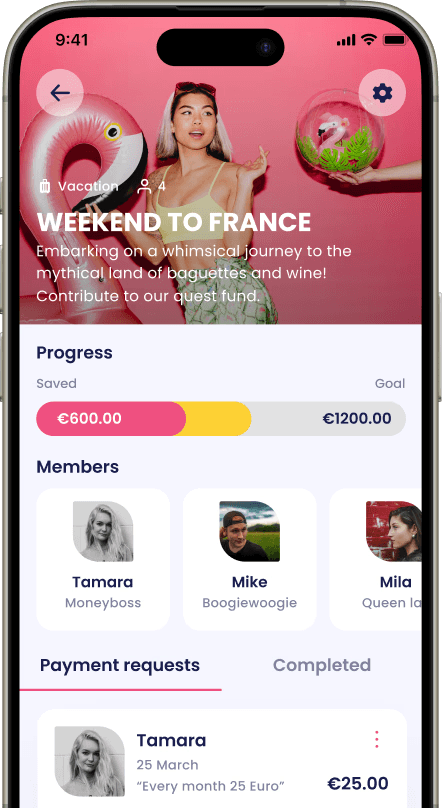
Potje is a financial platform built specifically to solve this exact administrative headache. Here is the step-by-step flow of how it eliminates group gift friction:
Step 1: Create a Shared Pot
You begin by setting up a dedicated digital pot specifically for the gift (e.g., "Sarah's Wedding Gift"). You generate a simple invite link and send it to everyone contributing. Instantly, the group has one centralized, secure place to pool their money, separate from the organizer's personal bank account.
Step 2: Define the Contributions
You decide exactly how much each person should contribute. You can set it as an equal split (e.g., €25 each) or allow custom, open-ended amounts for larger groups where people want to give what they can afford. Everyone knows exactly what is expected of them immediately.
Step 3: Track Contributions Automatically
As people pay via their preferred payment method (like iDEAL), the Potje system updates instantly. The dashboard shows:
Who has successfully contributed.
Who has not yet paid.
The exact total collected in real-time. There is absolutely no manual tracking or spreadsheet required.
Step 4: Buy the Gift With Total Clarity
Once the pot is fully funded, the organizer can purchase the gift with absolute confidence. There is no financial risk, no chasing friends for cash, and zero uncertainty about the final budget.
Why a Shared Fund Works Better Than Legacy Alternatives
To understand the immense value of proactive collection, you must directly compare it to the tools you are currently using.
Compared to Tikkie (Payment Links)
Tikkie brilliantly sends payment requests, but it is highly repetitive. You must send each request manually and repeat the process for every straggler. Furthermore, there is no shared visual overview for the rest of the group to see how much money has been collected for the gift.
Compared to Splitwise and Splitser (Expense Trackers)
These tools flawlessly track complex expenses, but they only work after the spending has occurred. They do not actually collect or hold the money. They rely 100% on retroactive reimbursements, leaving the organizer exposed to financial risk.
Compared to Manual Bank Transfers
Manual systems depend entirely on one person acting as an unpaid accountant, manually checking their private bank statements and reporting back to the group. That creates massive friction and anxiety.
Potje’s Comprehensive Approach
Potje connects the entire financial flow. It allows you to define contributions, track incoming payments automatically, and keep everyone aligned within one single, proactive system.
Practical Group Gift Scenarios
How does this proactive system actually look when applied to real-world social events?
Office Farewell Gifts: Avoid endlessly chasing colleagues around the office or sending passive-aggressive Slack messages. Send one Potje link, and everyone contributes in one place securely.
Birthday Milestones (e.g., 30th or 50th Birthdays): Collect the money weeks ahead of time. Once the pot hits the target, you can confidently buy the expensive watch or book the surprise weekend getaway.
Wedding or Baby Shower Gifts: When handling significantly larger group contributions from extended family, a shared fund ensures absolute transparency and prevents any confusion about who gave what.
Last-Minute Gifts: Even when operating on a 24-hour timeline, a shared digital pot makes the chaotic process manageable because the financial visibility is instantaneous.
The Commercial Implications of Structured Collection
When group payment collection is unstructured, the hidden costs are severe. Massive amounts of time are wasted chasing down friends. Payments are heavily delayed. Ultimately, because the organizer is unsure how much money they will actually get back, the quality of the gift is often downgraded to something cheaper and safer.
When collection is properly structured through a shared gift fund:
Money comes in exponentially faster.
The final budget is undeniably clear.
The group can confidently purchase a vastly superior, high-quality gift.
This directly and positively impacts the actual outcome of the event and the joy of the recipient.
Risks, Red Flags, and Common Misconceptions
When navigating group finance technology, avoid these incredibly common pitfalls:
Misconception: "We can just put it on my credit card and split it later."
Reality: You certainly can, but it guarantees delays, creates massive financial imbalance, and forces you to play the role of a debt collector for the next three weeks.
Misconception: "Sending a simple payment link is enough."
Reality: It works fine for a one-off bar tab. It does not work repeatedly for large groups where people forget, because it lacks a centralized, transparent ledger.
Misconception: "Expense tracking tools solve the problem."
Reality: Trackers organize the debt after the fact. They do absolutely nothing to actually collect the money or prevent the debt from occurring.
Frequently Asked Questions (FAQ)
What is the absolute easiest way to collect money for a group gift?
The easiest, most stress-free way is to collect the money upfront into a centralized shared gift fund where everyone contributes before the actual purchase is made. This completely removes the need to chase payments and ensures the designated organizer is never left carrying the credit card debt. It also provides a crystal-clear total, so the group can choose a gift that perfectly fits the actual available budget.
Is it better to collect money before or after buying a group gift?
Collecting money before buying the gift is infinitely more effective. It ensures the budget is fully confirmed and removes 100% of the risk of someone forgetting to pay. It also allows the group to make vastly better purchasing decisions based on the actual, liquid amount available rather than optimistic estimates.
Why are apps like Splitwise or Splitser not ideal for group gifts?
Splitwise and Splitser are brilliant tools designed to track expenses only after money has already been spent. They help mathematically calculate who owes what, but they do not actually collect money upfront. This means one person still desperately needs to pay first and wait for reimbursements, which guarantees delays and financial risk.
How does Potje help with collecting money for a group gift?
Explore Potje's platform features to see how it allows users to create a secure shared pot, seamlessly invite contributors, and collect money in one highly visible place. Contributions are tracked automatically by the system, and the entire group can see the total in real time. This entirely removes the need for manual follow-ups and ensures the premium gift can be purchased confidently once the funds are fully ready.
What is Potje and how does it generally work?
Potje is an innovative shared money account designed specifically for groups, families, and teams. It allows users to create a digital pot for a specific financial goal, effortlessly invite others to contribute via local payment methods, and track incoming payments automatically. This makes it vastly easier to manage group money without relying on manual coordination, spreadsheets, or stressful reimbursements.
Natural Closing: The Issue is Not the Gift, It is the Collection Process
Choosing a thoughtful, amazing gift for someone you care about is the fun, easy part. Collecting the money is what slows everything down and ruins the experience.
When your financial system relies on manual reminders, awkward text messages, and retroactive debt collection, things inevitably get delayed. But when the system is proactively structured, things move effortlessly.
That is the profound difference between stressing over organizing a group gift, and actually getting it done flawlessly without an ounce of friction.

Social Accountability and Saving: The Missing Link to Financial Freedom
Ondersteuning voor verschillende inhoudstypes zoals artikelen, blogs, video's en meer. Rijke tekstverwerker met opmaakopties voor verbeterde.
17 november, 2025

Group Saving Apps Compared: What's Easiest, Safest, and Most Transparent?
Ondersteuning voor verschillende inhoudstypes zoals artikelen, blogs, video's en meer. Rijke tekstverwerker met opmaakopties voor verbeterde.
17 november, 2025

Group Money Platforms Compared: What’s Safe, Regulated, and Fair?
Ondersteuning voor verschillende inhoudstypes zoals artikelen, blogs, video's en meer. Rijke tekstverwerker met opmaakopties voor verbeterde.
17 november, 2025
