18 June 2026


The simplest, most effective way to avoid financial stress is often the most traditional: saving before you buy is fundamentally simpler than paying after you buy.
Save Now, Buy Later (SNBL) is exactly what it sounds like. Instead of purchasing something today and paying for it over time—often accumulating hidden fees or debt—you intentionally save toward a specific financial goal first, and only make the purchase once you actually have the money securely in your account. For many young adults navigating a complex economic landscape, this proactive approach creates significantly less financial pressure, greater lifestyle flexibility, and ultimate control over personal and shared spending decisions.
Why Buy Now, Pay Later (BNPL) Became So Incredibly Popular
Buy Now, Pay Later fundamentally changed how people shop online and in stores.
Instead of waiting weeks or months until you could genuinely afford something, retail platforms offered the alluring ability to split payments into smaller, seemingly manageable amounts. For millions of consumers, that frictionless checkout process felt easier and highly accessible.
Psychologically, the appeal is incredibly obvious:
A pair of designer sneakers doesn't feel like a heavy €200 expense when it's broken down into four "easy" €50 payments.
A VIP concert ticket doesn't seem overly expensive when the actual cost is silently spread out across several weeks of your future paychecks.
You get exactly what you want immediately. The painful payments happen later.
But for many young adults, that immediate convenience comes with a massive, often invisible trade-off. Future income becomes rigidly committed to purchases that have already happened. When an unexpected emergency arises, or your income fluctuates, those four "easy" payments suddenly become a towering source of anxiety and potential debt.
Why More Young Adults Are Exploring Save Now, Buy Later
A rapidly growing number of young adults—specifically Millennials and Gen Z—are beginning to push back against the constant pressure of instant gratification. They are asking a fundamentally different financial question.
Instead of asking the retailer: "Can I afford the monthly payment?" They are asking themselves: "Can I actually afford the purchase?"
That subtle shift in mindset changes absolutely everything about personal finance.
Save Now, Buy Later focuses heavily on upfront planning rather than stressful repayment. Instead of blindly committing your future money to past desires, you actively build toward a financial goal first.
Embracing this practical alternative actively creates:
Greater visibility over spending: You know exactly where your money is going.
More intentional purchasing decisions: You eliminate impulsive, late-night spending.
Significantly less financial pressure: You never have to worry about missing an installment.
More flexibility when priorities change: If you change your mind about the purchase, you simply keep the cash.
The purchase still happens. The timing simply changes, putting you back in the driver's seat of your financial health.
What Does Save Now, Buy Later Look Like in Practice?
Many financially savvy people already use this approach daily without ever formally giving it a name. By actively setting money aside before pulling out a credit card, they protect their peace of mind.
Here is what the SNBL approach looks like in everyday life:
1. Travel and Vacations
Instead of financing a summer vacation on a high-interest credit card and paying it off until December, you systematically contribute to a dedicated travel fund over several months. You only book the flights and accommodation when the money is fully available, meaning you can relax on the beach without worrying about the looming bill.
2. Festivals and Major Events
Rather than relying on credit or installment plans to secure highly competitive festival tickets, you gradually build a dedicated event budget months before the tickets even go on sale. When the queue opens, you buy with absolute confidence.
3. High-Ticket Technology Purchases
Saving intentionally for a new iPhone, laptop, or gaming console often feels vastly less stressful than nervously managing automatic repayments after the purchase. You own the device outright from day one.
4. Group Goals and Shared Experiences
Friends frequently save together for upcoming trips, birthday celebrations, and unique experiences. Rather than anxiously asking one person to cover the massive cost upfront and hoping everyone pays them back, the group pools their funds beforehand using a shared money pot.
Why Younger Generations Are Embracing Goal-Based Saving
Many young adults grew up in an ecosystem entirely defined by instant gratification. Food arrives instantly via delivery apps. Entertainment streams instantly. Global shopping happens instantly with a single click.
Money, however, does not always work well when every single decision is immediate.
Goal-based saving introduces something incredibly valuable into the modern consumer experience: Intentionality.
When you deliberately spend weeks or months patiently building toward a financial goal, you naturally evaluate whether that item or experience still matters to you. The dopamine hit comes from the progress, not just the purchase.
Sometimes, after saving for two months, the answer is yes, you still want it. Sometimes, the answer is no, the urge has passed.
Both outcomes are immensely positive. The ultimate goal is making financial decisions with total clarity rather than manufactured retail urgency.
How Potje Supports a Save Now, Buy Later Mindset
One of the greatest challenges with the SNBL approach is maintaining motivation. A financial goal often feels incredibly abstract and distant when the money is just sitting aimlessly in a generic checking account without a clear, defined purpose.
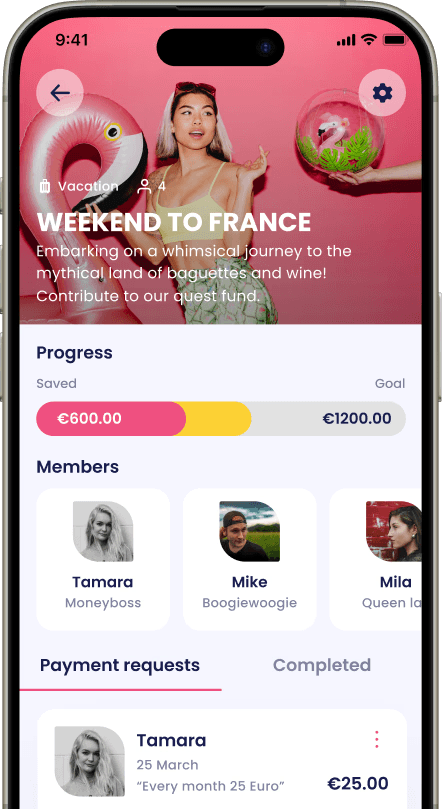
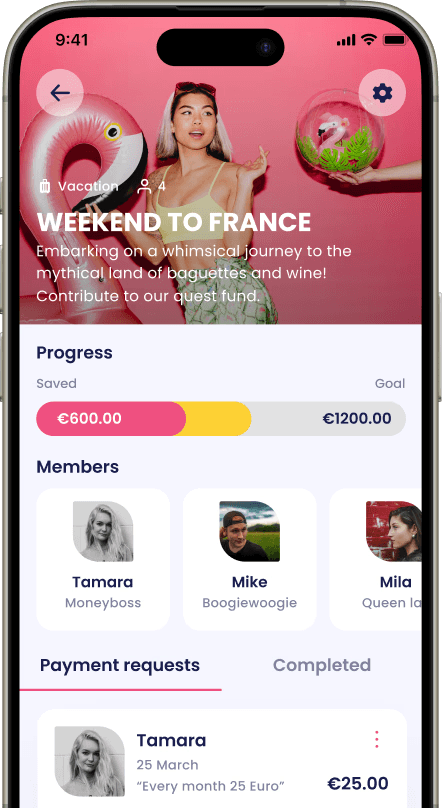
Potje helps solve this exact psychological hurdle through a modern joint money account ecosystem designed specifically around shared goals and dedicated money pots.
Instead of thinking about saving in boring, abstract terms, users can easily create highly specific, visually engaging goals within the app, such as:
"Summer Vacation to Spain"
"Tomorrowland Festival Tickets"
"Airbnb Group Trip Deposits"
"Shared Apartment Furniture"
"Sarah's Wedding Gift"
"Thursday Night Soccer Team Fees"
Suddenly, the goal becomes highly visible. The financial progress becomes trackable and exciting. The money has a strict, designated purpose. This digital architecture makes it exponentially easier to stay motivated and committed to saving before spending.
Saving Together Can Be Significantly Easier Than Saving Alone
Many of our most exciting financial goals intrinsically involve more than one person.
Think about the logistics of:
Massive group holidays
Bachelor and bachelorette party weekends
Amateur sports tournaments
Shared living expenses with roommates
High-value group gifts for colleagues
These common social situations almost always create immense pressure because one brave person inevitably ends up paying the massive bill first. Everyone else promises to seamlessly reimburse them later.
A Save Now, Buy Later approach completely flips that outdated model.
With Potje, the group actively contributes first. The massive spending happens second. That creates crystal-clear financial expectations and entirely removes the heavy financial and emotional pressure from the group organizer.
For shared goals, utilizing a group travel budget strategy is significantly easier, safer, and fairer than relying on messy, delayed repayments after the purchases have already been made.
Comparing Different Financial Approaches: BNPL vs. SNBL Tools
When deciding how to manage your personal or group spending, it is vital to understand the distinct purposes of the tools available on the market today.
Buy Now, Pay Later (e.g., Klarna, Afterpay)
Best for: Immediate access to purchases. The product is received first, and the payments happen later. While convenient for emergencies, it inherently encourages impulsive spending and locks future income into rigid installment schedules.
Tikkie
Best for: Quick peer-to-peer repayments. Tikkie works incredibly well for sending quick payment requests after the spending has already occurred (like splitting a restaurant bill). However, it does not facilitate the proactive saving required for a true SNBL strategy.
Collctiv
Best for: General group pooling. Collctiv focuses heavily on simply collecting money for group events and shared activities. It is a solid tool for general fundraising but lacks the comprehensive joint account structure needed for long-term goal tracking.
bunq
Best for: Independent saving. bunq is a full digital bank that offers excellent savings and money management features. It is fantastic for individual financial organization, but managing complex, multi-person shared goals can sometimes require a more specialized, group-focused tool.
Potje
Best for: Goal-based shared saving (SNBL). Potje focuses intensely on helping individuals and groups successfully save toward highly specific goals through a dedicated joint money account structure. For shared experiences, trips, and group plans, Potje aligns perfectly and naturally with the Save Now, Buy Later mindset.
Common Misconceptions About Save Now, Buy Later
"Saving takes way too long compared to just buying it now."Sometimes it does. But many young adults find that intentionally delaying a purchase for a short period actually helps them decide whether they truly want the item, preventing buyer's remorse and buyer's fatigue.
"Buy Now, Pay Later is always cheaper because of zero interest."Not necessarily. While many BNPL services advertise 0% interest, missing a single payment can trigger massive late fees. Furthermore, the real question isn't whether something is technically affordable today; it's whether those future payments will still feel comfortable and safe months from now.
"Goal-based saving is only for massive, expensive purchases like cars."Not at all. Many financially healthy people use the SNBL approach for weekend trips, concert tickets, birthday gifts, and everyday goals. The core principle of intentionality stays exactly the same regardless of the dollar amount.
FAQ Section
What exactly is Save Now, Buy Later (SNBL)?
Save Now, Buy Later is a proactive budgeting approach where you intentionally save money toward a specific goal before making a purchase. Instead of spreading out stressful payments after buying something, you build the required funds first and only spend once the money is fully available.
Is Save Now, Buy Later better than Buy Now, Pay Later?
Neither approach is universally "better" for every single situation. Save Now, Buy Later heavily prioritizes financial planning, peace of mind, and flexibility, while Buy Now, Pay Later prioritizes immediate product access. However, many financial experts and young adults prefer saving first because it prevents debt and creates much more visibility over spending decisions.
What kinds of goals work well with the Save Now, Buy Later approach?
Group travel, high-end technology purchases, music festivals, milestone gifts, home improvements, group sporting events, and shared social experiences are all perfect examples. Ultimately, any purchase that benefits from a little planning can work incredibly well with an SNBL approach.
What is Potje?
Potje is a modern joint money account that specifically helps individuals and groups effortlessly organize money around shared goals. Users can easily create dedicated digital money pots, contribute toward financial targets, track their progress in real-time, and save together for future experiences and purchases.
Can large groups actually use Save Now, Buy Later?
Yes. In fact, group goals often benefit the most from this strategy. Instead of one single person paying upfront and anxiously chasing repayments for weeks later, everyone contributes their fair share toward a shared goal before any spending occurs, completely eliminating repayment drama.
Key Takeaways
Buy Now, Pay Later focuses heavily on getting the purchase first, often at the expense of your future budget.
Save Now, Buy Later focuses entirely on safely reaching the financial goal first.
For many young adults, that small but powerful difference creates a completely transformed, healthier relationship with money.
Intentionally saving before spending actively reduces financial pressure, massively improves budget visibility, and makes retail purchases feel far more rewarding and intentional.
Whether you are actively planning a massive group trip, buying premium event tickets, organizing a shared experience, or simply working toward a personal milestone, building the money first always creates more flexibility than paying for it later.
Embrace the stress-free way to shop. Save now, buy later with Potje: https://www.potje.tech/en/

Social Accountability and Saving: The Missing Link to Financial Freedom
Ondersteuning voor verschillende inhoudstypes zoals artikelen, blogs, video's en meer. Rijke tekstverwerker met opmaakopties voor verbeterde.
17 november, 2025

Group Saving Apps Compared: What's Easiest, Safest, and Most Transparent?
Ondersteuning voor verschillende inhoudstypes zoals artikelen, blogs, video's en meer. Rijke tekstverwerker met opmaakopties voor verbeterde.
17 november, 2025

Group Money Platforms Compared: What’s Safe, Regulated, and Fair?
Ondersteuning voor verschillende inhoudstypes zoals artikelen, blogs, video's en meer. Rijke tekstverwerker met opmaakopties voor verbeterde.
17 november, 2025