25 August 2026



Someone drops out two days before the trip.
The Airbnb is already booked. The deposit is paid. And now everyone left in the group has to cover a bigger share than they originally agreed to.
Sound familiar?
Last-minute dropouts from group costs are one of the most common reasons group trips fall apart. Not the destination. Not the planning. The money conversation that happens when someone pulls out at the last second.
The good news: this is almost always preventable. And the fix is simpler than most people think.
According to the Ipsos Holiday Barometer 2026, the average European summer holiday budget now stands at €2,089. Financial pressure is the number one reason people pull out of group plans. That means the stakes are real, and so is the risk.
Here is exactly how to stop last-minute dropouts from wrecking your group plans and your friendships.
Why People Drop Out at the Last Minute
Most people do not drop out because they are unreliable. They drop out because the commitment never felt real in the first place.
Here is the pattern that plays out in almost every group:
Someone suggests a trip or event in a group chat
Everyone says "yes, I'm in!" with genuine enthusiasm
One person (usually the organiser) starts booking things
Weeks pass. No money changes hands.
Life gets complicated. Someone's budget tightens. Priorities shift.
The dropout happens, and the organiser is left holding the bill.
The problem is not the person who drops out. The problem is the gap between "I'm in" and "here's my money."
Key insight: Verbal commitment without financial commitment is not really commitment. When people have skin in the game, they show up. When they do not, they have nothing to lose by pulling out.
This is not a personality problem. It is a system problem. And system problems have system solutions.
The Real Cost of One Dropout
One dropout does not just affect the person leaving. It reshuffles the entire group's finances.
Say you have 6 friends splitting an Airbnb for a weekend in Lisbon. Total cost: €900. Everyone agreed to pay €150 each.
Then one person drops out a week before the trip.
Suddenly the remaining 5 people each owe €180. That is €30 more per person. It does not sound like much, but it causes real friction. Someone grumbles. Someone feels it is unfair. The organiser feels guilty for even asking.
The damage nobody talks about
The financial hit is annoying. The real damage is to the group dynamic.
The awkward "do they still owe us?" conversation rarely ends well. The organiser ends up chasing money. The person who dropped out feels guilty. The rest of the group feels cheated.
All of this is avoidable when money is collected before anything is booked.
That single shift, collecting upfront instead of chasing later, is the difference between a group trip that runs smoothly and one that ends in a WhatsApp argument.
5 Rules That Actually Prevent Last-Minute Dropouts
These are not complicated. They just require one thing: agreeing on them before the planning starts.
1. Collect money before you book anything
This is the single most effective rule.
Do not book the Airbnb, buy the festival tickets, or pay the deposit until everyone has contributed their share. Once the money is in, the commitment is real. People are far less likely to drop out when they have already paid.
If someone is not willing to transfer their share before the booking, that tells you everything you need to know about how committed they actually are.
2. Set a hard payment deadline, not a vague one
"Pay me back when you can" does not work.
Set a specific date. "Everyone needs to have paid by the 15th, or we cannot book." Clear deadlines create urgency. Vague ones create the illusion of flexibility that ends in someone dropping out at the worst possible moment.
3. Make costs visible to everyone
One of the biggest drivers of late dropouts is sticker shock. Someone agreed to join the trip but never fully processed what it would cost. Then reality hits and they bail.
The fix is transparency. Share a clear breakdown of what everyone owes, when they need to pay, and what the total group goal looks like. When the numbers are visible and agreed upfront, there are no surprises.
4. Agree upfront on what happens if someone drops out
Have this conversation before it happens, not after.
Does the dropout still owe their share of non-refundable costs?
Do the remaining members absorb the difference?
Is there a replacement policy?
Agreeing on this early removes the awkwardness entirely. It turns an emotional conversation into a practical one.
5. Use a shared money pot, not one person's bank account
This is where the old way really breaks down.
When one person collects all the money in their personal account, two problems emerge. Everyone has to trust that one person completely. And if a dropout happens, it is that same person's job to chase and redistribute the money.
A shared money pot solves both problems. Everyone contributes to a neutral pot. Nobody is personally on the hook. Progress is visible to the whole group.
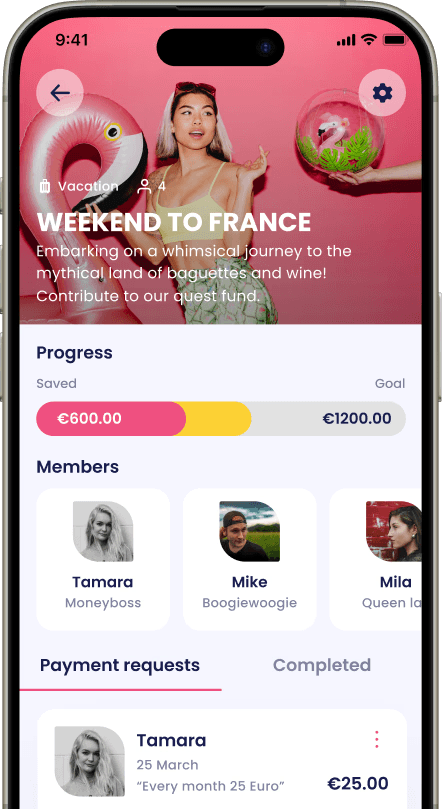
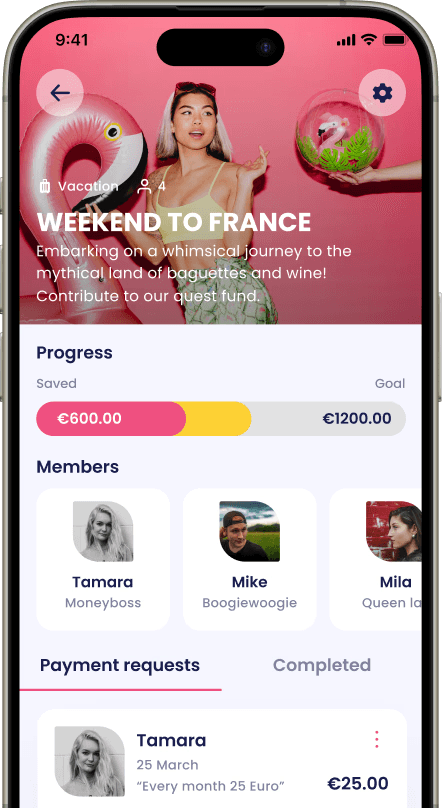
That is exactly what Potje is built for. It is a digital money pot where groups collect contributions before spending begins. Everyone can see the goal, track progress, and contribute in their own time. You can learn how groups use money pots here.
Why Collecting Money Upfront Changes Everything
There is a reason the most experienced group organisers always say the same thing: collect the money first.
It is not about distrust. It is about removing the conditions that make dropping out easy.
When someone has already paid their share into a shared pot, dropping out becomes a real decision with real consequences. They are not just backing out of a plan. They are potentially losing money they already contributed. That psychological shift alone reduces dropouts dramatically.
Old way vs. new way
Old way | New way with Potje | |
When money is collected | After the trip or event | Before anything is booked |
Who holds the money | One person's bank account | A shared, neutral money pot |
Visibility | Only the organiser knows | Everyone sees the progress |
Dropout risk | High (no financial commitment) | Low (money already paid) |
Chasing payments | Always | Automated reminders handle it |
Cost per person | 5 people = €1/month each | Shared fairly across the group |
Potje costs just €5 per month in total for an active money pot. Split across 5 people, that is €1 each per month. Split across 10 people, it is €0.50 each. The cost of one last-minute dropout is always far more than that.
You can read about how to set up a group money pot step by step to get started before your next group plan.
What to Do When a Dropout Happens Anyway
Even with the best systems, life happens. Someone gets sick. A family emergency comes up. A dropout happens despite everyone's best intentions.
Here is how to handle it without the group falling apart.
Step 1: Communicate immediately. Tell the group the same day. Do not let it fester. The sooner everyone knows, the sooner you can make a plan.
Step 2: Recalculate costs transparently. Share an updated breakdown showing what each person now owes. Keep it factual, not emotional. Numbers are easier to accept than accusations.
Step 3: Decide together what the dropout owes. If you agreed on this upfront, great. If not, have the conversation now. Most people are willing to cover non-refundable costs if asked fairly and calmly.
Step 4: Look for a replacement. A new person joining the group can take on the dropout's share and the problem is solved. Start with your wider social circle before accepting a stranger.
Step 5: Use the moment to set better rules for next time. Every dropout is a reminder of why collecting money upfront matters. If your group has been relying on one person's account and a spreadsheet, this is the moment to change that. Setting up a shared money pot takes ten minutes and saves hours of stress.
Frequently Asked Questions
What is the best way to prevent someone from dropping out of a group trip?
The most effective prevention is collecting everyone's contribution before making any bookings. When people have already paid, they have a real financial reason to stay committed. A shared money pot like Potje makes this the default: everyone contributes to a neutral account, the goal is visible to all, and no single person carries the risk alone.
Does someone who drops out still have to pay their share?
This depends on what was agreed upfront. If non-refundable costs have already been paid, it is generally considered fair for the dropout to cover their portion. The cleanest approach is to agree on a dropout policy before anything is booked, so there is no ambiguity when it actually happens.
How do I split costs fairly when someone drops out last minute?
Recalculate the per-person cost based on the remaining group size and share a clear, itemised breakdown with everyone. If the dropout contributed to a shared money pot, those funds can be redistributed or applied to the remaining costs. Keeping the conversation factual and transparent prevents resentment from building.
What is a shared money pot and how does it help with group costs?
A shared money pot is a joint account where everyone in a group contributes towards a shared goal before spending begins. It removes the need for one person to front costs and then chase repayments. Potje is a digital money pot built specifically for groups: friends saving for a trip, families planning an event, colleagues organising a team outing. Learn how it works here.
How much does Potje cost?
Potje costs €5 per month in total for an active money pot. That cost is shared automatically across the group. With 5 people, each person pays €1 per month. With 10 people, it is €0.50 each. The pot is free to set up and you only pay while it is active.
Why do people drop out of group trips at the last minute?
The most common reason is that the commitment never felt financial. People said yes enthusiastically but never paid anything, so backing out felt low-stakes. According to the Ipsos Holiday Barometer 2026, financial pressure is the primary obstacle to holiday participation across Europe. Requiring a financial contribution upfront transforms a casual yes into a real commitment.
Stop Reacting. Start Planning.
Last-minute dropouts feel like bad luck. Most of the time, they are the predictable result of a system that never required real commitment.
The fix is not complicated.
Collect money before you book. Make costs visible. Agree on what happens if someone drops out. Use a shared pot so nobody is personally on the hook.
Group trips, events, and shared experiences should be exciting. Not stressful.
Create your free money pot on Potje before your next group plan. It takes ten minutes and saves a lot more than that.

Social Accountability and Saving: The Missing Link to Financial Freedom
Ondersteuning voor verschillende inhoudstypes zoals artikelen, blogs, video's en meer. Rijke tekstverwerker met opmaakopties voor verbeterde.
17 november, 2025

Group Saving Apps Compared: What's Easiest, Safest, and Most Transparent?
Ondersteuning voor verschillende inhoudstypes zoals artikelen, blogs, video's en meer. Rijke tekstverwerker met opmaakopties voor verbeterde.
17 november, 2025

Group Money Platforms Compared: What’s Safe, Regulated, and Fair?
Ondersteuning voor verschillende inhoudstypes zoals artikelen, blogs, video's en meer. Rijke tekstverwerker met opmaakopties voor verbeterde.
17 november, 2025