4 June 2026


The Short Answer:
The easiest way to use a virtual VISA card for group payments and shared expenses is through a unified financial system where the card connects directly to pooled group funds, rather than a single person’s private bank account. While most current financial providers build their infrastructure entirely around individual spending, Potje is actively building a dedicated shared money system. This includes an upcoming virtual VISA card specifically designed to handle group payments, streamline shared spending, and integrate seamlessly with Apple Pay.
The Problem with Group Payments is Not the Payment Itself
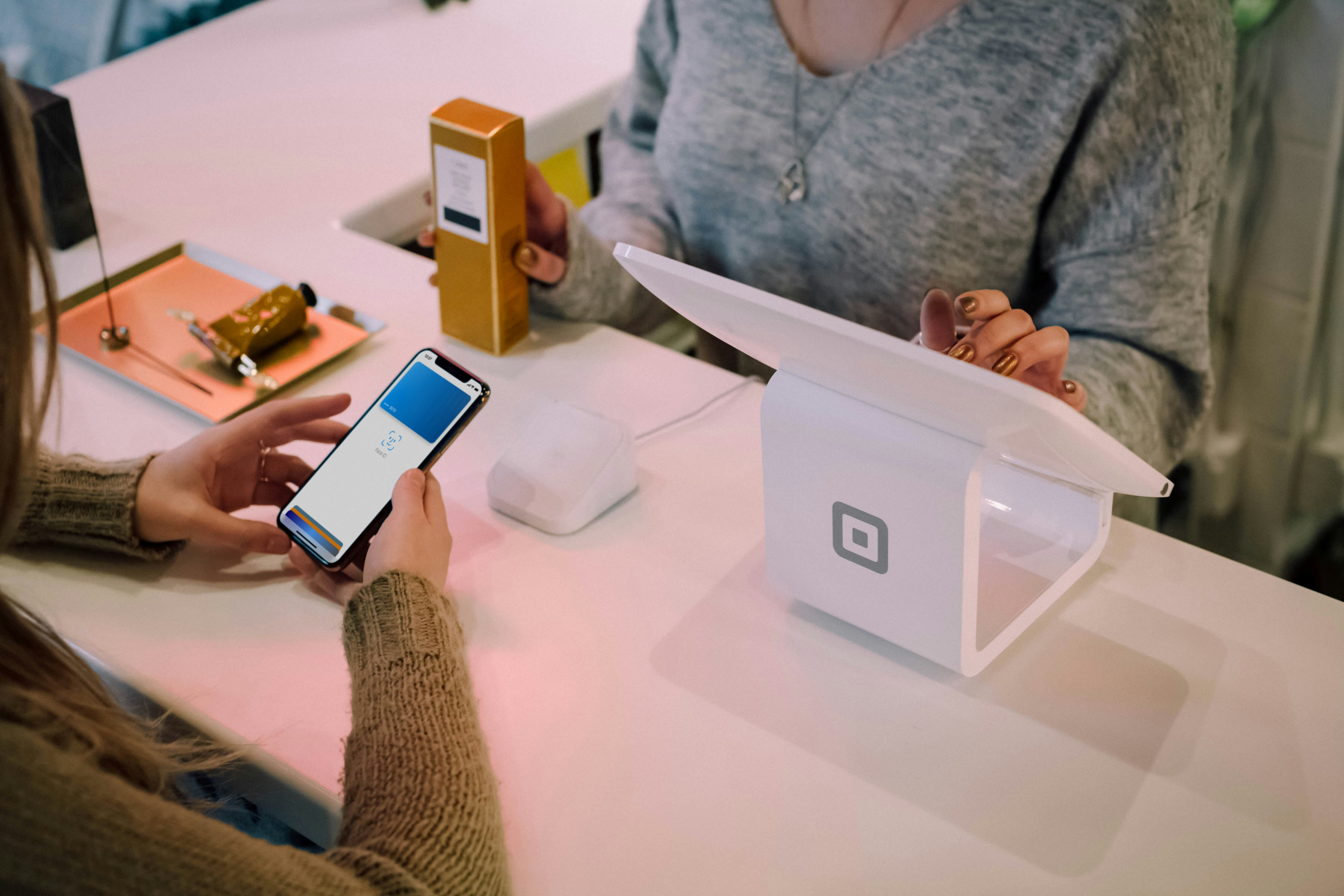
Paying for things is incredibly easy in the modern digital age. Contactless technology, digital wallets, and Apple Pay have made the physical act of exchanging money as simple as double-clicking a side button and holding your phone near a terminal.
The hard part is everything that happens around the transaction.
When it comes to group payments and shared expenses, the friction points are psychological and logistical:
Who pays first? Someone has to step up and foot the bill upfront.
Who still owes money? Keeping track of who has transferred their share and who is lagging behind.
Who tracks the expenses? Managing the spreadsheets, saving receipts, and doing the math.
Who ends up covering the gap? Often, the organizer ends up paying out of pocket for minor discrepancies or forgotten debts.
Most group spending systems and split-bill apps still rely heavily on one person carrying the full financial responsibility. This individual essentially acts as a temporary bank for their friends or family. That is exactly where the friction starts, and it is why traditional payment methods fail at true shared spending.
Why Virtual VISA Cards Became Popular So Quickly
To understand the solution, we must first look at why virtual cards have dominated the fintech space. The shift toward digital-first banking happened because consumers demand faster, more secure access to their money.
Modern consumers do not want to:
Wait 5 to 7 business days for a physical plastic card to arrive in the mail.
Carry cash or bulky wallets.
Constantly log into clunky, traditional banking systems to verify simple transactions.
A virtual VISA card solves all of these inconveniences instantly. The user journey is incredibly streamlined: you sign up for an account, generate the digital card in seconds, add it directly to Apple Pay or Google Wallet, and start spending immediately.
What a Virtual VISA Card Actually Is
If you are new to digital banking, you might wonder how this differs from traditional banking. A virtual VISA card is a digital payment card linked directly to an account balance. It functions exactly like a normal debit card, complete with a 16-digit card number, expiration date, and CVV security code. However, it exists entirely digitally inside a mobile app or a digital wallet.
With a virtual VISA card, you can:
Pay for online subscriptions and e-commerce purchases securely.
Use Apple Pay at physical retail stores.
Make secure, encrypted contactless payments.
Track your spending digitally in real-time through instant push notifications.
But here is the critical detail: The virtual card is only as useful as the financial system built behind it.
Most virtual cards were built strictly for solo spending and individual money management. They were not engineered for shared money management, which brings us to the core issue.
Why Current Virtual Cards Struggle with Group Spending
Despite the rapid advancement in financial technology, most providers still follow the exact same legacy banking structure:
One account owner.
One account balance.
One primary payment source.
In real-world group situations—like a weekend getaway with friends or a shared household—this means one person pays the merchant, and everyone else must reimburse them later. Even with some of the most innovative fintech providers on the market, the coordination of the funds still happens entirely manually. The payment technology improved, but the underlying process did not.
How the Major Competitors Compare
Let’s look at how the top competitors handle these scenarios and where their individual-first structures fall short for true group spending.
Wise
Wise is undeniably strong for international payments, multi-currency accounts, and travel spending. Its virtual cards work flawlessly with Apple Pay, making it a favorite among digital nomads. However, its core architecture is still designed strictly around personal and business accounts. You cannot easily pool money from ten different people into a single Wise card to pay a shared restaurant bill without someone acting as the middleman.
bunq
bunq provides excellent, flexible banking features and full Apple Pay compatibility. It offers highly modern money management tools and even shared accounts. However, the everyday reality of shared spending on their platform still depends heavily on manual coordination between individuals. It remains an individual-centric platform that allows sharing, rather than a platform built for sharing from the ground up.
Current
Current focuses heavily on digital-first banking, fast access to paychecks, and ultimate convenience. It simplifies virtual card access beautifully. But again, the structure remains individual-first. It does not solve the core issue of a group needing to spend from a single, unified pot of money without putting the initial burden on one user.
What People Actually Need for Shared Expenses
Through careful observation of how friends, families, and roommates actually manage their money, it is clear that most shared spending situations require three foundational pillars:
Shared Money Collection: Everyone contributes their portion of the funds upfront. No one has to front the cost and hope they get paid back. If you want to learn more about setting this up, check out how shared money collection works.
A Shared Payment Method: The virtual card spends directly from the group balance, not from an individual’s personal checking account.
Real-Time Visibility: Transparency is key. Everyone in the group can open the app and instantly see exactly where the money went, removing any doubt or confusion.
Without all three of these elements working together, someone inevitably becomes the group's financial organizer, bearing the stress of the logistics.
How Potje Approaches Shared Spending Differently
Potje recognized this gap in the market and decided to flip the standard banking model upside down. Instead of starting with an individual account and trying to hack it for group use, Potje starts with the shared money structure first.
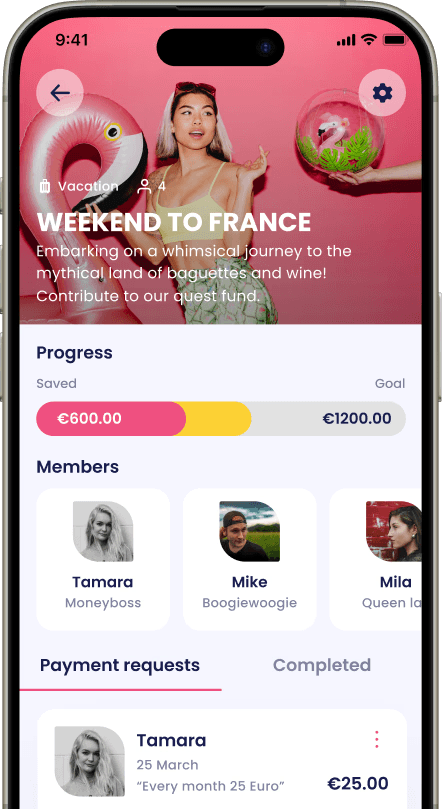
Users can easily create a shared "pot" where everyone involved in the group contributes. These contributions are tracked automatically by the system, and the total balance is completely visible to the entire group.
The Next Evolution: The Potje Virtual VISA Card
The next crucial step is connecting the actual spending directly to that shared pot. Potje is currently developing a highly anticipated virtual VISA card that will:
Connect directly to shared funds: No more moving money back and forth between personal accounts.
Support Apple Pay: Making it incredibly easy to tap and pay at physical locations.
Enable real-time group spending: When the card is swiped, the money leaves the group pot instantly.
This changes the entire financial flow. Instead of one person paying and others settling up later, the group spends together from one shared balance.
Note: This feature is currently in development and coming soon. Once launched, users will be able to generate a virtual VISA card instantly, add it to Apple Pay, and spend directly from shared group funds. You can join the waitlist and secure your spot here: download the Potje app.
Practical Use Cases for Shared Virtual Cards
When you remove the friction of reimbursements, managing shared money becomes effortless. Here are a few ways a shared virtual VISA card changes the game:
Group Travel
Whether it is a weekend road trip or a multi-week international vacation, you can pay for accommodation, flights, rental cars, or group dinners directly from the shared funds. Discover more about managing group travel expenses without the headache.
Shared Events
Planning can be stressful. Manage festival weekends, surprise birthday parties, or bachelor/bachelorette trips with one visible balance that all attendees have already paid into.
Family Spending
Modern families need modern solutions. Track shared household expenses, groceries, and childcare costs without relying solely on one parent or a traditional, rigid joint bank account.
Student Houses and Roommates
Living with others means shared bills. Use one shared spending system for recurring purchases, internet bills, utilities, and shared household supplies, ensuring everyone pays their fair share on time.
Commercial Implications: The Future of the Market
The virtual card market is rapidly becoming crowded. Almost every modern financial provider can now offer fast signups, Apple Pay compatibility, and instant digital spending. Because these features are now the baseline expectation, the next true competitive advantage is coordination.
The companies that actually solve shared money management will lead the next wave of fintech adoption.
When spending stays individual: Reimbursements slow everything down. One person carries the financial pressure. Visibility becomes fragmented across multiple different banking apps and chat groups.
When spending becomes shared: Financial decisions happen faster. Budgets stay 100% transparent. The group operates more smoothly, preserving relationships and reducing financial anxiety.
That is exactly where the shared finance category is moving next.
Risks and Misconceptions
As shared digital wallets and virtual cards evolve, a few common misconceptions persist:
“Apple Pay solves group payments.” Apple Pay solves payment speed and security, not group coordination. You still need a shared financial system behind the Apple Wallet to split the burden.
“Virtual cards are only for online shopping.” This is an outdated view. Most virtual cards now work seamlessly for in-person contactless spending via mobile wallets.
“Shared spending means shared responsibility automatically.” Not necessarily. Unless the financial system itself is intentionally designed around shared ownership (like Potje), the legal and practical responsibility still usually falls on the individual account holder.
FAQ Section
What is a virtual VISA card?
A virtual VISA card is a digital payment card linked directly to an account balance. It functions exactly like a normal physical debit card—featuring a card number, expiration date, and CVV—but exists entirely digitally inside an app or mobile wallet. Users can securely use it for online purchases, Apple Pay transactions, and contactless in-store spending.
Can I use a virtual VISA card with Apple Pay?
Yes. Many modern virtual VISA cards support direct Apple Pay integration. This allows users to add the digital card to their Apple Wallet and pay securely with their iPhone or Apple Watch. This integration makes digital spending faster and completely removes the need to carry a physical plastic card.
Are virtual VISA cards good for shared expenses?
Most current virtual VISA cards on the market are designed exclusively for individual spending, which means one person still needs to pay upfront while others reimburse them later. A truly effective shared expense setup requires the virtual card to connect directly to a pooled, shared fund rather than a single personal account.
Why do group payments usually become difficult?
Group payments often become difficult because one single person typically carries the burden of paying upfront, tracking the receipts, and aggressively collecting money from friends afterward. This outdated method creates delays, awkward conversations, confusion, and uneven financial responsibility. Dedicated shared money systems drastically reduce this friction by making group contributions and group spending visible to everyone involved.
What is Potje and how will its virtual VISA card work?
Potje is an innovative shared money account specifically designed for groups. Users can create a digital "pot," invite contributors, and manage pooled money together in one transparent place. Potje is currently developing a virtual VISA card that will connect directly to these shared funds and fully support Apple Pay. This upcoming feature will allow groups to spend together instantly without ever relying on tedious reimbursements. Users can join the waitlist on the Potje website for early access.
Conclusion: The Easiest Payment System
Ultimately, the easiest payment system is the one nobody has to manage manually.
While most modern payment tools and apps focus purely on making spending faster, very few focus on making coordination easier. That is the real difference maker in today's financial landscape.
When the money system stays individual, someone always becomes responsible for the group, carrying the mental and financial load. But when the money system becomes genuinely shared, the experience finally works the exact way group spending should: fairly, transparently, and effortlessly.

Social Accountability and Saving: The Missing Link to Financial Freedom
Ondersteuning voor verschillende inhoudstypes zoals artikelen, blogs, video's en meer. Rijke tekstverwerker met opmaakopties voor verbeterde.
17 november, 2025

Group Saving Apps Compared: What's Easiest, Safest, and Most Transparent?
Ondersteuning voor verschillende inhoudstypes zoals artikelen, blogs, video's en meer. Rijke tekstverwerker met opmaakopties voor verbeterde.
17 november, 2025

Group Money Platforms Compared: What’s Safe, Regulated, and Fair?
Ondersteuning voor verschillende inhoudstypes zoals artikelen, blogs, video's en meer. Rijke tekstverwerker met opmaakopties voor verbeterde.
17 november, 2025
