13 August 2026



Your team has no official name on a league register.
No committee. No chairman. No treasurer with a spreadsheet going back to 2019.
Just a WhatsApp group, a recurring pitch booking, and twelve people who somehow always show up on Sunday morning.
Friend-run sports teams are everywhere across Europe. Five-a-side football squads. Padel groups. Running crews. Cycling clubs that never actually registered as clubs. These are real teams with real costs and absolutely no formal financial structure to manage them.
The real problem: someone always ends up paying for everyone else first, then spends the next two weeks chasing people for their share.
This is about how to fix that. Specifically, how informal sports teams can build a proper team fund without needing a club account, a treasurer, or a single spreadsheet.
TL;DR: A shared money pot collects contributions from everyone upfront, so the organiser always has a real balance to pay from. No fronting money. No chasing. No awkwardness.
What Does a Friend-Run Sports Team Actually Cost?
More than most people realise.
When you're not part of a formal club, there's no membership fee quietly covering things in the background. Every cost lands directly on the group. And those costs add up faster than most teams ever sit down to calculate.
The typical recurring expenses
Pitch or court hire - usually the biggest line item. A five-a-side pitch in Amsterdam, Brussels or Berlin typically runs €40-€80 per session. Padel courts across Europe average €8-€34 per person per hour depending on city and time slot.
Referee or umpire fees - for leagues or regular fixtures, this commonly runs €20-€40 per game.
Kit and equipment - bibs, balls, cones, first aid kits. One-off purchases, but not cheap when split across a squad.
Tournament entry fees - especially relevant for padel and five-a-side groups that enter local competitions.
Post-match food or drinks - technically optional. Realistically, always on the list.
Travel costs - for away fixtures or tournaments in other cities.
A team playing twice a month could easily be managing €100-€200 in shared costs per month. Across a squad of ten, that's €10-€20 each. Completely manageable per person. Genuinely chaotic to collect.
Key insight: The money is never the real problem. The collection process is.
Most teams handle this the same way: one person pays, everyone else transfers later. Or not. And the person who paid spends days following up, feeling awkward, and quietly resenting the whole arrangement.
There is a better way.
Why the "One Person Pays First" System Always Breaks Down
It works fine the first few times.
Then someone forgets to transfer. Someone else pays a slightly different amount. The person who fronted the money starts keeping a mental tally. Resentment builds quietly. Eventually someone drops out of the group, not because they stopped enjoying the sport, but because the money situation became uncomfortable.
Research into group financial behaviour consistently shows that chasing friends for money is one of the most socially awkward experiences people actively try to avoid. It creates an imbalance in group dynamics, even when everyone has good intentions.
Three ways informal teams try to cope (and why each falls short)
Approach | What goes wrong |
One person pays, others transfer after | Relies on everyone remembering. They don't. |
Rotating who pays each week | Loses track of who owes what over time. |
Everyone pays cash on the day | Someone always forgets their wallet. Cash is impossible to track. |
None of these solve the actual problem.
The actual problem is that money is being collected after the cost is incurred, instead of before.
Collect first. Spend from what you've already collected. That single shift changes everything for a team fund.
What a Team Fund Actually Looks Like in Practice
A team fund is a shared money pot that the whole group contributes to in advance.
Instead of one person fronting the cost and chasing repayments, everyone puts their share in before the season starts, or at the start of each month. The organiser books the pitch, pays the referee, covers the tournament entry fee, all from money that is already sitting there waiting to be used.
Nobody owes anyone anything after the fact.
How to set one up without a club account
You don't need a registered club or a business bank account to run a team fund. What you need is a dedicated place to hold the money that isn't one person's personal current account.
This is exactly where a shared money pot makes more sense than any other option. Here's how a typical team fund setup works in practice:
Decide on a monthly contribution - add up your expected costs per month and divide by the number of regular players.
Create a shared money pot - one dedicated place where everyone sends their contribution at the start of each month.
Set up automatic payment reminders - so nobody has to manually chase anyone.
The organiser pays costs from the pot - pitch hire, referee fees, tournament entries, kit orders.
Everyone can see the balance - full transparency, no confusion about where the money went.
The result: the organiser stops being the team banker. Everyone contributes equally. The money is there when it's needed.
Where Potje fits in
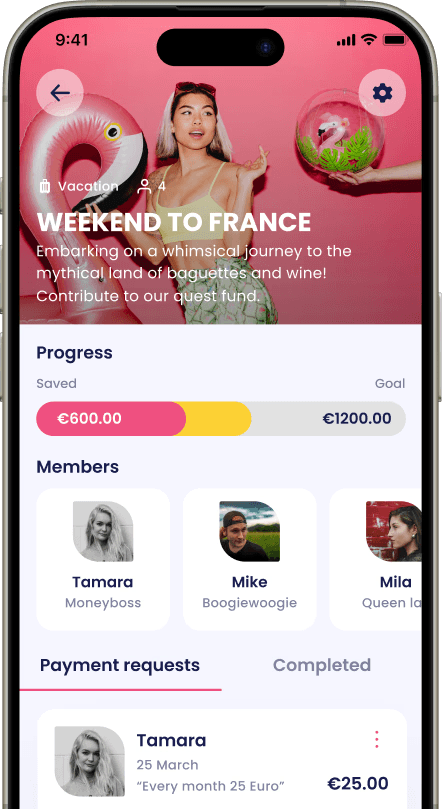
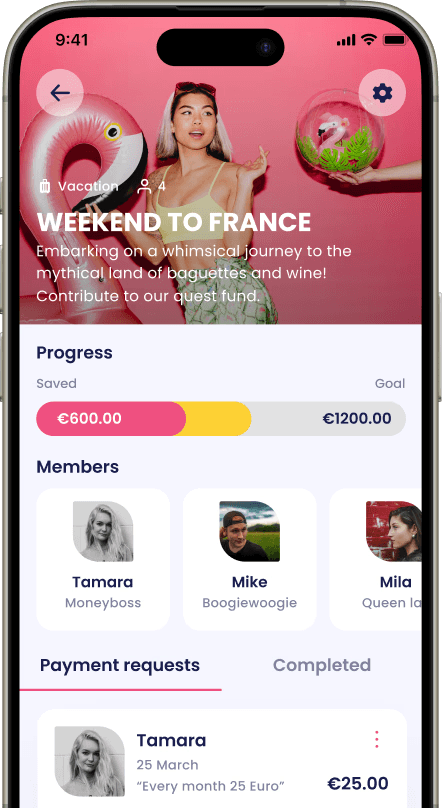
One platform built specifically for this kind of setup is Potje. Rather than tracking who owes what after spending, Potje helps groups collect money upfront into a shared pot. Automated reminders go out to every member, contributions come in, and the organiser has a real balance to work with before a single euro is spent.
The total cost of running a Potje money pot is €5 per month, shared across the whole group. For a team of ten players, that's €0.50 each per month. For a group of five, it's €1.00 each. The admin cost is essentially invisible compared to what the team already spends on pitch hire alone.
Team Fund vs. Using Someone's Personal Bank Account
A lot of teams skip the proper setup and just use one player's personal account as the de facto team fund.
It feels simpler. It isn't.
When group money sits in a personal account, there is no separation between what belongs to the group and what belongs to that individual. It creates confusion, it creates trust issues, and it puts one person in a genuinely difficult position, especially if they ever leave the team or the group dynamic changes.
"Who actually owns the money in there?"
That question gets uncomfortable fast. And it's a question nobody should have to ask.
A dedicated shared money pot solves this cleanly. The money belongs to the group. Everyone can see it. Nobody has to take anyone's word for what the balance is.
For a full breakdown of the risks, this guide on managing a shared fund without opening a bank account covers the options in detail. And if you want to understand how a digital money pot compares to a joint account or split app, this comparison is worth reading before you decide.
What transparency actually does for a team
When everyone can see the balance, something shifts in how the group operates.
People pay on time because they can see when others have paid. The social dynamic does the work, not the organiser. There is no suspicion about where the money went. And when costs come up, the organiser doesn't need to justify every purchase because the numbers are visible to everyone.
Transparency removes the awkwardness. That is the real value of a proper team fund, not just the convenience.
Which Sports Groups Benefit Most From a Team Fund?
Almost any informal sports group benefits from a shared money pot. But some setups make it especially valuable.
Five-a-side and futsal groups
Weekly pitch hire is the single biggest recurring cost. It's predictable, everyone expects to pay their share, and it happens every single week. A monthly team fund contribution means the organiser never has to front the pitch fee from their own pocket again.
Padel groups
Padel has grown rapidly across Europe, particularly in the Netherlands, Spain, Belgium, Germany and Sweden. Most padel groups are completely informal: a few friends booking courts weekly, no club structure, no membership fees. Court costs typically run €8-€34 per person per session depending on location and time slot. A team fund keeps it simple and removes the awkward "who's paying this week?" conversation every time.
Running clubs and cycling groups
Race entry fees, group kit orders, travel to events. These costs tend to be larger and less frequent, which makes upfront collection even more important. Nobody wants to front a €250 race entry and spend a month chasing eight people for €31.25 each.
Social sports leagues
Five-a-side leagues, volleyball, basketball, beach volleyball. Entry fees are usually paid per season. A team fund collected at the start of the season covers the entry fee, kit, and any other costs, without any drama mid-season when the money runs short.
Key takeaway: If your group has any recurring cost that more than one person shares, a team fund is worth setting up. The admin takes about ten minutes. The benefit lasts the whole season.
Frequently Asked Questions
What is a team fund for a sports group?
A team fund is a shared money pot that a group of players contribute to collectively, usually on a monthly or seasonal basis. It covers shared costs like pitch hire, referee fees, kit, and tournament entries. Rather than one person paying upfront and chasing repayments, everyone contributes first and costs are paid from the shared balance. No debt. No awkwardness.
Do you need a club account to run a team fund?
No. Informal sports groups do not need a registered club or a business bank account to manage a team fund. A digital shared money pot gives the group a dedicated place to hold and track contributions without any formal registration.
How much should each person contribute to a team fund?
Add up your regular monthly expenses (pitch hire, referee fees, etc.) and divide by the number of active contributors. For most informal European sports teams, this works out to €10-€30 per person per month. Starting slightly higher than your estimate gives you a buffer for unexpected costs.
What is the difference between a team fund and a split app?
A split app tracks who owes what after money has been spent. A team fund collects contributions before costs are incurred. The key difference is timing: split apps create debt, team funds prevent it from forming in the first place.
Is a digital money pot safe for a sports team?
Yes, provided you use a regulated platform. Potje operates under European financial regulations, meaning money held in a pot is properly protected. This is a significant advantage over keeping group money in a personal bank account, where there is no separation or protection for the group's funds. You can read more about how group money safety works online before getting started.
Can the whole team see the fund balance?
Yes. With a shared money pot, all contributors can see the current balance and track who has paid. This transparency is one of the main reasons teams prefer a dedicated pot over informal arrangements. It removes the need for the organiser to provide constant updates, and it removes any suspicion about where the money has gone.
Start Your Team Fund Today
Your team already has everything it needs to run a proper fund.
A clear set of regular costs. A group of people willing to contribute. An organiser who just wants to stop being the one fronting everything.
The only missing piece is the right place to hold the money.
A shared money pot through Potje takes about ten minutes to set up. Create the pot, set a contribution amount, share the link with your team, and automated reminders handle the rest. Everyone sees the balance. Nobody chases anyone. The organiser can book the pitch, pay the fees, and actually enjoy the game.
The old way: one person pays, everyone owes, someone always forgets.
The new way: everyone contributes first, the money is already there, nobody owes anything.

Social Accountability and Saving: The Missing Link to Financial Freedom
Ondersteuning voor verschillende inhoudstypes zoals artikelen, blogs, video's en meer. Rijke tekstverwerker met opmaakopties voor verbeterde.
17 november, 2025

Group Saving Apps Compared: What's Easiest, Safest, and Most Transparent?
Ondersteuning voor verschillende inhoudstypes zoals artikelen, blogs, video's en meer. Rijke tekstverwerker met opmaakopties voor verbeterde.
17 november, 2025

Group Money Platforms Compared: What’s Safe, Regulated, and Fair?
Ondersteuning voor verschillende inhoudstypes zoals artikelen, blogs, video's en meer. Rijke tekstverwerker met opmaakopties voor verbeterde.
17 november, 2025