19 August 2026



We have all been there.
The trip is over. The Airbnb was amazing. The group WhatsApp is still buzzing with photos. And somewhere in the back of your mind, you are quietly calculating how much three people still owe you for the booking.
You don't want to bring it up. You don't want to look petty. But €180 is €180.
The good news: most of the time, your friends haven't ghosted you. They just forgot. And there is a right way to remind them that keeps the friendship intact and actually gets you paid.
This guide covers exactly that. Plus, we'll share the one approach that makes the whole conversation unnecessary in the first place.
Why Reminding Friends About Money Feels So Awkward
Money is emotional. Even when the amount is small, asking for it back can feel like you're making a statement about the friendship itself.
Etiquette expert Thomas Farley, known as Mister Manners, puts it well: "I believe that anyone in the role of an unwitting lender should never feel uneasy about requesting what is rightfully theirs". The discomfort is social, not logical.
The reality is that most people who haven't paid you back simply forgot. Life gets busy. The post-trip glow fades and the mental note to "sort the money" gets buried under everything else.
Understanding this changes how you approach the reminder. You're not confronting someone. You're just giving them a nudge.
The Longer You Wait, the Harder It Gets
This is the uncomfortable truth about money between friends.
A quick message one week after a trip feels completely normal. The same message six months later feels loaded with resentment, even if you word it identically.
According to etiquette specialists, the window matters. Waiting too long doesn't just make the conversation harder. It also makes a simple payment request start to look passive-aggressive.
The rule of thumb:
Small amounts between close friends: remind within 1-2 weeks
Larger shared costs (Airbnb, group trip, event): remind within 5-7 days
Group collections (birthday gift, farewell present): set a clear deadline upfront
How to Remind Friends About Money: Practical Scripts That Work
The formula is simple. Etiquette coach Sheila Heen, co-author of Difficult Conversations, recommends keeping it short, specific, and neutral.
Amount + context + clear next step.
That's it. No guilt. No lengthy explanation. No apology for asking.
Script 1: The Casual First Reminder
Best for: close friends, smaller amounts, first follow-up.
"Hey! Quick one, just checking in about the €45 from dinner last week. Whenever works for you."
This works because it's specific (€45, dinner, last week), low pressure ("whenever works"), and doesn't read as accusatory.
Script 2: The Group Reminder
Best for: shared trips, events, or collections where multiple people owe you.
"Hey everyone, just a quick reminder about the Airbnb costs from the weekend. Total was €600, so that's €100 each. Let me know when you've sent it over."
Etiquette expert Diane Gottsman from the Protocol School of Texas recommends group reminders for exactly this scenario. They avoid singling anyone out and feel less personal than a one-on-one message.
Script 3: The Polite Follow-Up
Best for: when the first reminder went unanswered.
"Hey, I don't want this to get weird. Just following up on the €100 from the trip. Let me know when works."
Keep the tone calm. Assume good intent. The goal is to make it easy for them to pay, not to make them feel guilty.
Script 4: The Larger Amount
Best for: significant shared costs where a clear deadline helps.
"Hi [name], hope you're well. Wanted to check in about the €250 from the holiday booking. Could you send it over by Friday? Thanks so much."
For larger amounts, experts recommend being direct about timing. Vague requests ("whenever you can") give people an easy reason to keep delaying.
What Not to Say
Just as important as the right words are the wrong ones.
Avoid these phrases entirely:
"Are you ever going to pay me back?"
"I guess you forgot again."
"I'm not trying to be difficult, but..."
Sending a payment request with zero context after weeks of silence
The last one is worth highlighting. A random payment request out of nowhere, especially a long time after the event, reads as passive-aggressive even when it isn't meant that way.
The Real Problem With Chasing Friends for Money
Here's what most advice on this topic misses.
The awkward reminder is a symptom. The real problem is the system: one person covers costs upfront, everyone else promises to pay later, and someone ends up doing the chasing.
This is the old way. And it creates friction every single time.
One person carries the financial weight of the whole group. They front the Airbnb, the festival tickets, the group dinner. Then they spend the next two weeks sending polite (and increasingly less polite) reminders to get their money back.
It's not a communication problem. It's a structural one.
A Better Approach: Collect Before You Spend
The simplest way to never have to send a money reminder again is to collect contributions before the spending happens.
This is exactly how Potje works.
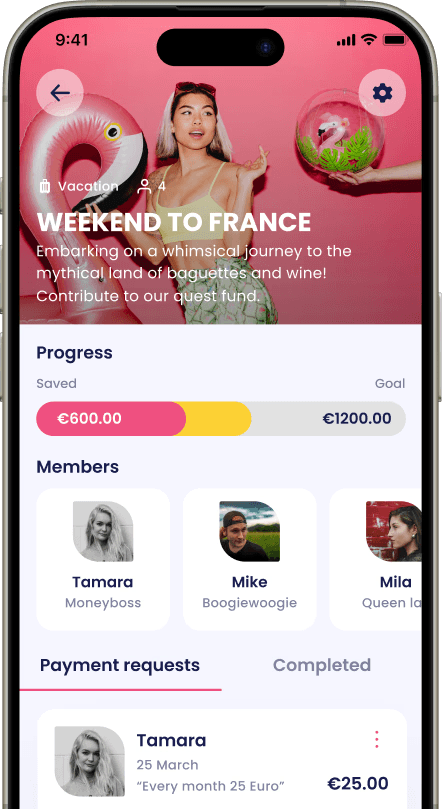
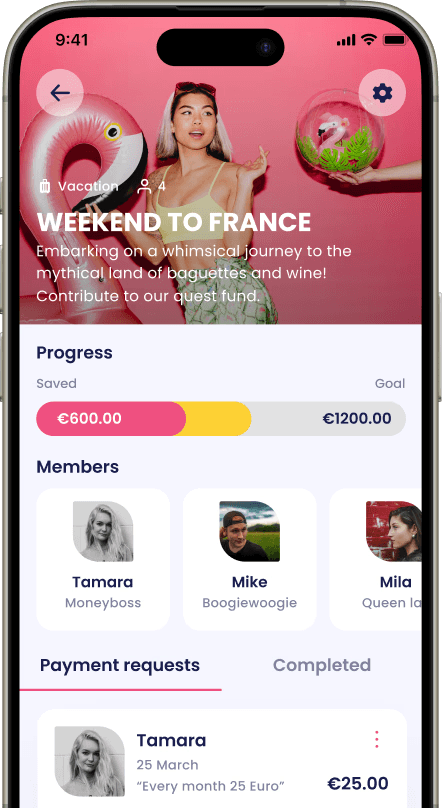
Rather than one person paying and chasing everyone later, the group creates a shared money pot. Everyone contributes their share upfront. When the goal is reached, the money gets spent. No IOUs. No awkward follow-ups. No mental accounting.
Everyone contributes first. The group reaches its goal together. Then the money gets spent.
For a group holiday, that means the Airbnb deposit is covered from the shared pot before anyone books. For a birthday collection, contributions come in before the gift is ordered. For a team event, everyone's share is in the pot before the venue is confirmed.
It removes the moment where money becomes uncomfortable entirely.
You can set up a money pot in minutes and share a link with your group. Potje handles the collection, tracks who has contributed, and sends automatic reminders so you never have to. The cost is shared equally across the group, typically €0.50 to €2.50 per person per month depending on group size.
If you're tired of being the one who fronts everything and chases everyone, this is the fix. Read more about how a shared money pot works and why more friend groups are making the switch.
Frequently Asked Questions
Is it rude to remind a friend they owe you money?
No. Etiquette experts are clear on this. Asking for money you are owed is entirely reasonable. The key is how you do it: keep the tone light, be specific about the amount, and assume they simply forgot rather than approaching it as a confrontation.
How long should I wait before reminding someone?
For smaller amounts, one to two weeks is reasonable. For larger shared costs like a holiday or event booking, remind within five to seven days. The longer you wait, the more loaded the conversation becomes.
What is the best way to remind a group of friends about money?
Send a general message to the whole group rather than calling out individuals. Be specific about the total amount and each person's share. Keep the tone friendly and include a clear next step, such as a payment link or deadline.
How do I avoid the awkward money conversation altogether?
Use a shared money pot before the spending happens. Platforms like Potje let groups collect contributions upfront so nobody has to front costs or chase repayments afterwards. It's the cleanest solution for group holidays, gift collections, and shared events.
What if a friend simply doesn't pay after multiple reminders?
Stay calm and be more direct. Set a specific deadline and preferred payment method. For larger amounts, a direct conversation (rather than a text) is more effective. According to etiquette experts, clarity and polite firmness are both completely acceptable.
Want to stop chasing friends for money altogether? Create a free money pot with Potje and let everyone contribute before the spending starts.

Social Accountability and Saving: The Missing Link to Financial Freedom
Ondersteuning voor verschillende inhoudstypes zoals artikelen, blogs, video's en meer. Rijke tekstverwerker met opmaakopties voor verbeterde.
17 november, 2025

Group Saving Apps Compared: What's Easiest, Safest, and Most Transparent?
Ondersteuning voor verschillende inhoudstypes zoals artikelen, blogs, video's en meer. Rijke tekstverwerker met opmaakopties voor verbeterde.
17 november, 2025

Group Money Platforms Compared: What’s Safe, Regulated, and Fair?
Ondersteuning voor verschillende inhoudstypes zoals artikelen, blogs, video's en meer. Rijke tekstverwerker met opmaakopties voor verbeterde.
17 november, 2025