14 April 2026



"I’ll pay you later." Those five words are the fastest way to derail group plans. This phrase delays bookings, shifts all the financial risk onto one designated organizer, and creates a chaotic system that relies entirely on people remembering to open their bank apps. The true fix is remarkably simple: pool the funds before anyone makes a purchase and keep everything in one transparent, shared space.
The Trap of "I’ll Pay You Later"
Picture this: you are ready to book a massive Airbnb for an upcoming vacation. You drop a message in the group chat, letting everyone know, "It is 300 dollars each." Someone replies almost instantly, "Book it, I’ll pay you later." A few thumbs-up emojis follow. One person actually sends the cash right away.
The rest? Total silence.
Suddenly, you are constantly checking your bank app, doing mental math to figure out who has paid, and staring at a growing deficit in your personal checking account. Then comes the inevitable, awkward text: "Hey guys, just a friendly reminder..."
That is the exact moment the dynamic of the trip changes. You are no longer just planning a fun getaway; you are acting as a debt collector.
Why Traditional Systems Always Fail
No one says "I'll pay you later" with malicious intent. The problem is not your friends; the problem is the fundamentally broken system behind how you operate.
Payment is Not Urgent for Everyone: You are ready to book the flights right now. Meanwhile, your friend is thinking about their rent, groceries, or simply gets distracted. You have the same deadline but completely different financial priorities.
Memory is Unreliable: People do not wake up thinking about paying you back. They forget, they delay, or they mistakenly assume they already sent the transfer. This forces you to track everyone manually.
One Person Carries the Financial Risk: If you pay upfront and someone drops out or delays their payment, that cost sits squarely on your shoulders.
This dynamic creates massive social friction. You do not want to be the nagging friend, so you wait. Then you wait some more. When you finally ask again, the tension is palpable. This exact scenario is one of the biggest reasons people start desperately searching for better ways to handle their shared finances.
The Flaw in Standard Peer-to-Peer Apps
Most groups try to patch this problem instead of actually fixing it. They turn to popular peer-to-peer payment apps like Venmo, Cash App, or Zelle. While these apps make it easy to shoot over a quick payment request, they only reduce friction—they do not remove it. If a friend ignores the notification, you still have to follow up manually.
Other tracking apps give you a clear breakdown of who owes what, but they operate entirely after the fact. The money has already been spent, your credit card is already charged, and you are still waiting to be reimbursed.
How to Manage Money With Friends the Right Way
Sending more aggressive reminders will never fix a broken system. Changing the order of operations will. The secret to effective group money management is simple: save first, spend later.
Instead of paying upfront and begging people to send you their share, you must:
Agree on the overall goal for the trip.
Collect the contributions into a neutral pool.
Book the reservations only when the funds are fully secured.
No chasing. No awkward follow-up messages. No guessing who actually paid.
Potje: The Ultimate Splitwise Alternative
Most digital solutions try to treat the symptoms of group debt. Potje is built specifically to fix the structural setup.
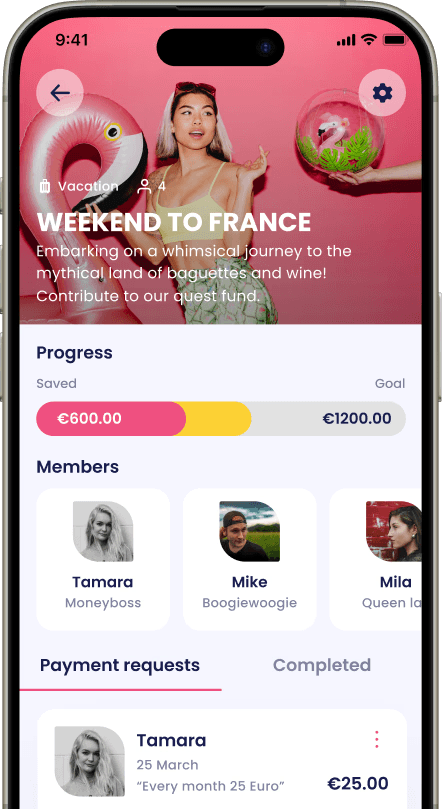
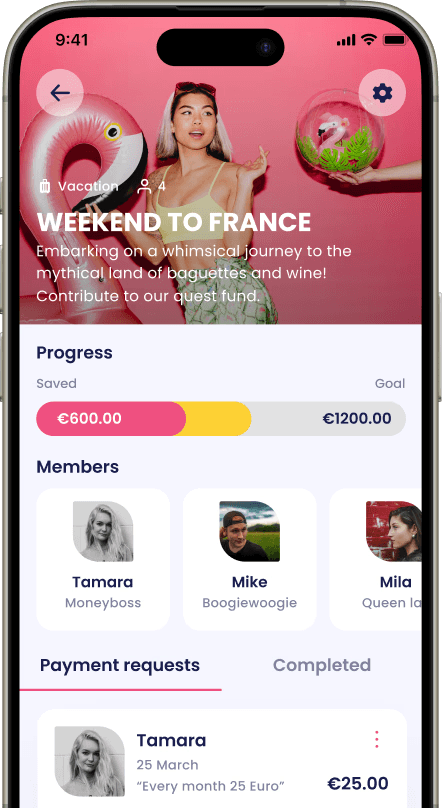
Instead of forcing one person to act as the group's central bank, Potje provides a dedicated, shared money account designed explicitly for pooling funds. You create a money pot around a specific goal, invite your group, and start collecting contributions directly into that secure pot.
From that moment on, everything is seamlessly structured:
Total Transparency: Everyone can see exactly how much has been added and what is still missing. No one needs to ask for status updates.
Automated Chasing: Payment requests and reminders are built directly into the platform. The system handles the nagging, so you do not have to.
Financial Separation: Group money is no longer mixed with your personal checking account. It sits securely in its own space, making it vastly easier to manage and deploy when the group is ready to act.
This is the perfect Splitwise alternative because it focuses on proactive saving rather than reactive debt tracking.
Real Scenarios Where Group Trip Expenses Cause Friction
Delays cost money, and this shows up consistently when trying to coordinate a shared travel budget.
Booking Flights and Airbnbs
Without structure, one person puts the entire Airbnb deposit on their credit card and waits days—or weeks—to be paid back. Alternatively, everyone promises to send money for flights, but prices surge while you wait for the last person to transfer their share. With an upfront collection system, the money is already pooled, allowing you to lock in the best prices instantly.
Daily Vacation Spending
During the trip, one person usually ends up covering the rental car, another buys the groceries, and someone else pays for dinner. Settling up later becomes an absolute nightmare of overlapping IOUs. With a shared fund, all communal spending comes from one central pot, completely eliminating the need for post-trip calculations.
Overcoming Common Misconceptions
"We are good at paying each other back." Every friend group believes this until someone genuinely forgets, creating silent resentment.
"It is just a quick weekend trip." Even short trips involve significant shared costs. The exact same financial bottlenecks will appear.
"We can just figure it out later." "Later" inevitably becomes stressful and almost always results in paying higher prices for last-minute bookings.
Frequently Asked Questions
Why do people say “I’ll pay you later” and never follow through?
People rarely intend to delay, but paying you back is not a top priority in their day-to-day lives. It competes with their other expenses and is incredibly easy to forget. The root issue is a lack of structured, automated collection.
What is the best method for securing a shared travel budget?
The most effective approach is to collect the funds before making any non-refundable bookings. Use a shared digital pot where everyone contributes upfront. This aligns the group, removes the need for awkward reimbursement texts, and entirely eliminates the financial risk for the organizer.
Are peer-to-peer payment apps like Venmo or Cash App enough?
While these apps make it easier to send money, they do not solve the underlying coordination issue. If someone ignores your Venmo request, you still have to personally follow up. A dedicated pooling system works significantly better for upfront planning.
What is Potje?
Potje is a shared money account designed for groups. It allows users to create a dedicated money pot for a specific goal, invite friends, and securely collect contributions in one place. By focusing on saving together before spending, it removes the headache of managing group IOUs.

Social Accountability and Saving: The Missing Link to Financial Freedom
Ondersteuning voor verschillende inhoudstypes zoals artikelen, blogs, video's en meer. Rijke tekstverwerker met opmaakopties voor verbeterde.
17 november, 2025

Group Saving Apps Compared: What's Easiest, Safest, and Most Transparent?
Ondersteuning voor verschillende inhoudstypes zoals artikelen, blogs, video's en meer. Rijke tekstverwerker met opmaakopties voor verbeterde.
17 november, 2025

Group Money Platforms Compared: What’s Safe, Regulated, and Fair?
Ondersteuning voor verschillende inhoudstypes zoals artikelen, blogs, video's en meer. Rijke tekstverwerker met opmaakopties voor verbeterde.
17 november, 2025
