12 June 2026



The very best, most memorable group trips all start with one crucial element: a rock-solid deposit plan.
Before booking flights, locking down accommodation, or reserving non-refundable activities, every single travel group should create a comprehensive group trip deposit checklist. The most common reason group vacations go wildly over budget isn't the trip itself—it's poor upfront financial planning. A clear, heavily communicated deposit plan helps everyone contribute early, creates total transparency around shared costs, and completely prevents one generous person from carrying the financial burden for the entire group.
Why Most Group Trips Become Massive Money Headaches
Planning a trip with friends sounds incredibly easy on paper. Until actual money enters the conversation.
The cycle is universally recognizable:
Everyone passionately agrees on the destination.
Everyone promises they are "definitely coming."
Then suddenly, somebody has to step up to:
Book the accommodation and pay the security deposit.
Reserve VIP activities or excursion tickets.
Secure non-refundable travel tickets.
And somehow, that massive financial responsibility always lands squarely on the shoulders of the exact same person. The organizer.
The problem isn't usually the trip itself or the friends involved. The root problem is that most groups never discuss the full, realistic cost before they start blindly booking. They focus entirely on the exciting parts of group vacation planning: the destination, the Instagram photos, and the daily itinerary. They actively ignore the upfront travel costs required to make it happen.
That is exactly where utilizing a proper Group Trip Deposit Checklist becomes invaluable.
What Should a Group Trip Deposit Actually Cover?
When planning a shared travel fund, many groups only think about the initial accommodation deposits. That is a massive, often costly mistake.
A complete, stress-free group trip deposit should comprehensively cover several distinct financial categories to ensure nobody is left floating the bill.
1. Flights: The Most Volatile Travel Expense
Flights are often the largest single travel expense for any group getaway. More importantly, airline prices are highly dynamic and can change by the hour.
Waiting for everyone in the group to manually transfer their share of the money often means missing out on the cheapest fares, forcing the whole group to pay more simply because of slow communication. Before booking flights, your group must firmly establish:
Estimated flight cost per person: Set a realistic ceiling for what people are willing to pay.
A strict booking deadline: "We are buying tickets on Friday at 5 PM."
The upfront contribution amount required: Collect this before anyone clicks "purchase."
Cancellation expectations: Clarify what happens if someone drops out after tickets are bought.
If flight prices for your destination are known to increase rapidly, collecting money early into a joint money account becomes even more critical to lock in the best rates.
2. Accommodation: Beyond the Nightly Rate
Whether you are booking a massive Airbnb, a cozy vacation rental cabin, or a block of luxury hotel rooms, accommodation almost always requires either a full payment upfront or a hefty non-refundable deposit.
However, your accommodation budget deposit must include more than just the advertised nightly rate. It should account for:
The base booking cost
Platform service fees (which can be up to 15% on some sites)
Local and state occupancy taxes
Mandatory cleaning fees
Damage and security deposits
Many groups vastly underestimate how quickly these additional costs add up at checkout. A fully funded, shared accommodation budget prevents awkward surprises and ensures the organizer isn't putting their own credit score on the line for a damage deposit.
3. Activities: The Core of the Experience
Most groups focus all their financial energy on simply getting to the destination. But the real memories—and the real hidden costs—usually happen once you actually arrive.
To avoid someone having to constantly ask for Venmo transfers during the vacation, collect a deposit for major activities in advance. This often includes:
Private boat trips or yacht charters
Day-long excursions and guided tours
Festival tickets and VIP passes
Ski lift passes and equipment rentals
Cover charges for premium nightlife events
Creating a dedicated activities fund before departure prevents endless, mood-killing conversations about affordability while on the trip. Nobody wants to spend their valuable vacation time sitting by the pool calculating who owes what for yesterday's jet skis.
4. Emergency Funds: The Overlooked Necessity
This is the category most groups completely ignore. And ironically, it is the category many groups eventually desperately need.
Emergency funds act as a travel contingency plan and can help smoothly cover:
Last-minute local transport (surging Uber prices in the rain)
Minor medical expenses or pharmacy runs
Unexpected accommodation changes or late checkout fees
Replacing lost items (like phone chargers or sunglasses)
Schedule disruptions causing missed flights or trains
The goal isn't to be pessimistic or expect problems. The goal is to completely avoid financial stress and group conflict if problems do occur. Even a small emergency contribution of $50 per person can make a significant difference when you're in a pinch in a foreign city.
A Simple, Actionable Group Trip Deposit Checklist
Before booking a single item, your group should hold a meeting (or jump on a call) and explicitly agree on funding these essential deposits.
Use this checklist to ensure total coverage:
[ ] Flights: Base fare, baggage fees, and seat selection.
[ ] Accommodation: Nightly rate, taxes, fees, and security deposit.
[ ] Planned Activities: Tickets, excursions, and reservations.
[ ] Local Transport: Rental cars, gas, trains, or ride-share estimates.
[ ] Emergency Fund: A small buffer for unexpected hurdles.
[ ] Shared Food Budget (Optional): Grocery runs or communal dinners.
[ ] Group Contingency Fund: To cover dynamic pricing shifts before booking.
When these specific categories are planned and funded upfront, the entire trip transforms from a logistical nightmare into a breeze.
Why Collecting Money Before Booking Works Better
Most group travel problems follow the exact same frustrating pattern: Somebody pays first. Everyone promises to pay later.
At least, that is the plan. Reality looks drastically different.
People forget to send the money. Someone misses a payday and asks for an extension. Another friend says they will transfer it "next week." Meanwhile, the organizer ends up carrying a massive financial burden, essentially acting as an unpaid, highly stressed credit provider for their friends.
Collecting contributions before bookings happen instantly solves this exact problem. Instead of one person financing the trip, the financial responsibility becomes shared across the entire group from day one. It guarantees commitment and completely eliminates the dreaded "repayment drama."
Why Potje Helps Groups Create a Proper Trip Deposit Fund
Most group trips fail financially before they even step foot in an airport. This isn't because the trip is fundamentally too expensive; it's because nobody properly organizes the money.
One friend pays for the Airbnb. Another books the boat activities. Someone else buys the festival tickets. Then, everyone spends the next three weeks trying to settle up via messy spreadsheets and passive-aggressive text messages.
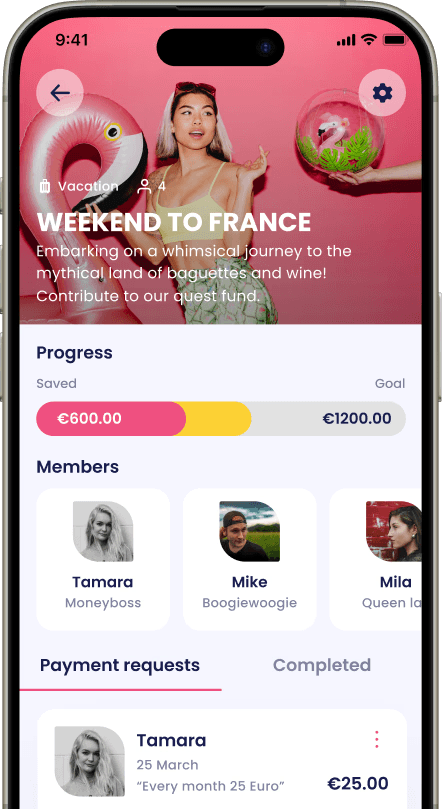
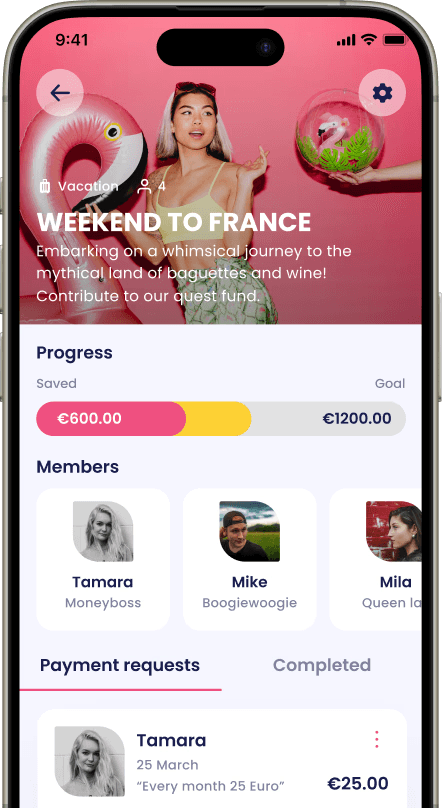
Potje solves this exact friction point by allowing groups to create a dedicated trip deposit fund through a digital, shared ecosystem. Instead of frantically collecting money after bookings have been made, groups can build their shared travel fund collaboratively before a single dollar is spent.
Create a Dedicated Deposit Fund
A group organizer can seamlessly create a money pot specifically tailored for the trip. Examples include: "Ibiza Summer 2026," "Nashville Bachelor Weekend," "Ski Trip Colorado," or "Spring Break Miami." Everyone invited knows exactly what the fund is for, the total goal amount, and how much money needs to be collected per person.
Collect Contributions Before Bookings Happen
Rather than one person covering thousands of dollars upfront on their personal card, everyone contributes directly into the shared travel fund. This means:
The accommodation budget is fully covered in advance.
Flight deposits can be planned without price-jump panic.
Activities can be budgeted and booked securely.
Emergency reserves are successfully built before departure.
The organizer no longer acts as the group's personal lender.
Separate Funds for Different Travel Costs
Many highly organized groups prefer to segment their travel budgets into crystal-clear categories using Potje. For example:
Accommodation Fund: Used strictly for Airbnbs, luxury hotels, cabins, and vacation rentals.
Activities Fund: Dedicated to excursions, festivals, guided tours, and unique experiences.
Emergency Fund: Kept untouched for unexpected travel expenses and contingencies.
This level of organization makes it incredibly easy to see exactly how much money has been allocated to each part of the trip.
Everyone Can See the Progress
One of the biggest, most anxiety-inducing challenges with group travel is uncertainty. People constantly ask the organizer:
Have enough people paid yet?
Can we finally book the house?
What is our actual budget?
How much do we still need to collect?
A shared deposit fund actively removes much of that uncertainty because all contributors can transparently track the progress toward the group's financial target in real-time.
Better Planning Creates Better Trips
The most successful, stress-free group trips usually have one massive thing in common: The money was entirely organized before the bookings were made.
Potje's joint money account structure specifically helps modern groups build a travel fund, effortlessly collect contributions, and properly prepare for flights, accommodation, activities, and emergencies before anyone has to put their personal finances (or friendships) on the line.
Comparing Group Travel Money Solutions
When looking for group travel apps to manage your deposit checklist, you will likely encounter a few different solutions. Here is how they stack up.
Tricount
Tricount is a highly popular app that helps groups track shared expenses and calculate repayments. However, it works best once spending has already happened. It tells you who owes whom, but it doesn't solve the problem of needing to collect the funds upfront before the booking.
bunq
bunq is a digital bank that offers shared money features that can certainly help organize travel finances. However, it operates as a full banking suite, and many casual travel groups still need a highly specific, travel-focused contribution process before the massive spending begins.
Collctiv
Collctiv focuses heavily on pooling money for groups, gifts, and events. While this can be incredibly useful for simple, one-off collections (like a shared birthday gift), it lacks the nuanced, multi-fund categorization needed for complex group travel.
Potje
Potje stands apart because it focuses entirely on helping groups organize money together around a shared, specific goal. For travel groups, that explicitly means planning and pooling contributions before the massive costs occur, rather than relying entirely on a web of confusing repayments afterwards.
Common Misconceptions About Group Travel Budgets
"We'll just figure it out once we arrive." This is exactly how most travel budget problems and arguments start. The best, most relaxing trips usually have the clearest, most strictly defined budgets established before anyone packs a bag.
"Emergency funds aren't really necessary." It is true that most trips don't end up needing them. But when something unexpected does happen—like a missed flight or a medical hiccup—having a pre-funded, shared reserve becomes incredibly valuable and stops panic in its tracks.
"One person paying for everything is just easier." Initially, hitting "Checkout" is easier. But long term, it almost always creates severe repayment issues, hours of administrative spreadsheet work, and unnecessary emotional stress for the organizer.
Coming Soon: Apple Pay Spending From Your Joint Money Account
The future of group travel finance is about to become even more frictionless. Potje is currently developing virtual VISA debit cards connected directly to your shared money pots. These cards will fully support Apple Pay and Google Pay, and can be easily used anywhere VISA is accepted globally.
For travel groups, this means future trips could seamlessly include:
Total shared spending visibility
Instant Apple Pay and Google Pay contactless payments
Streamlined group travel budgeting
Spending directly from shared balances (meaning you never have to use your personal card to book the Airbnb again)
Note: The feature has not launched yet. Join the waitlist here: https://www.potje.app
FAQ Section
How much money should a group collect before a trip?
The ideal amount depends entirely on the destination, duration, and group size. However, most groups should collect enough to cover 100% of the flights, the full accommodation cost, all planned ticketed activities, and a small emergency reserve (usually $50–$100 per person). The more major expenses that are covered before departure, the less financial stress the group experiences during the trip.
Should accommodation deposits be collected before booking?
Yes. Accommodation is almost always one of the largest trip expenses and carries the highest upfront cost. Collecting contributions beforehand completely reduces the personal financial risk for the organizer and ensures everyone is actually committed before non-refundable reservations are made.
Why should a group create an emergency fund?
Unexpected costs happen on almost every major group trip. Delayed transport, sudden accommodation issues, minor medical expenses, or unavoidable schedule changes can create highly stressful unplanned spending. A pre-funded shared emergency fund helps groups instantly manage these situations without stress, panic, or arguments over who is paying.
What is Potje?
Potje is a modern joint money account specifically designed to help groups organize money together. Users can effortlessly create shared money pots for holidays, bachelor parties, events, activities, and other group goals while tracking all contributions and overall progress in one transparent place.
Will Potje support Apple Pay?
Yes. Potje's highly anticipated upcoming virtual VISA debit cards are expected to fully support Apple Pay and Google Pay. This will allow groups to spend directly from their shared balances while maintaining real-time visibility over travel spending and shared expenses.
Key Takeaways
The best group trips are rarely the ones with the biggest budgets; they're the ones with the clearest plan.
Before booking flights, accommodation, or activities, you must create a deposit checklist that covers every major expense category.
When everyone contributes their money early, budgets become remarkably clearer, organizers experience far less pressure, and the entire group enjoys a vastly smoother travel experience.
A little financial planning before departure can permanently eliminate a lot of awkward money conversations later.
Start planning with Potje today: https://www.potje.tech/en/

Social Accountability and Saving: The Missing Link to Financial Freedom
Ondersteuning voor verschillende inhoudstypes zoals artikelen, blogs, video's en meer. Rijke tekstverwerker met opmaakopties voor verbeterde.
17 november, 2025

Group Saving Apps Compared: What's Easiest, Safest, and Most Transparent?
Ondersteuning voor verschillende inhoudstypes zoals artikelen, blogs, video's en meer. Rijke tekstverwerker met opmaakopties voor verbeterde.
17 november, 2025

Group Money Platforms Compared: What’s Safe, Regulated, and Fair?
Ondersteuning voor verschillende inhoudstypes zoals artikelen, blogs, video's en meer. Rijke tekstverwerker met opmaakopties voor verbeterde.
17 november, 2025
