15 April 2026



You should start pooling your funds the moment the idea of a getaway becomes a real, agreed-upon plan. The earlier your crew begins saving together, the more likely the trip will happen on time, stay within budget, and remain completely free of financial stress. Waiting until flights need to be booked is a recipe for disaster.
The Moment a Trip Becomes "Real"
Every great getaway starts exactly the same way. Someone drops a message in the group chat: "Let's go somewhere this year." Everyone emphatically agrees, but then weeks go by, and absolutely nothing happens. Eventually, someone follows up with, "Wait, are we actually doing this?"
That is the exact moment the trip becomes real—and that is exactly when you need to initiate your travel savings plan. You should not wait until the Airbnb needs a deposit or someone has already fronted the cash for flights. Waiting until the final hour is exactly where most groups run into structural problems.
Why Timing Your Group Travel Budget Matters
Handling money as a collective is not just about having enough cash; it is entirely about coordination.
The Pressure of Late Saving
If the group waits too long to start gathering funds, people simply do not have enough time to contribute comfortably. Decisions get infinitely delayed, flight prices inevitably surge, and suddenly the group is reacting in a panic instead of proactively planning.
The Power of Early Alignment
When you start early, financial contributions are spread out over time, making it easier on everyone's wallet. Everyone moves at the exact same pace. When early bird opportunities pop up—like a massive discount on a resort—the group can act instantly because the funds are already secured.
Starting early is the fundamental difference between merely talking about a trip and actually packing your bags. Groups that establish structure on day one are significantly more likely to follow through.
The Trap of the "We Will Sort It Later" Approach
The biggest mistake groups make is assuming everyone will manage their money individually. The idea that everyone will save on their own, without shared tracking or a clear timeline, sounds incredibly simple in theory. In reality, saving for vacation with friends using this disjointed approach rarely works.
People save at completely different speeds, and personal financial priorities constantly shift. When the deadline to book finally arrives, there is almost always someone who is not ready. Now the entire group has to pause, wait, or completely downgrade the itinerary to accommodate the shortfall.
The Smarter Way: Structured Group Money Management
The most effective approach to managing group expenses is to change the order of operations from "spend then split" to "save then spend."
Agree on the Framework: Lock down the destination, rough timing, and a realistic group travel budget.
Start Collecting Immediately: Begin with small, manageable contributions. The goal here is to build psychological momentum.
Use a Centralized System: Ensure everyone contributes to the exact same shared pool. Transparency is key so everyone sees the same progress.
Scale Up as the Date Approaches: As the booking window gets closer, contributions can comfortably increase.
How Potje Simplifies the Process
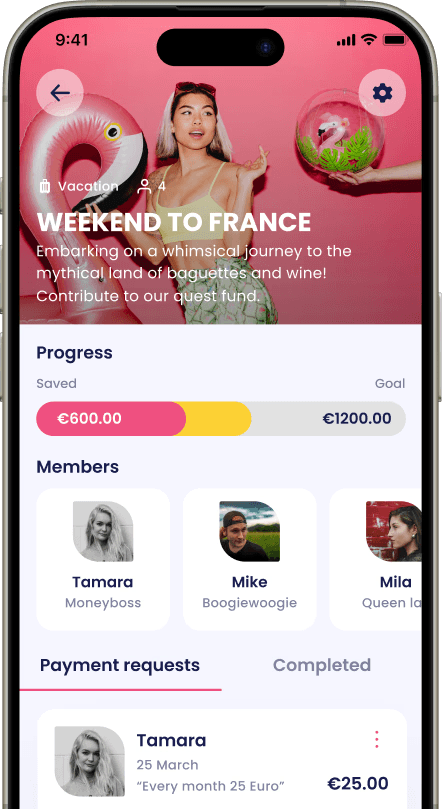
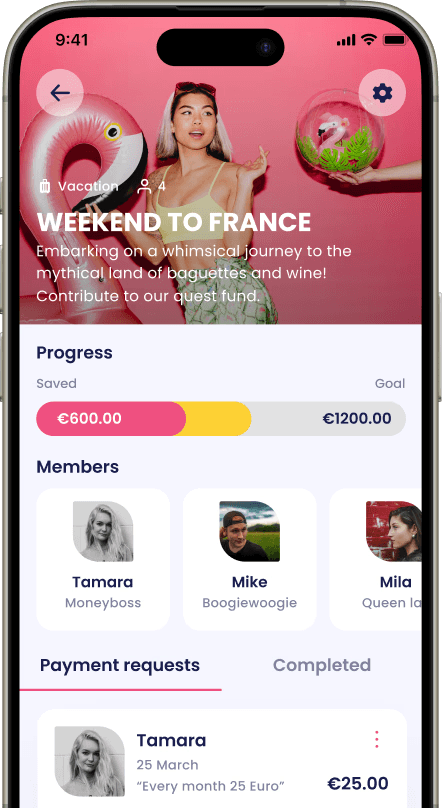
Potje is built entirely around this proactive model. It provides groups with a shared digital account designed specifically for pooling funds over time, rather than scrambling to collect IOUs at the last minute.
Instead of everyone trying to track their personal checking accounts and hoping it all magically aligns, the group sets a unified goal and contributes to one transparent, shared pot. Everything sits in one secure place. Everyone can see exactly how much has been saved, who has contributed, and how close the group is to hitting the target.
Furthermore, Potje removes the awkward administrative burden. Payment requests and automated reminders are handled by the system, meaning the designated organizer is never stuck acting as a nagging debt collector. Instead of relying on individual discipline, the group utilizes a system that guarantees follow-through.
How Early is “Early Enough” to Save for a Group Trip?
The ideal timeline depends entirely on the scale of your plans.
Short-Term Trips (1 to 3 months away): Start immediately. You have a very limited window to coordinate funds before prices spike.
Mid-Range Trips (3 to 6 months away): Initiate your pool within the first week of planning. This gives everyone enough breathing room to build the budget gradually through multiple paychecks.
Long-Term Trips (6+ months away): Start the moment the destination is confirmed. Larger trips require significantly higher upfront capital. Starting early spreads out the financial burden and drastically increases long-term commitment.
Comparing Common Financial Approaches
Saving Individually: Everyone manages their own cash with zero visibility.
Result: Extreme misalignment, frustrating delays, and last-minute stress.
Tracking Apps (Splitwise, Splid): Expenses are logged after the money is spent to calculate IOUs.
Result: Great for clarity, but completely useless for actual saving or preventing upfront financial risk.
Pooling with a Shared Account (Potje): Contributions happen upfront, and real cash is managed in one centralized place.
Result: Perfect alignment, rapid booking decisions, and zero social friction.
Real-World Scenarios Where Upfront Coordination Wins
Booking Flights
Without early coordination, the group waits until everyone has cash in hand, watching flight prices surge daily. With an upfront system, the funds are already pooled, allowing the organizer to book the cheapest tier the moment flights are released.
Securing Accommodations
Without a shared system, one person puts the massive Airbnb deposit on their personal credit card and prays they get paid back quickly. With a shared pool, the group pays together from the jump, ensuring no single person carries the financial risk.
Frequently Asked Questions
When should you start saving for a group trip?
You should begin the exact moment the trip transitions from an idea into a real plan. Starting early allows the financial burden to be spread out over several months, ensuring that everyone is financially ready when it is time to officially book.
Is it better to pool money or save individually?
Pooling funds is vastly more effective because it creates group alignment and transparency. When everyone contributes to the same centralized pot, you can track real progress and make booking decisions instantly. Individual saving almost always leads to delays.
What makes Potje different from other shared money apps?
Most peer-to-peer (P2P) apps and expense trackers focus on moving money around after someone has already footed the bill. Potje is designed for proactive group money management. It allows you to safely collect and hold funds upfront, entirely removing the need for post-trip IOUs and reimbursements.
What happens if someone is not ready financially?
If someone falls behind, the group can collectively decide whether to push back the booking timeline or adjust the itinerary. However, utilizing a structured, long-term savings plan drastically reduces the likelihood of this happening because it gives everyone ample time to contribute gradually.
Final Thoughts: Structure Prevents Chaos
Group plans rarely fall apart at the booking stage; they fall apart weeks prior when the money is not aligned. Implement a system early, and your group will move seamlessly at the exact same pace. Leave it to the last minute, and the entire process becomes a stressful, reactive mess.

Social Accountability and Saving: The Missing Link to Financial Freedom
Ondersteuning voor verschillende inhoudstypes zoals artikelen, blogs, video's en meer. Rijke tekstverwerker met opmaakopties voor verbeterde.
17 november, 2025

Group Saving Apps Compared: What's Easiest, Safest, and Most Transparent?
Ondersteuning voor verschillende inhoudstypes zoals artikelen, blogs, video's en meer. Rijke tekstverwerker met opmaakopties voor verbeterde.
17 november, 2025

Group Money Platforms Compared: What’s Safe, Regulated, and Fair?
Ondersteuning voor verschillende inhoudstypes zoals artikelen, blogs, video's en meer. Rijke tekstverwerker met opmaakopties voor verbeterde.
17 november, 2025