27 August 2026



Group money has ended more friendships than most people care to admit.
Not because anyone was dishonest. Not because anyone was selfish. But because nobody agreed on anything before the spending started.
One person assumes costs get split equally. Another assumes they'll only pay for what they use. Someone fronts the Airbnb and quietly starts resenting the group chat two weeks later.
The fix is simple: have the conversation before a single euro changes hands.
This is what every friend group should agree on before money gets involved. Not a lecture. Not a spreadsheet. Just five honest agreements that keep the trip fun and the friendship intact.
Quick answer: The most common source of group money conflict is not the money itself. It is the missing agreement about how money should be handled. Align on budget, contribution method, who manages the pot, what happens to leftovers, and how you collect upfront. Do that before booking anything and most problems disappear entirely.
Agreement 1: Set a Real Budget, Not a Vague One
"Let's keep it cheap" is not a budget. It is a wish.
Every person in the group has a different idea of what "cheap" means. For one friend, it is €50 a day. For another, it is €150. That gap does not surface until someone suggests a restaurant and someone else goes quiet.
The fix is to agree on a real per-person number before anything gets booked.
How to do it without making it awkward
Drop a message in the group chat. Keep it casual. Something like:
"Quick money check before we book anything. What is everyone comfortable spending all in? Accommodation, food, activities, transport. Give me a rough number and I will work out what we can do."
Most people are relieved when someone brings it up. Research consistently shows that 75% of friend groups skip the money conversation entirely and end up with post-trip tension as a result.
Once you have a range, build a simple breakdown:
Category | Group Total | Per Person (5 people) |
Accommodation | €600 | €120 |
Food & drinks | €400 | €80 |
Activities | €250 | €50 |
Transport | €150 | €30 |
Total | €1,400 | €280 |
Now everyone knows exactly what they are signing up for. No surprises. No awkward silences at checkout.
Agreement 2: Decide How You Will Collect Money Upfront
This is the agreement most groups skip. And it is the one that causes the most damage.
The old way: one person pays for everything, then spends the next two weeks chasing the group for their share. It is exhausting. It builds resentment. And it almost always means someone ends up out of pocket.
The better way: everyone contributes before the spending starts.
This is the core idea behind a shared money pot. Instead of one person fronting costs and hoping to get paid back, the group builds a shared fund together. Nobody carries the financial burden alone. Everyone can see the progress. And when it is time to book the Airbnb or pay the first deposit, the money is already there.
Three ways groups typically handle this
Equal upfront contributions: Everyone puts in the same amount before the trip. Works well for close friends with similar budgets. Simple, low-effort, no tracking required.
Proportional contributions: People contribute based on what they plan to use. Better for groups with different spending habits or income levels.
Category ownership: Each person covers one cost category entirely (one person handles accommodation, another handles transport). You balance the totals at the end.
For most groups, the equal upfront method is the least stressful. You know the total is covered. Nobody is waiting on anyone. And if there is money left over, you split it back at the end.
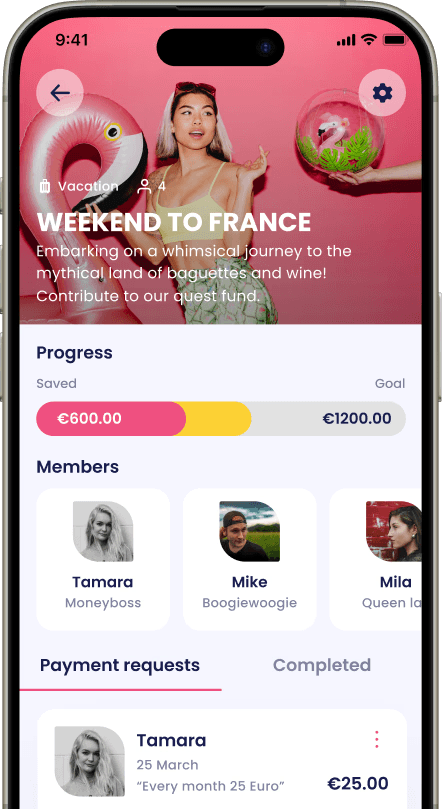
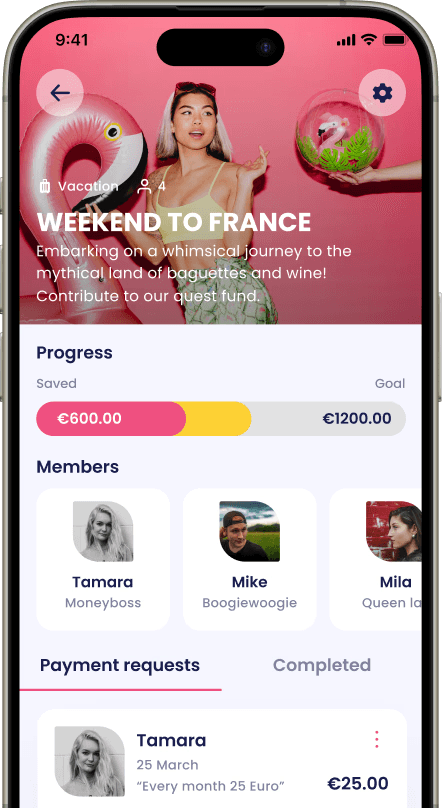
Potje is built exactly for this. Groups create a shared money pot, set a goal, and everyone contributes their share upfront. No one person's personal account is involved. Everyone sees the balance in real time. It changes the whole dynamic from "I'll sort it and you can pay me back" to "we sorted it together."
Agreement 3: Nominate One Person to Manage the Group Pot
Every group needs a money manager. Not a controller. Not someone who holds all the power. Just one person who is responsible for keeping track of what has been collected and what has been spent.
Without this, nobody owns the task. Payments get missed. Someone books something without checking the balance. Another person makes a different booking on the same day. Chaos.
What the money manager actually does
Confirms everyone has contributed their share before any bookings are made
Makes group payments from the shared fund (not their personal account)
Keeps the group updated on the current balance
Flags if costs are running over budget
This does not have to be the most organised person in the group. It just has to be someone who agrees to take it on.
The key is separating the group money from anyone's personal finances. When one person's personal account doubles as the group fund, it gets messy fast. Whose money is whose? What if they need that money for something else before the trip?
A dedicated shared money pot solves this completely. The money lives in a separate account that belongs to the group, not to one individual. The manager can oversee it without it ever touching their personal balance.
You can read more about how a shared money pot app works and why it is a cleaner setup than routing group funds through one person's account.
Agreement 4: Agree on What Happens to Leftover Money
This one sounds minor. It rarely is.
You collected €300 per person for the weekend. You spent €240. There is €60 per person sitting in the pot at the end. What happens to it?
If you have not agreed on this upfront, you will have a conversation nobody wants to have at the end of the trip when everyone is tired and just wants to go home.
The three most common approaches
Split it back equally. Everyone gets their leftover share returned. Clean, fair, simple.
Roll it into the next group plan. Leave the money in the pot for the next trip, gift collection, or shared goal. Works well for groups who plan together regularly.
Spend it on a group treat. Use the leftover to cover a final dinner, a round of drinks, or something the whole group enjoys together.
There is no wrong answer. The only wrong move is not deciding before the trip ends.
This is also where a shared money pot earns its value. Because the money is held in a transparent group account, everyone can see exactly what is left and agree on what to do with it. There is no awkward "I think there was about €40 left but I am not sure" conversation. The balance is right there.
For groups that plan together often, whether it is a holiday every summer or a birthday collection every few months, saving together for shared goals becomes much easier when the money never fully disappears between plans.
Agreement 5: Set a Contribution Deadline
Nothing stalls a group plan faster than waiting for one person to transfer their share.
The Airbnb needs to be booked. The festival tickets go on sale Thursday. The group is ready to move. But two people still have not paid in. So everyone waits.
Set a deadline. Make it specific. Stick to it.
A contribution deadline is not aggressive. It is respectful of everyone's time. It means the organiser does not have to chase. It means the group can move forward on the plan without holding their breath.
How to frame it without the awkwardness
The trick is to set the deadline at the planning stage, not after people start dragging their feet. Something like:
"Let's all put in our share by [date] so we can confirm the booking. I'll send a reminder a few days before."
Automated reminders are even better. Nobody has to be the awkward one who sends three follow-up messages. The system handles it.
This is one of the practical reasons groups use Potje for holiday saving. The platform sends automatic payment reminders so the organiser does not have to. Everyone gets a nudge. The pot fills up. The booking gets made.
No chasing. No resentment. Just a group that is actually ready to go.
The Checklist: Five Things to Agree on Before Money Moves
Before your group books anything, runs through this list together:
Budget: What is the all-in per-person number everyone is comfortable with?
Collection method: Are we contributing upfront to a shared pot, or splitting costs at the end?
Money manager: Who is responsible for overseeing the group fund?
Leftover plan: If there is money left, what do we do with it?
Contribution deadline: By what date does everyone need to have paid in?
Five questions. One group chat message. Ten minutes.
Most groups skip this entirely. Then they spend weeks untangling awkward debts, damaged feelings, and the lingering sense that someone got a worse deal than everyone else.
The groups that have this conversation upfront? They just go on the trip and enjoy it.
Why collect first, spend second?
The biggest shift in group money thinking is moving from "spend now, sort it later" to "collect first, then spend."
When everyone contributes upfront, nobody carries the financial weight alone. There is no one person silently keeping score. There is no post-trip debt collection. There is just a shared fund that everyone built together, ready to use when the time comes.
This is exactly what Potje was designed for. Groups create a shared money pot, set a goal, invite everyone to contribute, and the money is there before a single booking is made. The cost of running a pot is €5 per month in total, split automatically across the group. For a group of five, that is €1 each per month.
It is a small price for a completely stress-free group money experience.
Ready to try it? Create your first shared money pot on Potje before your next group plan. Set a goal, share the link, and let everyone contribute on their own time.
Frequently Asked Questions
What should a friend group agree on before a trip?
Before any group trip or shared spending plan, agree on five things: the total per-person budget, how contributions will be collected (upfront or after), who manages the group fund, what happens to any leftover money, and the deadline for everyone to contribute. Agreeing on these five points before any bookings are made eliminates most group money conflicts.
Is it better to collect money upfront or split costs at the end?
Collecting upfront is almost always less stressful. When everyone contributes before spending begins, no one person carries the financial burden. There are no post-trip debts to chase, no awkward reminders, and no resentment. Splitting at the end works, but it requires careful tracking and relies on everyone paying promptly once the trip is over.
What is a shared money pot?
A shared money pot is a dedicated group fund where multiple people contribute towards a shared goal, such as a holiday, a group gift, or a weekend away. Unlike routing money through one person's personal account, a shared money pot is transparent, separate from individual finances, and accessible to the whole group. Platforms like Potje offer regulated shared money pots built specifically for groups.
How do you avoid money arguments in a friend group?
The most effective way to avoid money arguments is to have the money conversation before any spending begins. Agree on a budget, decide how costs will be split, assign someone to manage the fund, and set a deadline for contributions. Groups that collect money upfront into a shared pot experience significantly less post-trip conflict than those who sort finances after the fact.
What happens if someone cannot afford their share?
Have this conversation early, privately, and without judgment. Budget flexibility is easier to build in at the planning stage than to retrofit after bookings are made. Some groups use budget tiers for certain activities, allowing friends with different financial situations to opt into different spending levels without awkwardness. The key is that everyone knows the plan before money moves.

Social Accountability and Saving: The Missing Link to Financial Freedom
Ondersteuning voor verschillende inhoudstypes zoals artikelen, blogs, video's en meer. Rijke tekstverwerker met opmaakopties voor verbeterde.
17 november, 2025

Group Saving Apps Compared: What's Easiest, Safest, and Most Transparent?
Ondersteuning voor verschillende inhoudstypes zoals artikelen, blogs, video's en meer. Rijke tekstverwerker met opmaakopties voor verbeterde.
17 november, 2025

Group Money Platforms Compared: What’s Safe, Regulated, and Fair?
Ondersteuning voor verschillende inhoudstypes zoals artikelen, blogs, video's en meer. Rijke tekstverwerker met opmaakopties voor verbeterde.
17 november, 2025