17 August 2026



We've all been there.
The trip is booked. The Airbnb is paid. The group chat is buzzing. And then you check the shared notes app and realise one person still hasn't transferred their share.
Now comes the part nobody enjoys: bringing it up.
The good news? Most people who haven't paid simply forgot. According to financial wellbeing experts at HerMoney, the majority of unpaid amounts in friend groups come down to forgetfulness, not bad intentions. That means a calm, friendly nudge is usually all it takes.
This guide gives you the exact words to use, plus a smarter way to set things up next time so you never have to have this conversation again.
Why Chasing Group Payments Feels So Awkward
Money and friendship are an uncomfortable mix.
When you ask someone to pay you back, it can feel like you're putting a price on the relationship. You don't want to seem petty. They don't want to feel called out. So the conversation gets delayed, the amount sits unpaid, and a small financial issue quietly turns into a social one.
The real problem isn't the money. It's the timing.
Asking for payment weeks after an event always feels heavier than it needs to. The expense is no longer fresh, nobody remembers the exact amount, and the reminder lands like an accusation rather than a simple admin task.
The fix is straightforward: ask early, keep it light, and make it about the group goal rather than the individual debt.
What to Say: Ready-to-Use Scripts for Every Situation
Here are real phrases you can copy, adapt, and send right now. Each one is designed to feel natural, not confrontational.
The Gentle First Reminder
Use this within 24 to 48 hours of the expense. Keep it casual.
"Hey, just closing off the group expenses from [event]. Your share comes to €[amount]. Send it over whenever you get a chance today?"
"Quick one: I'm settling the [Airbnb / dinner / tickets] payments. You're down for €[amount]. Can you transfer when you have a moment?"
Why this works: It frames the request as admin, not a personal complaint. You're just closing a loop.
When a Few Days Have Passed
If the first nudge didn't land, be slightly more specific.
"Hey, I haven't seen the transfer come through yet for [event]. It was €[amount] per person. Can you sort it before [day]?"
"Just a reminder about [expense]. Your part is €[amount]. Would be great to close this off by the end of the week."
Why this works: Adding a soft deadline makes it easier for the other person to act without feeling pressured.
When It's Been More Than a Week
At this point, a private message works better than a group reminder.
"I don't want to make a big deal of this, but I'm still waiting on €[amount] from [event]. Can you let me know when you can send it?"
"It's not about the amount, it's just about keeping things organised between us. Your share from [event] is still outstanding. When works for you?"
Why this works: According to Manisha Thakor, founder of MoneyZen Wealth Management, framing the request around the relationship rather than the money keeps the conversation from turning into a conflict.
For a Group Message (When Multiple People Haven't Paid)
Send this to the whole group rather than singling anyone out.
"Closing off the group pot for [trip / event]. A few transfers are still missing. Here's the breakdown: [list amounts]. Can everyone settle up by [date]? Thanks!"
"Quick group update: we're still short €[total amount] to cover everything. If you haven't transferred yet, can you do it today?"
Why this works: A group message removes the awkwardness of calling one person out publicly. If one person is still missing after the group message, follow up privately.
When Someone Says They'll Pay Later
This happens a lot with group trips. Someone always says "I'll sort it when I'm back."
"No problem, just let me know a date that works. I'll set a reminder so we don't both forget."
"That's fine, I just need to know when. Can you say by [date]?"
Key rule: Always confirm a specific date. "Later" without a deadline almost never happens.
The Golden Rules of Asking for Group Money
Before you send any message, keep these principles in mind. They make a bigger difference than the exact words you choose.
Be Specific, Not Vague
Vague reminders get ignored. Specific ones get paid.
Vague: "Hey, you still owe me for the trip."
Specific: "Your share for the Airbnb was €87. Can you transfer it by Friday?"
Always include the amount, the event it relates to, and a timeframe.
Keep It Private When It's Personal
If one person in the group is consistently late, don't call them out in the group chat. Send a private message. Public pressure creates embarrassment, and embarrassment creates avoidance.
Use "We" Language, Not "You" Language
Framing the request as a shared goal rather than a personal debt changes the whole tone.
"You" language: "You still haven't paid."
"We" language: "We're just closing off the group fund. Can you send your share?"
The second version feels collaborative. Nobody is the bad guy.
Don't Apologise for Asking
You organised something. You fronted money. Asking to be paid back is completely reasonable. You don't need to start with "Sorry to bother you" or "I hate to ask, but..."
Just ask. Calmly and directly.
The Better Fix: Stop Chasing. Start Collecting Upfront.
Here's the truth: no matter how perfectly you word a payment reminder, chasing money after the fact is always going to feel uncomfortable.
The real solution isn't better scripts. It's a different system.
Collect the money before you spend it. When everyone contributes to a shared pot upfront, there's nothing to chase afterwards. The trip gets booked. The gift gets bought. The event gets planned. And everyone already paid their share before anything happened.
That's exactly how Potje works.
What Is Potje?
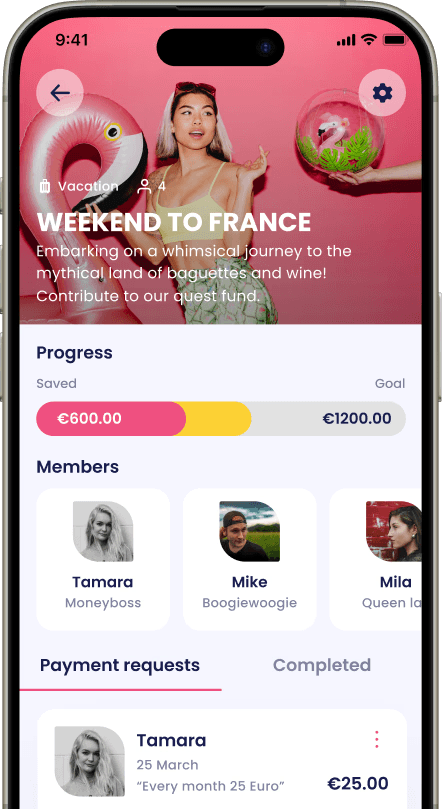
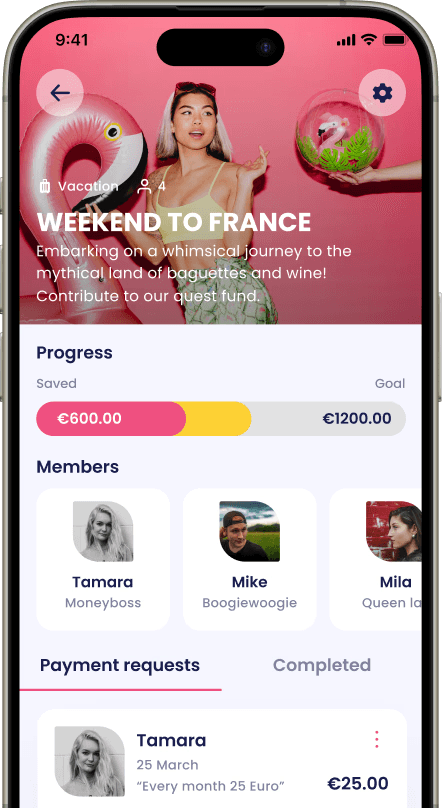
Potje is a shared money pot for groups. Instead of one person fronting the cost and then chasing everyone else, the group creates a pot, sets a goal, and everyone contributes before the money gets spent.
No reminders. No awkward messages. No "I'll pay you back later."
You can learn more about how it works in our guide on how a shared money pot app works to save together as a group.
How Potje Solves the "Someone Hasn't Paid" Problem
The reason group payments fall apart is simple: one person carries the financial risk while everyone else delays.
Potje flips this completely.
Everyone contributes to the shared pot before the booking is made
The group can see progress towards the goal in real time
Automated payment reminders go out so you don't have to send them manually
Nobody has to front hundreds of euros and then chase their friends
The cost of running a pot is €5.00 per month total, shared automatically across the group. With 5 people, that's just €1.00 each per month. With 10 people, it's €0.50 each.
We've written about the psychology behind why collecting before spending makes group trips run smoother, if you want to understand why this approach works so well.
Who Is It For?
Potje works well for any group with a shared goal:
Friends planning a holiday, festival, or weekend away
Colleagues organising a team gift or office event
Families saving together for a shared celebration
Sports teams collecting for kit, travel, or tournaments
If your group regularly ends up in the "someone hasn't paid yet" situation, Potje is built for you. Read more about how to save money with friends for a trip without chasing anyone.
Frequently Asked Questions
What do you say when someone in the group hasn't paid yet?
Keep it short, specific, and friendly. Include the amount, what it was for, and a soft deadline. For example: "Hey, just closing off the group expenses from [event]. Your share is €[amount]. Can you transfer by [day]?" Most people simply forgot, so a calm reminder is usually enough.
How do you ask for money without it being awkward?
Ask early, be specific, and frame it as a group admin task rather than a personal request. Use "we" language where possible: "We're just closing off the group pot" rather than "You still haven't paid." Timing matters too. The closer to the event, the easier the conversation.
What if someone keeps saying they'll pay later?
Acknowledge it, but ask for a specific date. "That's fine, when exactly can you send it?" Without a date, "later" rarely becomes action. If it becomes a pattern, consider switching to a system where everyone pays upfront before the next group plan.
Is there a way to avoid chasing group payments altogether?
Yes. Tools like Potje let groups collect money before spending it. Everyone contributes to a shared pot upfront, so there's nothing to chase after the event. It removes the need for reminders entirely. You can read more in our guide on how to prevent the pay-later hangover.
How long should you wait before sending a payment reminder?
Within 24 to 48 hours of the expense is ideal. The sooner you ask, the easier it is for everyone. Waiting more than a week makes the conversation feel heavier than it needs to be.
The scripts above will help you handle the conversation this time.
But if you're tired of having it at all, the answer is to change the system. Create a shared money pot with Potje before your next group plan and let everyone contribute upfront. No chasing. No awkward messages. Just a group that's organised before the fun begins.

Social Accountability and Saving: The Missing Link to Financial Freedom
Ondersteuning voor verschillende inhoudstypes zoals artikelen, blogs, video's en meer. Rijke tekstverwerker met opmaakopties voor verbeterde.
17 november, 2025

Group Saving Apps Compared: What's Easiest, Safest, and Most Transparent?
Ondersteuning voor verschillende inhoudstypes zoals artikelen, blogs, video's en meer. Rijke tekstverwerker met opmaakopties voor verbeterde.
17 november, 2025

Group Money Platforms Compared: What’s Safe, Regulated, and Fair?
Ondersteuning voor verschillende inhoudstypes zoals artikelen, blogs, video's en meer. Rijke tekstverwerker met opmaakopties voor verbeterde.
17 november, 2025