24 April 2026



On paper, every financial app promises the same thing: "Track who owes what," or "Send payments instantly." But when you actually try using them for a group trip, a shared roommate budget, or a bachelor party, reality sets in.
Someone forgets to log a payment. Another person pays late. And inevitably, someone never settles up at all. Suddenly, you are right back where you started—acting as a glorified debt collector for your friends.
The truth is, most apps focus entirely on reactive features rather than how groups actually behave. If an app still relies on manual tracking, constant reminders, and chasing down reimbursements, it isn't solving the core problem. Here is what you actually need to look for to keep shared finances entirely friction-free.
Why Your Current Split Expenses App is Failing You
When coordinating shared funds, failure rarely happens because of a missing button or a clunky interface. It fails because of delayed payments, zero financial visibility, and putting too much pressure on one "organizer."
Most apps fall into one of two traps:
Expense Trackers (like Splid or Splitwise): These are great for mathematical clarity—showing exactly who paid what and who owes whom. However, they don't actually move the cash. You still have to manually request and transfer funds.
P2P Transfer Apps (like Venmo or Cash App): These move money quickly but lack the structure for budgeting or holding communal funds securely.
To truly fix the problem, you don't just need faster payments; you need a proactive system.
The Best Group Money App Features You Actually Need
If you want to stop managing the mess and start avoiding it altogether, you need an app that actively removes friction from the process.
1. Collecting Contributions Upfront
This is the single most critical feature. Instead of one person paying first and praying they get paid back later, the app should allow the group to collect contributions beforehand. By building a shared budget to spend directly from, you eliminate the need for IOUs and reimbursements entirely.
2. Total Shared Visibility
Everyone chipping in should be able to see the total balance, who has contributed, and what funds are available. Without this transparency, people rely on assumptions and text message updates, which is exactly where confusion breeds resentment.
3. Separation from Personal Finances
Group funds should never sit in someone’s personal checking account. A robust platform creates a dedicated, ring-fenced space for the shared budget, preventing group cash from accidentally mixing with someone's personal rent or grocery money.
4. Automated Reminders
Manual reminders create social friction. The ideal platform automatically handles payment requests, deadline reminders, and contribution tracking so the organizer doesn't have to play the bad guy.
Evaluating Group Savings Tools vs. Traditional Trackers
When you look at tools like Revolut or SquadTrip, you start to see features closer to what groups actually need. Revolut offers shared accounts with combined access, but it often requires complex setups and full banking adoption—which is overkill for a weekend getaway. SquadTrip is great, but it is rigidly tied to travel bookings, lacking everyday flexibility.
The gap in the market is clear: very few tools actually help groups organize their money before the purchasing decisions are made.
How to Manage Money with Friends Without the Friction
If arguments and awkwardness stem from misalignment, the fix is to create alignment from day one. This is exactly where Potje changes the dynamic.
Potje is built explicitly around the features that remove friction. Instead of focusing on splitting the bill after the fact, it empowers your group to pool funds upfront.
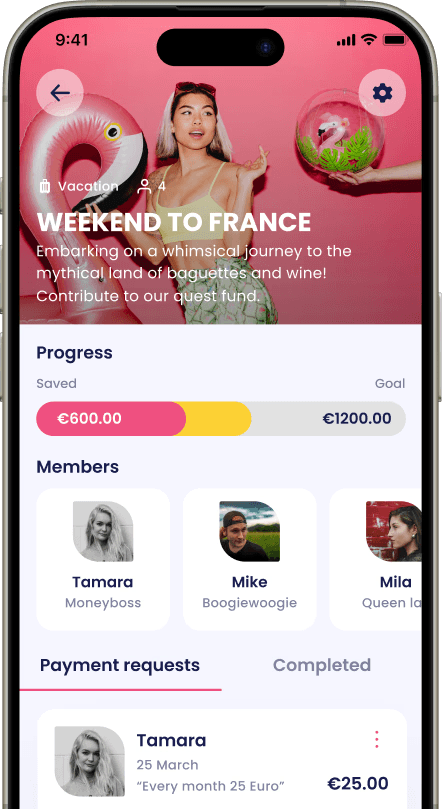
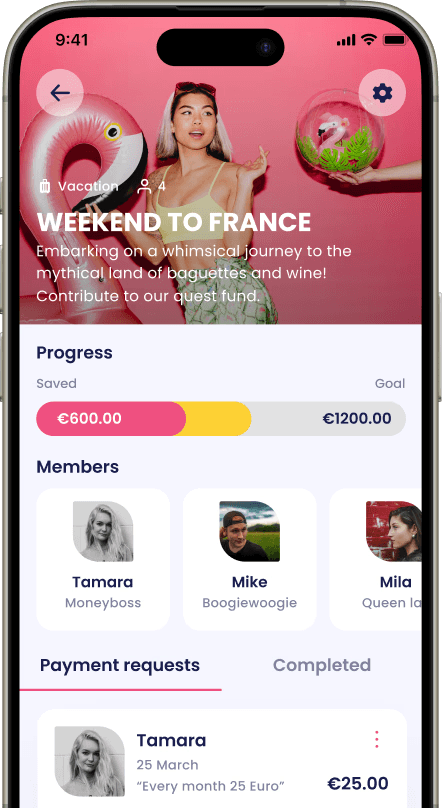
You simply create a digital "pot" for a specific goal—like a shared Airbnb or roommate utilities—and invite your friends. From there, everyone contributes into the same transparent space. The group sees the progress in real-time, and no one needs to track manual payments on a spreadsheet.
Why Potje is the Ultimate Shared Expenses App
Potje shifts how your group operates. Because the money is stored completely outside of personal accounts, your finances stay clean. Access is strictly controlled; only invited members can participate, ensuring funds aren't exposed across scattered platforms.
Plus, Potje uses a simple, flat monthly fee (around $5/€5 equivalent) per group account. This tiny cost is shared across the group and sits within the pot itself, easily replacing the hours of time and effort spent chasing payments.
Practical Ways to Use a Shared System
Group Vacations: Without the right features, one person puts the flights on their credit card while others promise to Venmo them. With a proactive setup, contributions are collected first, the money is ready, and booking happens instantly.
Roommate Expenses: Without structure, rent and utility payments happen randomly. With a shared fund, contributions are consistent, spending is completely transparent, and nobody gets stuck holding the bag.
Events and Parties: When planning a birthday or a tailgate, waiting on late payments delays decisions. Upfront pooling means the group can confidently move forward together.
Frequently Asked Questions
What makes a shared system better than just tracking debts?
Tracking simply tells you what happened in the past; it doesn't prevent financial problems. A system that collects money upfront actively prevents issues by ensuring the cash is secured before any spending occurs.
Do we need everyone to use the same app?
Yes. The immense value of these platforms comes from shared visibility and coordinated behavior. If only half the group uses the app, you lose transparency and return to manual coordination.
Will more features make an app better?
Not always. More features often just mean a steeper learning curve. What matters is whether the app's core functionality eliminates social friction, awkward conversations, and the risk of lost money.

Social Accountability and Saving: The Missing Link to Financial Freedom
Ondersteuning voor verschillende inhoudstypes zoals artikelen, blogs, video's en meer. Rijke tekstverwerker met opmaakopties voor verbeterde.
17 november, 2025

Group Saving Apps Compared: What's Easiest, Safest, and Most Transparent?
Ondersteuning voor verschillende inhoudstypes zoals artikelen, blogs, video's en meer. Rijke tekstverwerker met opmaakopties voor verbeterde.
17 november, 2025

Group Money Platforms Compared: What’s Safe, Regulated, and Fair?
Ondersteuning voor verschillende inhoudstypes zoals artikelen, blogs, video's en meer. Rijke tekstverwerker met opmaakopties voor verbeterde.
17 november, 2025