13 April 2026



Group finances almost always get messy because, frankly, there is no standardized system in place. People pay at different times, one unfortunate person ends up tracking every single receipt, and no one really knows where the budget stands. The fix, however, is remarkably simple: collect contributions upfront, keep the funds in one secure place, and make the balance visible to the entire group.
The Pain of Collecting Money From Friends
Every friend group has that one designated organizer. They book the Airbnb, pay for the flights, and casually drop the classic line: “just send me your part.” Everyone agrees in the moment, but the execution rarely goes smoothly.
A few people send their share immediately, a few genuinely forget, and one person promises they will transfer it later before disappearing for three days. Suddenly, the organizer is stuck constantly checking their bank apps, sending awkward reminders, and trying to remember exactly who has paid for what.
This is the exact moment the process breaks down. It is not because your friends are purposely difficult; it is because the system itself is flawed. This frustrating pattern shows up across group trips, bachelor parties, and shared events, and it is usually the primary reason people start searching for better solutions.
Why Traditional Systems Fail at Shared Expenses
The chaos of organizing shared expenses is not random. It follows the exact same structural failure every single time, driven by a few core issues:
No Shared System: The funds live in one person’s personal checking account, while the financial tracking lives in scattered text messages or a messy spreadsheet. This combination simply does not scale.
Unsynchronized Payments: Everyone operates on their own financial timeline. One person pays today, another promises to pay next week, and someone else forgets entirely. There is zero coordination.
Low Financial Visibility: Most people in the group do not actually know how much has been collected, what is still missing, or what has already been spent. This lack of transparency creates hesitation and confusion.
As a result, the organizer ends up doing all the heavy lifting—tracking IOUs, reminding friends to pay, and taking on the financial risk. It is easy to blame people and say, "they should just pay on time," but group behavior relies too heavily on memory, good intentions, and manual coordination. None of those are reliable.
How Most Tools Try (and Fail) to Fix the Problem
Different financial tools approach the problem from different angles, but most miss the mark when it comes to true coordination.
The Problem with Tracking-Only Apps
Apps designed to track who owes what are incredibly useful for clarity. You log what was spent, and the algorithm calculates the exact IOUs. However, they do not actually manage the cash. Someone still has to pay upfront, and someone still has to aggressively chase down repayments.
The Flaws of P2P Payment Apps
Peer-to-peer apps make it easy to send payment requests and reduce friction slightly. Yet, you still have to manually send the links and remind people to fulfill them.
The Joint Account Dilemma
Some modern digital banks allow for shared vaults where money sits in one place. While this is much closer to a real solution, it requires everyone in the group to use that specific banking platform, which creates massive friction for large groups.
The Smarter Way to Manage Money With Friends
The ultimate fix is not just downloading another tracking tool; it is completely changing the order of operations. Instead of paying upfront and begging for your money back later, you need to flip the script: save first, spend later.
By setting a clear financial goal, collecting contributions early, and spending from a single pooled resource, you completely remove the root cause of the mess.
Enter Potje: A True Splitwise Alternative
Most groups do not realize that their setup is the problem until it inevitably breaks. This is exactly where Potje comes in. As a powerful Splitwise alternative, Potje does not just track IOUs; it gives your group a shared money account explicitly designed for pooled finances.
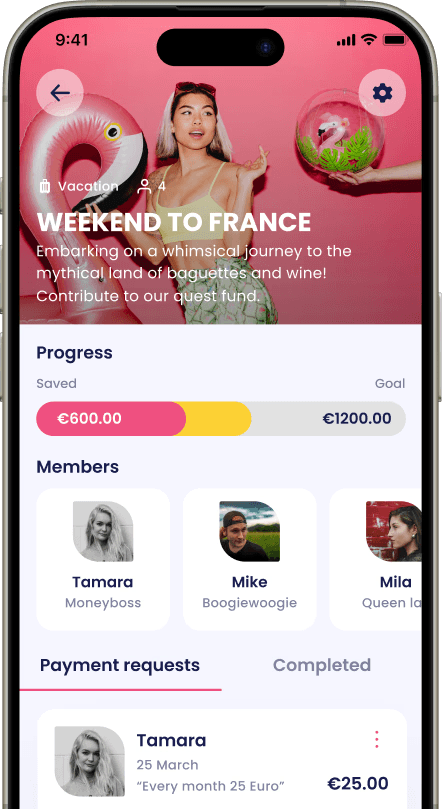
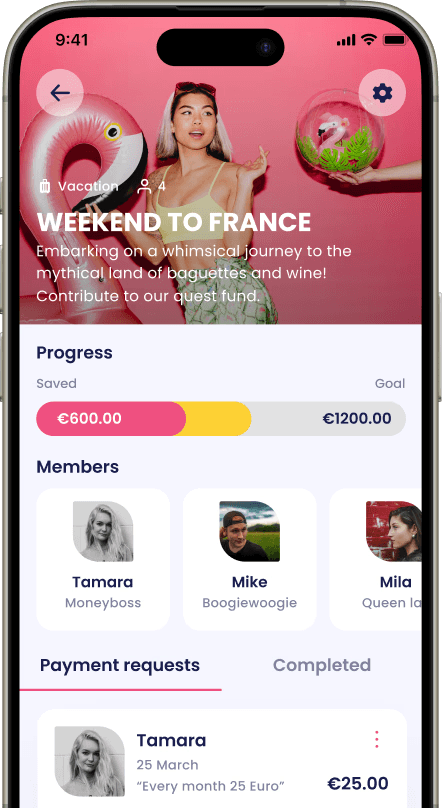
Instead of turning one person into the organizer, debt collector, and accountant, Potje allows you to create a dedicated money pot around a specific goal—be it a trip, an event, or a group gift. You simply invite your group and start pooling funds into that pot.
The Power of Upfront Group Savings
Once you switch to a dedicated group savings model, the dynamic of the entire trip changes entirely:
Complete Visibility: Everyone can see exactly how much has been added to the pot, what is still missing, and what funds are available to spend. No one has to ask for awkward updates.
Automated Reminders: Payment requests and reminders are built directly into the platform. No one has to send uncomfortable follow-up texts, shifting the burden from the organizer to the system.
Separation of Funds: The pooled money no longer sits in someone’s personal bank account. It lives in its own secure space, making it vastly easier to track, manage, and deploy when the group is finally ready to book.
This effectively removes the financial pressure from one individual and spreads the responsibility evenly across the group.
Where Structured Coordination Matters Most
Getting this right impacts more than just your stress levels; it affects the actual outcome of your plans. Early coordination leads to faster bookings, better pricing, and higher completion rates. Structured coordination is vital for:
Group Trips: Flights and accommodations require heavy upfront capital. Without structure, one person takes on all the financial risk.
Events and Celebrations: Birthdays, weddings, and group gifts involve multiple contributors aiming for one shared goal. Visibility is key to preventing a mess.
Recurring Groups: Sports teams or weekly meetups require consistency. Manual tracking systems always break down over time.
Frequently Asked Questions
Why do shared group finances always get so messy?
They get messy because there is no centralized system. People pay on different timelines, tracking is handled manually, and financial visibility is limited. This creates confusion and forces one person to shoulder the burden.
How do you manage money with friends without ruining the vibe?
The best way is to set up a centralized system where everyone contributes upfront and can view the exact same dashboard. This removes the need for manual reminders. When the process is transparent, the organizer does not have to chase payments, keeping relationships stress-free.
What makes a dedicated pooling app a better Splitwise alternative?
Standard expense trackers are useful for logging past expenses, but they do not manage actual cash flow. A true alternative allows groups to collect, hold, and manage real funds in one centralized place, completely eliminating the need for post-trip repayments and IOUs.
What is Potje?
Potje is a shared money account designed specifically for groups. It allows users to create a dedicated money pot for a specific goal, invite friends, and collect contributions securely in one place. It focuses on saving together before spending, removing the friction of traditional group finance.

Social Accountability and Saving: The Missing Link to Financial Freedom
Ondersteuning voor verschillende inhoudstypes zoals artikelen, blogs, video's en meer. Rijke tekstverwerker met opmaakopties voor verbeterde.
17 november, 2025

Group Saving Apps Compared: What's Easiest, Safest, and Most Transparent?
Ondersteuning voor verschillende inhoudstypes zoals artikelen, blogs, video's en meer. Rijke tekstverwerker met opmaakopties voor verbeterde.
17 november, 2025

Group Money Platforms Compared: What’s Safe, Regulated, and Fair?
Ondersteuning voor verschillende inhoudstypes zoals artikelen, blogs, video's en meer. Rijke tekstverwerker met opmaakopties voor verbeterde.
17 november, 2025
