21 August 2026



The Four Words That Cause Group Money Problems
Someone in the group chat says it every single time.
"Just book it. I'll pay you later."
It sounds fine. It sounds like trust. But anyone who has ever organised a group holiday, a birthday dinner, or a weekend away knows exactly what happens next.
Later becomes a week. A week becomes a month. And somewhere along the way, the person who fronted the money is left chasing their friends instead of enjoying the memories they just made together.
This is one of the most common problems in group planning. And it is not really about the money. It is about what the "pay you later" promise does to the group dynamic, the budget, and the friendship.
This blog breaks down exactly why it happens, why it keeps happening, and what the smarter approach looks like.
Why "I'll Pay You Later" Feels Fine but Never Is
The problem starts with psychology, not bad intentions.
When someone says "I'll pay you later," they genuinely mean it. In that moment, the trip feels exciting, the group is buzzing, and the money feels like a detail. Everyone intends to sort it out.
But here is what actually happens on the other side.
The person who pays upfront carries all the risk
The moment one person books the Airbnb or pays the deposit, they become the group's bank. Their money is gone. The trip sits on their balance, not the group's. And they have no guarantee of when, or whether, they will be paid back.
Research from Airbnb found that trip organisers who front costs on behalf of a group can end up losing significant sums when friends fail to follow through. In some cases, this runs into thousands of euros.
The felt value of a debt drops over time
There is a well-documented psychological effect at play here. The longer a debt goes unpaid, the less real it feels to the person who owes it. The trip is over. The excitement has faded. Paying back €150 for a holiday that happened six weeks ago feels very different from paying €150 for a holiday that happens next weekend.
The delay does not hold the debt steady. It quietly erodes the motivation to pay.
Friendships absorb the awkwardness
Nobody wants to be the person sending the third reminder message. So most people do not. They absorb the loss, feel quietly resentful, and the friendship quietly shifts.
The Real Problems It Creates for Group Plans
It is not just an awkward conversation. The "pay you later" approach creates real, practical problems that ripple through the entire planning process.
Problem 1: One person carries the financial burden
When someone fronts the costs, they are effectively giving the rest of the group an interest-free loan. Their savings take the hit. Their credit card absorbs the booking. And they have no timeline for when that money comes back.
For larger group plans like ski trips, festival weekends, or Airbnb rentals, this can mean hundreds or even thousands of euros sitting on one person's account for weeks.
Problem 2: Nobody knows the real budget
When contributions are scattered and informal, the group never has a clear picture of what has actually been collected versus what has been promised. That makes it almost impossible to plan confidently.
Has everyone confirmed they are coming?
Has anyone actually paid?
Is there enough in the pot to book the accommodation?
These questions pile up. The organiser ends up managing a spreadsheet instead of enjoying the planning.
Problem 3: Partial payments and drop-outs create chaos
Real life happens. Someone drops out after the Airbnb is booked. Someone pays half. Someone says they will transfer "this weekend" and then goes quiet. The person who made the booking is now legally responsible for the full amount, regardless of what the group agreed.
The booker is always on the hook. The travel provider does not care who owes whom.
Problem 4: The group loses trust in each other
This is the one nobody talks about. A friend who does not pay back is not just a financial inconvenience. It changes how you plan the next trip. You start wondering whether to invite them. You start asking for deposits. The dynamic shifts from "we trust each other" to "we need to protect ourselves."
That is a real cost, and it has nothing to do with money.
Why the Old Solutions Do Not Really Fix It
Most groups try to patch the problem with tools that were not built for it.
Approach | What it does | What it misses |
WhatsApp reminders | Chases people after the fact | Still relies on goodwill |
Spreadsheet tracking | Logs who owes what | Does not collect the money |
One person's bank account | Centralises the pot | No transparency, one person holds all funds |
Payment request apps | Sends a request after spending | Still a post-event chase |
The common thread across all of these is timing. They all try to solve the problem after the money has already been spent. One person has fronted the cost, and now the group is in recovery mode.
The real fix is not a better reminder system.
The real fix is collecting the money before anyone spends a cent.
That is a completely different approach. And it changes everything about how group plans feel to organise.
How Collecting First Changes Everything
When a group collects money before spending begins, the entire dynamic shifts.
Nobody is carrying the financial burden alone. Nobody is chasing anyone. The budget is real and visible. And the group can only spend what is actually there.
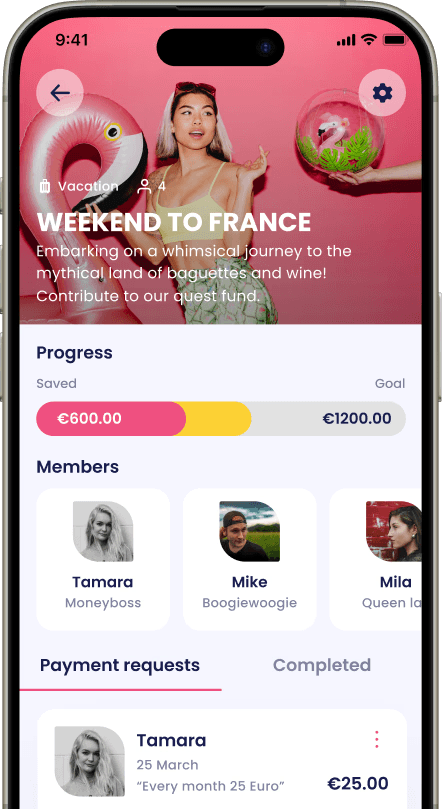
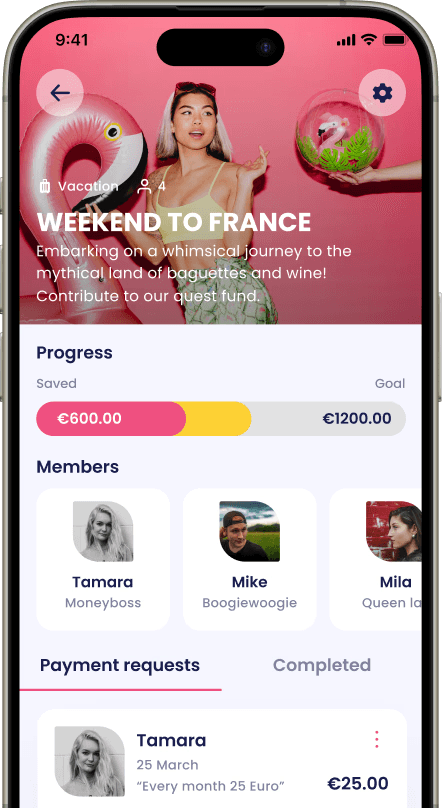
This is the approach that Potje is built around. Instead of one person fronting costs and hoping to be repaid, the group creates a shared money pot together. Everyone contributes their share upfront. The pot fills up. Then the group spends from it.
What that looks like in practice
Say your group of six is planning a weekend in Barcelona. Instead of someone putting the Airbnb on their credit card and sending reminders for weeks, here is how it works differently:
One person creates a Potje money pot and sets the goal amount.
A payment link is shared with the group.
Everyone contributes their share before anything is booked.
The pot reaches its target. Now the group books with confidence.
No one person carries the risk. Everyone can see the progress. And the trip starts on the right foot, financially and socially.
The difference is simple: instead of spending first and collecting later, the group saves first and spends together.
Potje costs just €5.00 per month in total, shared across the entire group. With five people, that is €1.00 each per month. With ten people, it drops to €0.50 each. For a weekend away or a group holiday, that is a small price for a much smoother experience.
You can learn more about how a shared money pot works and how to save together for a holiday on the Potje blog.
Frequently Asked Questions
Why do people keep saying "I'll pay you later" even when they know it causes problems?
It is mostly habit and optimism. In the moment of planning, the trip feels exciting and the money feels like a small detail. People genuinely intend to pay. The problem is that intentions and follow-through are not the same thing, especially once the excitement fades after the event.
What happens if someone in the group does not contribute to the shared pot?
With an upfront collection model, this becomes visible immediately. If the pot has not reached its goal, the group knows someone has not contributed before anything is booked. That is far easier to address than chasing someone for money weeks after the holiday.
Is it awkward to ask friends to pay upfront?
It can feel that way at first. But framing it as "let's all put in before we book" rather than "I need deposits" makes it feel collaborative rather than transactional. Most people find it easier once they realise nobody is being singled out and everyone is contributing at the same time. You can read more about managing the awkwardness of collecting money from friends on the Potje blog.
Does Potje work for plans other than holidays?
Yes. Groups use Potje for birthday gift collections, team events, sports club fees, school trips, and more. Any situation where a group needs to collect and manage money together is a good fit. See what you can use a money pot for for more ideas.
How is Potje different from just using one person's bank account?
When money sits in one person's account, there is no transparency, no shared visibility, and no separation between personal and group funds. Potje creates a dedicated, shared money pot that everyone can see, with automated contribution tracking and no manual spreadsheets required.
Stop Waiting for "Later"
Group plans should be exciting, not stressful.
The "pay you later" promise has a way of turning the best shared experiences into awkward financial negotiations. Not because anyone is a bad friend, but because the system is set up wrong from the start.
Collect before you spend. It is the single biggest change a group can make.
If you are planning a trip, a birthday collection, or any shared goal, create a Potje money pot and share the link before anyone books anything. When the pot is full, the group is ready.
No chasing. No spreadsheets. No awkward reminders.
Just the plan, and the people you made it with.

Social Accountability and Saving: The Missing Link to Financial Freedom
Ondersteuning voor verschillende inhoudstypes zoals artikelen, blogs, video's en meer. Rijke tekstverwerker met opmaakopties voor verbeterde.
17 november, 2025

Group Saving Apps Compared: What's Easiest, Safest, and Most Transparent?
Ondersteuning voor verschillende inhoudstypes zoals artikelen, blogs, video's en meer. Rijke tekstverwerker met opmaakopties voor verbeterde.
17 november, 2025

Group Money Platforms Compared: What’s Safe, Regulated, and Fair?
Ondersteuning voor verschillende inhoudstypes zoals artikelen, blogs, video's en meer. Rijke tekstverwerker met opmaakopties voor verbeterde.
17 november, 2025