11 August 2026



You joined the team because you love the sport.
Maybe it's a Sunday morning football league. A mixed hockey team that's been together for six years. A padel group that started with three colleagues and somehow became twelve.
Whatever the sport, the story is always the same.
Great group of people. Genuine intentions. And at some point, someone's standing in a WhatsApp chat asking who still hasn't paid for the new kit.
The problem isn't your teammates. It's the system.
Money in friend-run sports teams gets messy for reasons that have nothing to do with trust or goodwill. It gets messy because the way most teams collect and manage shared money was never designed to work properly in the first place.
Here's why it happens, and what actually fixes it.
The Costs Add Up Faster Than Anyone Expects
Most amateur sports teams carry more shared costs than members realise at the start of a season.
It starts with the obvious stuff. Kit. Registration fees. Referee costs. Then come the less obvious ones.
Travel to away fixtures (fuel, train tickets, parking)
Tournament entry fees that need to be paid upfront, months in advance
End-of-season events like a team dinner or weekend trip away
Equipment that wears out and needs replacing mid-season
Penalty pots that most teams collect informally, with no clear record
By the time you add it all up, a typical amateur sports team across Europe is collectively managing several hundred euros per season. Sometimes considerably more.
According to Eurostat's sport statistics publications, participation in organised amateur sport is one of the most widespread social activities in Europe, with tens of millions of people involved in team-based activities. That's a lot of shared costs being managed through WhatsApp messages and handshake agreements.
The money is real. The system for managing it usually isn't.
Why the "One Person Pays, Everyone Owes" Method Always Breaks Down
Most friend-run teams default to the same approach.
One person, usually the most organised or the most willing, covers costs upfront. Then they chase the rest of the group to pay them back.
It feels fine at first. It stops feeling fine very quickly.
The organiser carries all the risk
When one person pays for kit, tournament fees, or a team event out of their own account, they're essentially offering an interest-free loan to twelve people simultaneously.
If two or three teammates are slow to pay, that person is personally out of pocket, sometimes for weeks. It's not a small thing. A new kit order or tournament registration can run to hundreds of euros before a single contribution comes in.
Chasing friends feels awful
Nobody wants to be the person sending the third reminder in a WhatsApp group.
But nobody wants to be ignored either. The result is a slow build of low-grade awkwardness that sits underneath every training session and post-match drink.
"It's not about the money. It's about the feeling that some people think the rules don't apply to them."
That's what most team treasurers actually feel, even if they'd never say it out loud.
Nobody has the full picture
When money is collected informally, through bank transfers, cash, or split apps, there's rarely a single clear view of where things stand.
The organiser has a rough mental tally. The rest of the team has no idea. Disagreements about what was paid, when, and for what become almost inevitable. This is one of the most common sources of tension in group finances, and it plays out the same way regardless of how good the intentions are.
The Friendship Factor Makes It Harder, Not Easier
Here's the part most people don't say out loud.
Managing money is harder when you're friends with the people involved.
With a stranger, you'd send an invoice and follow up professionally. With your teammate of four years, the one whose birthday you went to last month, it's different. You soften the message. You give it another week. You convince yourself they probably just forgot.
The social cost of asking twice
Research into the psychology of group money consistently shows that people find it significantly more stressful to chase friends for money than to chase strangers or colleagues. The closer the relationship, the higher the perceived social risk of the ask.
This is why the team organiser often ends up absorbing costs rather than pursuing them. Not because they don't care about the money, but because they care more about the friendship.
Different people have different money habits
In a group of twelve teammates, you'll find:
People who pay the moment they receive a request
People who intend to pay but genuinely forget
People going through a tight month who feel embarrassed to say so
People who quietly assume someone else will cover it
None of these people are bad teammates. But they all create friction in a system that depends on everyone behaving the same way at the same time.
The system needs to work for all of them. Most systems don't.
The social dynamics of shared money in groups mean that informal collection methods put the entire burden of enforcement on one person's shoulders, and on one person's relationships.
What Actually Works: Collect First, Spend After
The single biggest shift a sports team can make in how they manage money is this:
Collect first. Spend after.
It sounds obvious. Almost every team does the opposite. Someone pays, then the group scrambles to reimburse. The debt exists before the conversation about it even starts.
When a team collects money into a shared pot before any costs are incurred, everything changes.
No one carries the burden alone
The organiser isn't fronting money out of their own account. Nobody is owed anything. The team's shared pot covers the cost, and everyone contributed to it before the bill arrived.
There's no debt to chase. No awkward follow-ups. No one person quietly absorbing costs to keep the peace.
Transparency removes the awkwardness
When every member can see the shared pot, the goal, and who has contributed, the social dynamic shifts completely.
It's no longer the organiser chasing individuals. It's the group working toward a shared goal together. Automated reminders do the nudging, and they're neutral. Nobody takes it personally when the app sends a reminder. They would take it personally when their teammate does.
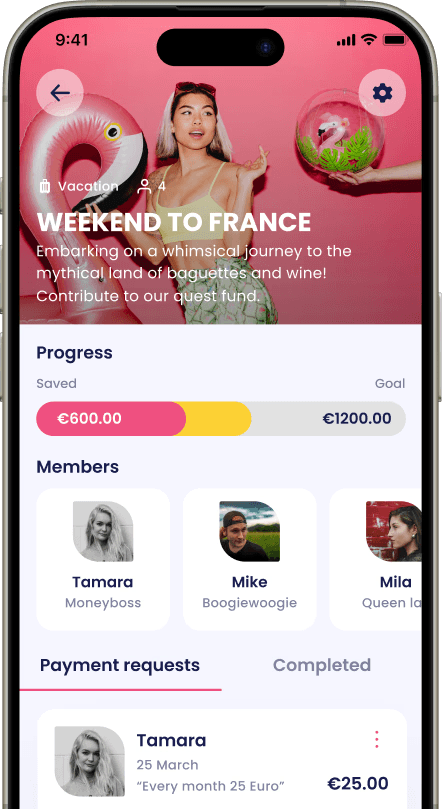
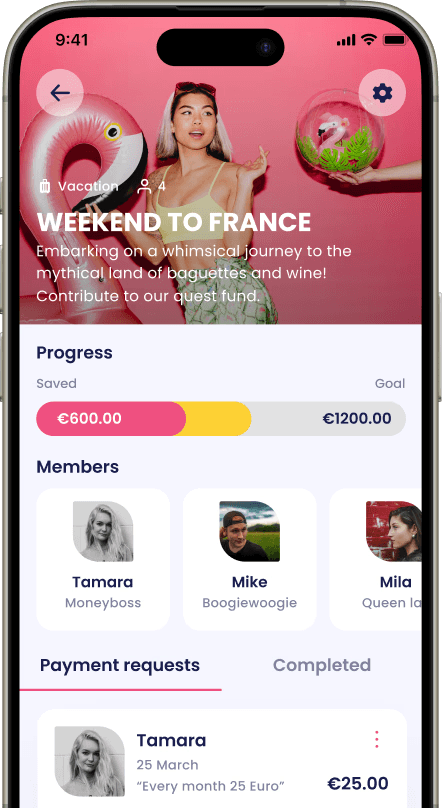
This is exactly how a shared money pot works in practice. Everyone sees the progress. Everyone knows where they stand.
Old approach | Collect-first approach |
One person fronts all costs | Everyone contributes upfront |
Organiser chases repayments | Automated reminders handle it |
No shared visibility | Full transparency for the whole group |
Debt exists from the start | No debt, only a shared goal |
Awkward friendship dynamics | Clean, neutral system |
The team stays a team
When money is handled cleanly, it stops being a source of tension.
The post-match conversation can be about the game, not about who still owes what. The group chat stays positive. The organiser doesn't quietly resent the role they've ended up in.
That's not a small thing. Group saving works precisely because it removes the friction that individual debt creates.
How Potje Works for Sports Teams
One platform taking a different approach to group money is Potje.
Rather than tracking who owes what after spending has already happened, Potje lets groups create a shared money pot with a clear goal. Everyone contributes before the money gets spent. The organiser sets the target, shares a payment link, and the group fills the pot together.
For a sports team, this works across every scenario where shared costs come up.
Kit fund: Set a target, share the link with the squad, everyone contributes before the order is placed
Tournament fees: Collect the entry fee from the group weeks in advance, so no one person carries the upfront cost
End-of-season dinner: Build the pot gradually across the season so there's no last-minute scramble in December
Penalty pot: A natural fit for the classic team fine system, collected and tracked in one transparent place
The cost is straightforward. An active money pot on Potje costs €5 per month in total, split automatically across the group. For a team of ten, that's €0.50 each per month. For a group managing hundreds of euros in shared costs across a season, it's a simple trade.
Potje is a regulated joint money account, not a bank account, and not a payment app. It's built specifically for groups who want to collect and save money together before spending it.
If your team has been dealing with the same money headaches season after season, see how a shared money pot actually works in practice and whether it fits how your team operates.
Frequently Asked Questions
Why does money always cause problems in friend groups?
Money causes friction in friend groups because the social dynamics of friendship work against clean financial accountability. People are reluctant to chase friends, give each other more grace than they'd give strangers, and avoid confrontation to protect the relationship. Small unpaid amounts accumulate into real tension over time, even when everyone started with good intentions.
How should an amateur sports team manage shared costs?
The most effective approach is to collect contributions before costs are incurred, rather than reimbursing one person afterwards. Setting up a shared money pot with a clear goal and automated reminders removes the need for the organiser to personally chase teammates, and gives the whole group visibility of where things stand.
What is the best app for managing sports team finances?
For friend-run amateur teams, a dedicated shared money pot works better than a split app. Split apps track who owes what after spending has already happened. A shared money pot collects contributions upfront, so no debt is created and no one person carries the financial burden. Potje is designed specifically for this use case.
How much does it cost to use Potje for a sports team?
An active money pot on Potje costs €5 per month in total, shared automatically across the group. For a team of ten, that's €0.50 per person per month. For a team of five, it's €1.00 each.
Can the whole team see the shared pot?
Yes. Potje gives every group member visibility of the pot's progress, contributions, and goal. This transparency is one of the main reasons it reduces the awkwardness around team finances. Everyone can see who has contributed and how close the group is to the target, without anyone having to ask.
The sport brings you together. The money shouldn't pull you apart.
Every team has that one season where a money disagreement leaves a mark. The person who felt they were always covering costs. The group chat that went quiet for a week. The teammate who quietly stopped showing up.
It doesn't have to be that way.
When the system is right, money stops being a conversation at all. Everyone contributes. The goal gets reached. The team gets on with what it actually came together to do.
Ready to sort your team's shared costs properly? Create a money pot for your sports team at Potje and start the next season with a clean system everyone can see.

Social Accountability and Saving: The Missing Link to Financial Freedom
Ondersteuning voor verschillende inhoudstypes zoals artikelen, blogs, video's en meer. Rijke tekstverwerker met opmaakopties voor verbeterde.
17 november, 2025

Group Saving Apps Compared: What's Easiest, Safest, and Most Transparent?
Ondersteuning voor verschillende inhoudstypes zoals artikelen, blogs, video's en meer. Rijke tekstverwerker met opmaakopties voor verbeterde.
17 november, 2025

Group Money Platforms Compared: What’s Safe, Regulated, and Fair?
Ondersteuning voor verschillende inhoudstypes zoals artikelen, blogs, video's en meer. Rijke tekstverwerker met opmaakopties voor verbeterde.
17 november, 2025