22 April, 2026



No one moves into a new apartment thinking, “This is where the arguments start.” But financial friction in a shared house rarely begins with a massive blowout. It happens slowly. Someone pays for groceries, someone else forgets to transfer their share, and another person promises they’ll “Venmo you later.”
Suddenly, there is a running mental tab. Then comes the inevitable, awkward text to the group chat: “Wait, who still owes for last month’s internet?”
At that moment, the tension shifts. It is no longer just about the money—it is about fairness, responsibility, and invisible labor. If you want to avoid these conflicts, you need to rethink how your household handles money.
The Hidden Tension in Shared Living
When it comes time to split bills with roommates, things get messy quickly. This isn't random; it follows the same predictable pattern in almost every lease.
Payments Get Out of Sync
One person pays for the shared supplies immediately, another delays until payday, and a third completely forgets. The household’s cash flow becomes instantly unbalanced.
Informal Tracking Creates Resentment
Most roommates rely on fridge whiteboards, messy text threads, or just their memories to track who owes what. This works perfectly—until it doesn't. When visibility is low, no one has a clear view of what has been spent, what is still owed, and what bills are coming next.
The "Organizer" Burden
In every house, one person inevitably becomes the unofficial household accountant. They keep track of the receipts, send the awkward payment reminders, and carry the financial pressure. That uneven responsibility is exactly where resentment builds.
Most disagreements sound like they are about dollar amounts, but they are actually about a lack of timing, visibility, and shared responsibility.
Why Popular Payment Apps Aren't Enough
When trying to manage household expenses, people usually turn to a mix of popular apps. While helpful for quick transactions, they don't solve the root behavioral problems.
P2P Transfer Apps (Venmo, Cash App, Tikkie): These make sending quick payment requests easy. However, they are also easy to ignore. If someone doesn't pay, you are still forced to play debt collector.
Expense Trackers (Splitwise, Splid): These are excellent for mathematical clarity—showing exactly who paid what and who owes whom. But they are entirely reactive. They tally up the damage after the spending happens, meaning you still have to settle up later.
Bank Transfers (Zelle, Wise): Reliable and flexible for moving money, but they still completely depend on individuals remembering to initiate the transfer.
The common flaw? All of these tools rely on human behavior. They assume everyone will remember, pay on time, and stay perfectly aligned.
The Proactive Fix: Pool Your Funds Upfront
If arguments stem from misalignment, the solution is to create alignment before anyone swipes their debit card.
Instead of paying individually and awkwardly settling up later, the smartest households agree on a budget, collect contributions upfront, and spend from a shared pool.
By gathering your shared expenses with flatmates or roommates into a single, visible pot beforehand, everyone is aligned from day one. You aren't tracking debts; you are managing a budget.
How Potje Streamlines Group Money Management
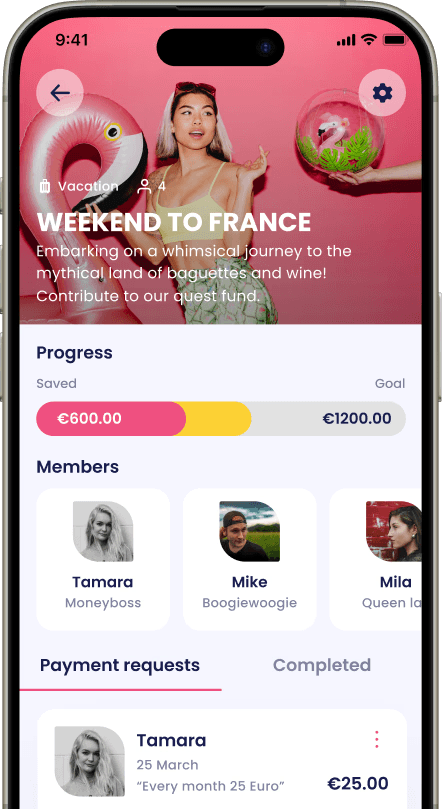
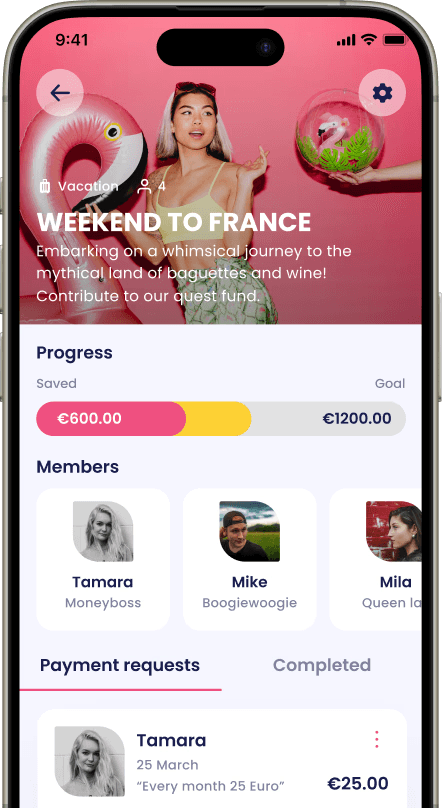
This proactive approach is exactly where a platform like Potje steps in. Instead of roommates constantly sending money back and forth and tracking everything on a spreadsheet, Potje creates a transparent group money management system.
You simply set up a dedicated digital pot for your rent, utilities, or grocery runs, and invite your housemates.
Complete Visibility: Everyone contributes into the same space, and the total balance is visible to the entire household. No one ever has to ask, "Did we pay the electric bill yet?"
No More Chasing: The system handles the math and the contributions, keeping everything structurally sound so nobody has to act as the debt collector.
Clear Separation: Your shared household funds don't sit in one person’s personal checking account. They live in a dedicated space, removing the confusing overlap between personal cash and rent money.
Whether you are collecting money from friends for a weekend trip or managing a year-long lease, shared responsibility removes the tension.
Practical Scenarios for Roommates
Groceries: Without structure, one person buys the food, and others forget to transfer their share. With a shared system, everyone contributes on the 1st of the month, and all household shopping comes directly from that combined pot.
Utilities: Without structure, the Wi-Fi is in one person's name, the electric is in another's, and tracking who owes what is a nightmare. With a shared fund, contributions are consistent, and bill payments become highly predictable.
Household Items: Toilet paper, cleaning supplies, and trash bags add up quickly. Without structure, no one tracks them. With upfront pooling, the spending is clear, and no one feels financially drained by the little things.
Frequently Asked Questions
How do roommates split expenses without arguing?
Roommates avoid arguments by shifting from reactive debt-tracking to proactive budgeting. By creating a shared system where everyone contributes upfront, you eliminate the need to track manual payments or follow up on IOUs.
What is the best way to manage shared household expenses?
The most effective approach is to collect the funds before the spending happens. A shared digital system provides total visibility, ensuring everyone knows exactly how much is in the household budget and what it is being spent on.
Are apps like Venmo or Splitwise enough for shared living?
While great for one-off situations, they fall short for ongoing shared living. Tracking apps just tell you who is in debt, and P2P apps require you to actively chase that debt down. A structured system that pools money upfront works far better for long-term harmony.
What makes Potje different for roommates?
Most tools just track expenses or move money peer-to-peer. Potje is designed to manage shared money collaboratively from the start. It allows you to gather contributions upfront, keep everything in one transparent place, and spend from a unified balance, completely removing the awkwardness of IOUs.

Social Accountability and Saving: The Missing Link to Financial Freedom
Ondersteuning voor verschillende inhoudstypes zoals artikelen, blogs, video's en meer. Rijke tekstverwerker met opmaakopties voor verbeterde.
17 november, 2025

Group Saving Apps Compared: What's Easiest, Safest, and Most Transparent?
Ondersteuning voor verschillende inhoudstypes zoals artikelen, blogs, video's en meer. Rijke tekstverwerker met opmaakopties voor verbeterde.
17 november, 2025

Group Money Platforms Compared: What’s Safe, Regulated, and Fair?
Ondersteuning voor verschillende inhoudstypes zoals artikelen, blogs, video's en meer. Rijke tekstverwerker met opmaakopties voor verbeterde.
17 november, 2025