6 October 2026


You open a new group money app, ready to start a pot for the holiday your friends have been planning for months. Then it asks for your ID.
Passport. Or driving licence. Maybe a quick selfie scan.
Your first reaction might be: "Why does a savings app need to know who I am?"
It is a fair question. And the answer actually makes the app more trustworthy, not less.
The short version: regulated group money apps in Europe are required by law to verify your identity before you can hold or move real money. This is not about being nosy. It is about keeping your group's savings safe, preventing fraud, and making sure the platform you are using is playing by the rules.
Here is what is actually happening, and why it is worth the two minutes it takes.
What Is ID Verification, and Why Do Apps Ask for It?
ID verification, often called KYC (Know Your Customer), is a standard process that regulated financial platforms use to confirm you are who you say you are.
It typically involves:
Uploading a photo of your passport or national ID card
A quick selfie or liveness check to match your face
Sometimes, confirmation of your address
This is not a new concept. Banks have done it for decades. What is new is that it now applies to digital platforms that hold and move real money on your behalf, including group money apps.
Why Europe Requires It
The EU Anti-Money Laundering Directive framework requires any platform handling payments or shared funds to verify user identities before onboarding. The rules are getting stricter, not looser. By 2027, the EU will mandate eIDAS-based identity verification as the default standard for all regulated digital financial services.
This means that if an app lets you collect and hold money from a group without any ID check, it is either operating below the regulatory threshold or, more concerning, it is not regulated at all.
An unregulated platform has no obligation to protect your money. A regulated one does.
What Happens When Group Money Apps Skip Verification?
Imagine your group collects €800 for a weekend away. The organiser puts it all in an app. Then something goes wrong: the platform shuts down, gets hacked, or the account is flagged for suspicious activity.
Without regulation, you have very little recourse.
Unverified platforms carry real risks:
No safeguarding rules. Your money is not legally protected if the platform fails.
Fraud is easier. Without identity checks, bad actors can create fake accounts and exploit group collections.
No dispute process. If money goes missing, there is no regulated body overseeing the platform.
The EU's stricter identity rules exist precisely because of incidents like these. In early 2026, a single fraudster opened 46 bank accounts using stolen identities and deepfake technology to bypass basic identity checks, according to iProov's analysis of the EU AML package. Regulators responded by tightening the rules across all financial platforms, including group savings apps.
When an app asks for your ID, it is saying: we are regulated, we are serious, and we are accountable.
That is the kind of platform you want holding your group's money.
How Potje Handles Verification (and What You Get in Return)
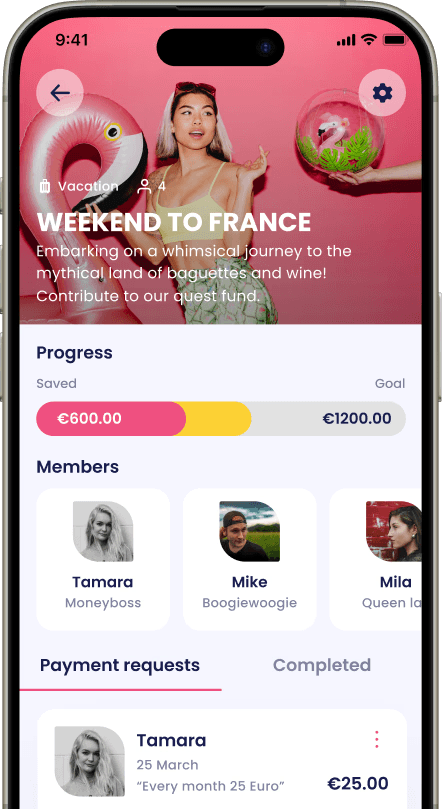
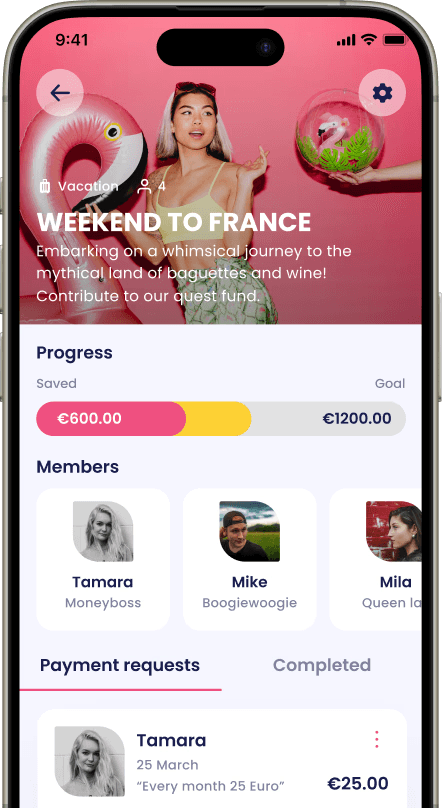
Potje is a regulated group money platform built specifically for shared savings goals. Holidays. Birthday gifts. Sports club fees. Festival budgets. Anything your group is saving towards together.
To start a money pot as the organiser, Potje asks you to verify your identity. It takes a few minutes.
In return, you get:
A fully regulated shared money account where your group's contributions are protected
Instant payouts of any amount, whenever you need the money, with no waiting period
No fee on partial payouts, so you can access part of the pot without any extra cost
Automated contribution reminders, so you are not the one chasing everyone
Full transparency, so every group member can see progress towards the goal
And right now, your first month is completely free.
The cost after that is €5.00 per month in total, shared automatically across the group. With 10 people, that works out to just €0.50 each per month.
"Everyone contributes before spending begins. No one carries the financial burden alone."
That is the Potje model. And the ID verification at the start is what makes it possible to offer all of this within a regulated, trustworthy framework.
ID Verification Is a Feature, Not a Friction Point
Think about it from the other side for a moment.
You are contributing to a group pot organised by a friend. You send €100 towards the Airbnb deposit. Would you rather that money sit in an anonymous, unverified app? Or in a regulated account where the organiser has been verified and the platform is accountable to financial regulators?
The answer is obvious when you frame it that way.
What Verification Actually Protects You From
Fake organisers. If someone creates a fraudulent collection, verified identity makes them traceable.
Platform risk. Regulated apps must meet strict financial standards, including safeguarding your funds.
Disputes. If something goes wrong, a regulated platform has formal processes to resolve it.
The two minutes you spend uploading your ID at the start are protecting every euro your group contributes after that.
Verification is not a barrier to using the app. It is the reason you can trust it.
For a deeper look at how group money platforms compare on safety and regulation, see this comparison of regulated group money platforms in Europe.
Frequently Asked Questions
Why do group money apps ask for ID verification?
Regulated group money apps in Europe are required by EU Anti-Money Laundering rules to verify the identity of anyone who opens an account or holds funds on behalf of others. This protects users from fraud and ensures the platform is legally accountable.
Is it safe to upload my ID to a money app?
Yes, if the app is regulated. Regulated platforms are required to handle your personal data in line with GDPR and to use secure, encrypted identity verification processes. Always check whether an app is operating under a financial licence before sharing documents.
Does every group member need to verify their ID?
Typically, only the pot organiser needs to complete full identity verification. Group members who simply contribute money often go through a lighter check, or none at all, depending on the platform and the amount involved.
Does Potje verify ID?
Yes. Potje requires the pot organiser to complete identity verification before starting a shared money pot. This is part of operating as a regulated platform and is what allows Potje to offer instant payouts, safeguarded funds, and a trustworthy group savings experience.
How long does ID verification take on Potje?
The process typically takes a few minutes. You will need a valid passport or national ID card and access to your phone camera for the liveness check.
What does Potje cost after the free month?
After your first free month, Potje costs €5.00 per month in total, shared across the group. With five people that is €1.00 each. With ten people it is just €0.50 each per month. There are no fees on partial payouts, and you can withdraw any amount instantly.
Ready to Start a Pot You Can Trust?
Group money should be organised before it becomes a problem. That starts with choosing a platform you can actually trust.
Potje makes it simple. Verify once, then collect contributions, track progress, and pay out instantly whenever your group is ready. No spreadsheets. No chasing. No awkward money conversations.
Your first month is free. Start your group pot at potje.tech today.

Social Accountability and Saving: The Missing Link to Financial Freedom
Ondersteuning voor verschillende inhoudstypes zoals artikelen, blogs, video's en meer. Rijke tekstverwerker met opmaakopties voor verbeterde.
17 november, 2025

Group Saving Apps Compared: What's Easiest, Safest, and Most Transparent?
Ondersteuning voor verschillende inhoudstypes zoals artikelen, blogs, video's en meer. Rijke tekstverwerker met opmaakopties voor verbeterde.
17 november, 2025

Group Money Platforms Compared: What’s Safe, Regulated, and Fair?
Ondersteuning voor verschillende inhoudstypes zoals artikelen, blogs, video's en meer. Rijke tekstverwerker met opmaakopties voor verbeterde.
17 november, 2025