28 July 2026



The Problem With Group Money
Someone always ends up carrying the group.
They book the Airbnb. They pay for the festival tickets. They front the coach transfer. Then they wait. And wait. And send a few too many messages that start with "Hey, just a reminder..."
It is not that people are dishonest. It is that group money is invisible. Nobody knows exactly what they owe, when to pay, or whether someone else has already sorted it. When the balance is unclear, people hesitate. When people hesitate, the organiser chases. And chasing is exhausting.
The fix is simpler than most people think: make the balance visible to everyone.
When everyone in the group can see exactly how much has been collected, how much is still needed, and who has contributed, something shifts. People pay faster. Not because they feel pressured, but because the information is right there. There is no confusion to hide behind.
This is what transparent group balances actually do, and why they matter for anyone organising a shared trip, event, or group goal.
What Is a Transparent Group Balance?
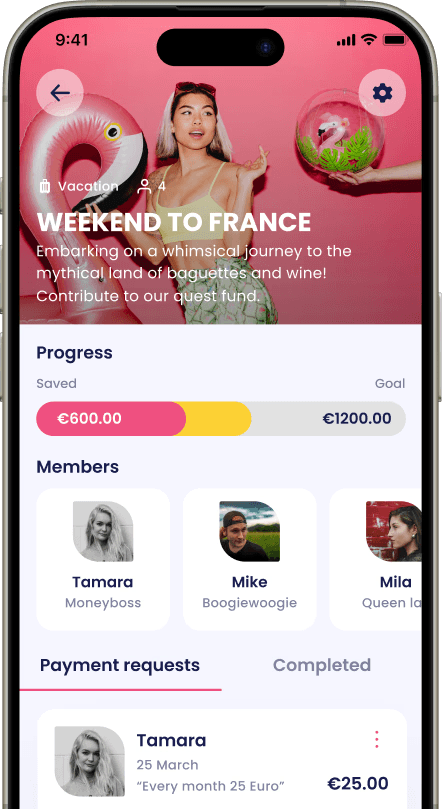
A transparent group balance is a shared, real-time view of a group's money pot that every member can see.
It shows:
The goal amount (how much the group needs to collect in total)
The current balance (how much has been paid in so far)
Individual contributions (who has paid and how much)
What is still outstanding (how much each person still owes)
This is different from one person keeping a spreadsheet that nobody else sees. It is also different from a group chat where someone pastes a screenshot every few days.
A transparent balance lives in a shared space. It updates in real time. Everyone has access without needing to ask.
The key insight: when people can see the group's progress, they feel part of something. When they feel part of something, they contribute.
Why Transparency Speeds Up Group Payments
It comes down to three things: clarity, accountability, and momentum.
Clarity removes the excuse
Most late group payments are not deliberate. People genuinely forget, or they are not sure exactly what they owe. A transparent balance removes all of that ambiguity. The number is right there. No calculation needed. No awkward "how much do I owe again?" message to send.
When the amount is clear and visible, the only thing left is the decision to pay.
Accountability without confrontation
Nobody wants to be the person who hasn't paid.
When contributions are visible to the group, there is a natural social motivation to stay current. This is not about shame or pressure. It is about belonging. People want to be seen as reliable by their friends and family.
Transparent balances create this accountability quietly, without anyone having to say a word.
Momentum is contagious
When people see the balance growing, they want to be part of it.
A group that is 60% of the way to their holiday fund feels different from a group that is at zero. Progress is motivating. Seeing others contribute nudges people to do the same.
This is why shared goals with visible progress consistently get funded faster than those managed privately.
Think of it like a crowdfunding page. Nobody backs a campaign with zero contributions. The moment the number starts moving, others follow.
The Old Way vs. The Better Way
Here is what group money usually looks like without transparency, and what it looks like when everyone has visibility.
Old way | With transparent balances | |
Who knows the balance? | Only the organiser | Everyone in the group |
How do people know what to pay? | The organiser tells them | It is visible in real time |
What happens when someone forgets? | The organiser chases | The balance reminds them |
How does the group feel? | Stressed and uneven | Aligned and motivated |
When does money get collected? | After the event | Before the spending begins |
The difference is not just organisational. It changes the dynamic of the whole group.
One person stops carrying the burden. Everyone becomes part of the plan.
How Potje Makes Group Balances Transparent
Potje is a joint money account built specifically for groups.
Instead of one person collecting money and everyone else hoping for the best, Potje gives the whole group a shared money pot with a clear goal. Everyone can see the balance. Everyone can see who has contributed. And everyone gets automated reminders, so the organiser never has to send another awkward message.
Here is how it works in practice:
The organiser creates a money pot with a goal amount and a deadline.
A payment link is shared with every member of the group.
Each person contributes directly into the shared pot.
Everyone sees the progress in real time, including who has paid and how much is still needed.
The money is collected before spending begins, so nobody is left chasing debts after the fact.
No spreadsheets. No awkward reminders. No one person carrying the group.
Potje is currently developing a virtual spending card so the group can spend directly from the pot when the goal is reached. You can join the waiting list at potje.tech.
Who Benefits Most From Transparent Group Balances?
Honestly? Anyone who has ever had to chase a friend for money.
But more specifically, transparent group balances make the biggest difference for:
Holiday groups saving for flights, accommodation, or experiences together
Event organisers collecting contributions for a birthday, hen do, or stag weekend
Sports clubs and teams managing shared kit, travel, or entry fees
Housemates splitting regular shared costs like groceries or household bills
Festival groups pooling money for tickets, transport, and accommodation in advance
In each of these situations, the organiser usually ends up doing far more work than anyone else. Transparent balances shift that responsibility back to the group, where it belongs.
Frequently Asked Questions
Does everyone need the Potje app to see the group balance?
No. The organiser creates the money pot and shares a payment link. Group members can contribute and track progress without needing to download the app themselves.
Is it safe to share financial information with the whole group?
Potje only shows contribution amounts and progress towards the goal. Personal banking details are never visible to other group members.
What happens if someone does not pay?
Potje sends automated payment reminders, so the organiser does not have to. If someone still does not contribute, the balance makes it clear to the group without anyone needing to call it out directly.
How is Potje different from just using a group chat to track payments?
A group chat relies on someone manually updating the balance and trusting everyone to be honest about what they have paid. Potje automates all of this. Contributions go directly into the shared pot. The balance updates in real time. No manual tracking needed.
Stop Chasing. Start Collecting.
Group money does not have to be stressful.
When everyone can see the balance, people pay. Not because they are forced to, but because clarity removes every reason not to.
The organiser stops chasing. The group stops feeling guilty. And the whole experience, whether it is a weekend away, a birthday dinner, or a festival trip, starts the way it should: with everyone on the same page.
Ready to try a better way? Create your first money pot with Potje and see how fast a group can move when the balance is visible to everyone.

Social Accountability and Saving: The Missing Link to Financial Freedom
Ondersteuning voor verschillende inhoudstypes zoals artikelen, blogs, video's en meer. Rijke tekstverwerker met opmaakopties voor verbeterde.
17 november, 2025

Group Saving Apps Compared: What's Easiest, Safest, and Most Transparent?
Ondersteuning voor verschillende inhoudstypes zoals artikelen, blogs, video's en meer. Rijke tekstverwerker met opmaakopties voor verbeterde.
17 november, 2025

Group Money Platforms Compared: What’s Safe, Regulated, and Fair?
Ondersteuning voor verschillende inhoudstypes zoals artikelen, blogs, video's en meer. Rijke tekstverwerker met opmaakopties voor verbeterde.
17 november, 2025
