29 October 2026



Someone in the group chat suggests a Christmas market trip. Everyone reacts with enthusiasm. Then comes the silence: who books the train? Who pays for the hotel? Who chases everyone for the money?
Group travel is brilliant in theory and chaotic in practice. The festive part is easy. The money part is where things fall apart.
Here is the thing: a Christmas market weekend does not have to be stressful to organise. The secret is collecting the big costs before anyone books anything. Once the transport and hotel money is sitting in one shared Potje pot, the rest of the trip plans itself.
This guide covers exactly how to do that: from choosing a destination and building a realistic budget, to collecting everyone's share upfront and booking with confidence.
Where to Go: Popular Christmas Market Destinations Within Easy Reach
From the Netherlands or Belgium, you are spoilt for choice. Some of Europe's most celebrated Christmas markets are just a train ride or a short drive away. Here are five destinations worth considering.
Cologne, Germany
The Cologne Christmas Market at the foot of the cathedral is one of the most iconic in Europe. Around two and a half hours by train from Amsterdam and less than an hour from the Belgian border, it is one of the most accessible options for groups.
Düsseldorf, Germany
Just over two hours by train from Amsterdam, Düsseldorf spreads multiple markets across its city centre each December. A solid choice if you want the full German Christmas market experience with slightly fewer crowds than Cologne.
Brussels, Belgium
Winter Wonders Brussels drew over 4.3 million visits across Brussels city centre in its 2025 edition, with the Grand Place at its heart. Under two hours by train from Amsterdam, it is one of the easiest big-market trips to organise.
Strasbourg, France
Known as the "Capitale de Noël," Strasbourg hosts one of the oldest Christmas markets in Europe, dating back to 1570. Around five to six hours from Amsterdam by train, but well worth it for groups wanting something different.
Bruges, Belgium
Bruges runs its market from late November through to early January. Compact, beautiful, and easy to reach from both the Netherlands and Belgium, it is ideal for a relaxed group weekend.
Key tip: All five destinations have one thing in common. They fill up fast. Hotels and trains book out weeks in advance during the Christmas market season. The earlier you decide on a destination, the better your options and prices.
What Does a Christmas Market Weekend Actually Cost?
Before you collect a single euro from anyone, you need a realistic number. Vague estimates lead to awkward conversations later. Here is a sample budget for a group of six people on a two-night weekend trip, using Cologne as the example.
Sample Budget: Six People, Two Nights in Cologne
Cost category | Per person | Group total (6 people) |
Return train (Amsterdam to Cologne) | €60 | €360 |
Hotel (2 nights, shared rooms) | €80 | €480 |
Market spending money | €50 | €300 |
Food and drinks (2 days) | €60 | €360 |
Total | €250 | €1,500 |
A few things to note about this breakdown.
Transport and accommodation make up more than half the total. These are also the costs that need to be booked and paid for in advance. That is why they should be collected first, before anyone starts discussing what to buy at the market.
Market spending money is personal. Some people will spend €20 on a single handmade ornament. Others will spend €80 on gifts for the whole family. Agreeing a rough per-person amount in advance avoids any awkwardness at the stalls.
Food and drinks add up faster than expected. Two days of mulled wine, hot chocolate, bratwurst, and sit-down dinners can easily reach €60 per person. Build this into your estimate from the start.
The golden rule: Collect the non-negotiable costs (transport and hotel) before booking. Everything else can be managed on the day.
Collect the Big Costs First, Then Book
This is the step most groups skip. Someone books the hotel on their personal card, someone else buys the train tickets, and then the group spends the next three weeks sending payment requests to each other. It is messy, it creates awkward debt, and it often means one person ends up significantly out of pocket.
The better approach: collect the money before anyone books anything.
How It Works in Practice
Agree on the destination and dates. Get a firm commitment from everyone before spending a minute on logistics.
Work out the transport and hotel cost per person. Get actual quotes, not rough estimates.
Open a shared money pot. Everyone contributes their share upfront.
Book from the pot. Once the money is in, whoever is organising can pay out from the pot to book the train and hotel.
This approach means nobody is out of pocket, nobody has to chase anyone, and the booking happens quickly because the money is already there.
Why This Matters More Than You Think
When one person fronts the money and hopes to be paid back, two things happen. First, they carry financial stress the entire trip. Second, the repayments drag on for weeks after you get home, which takes the shine off an otherwise lovely weekend.
Collecting upfront solves both problems. It also creates a natural commitment mechanism: once someone has paid into the pot, they are far less likely to drop out last minute.
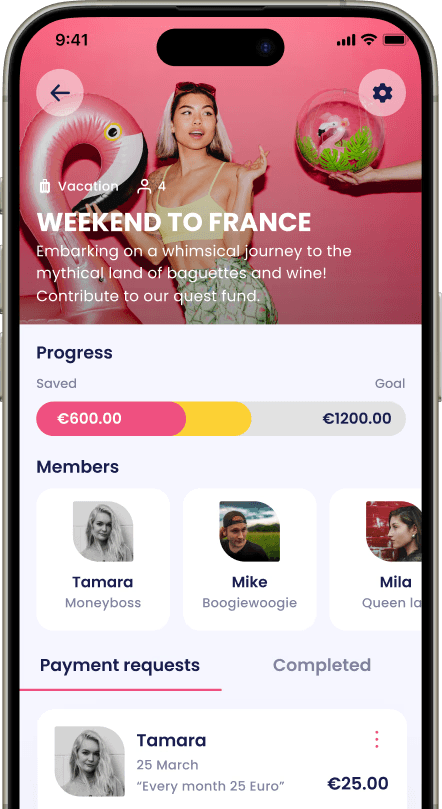
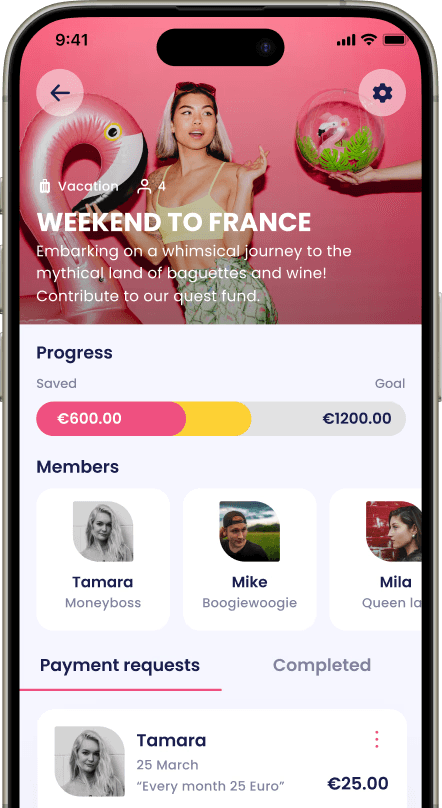
This is exactly what Potje is built for. Potje is a shared money pot designed specifically for groups. You create a pot, share a payment link, and everyone contributes their share. The money sits in the pot until you are ready to book. Potje offers your first month free, so for a short trip like this, the cost to the group is nothing.
Your first month is free. After that, the pot costs €5 per month in total, shared across the whole group. For six people, that is less than €1 each per month.
Potje also supports instant payouts of any amount, with no fee on partial payouts. So if you need to pay the hotel deposit before the full amount is collected, you can withdraw just what you need without any penalty.
Agree a Spending Budget Per Person Before You Go
The transport and hotel are fixed costs. Everyone knows what they owe, and it is easy to collect. Market spending money is trickier because it is personal and variable.
The best way to handle it is to agree a rough per-person spending budget before you leave. This does not mean everyone has to spend the same amount. It just means everyone has a number in their head going in.
A Simple Spending Framework
Set a suggested daily market budget per person. Something like €40 to €60 per day covers a few drinks, some food, and a bit of shopping without anyone feeling pressured.
Keep gift shopping separate. If people are buying Christmas gifts at the market, that comes out of their own pocket and does not need to be part of the group pot.
Agree on shared meals. If the group plans to eat dinner together, decide in advance whether that is a shared cost or individual.
Leave room for spontaneity. The best moments at Christmas markets are unplanned. Nobody wants to feel like they cannot buy an extra mug of mulled wine because they have hit their budget.
The point of agreeing a framework is not to control how people spend their money. It is to make sure nobody feels awkward or left out because they budgeted very differently from the rest of the group.
A practical tip: If you are using a shared pot for the trip, you can also add a small "group fun fund" to cover shared experiences like a round of drinks or a group dinner. Everyone contributes the same small amount, and it gets spent together. No awkward splitting at the table.
For more on how to manage group money for a trip without the stress, take a look at our guide on how to collect money for a group trip without the awkward chasing.
Booking Tips for a Short Season
Christmas markets run for a matter of weeks. That is part of what makes them special. It is also what makes them logistically tricky. Here is what experienced group travellers know that first-timers often learn the hard way.
Book as Early as Possible
Hotels in popular Christmas market cities like Cologne, Brussels, and Strasbourg sell out fast. Prices also rise sharply as December approaches. The sooner your group agrees on a destination, the better the rates you will typically find.
The same applies to trains. Eurostar routes to Brussels and beyond, and Deutsche Bahn international trains to Cologne and Düsseldorf, release tickets months in advance. Early bookers get the best fares.
The practical implication: collect the money first, then book immediately. Do not collect the money and then wait to book. Prices go up while you hesitate.
Always Check Cancellation Terms
Life happens. Someone in the group might have to drop out. Before you book any hotel or transport, check the cancellation policy carefully.
Hotels: Look for options with free cancellation up to 48 or 72 hours before arrival. Booking.com and similar platforms usually show this clearly. It costs a little more upfront but protects the group if plans change.
Trains: Some advance train tickets are non-refundable. If there is any uncertainty about the group, consider flexible tickets even if they cost slightly more.
Group size: If someone drops out after you have booked, having a shared pot makes it much easier to manage a partial refund or cover the shortfall without one person bearing the entire cost.
Keep the Group Small and Committed
The bigger the group, the harder it is to get everyone to commit. A Christmas market weekend works best with four to eight people. Beyond that, coordinating schedules, preferences, and payments becomes its own full-time job.
If you are organising for a larger group, consider how to plan a budget-friendly trip with friends for strategies that scale better.
Have a Clear Deadline for Contributions
Set a firm date by which everyone needs to have paid into the shared pot. Make it at least two weeks before you plan to book, so you have time to follow up with anyone who is slow to pay without delaying the whole group.
Avoid open-ended collection periods. "Pay when you can" becomes "pay never." A specific deadline changes the dynamic entirely.
How to Set Up Your Christmas Market Money Pot
Setting up a shared money pot for the trip takes about five minutes. Here is how it works with Potje.
Create a pot. Give it a name (something like "Cologne Christmas 2026") and set the goal amount based on your transport and hotel costs.
Share the payment link. Send it to everyone in the group via WhatsApp or your group chat. Each person pays their share directly.
Watch the pot fill up. Everyone can see progress towards the goal. No chasing, no spreadsheets, no guessing who has paid.
Pay out when you need to. Once the money is in, you can pay out instantly to cover the hotel or train booking. Partial payouts are available with no fee, so you can withdraw exactly what you need, when you need it.
The first month is completely free. For a step-by-step walkthrough, see our guide on how to set up a group money pot with Potje.
FAQ
How much should I budget for a Christmas market weekend trip?
For a two-night group trip from the Netherlands to a destination like Cologne or Brussels, expect to budget around €200 to €300 per person. This covers return transport, shared accommodation, food, drinks, and market spending money. The exact amount depends on how early you book and how many people are sharing accommodation costs.
When is the best time to book a Christmas market trip?
As early as possible. Popular Christmas market destinations like Cologne, Brussels, and Strasbourg fill up fast. If you are planning a trip in December, aim to book your hotel and transport as soon as your group has agreed on dates. Hotels and trains both get significantly more expensive as December approaches.
How do I collect money from friends for a group trip without the awkward chasing?
The most effective method is to collect money before booking, not after. Open a shared money pot, share the payment link with the group, and set a firm deadline. When everyone knows the trip cannot be booked until the pot is full, contributions tend to arrive much faster. Potje is built for exactly this: a shared money pot where everyone contributes upfront and the organiser books from the collected funds.
What is a shared money pot and how does it work?
A shared money pot is a digital account where multiple people contribute towards a shared goal. With Potje, you create a pot, set a target amount, and share a payment link with your group. Each person pays their share directly into the pot. The organiser can then pay out from the pot to cover shared costs like hotel and transport. There are no hidden fees, and payouts are instant.
Can I do a partial payout from a Potje money pot?
Yes. Potje supports instant payouts of any amount, including partial payouts. There is no fee on partial payouts. This means you can withdraw just what you need to pay the hotel deposit, for example, without waiting for the full amount to be collected first.
Is Potje free to use?
Your first month is completely free. After that, the pot costs €5 per month in total, shared automatically across the whole group. For a group of six, that is less than €1 each per month. For a short Christmas market trip, you will likely use only the free first month.
What are the best Christmas market cities to visit from the Netherlands?
Some of the most popular options include Cologne (around two and a half hours by train), Düsseldorf (around two hours), Brussels (under two hours), Bruges, and Strasbourg. All offer excellent Christmas markets and are easily reachable by train or car. Cologne and Brussels are the most popular choices for Dutch and Belgian groups due to their proximity and the scale of their markets.
Ready to Start Planning?
A Christmas market weekend with friends is one of the most enjoyable things you can do in December. The markets, the mulled wine, the lights all come together beautifully when the planning is done properly.
The planning is not complicated. Pick a destination. Work out the costs. Collect the transport and hotel money before anyone books. Agree a rough spending budget per person. Book early and check the cancellation terms.
The part most groups get wrong is the money. They leave it until after the booking, which means one person carries the cost and everyone else owes them. It creates stress that follows the group all the way to the market and back.
Collect first. Book second. Enjoy the trip.
Start your Christmas market money pot with Potje today. Your first month is free, payouts are instant, and there are no fees on partial withdrawals.

Social Accountability and Saving: The Missing Link to Financial Freedom
Ondersteuning voor verschillende inhoudstypes zoals artikelen, blogs, video's en meer. Rijke tekstverwerker met opmaakopties voor verbeterde.
17 november, 2025

Group Saving Apps Compared: What's Easiest, Safest, and Most Transparent?
Ondersteuning voor verschillende inhoudstypes zoals artikelen, blogs, video's en meer. Rijke tekstverwerker met opmaakopties voor verbeterde.
17 november, 2025

Group Money Platforms Compared: What’s Safe, Regulated, and Fair?
Ondersteuning voor verschillende inhoudstypes zoals artikelen, blogs, video's en meer. Rijke tekstverwerker met opmaakopties voor verbeterde.
17 november, 2025