5 June 2026



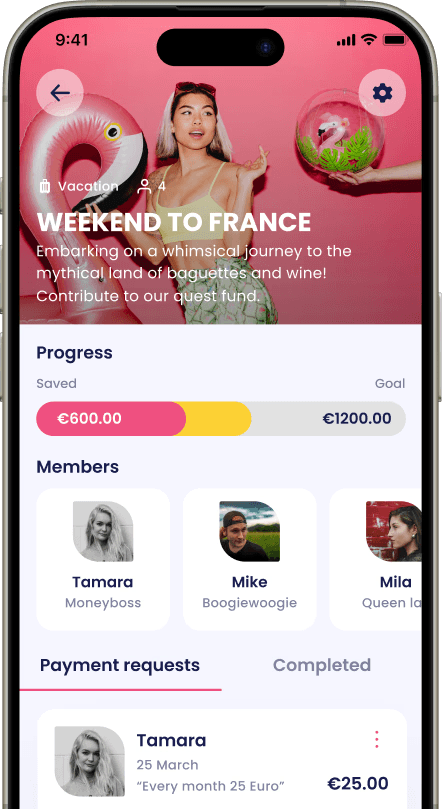
A virtual VISA card simplifies shared money by making group spending digital, instantly trackable, and much easier to manage through Apple Pay and online payments. However, the biggest improvement in financial transparency and security happens when the virtual card is connected directly to a pooled, shared fund instead of a single individual’s private bank account. This structure creates total group visibility, eliminates tedious reimbursement friction, and establishes far stronger control over shared budgets.
The Biggest Problem with Shared Money is Visibility
Most shared spending systems—whether for a weekend getaway with friends or a household bill-splitting arrangement—break down because nobody actually sees the full financial picture.
Think about the standard way groups handle expenses:
One person pays the merchant.
Another person attempts to track the expenses in a spreadsheet or a third-party app.
Someone else forgets to transfer their share of the reimbursement.
Before long, the group has three different, conflicting versions of the exact same budget. That is where interpersonal tension starts. It rarely happens because the money is actually missing or stolen; it happens because the financial system itself is entirely fragmented. When data is scattered across personal accounts and chat groups, trust diminishes, and coordination becomes a stressful chore.
Why Virtual VISA Cards Are Changing Spending Habits
The rapid adoption of virtual VISA cards has fundamentally shifted how consumers think about everyday transactions. Virtual cards remove a massive amount of friction immediately from the payment experience.
With a purely digital card, you no longer need to:
Carry a bulky physical plastic card that can be lost or stolen.
Wait 5 to 7 business days for a bank delivery.
Depend on slow, manual cash transfers to settle debts.
Instead, modern banking users can:
Add the virtual card directly to Apple Pay or Google Pay.
Pay for online travel bookings or digital subscriptions instantly.
Use a smartphone or smartwatch for fast, secure contactless payments at retail stores.
The experience undeniably feels faster and more modern. But speed alone is not the real paradigm shift. The real shift is visibility and control.
What a Virtual VISA Card Actually Does
If you are new to digital-first banking, it helps to understand the mechanics. A virtual VISA card is exactly what it sounds like: a fully functional digital payment card connected directly to an account balance.
It functions exactly like a regular physical debit card. It has a unique 16-digit card number, an expiration date, and a CVV security code. However, it exists entirely digitally inside a mobile banking app or digital wallet.
What makes a virtual card so useful for group money management?
Payments happen instantly and are authorized in real-time.
Spending data is immediately visible in the app's transaction history.
Cards can be frozen, paused, or completely deleted with a single tap.
Apple Pay integration removes friction at the point of sale, utilizing biometric security (FaceID/TouchID).
This digital-first architecture creates unprecedented control over money movement—especially in complicated shared financial situations.
Why Shared Money Usually Becomes Complicated
Despite the rise of sleek financial apps, most group money systems still rely heavily on one single person handling all the logistics.
In almost every scenario:
One person books the group accommodation.
One person puts their card down for the expensive group dinner.
One person aggressively tracks who owes what on a split-bill app.
Even with highly popular digital tools like Wise, bunq, or Revolut, the underlying banking structure remains mostly individual. Yes, the payment itself has become digital and fast, but the coordination between the group members stays frustratingly manual. The system still requires an organizer to act as a middleman, floating their own personal cash until everyone else decides to pay them back.
The Security Problem Nobody Talks About
When we talk about financial security, we usually focus on hackers or stolen card numbers. But shared money systems often create a massive, hidden risk: personal financial exposure.
Because traditional payment setups require one person to pay upfront, that individual becomes financially exposed. If friends pay late, forget, or back out of a plan, that designated organizer carries the entire cost.
The core issue here is not a lack of trust among friends; the issue is one of ownership. When the spending system depends on a single person's individual bank account, the financial and mental responsibility becomes incredibly uneven. It places an unfair burden on the organizer, which is the exact opposite of how "shared" spending should feel.
How Virtual Cards Improve Security in Practice
Transitioning to a digital, virtual card system improves security in several highly practical ways:
Real-Time Visibility: Transactions appear on the dashboard immediately. Everyone with access can see exactly where the money goes, preventing disputes over lost receipts or forgotten purchases.
Better Spending Control: Virtual cards are highly customizable. They can often be frozen instantly, and single-use virtual card numbers can be generated for specific online purchases. This drastically reduces the risk of fraud compared to swiping a physical card.
Reduced Cash Handling: The group no longer depends on counting physical cash, handling messy ATM withdrawals, or tracking scattered peer-to-peer (P2P) bank transfers.
Cleaner Separation of Money: When the spending balance is strictly separated from your personal checking or savings accounts, the entire financial system becomes significantly easier and safer to manage.
How Competitors Approach Virtual Spending
To understand where the market is going, it is helpful to look at how the biggest players handle virtual cards today.
Wise
Wise is a fantastic platform for international payments and navigating foreign exchange rates during travel. Its virtual cards integrate smoothly with Apple Pay. However, the accounts are built for the individual or the business, meaning splitting shared travel expenses still requires manual calculation afterward.
bunq
bunq focuses heavily on flexible digital banking and modern spending tools. It offers excellent Apple Pay compatibility and robust digital card management. While they offer joint features, the foundation is still individual-first, requiring users to link personal accounts together rather than funding a neutral, shared pot first.
Revolut
Revolut provides incredibly fast virtual card creation and a world-class mobile payment experience. It is immensely popular for digital-first users. But similar to Wise, it is designed for a single owner.
The Common Limitation
All three of these major competitors still primarily focus on individual account ownership. That means, at the end of the day, shared spending still relies on tedious reimbursements and post-purchase coordination.
Why the Next Evolution is Shared Virtual Spending
The future of group money management is not just about making digital payments slightly faster. It is about establishing shared ownership of the entire spending flow.
Instead of the outdated model of one person paying and others reimbursing later, the system must become collective from the start:
Shared Balance: The money is pooled together before the spending happens.
Shared Visibility: Every contributor sees the same dashboard and transaction history.
Shared Responsibility: No single person carries the risk of a depleted personal bank account.
This is exactly where virtual cards pivot from being just a "neat feature" to becoming a profoundly useful financial tool for groups.
How Potje is Building Toward This
Potje recognized this gap in the market and flipped the standard banking model. Potje already provides the foundational shared money structure that groups actually need.
Instead of tracking debts, users create a digital money pot where:
Everyone in the group contributes upfront.
Contributions are tracked automatically by the system.
The total balance is transparent and visible to the entire group.
The next logical step is connecting the actual point of purchase directly to those shared funds. To solve this, Potje is actively developing a virtual VISA card (launching Q3 2026) that will:
Connect directly to the shared pot: Bypassing personal accounts entirely.
Work flawlessly with Apple Pay and Google Pay: Enabling tap-to-pay functionality for group dinners or hotel check-ins.
Allow real-time group spending visibility: Everyone sees the receipt the moment the card is charged.
This upcoming feature dramatically reduces manual tracking, eliminates reimbursement friction, and restores financial balance inside groups.
Important: This feature is coming soon. Once launched, the "Money Boss" of your group will be able to generate a virtual VISA card instantly, add it to Apple Pay, and spend directly from the collected shared funds. You can secure your spot and join the waitlist here: Potje App.
Practical Use Cases for Shared Virtual Cards
How does a shared virtual card actually change your day-to-day life? Here is how different groups benefit from group money management:
Group Travel: Use one unified shared balance to book the Airbnb, pay for rental cars, and cover group dinners. No more complicated spreadsheets at the end of a holiday.
Family Spending: Keep visibility across shared household costs, groceries, or childcare supplies without forcing both partners to rely on one person's individual checking account.
Shared Events: Whether it is a bachelor party, a festival weekend, or a milestone birthday, track the group's spending collectively in real-time.
Student Houses and Roommates: Manage recurring internet, utility, and shared supply expenses far more transparently, ensuring no roommate is left covering the rent gap.
Commercial Implications: Where the Market is Moving
From a market perspective, virtual VISA cards are rapidly becoming the baseline standard. Soon, simply offering a digital card will not be enough to impress consumers. The real competitive advantage is now the spending structure behind the card.
When systems stay individual: Reimbursements slow down fast decisions. One person carries intense financial pressure. Visibility becomes hopelessly fragmented.
When systems become shared: Spending becomes 100% transparent. Coordination happens effortlessly. Most importantly, financial trust improves among friends and family.
That is where the consumer fintech market is aggressively moving.
Risks and Misconceptions
There are a few common misconceptions about digital group spending that need to be addressed:
“Apple Pay automatically solves shared spending.” False. Apple Pay greatly improves payment speed at the terminal, but it does nothing to fix the ownership structure. It simply charges the underlying card faster.
“Virtual cards are only safer for online shopping.” False. While they are excellent for preventing online e-commerce fraud, their ability to be frozen instantly and tracked in real-time also improves control and visibility in real-world group spending scenarios.
“Expense tracking apps are enough.” False. Tracking apps only help after the spending has occurred. They tell you who is in debt, but they do not solve the root problem of how the money is actually managed and spent in the first place.
FAQ Section
What is a virtual VISA card?
A virtual VISA card is a highly secure digital payment card connected to an account balance. It functions exactly like a normal physical debit card—complete with a card number, expiry date, and CVV—but it exists digitally inside a mobile banking app or digital wallet. Users can securely use it for online purchases, Apple Pay transactions, and contactless retail payments.
Are virtual VISA cards more secure than physical cards?
Yes, virtual VISA cards can significantly improve security. Because they are managed entirely digitally, they can often be frozen, deleted, or replaced instantly with a single tap if you suspect fraud. Furthermore, they reduce the group's dependence on physical cards and cash handling, lowering the risk of theft or loss.
Can I use a virtual VISA card with Apple Pay?
Yes. Most modern virtual card providers support direct Apple Pay and Google Pay integration. This allows users to add their virtual VISA cards to their Apple Wallet, enabling fast, secure contactless payments in physical stores and seamless online checkout. Compatibility varies slightly depending on the provider and region.
Why is shared spending usually difficult to manage?
Shared spending becomes difficult because the traditional banking model forces one person to pay the full amount upfront while aggressively chasing others to reimburse them later. This creates deeply uneven financial responsibility, delayed peer-to-peer payments, and fragmented visibility. Dedicated shared systems solve this by making the pooled money and the outgoing spending visible to the entire group simultaneously.
What is Potje and how will its virtual VISA card work?
Potje is a dedicated shared money account built specifically for groups. It allows users to create a digital pot, invite contributors, and seamlessly collect and manage money together in one transparent place. Potje is currently developing a virtual VISA card (launching Q3 2026) that will connect directly to these shared funds and support Apple Pay. This empowers groups to spend together from a single balance without relying on tedious post-trip reimbursements. The feature is coming soon, and users can join the waitlist via the Potje website.
Conclusion
Ultimately, shared money becomes simpler when the financial system stops depending on the shoulders of one person. Most of the stress and frustration in group payments stems from uneven responsibility: one person pays, one person tracks, and one person follows up. That creates friction instantly.
When the actual spending becomes visible and truly shared through a dedicated virtual card system, the entire dynamic changes. That is what makes modern virtual spending systems fundamentally more useful, secure, and stress-free than traditional payment setups.

Social Accountability and Saving: The Missing Link to Financial Freedom
Ondersteuning voor verschillende inhoudstypes zoals artikelen, blogs, video's en meer. Rijke tekstverwerker met opmaakopties voor verbeterde.
17 november, 2025

Group Saving Apps Compared: What's Easiest, Safest, and Most Transparent?
Ondersteuning voor verschillende inhoudstypes zoals artikelen, blogs, video's en meer. Rijke tekstverwerker met opmaakopties voor verbeterde.
17 november, 2025

Group Money Platforms Compared: What’s Safe, Regulated, and Fair?
Ondersteuning voor verschillende inhoudstypes zoals artikelen, blogs, video's en meer. Rijke tekstverwerker met opmaakopties voor verbeterde.
17 november, 2025
