28 April 2026



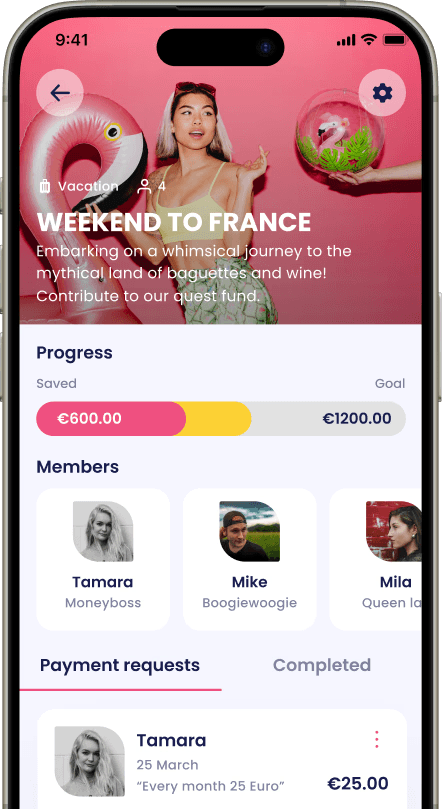
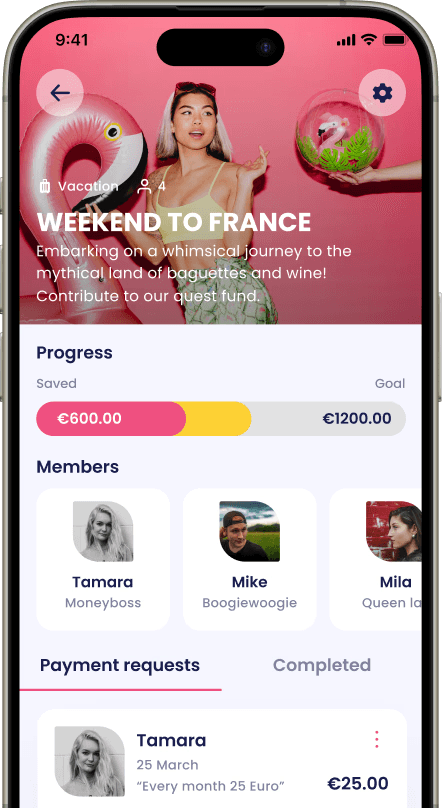
A group money management app helps you track and manage group expenses—shared costs among multiple people, such as for travel, outings, or shared living situations. While a shared expense tracking app helps you track who owes money after spending, a shared savings account helps you collect and manage money before spending. For almost any splitting situation, collecting money upfront through a shared system like Potje reduces friction, avoids reimbursements, and keeps the group aligned.
Establishing a budget and defining contribution rules are critical practices for effective group financial management.
Two tools that look similar but solve different problems
Most people assume these tools are interchangeable.
They are not.
They solve two completely different moments in group money management.
One looks backward. One looks forward.
Understanding that difference is what stops groups from getting stuck tracking finances endlessly.
What a shared expense tracking app actually does
Apps like this—often praised as a genius expense splitting app by publications like the NY Times and Financial Times—are built around one idea.
Someone pays. The app tracks the single expense. Then the group will settle later.
This works well for:
Short group trips
A quick dinner bill with co workers
Couples sharing relationship costs
Casual spending among friends
But the system depends on behavior:
People need to add expenses or organize group bills
People need to pay each other back using exact amounts
Someone still needs to follow up and calculate group totals
It organizes the situation. You get an expense history, an activity feed where you can comment directly, and the ability to add informal debts. It does not, however, remove the problem.
What a shared savings account actually does
A shared savings account flips the flow.
Instead of recording cash payments or trying to split expenses after the fact, the group collects money upfront.
This creates a shared balance that can be used directly, often acting much like a shared debit card, especially when using a secure digital money pot for groups.
With a system like Potje:
Everyone contributes to one pot to simplify debts
Payments are tracked automatically instead of relying on offline entry
The group sees the same total balances
No one is waiting for the easiest repayment plan. No one is carrying the cost alone. You can stop stressing over who owes whom.
Why most groups start with tracking apps
Tracking apps feel easier, particularly for groups that are used to reactive shared spending instead of proactive saving.
No setup. No commitment. Just create groups, add multiple payers, and log what happens.
Many offer a free or paid version with multi platform support, push notifications, or even an open exchange rates integration for different currencies.
That works until:
The group expands into larger groups
The volume of shared expenses increases
Timing becomes important
At that point, tracking turns into admin.
Managing custom user avatars, updating cover photos, editing an edit history, or hoping a deleted group can be restored easily becomes tedious. And admin becomes friction.
The real difference is when money is handled
This is where the decision becomes clear.
Expense tracking apps
Handle money after spending. You create bills, split bills, and track who needs to pay.
Shared savings accounts
Handle money before spending.
That one shift changes everything:
Who takes financial risk
How decisions are made for private expenses
How much coordination is needed to manage apartment bills or group events
Where bunq, Wise, and Splitwise Pro fit in
bunq
bunq provides shared banking infrastructure and sits alongside other group savings and expense management apps.
It offers:
Regulated bank account options
Shared access
Structured control
But it requires:
Setup from all members
Commitment to a shared account
It works best for long-term setups like roommates splitting rent, not flexible group use.
Wise
Wise is strong if you need to convert expenses internationally.
But it operates at an individual level.
There is no shared balance to split expenses equally. You are still managing cash payments manually across different money places.
Splitwise Pro
Many groups use a pro version of a tracker like Splitwise Pro to access industry leading features for splitting bills and tracking contributions with friends.
These upgrades let you store high resolution receipts, use OCR integration, unlock advanced budgeting tools, and enable expense categorization. However, it is still just a tracker. You still have to figure out integrated payments yourself to actually move the money.
Potje
Potje sits between these tools.
It provides:
A shared money account
No need for full banking setup
Automated group coordination
This makes it more flexible than traditional banking and more structured than tracking shared expenses among friends in an app.
Commercial implications: why groups switch
Groups rarely switch tools because of app features.
They switch because of friction that damages important relationships and private friendships.
With tracking apps
Payments are delayed
One person carries the cost
Follow-ups become necessary
With shared savings systems
Money is available upfront
The group moves faster
Coordination is reduced
This directly impacts outcomes.
For example, when groups use a shared savings pot for trips and events:
Vacations to a vacation house get booked earlier
Budgets are clearer
Fewer people drop out
That is the real value.
Practical use cases
Group travel
Shared savings works better. Money is collected before bookings, avoiding delays and price increases when you use a shared savings pot for holidays and activities.
Casual shared expenses
Tracking apps can work. If the amount is small and the timeline is short, simplicity wins.
Recurring group activity
Shared savings creates consistency across multiple groups. Payments happen regularly without needing reminders from one person, especially when using a digital platform for recurring group saving.
Long-term goals
Saving over time requires structure, and a shared savings pot for long-term group goals supports that behavior. Tracking bills after spending does not.
Risks and misconceptions
"Tracking apps are enough if people pay on time"
That is the assumption. In reality, delays happen. The system depends on perfect behavior.
"Shared accounts are too complicated"
Traditional bank accounts can be. But shared money systems are designed to reduce that complexity, often providing world class customer support if you need help.
"It does not matter which one we use"
It does. The wrong setup creates ongoing friction. The right setup, such as a group savings platform for shared expenses, removes it entirely.
FAQ Section
What is the difference between expense tracking and a shared savings account?
Expense tracking apps record what has already happened. They show who paid and who owes money. A shared savings account collects money before spending and manages it in one place. This removes the need for reimbursements and reduces coordination effort. The key difference is timing. One reacts to spending, the other prepares for it.
When should I use an expense tracking app?
Expense tracking apps are useful for simple, short-term scenarios where one person pays and the group settles quickly. For example, splitting a dinner or a short trip. If the amount is small and everyone pays back immediately, the system works. But as soon as delays or larger expenses are involved, tracking becomes less effective.
When is a shared savings account better?
A shared savings account is better when money needs to be collected from multiple payers over time. This includes group travel, shared goals, or recurring expenses. By collecting money upfront, it removes financial risk and reduces the need for follow-ups. It also gives the group a clear view of what is available.
Is a shared savings account safer than tracking apps?
It can be, depending on how it is structured. Systems like Potje hold funds securely and provide full transparency to the group. This reduces reliance on one person and improves visibility. Tracking apps do not hold money, so safety depends on individuals managing payments correctly.
What is Potje and how does it fit into this comparison?
Potje is a shared money account designed for groups who want to collect, manage, and spend money together. It sits between expense tracking apps and traditional bank accounts. It allows the group to contribute upfront, track payments automatically, and use a shared balance. This removes the need for reimbursements and simplifies group money management.
The choice is not about features, it is about flow
Most groups choose tools based on what feels easiest at the start.
But the real question is what happens over time.
Tracking apps help you react to spending.
Shared savings systems help you control it.
And in group money, control is what removes friction, not visibility alone.
If you're saving up as a group for a trip, event, or gift, Potje makes it easy to collect money into one shared digital pot instead of chasing people for their share. Start a pot through this link and get your first month free. After that it's €5 a month per pot, taken straight from the pot balance, so there's nothing to pay upfront to start saving together.

Social Accountability and Saving: The Missing Link to Financial Freedom
Ondersteuning voor verschillende inhoudstypes zoals artikelen, blogs, video's en meer. Rijke tekstverwerker met opmaakopties voor verbeterde.
17 november, 2025

Group Saving Apps Compared: What's Easiest, Safest, and Most Transparent?
Ondersteuning voor verschillende inhoudstypes zoals artikelen, blogs, video's en meer. Rijke tekstverwerker met opmaakopties voor verbeterde.
17 november, 2025

Group Money Platforms Compared: What’s Safe, Regulated, and Fair?
Ondersteuning voor verschillende inhoudstypes zoals artikelen, blogs, video's en meer. Rijke tekstverwerker met opmaakopties voor verbeterde.
17 november, 2025