4 May 2026



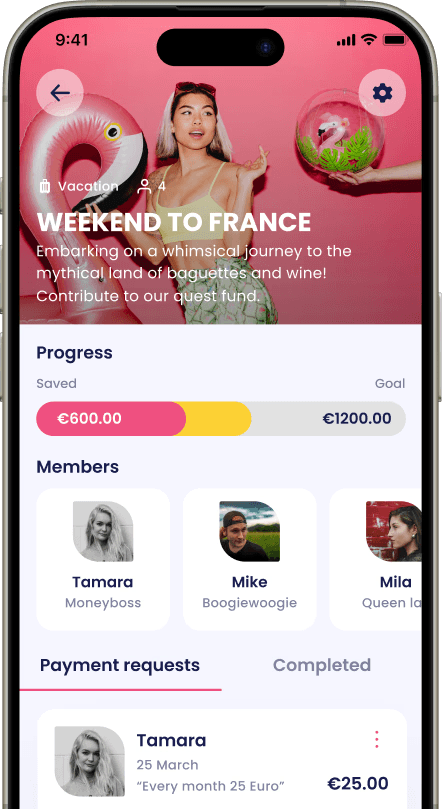
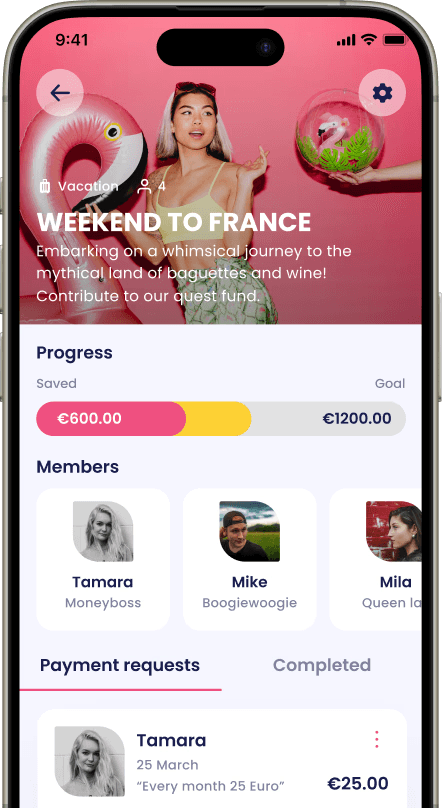
A shared money app like Potje lets a group collect money in one place, track who has contributed, and use the funds together. Instead of one person having to manually manage payments, organize the collection, or verify someone’s identity when they sign up, the system handles requests, automatic reminders, and visibility so the group can save and spend as one. Joining is incredibly simple, making the whole experience frictionless and fun.
The moment group money stops being “easy”
It usually starts casually when people want to chip in.
“Let’s just split the bill.” “I’ll pay now, send me cash later.”
That works once. But as soon as the group grows or the timeline stretches, things change. You are no longer just collecting money from friends or family; you are effectively running a shared money pot for group expenses.
You are managing:
Who has paid upfront
Who still needs to transfer their share
How much of the total pool is collected
When you can actually move forward to book or shop
This is where most groups feel friction. It becomes a stressful subject when you're constantly chasing people for their share. And this is exactly the problem simple shared expense management tools like Potje are built to solve.
What a shared money pot app actually does
At a basic level, a shared money pot creates one central place for the group to pool money.
With Potje, that means:
One visible balance showing your progress
Structured contributions from every member
Instead of keeping money separate across personal accounts or tracking expenses in apps like Splitwise, everything sits in one secure system, keeping your money safe.
This is the key shift. You are not just tracking money anymore. You have total control, and you are managing it together.
How Potje works in a real group scenario
The easiest way to understand it is through flow.
Step 1: Create a pot around a goal
Every collection pot starts with a reason.
Group trips
Team events
You simply create a pot, add a quick note, and get ready to celebrate. This anchors the money to something real.
Step 2: Invite your group
You send a link or a QR code. Users join and contribute using their preferred payment method. They can use a debit card, Apple Pay, or Google Pay. There is no need for everyone to use the same bank, and no one has to swap sensitive bank details.
Step 3: Set contributions
You can define exactly how much each person should add to cover the cost, or keep it flexible so contributors can add what they want.
Step 4: Payment requests are automated
Instead of sending individual messages, Potje handles the transactions and sends automatic payments and requests directly to the group members. This removes the manual step entirely.
Step 5: Reminders happen without you
If someone forgets, the system follows up with automatic reminders. This is one of the biggest value drivers—the organizer is finally free from nagging.
Step 6: Everyone sees the same thing
The group has full visibility:
Who paid
How much is collected
Progress toward the goal
This removes confusion and avoids constant updates, so friends can stay focused on the plan.
Step 7: Spend from the group fund
Once the money is collected, the group uses it directly. No reimbursements. No settling later. You can withdraw the funds, or spend directly at a store or any point of sale where it is accepted.
Why this works better than Splitwise and similar apps
Apps like Splitwise, Tricount, and Settle Up are built for tracking. They answer one question in the financial world: "Who owes what?" But they do not solve the core problem the way a pre-funded shared money pot app does.
With Splitwise
Someone pays upfront
Expenses are logged
People pay back later
This creates dependency on repayment behavior and adds unwanted fees of time and stress.
With Potje
Everyone makes their contributions first
The group builds a shared balance
Money is used directly
This removes the need for tracking after the fact, chasing down payments, and putting the financial risk on one person. This is why the experience feels completely different.
The real benefit is not convenience, it is structure
At first glance, a shared money pot looks like a convenience feature or a handy tip. It is not. It is a structural change.
Without structure:
Payments are delayed
Plans are blocked
People disengage
With structure:
Contributions happen earlier
The group stays aligned
Decisions happen faster
This is especially important for higher-value goals like travel, where having the funds secured early with a shared savings pot for holidays and activities makes all the difference.
Practical use cases where Potje fits best
Group travel
Instead of waiting for everyone to pay, the group collects money upfront and books when ready, using group saving for shared travel costs.
Shared events
Birthdays, the perfect gift, or festivals become easier when contributions are handled once through a shared birthday and gift money pot.
Recurring groups
Sports teams or shared activities benefit from consistent contributions over time when they use a simple app for managing group savings and expenses.
Long-term saving goals
Saving for something months ahead requires structure and real-time visibility.
Common misconceptions
"This is the same as splitting apps"
It is not. Splitting apps track money after spending. Potje manages money before and during spending.
"We can just manage it ourselves"
You can. But it creates ongoing work. The more people involved, the harder it becomes to manage.
"It only matters for large groups"
Even small groups experience the same issues. The difference is just how quickly they show up.
FAQ Section
How does a shared money pot app like Potje help collect money from friends?
Potje centralizes the entire process. Instead of sending multiple payment requests and tracking responses manually, the system handles it for you. Payment requests are sent automatically, reminders follow when needed, and the group can see contributions in real time. This removes the need for manual coordination.
Is Potje better than Splitwise for group savings?
For saving, yes. Splitwise is designed to track expenses after they happen, meaning someone still needs to pay upfront and wait to be reimbursed. Potje collects money before spending, which removes that risk. It is completely free to set up an account and start your pool.
Do all group members need the same bank to use Potje?
No. Potje is bank-agnostic, which means people can contribute using their own accounts without needing to switch or set up something new.
What happens if someone does not contribute?
The system makes contributions visible to the entire group. Everyone can see who has paid and who has not. Automated reminders help prompt action without requiring direct follow-ups from the organizer. In most cases, visibility alone increases participation.
What is Potje and how does it work for saving together?
Potje is a shared app designed for groups. You create a pot, invite friends, and collect contributions in one place. The platform handles payment requests, reminders, and tracking automatically. The group can see the balance in real time and use the funds directly for their goal.
The shift is from tracking money to controlling it
Most tools help you understand what happened. Potje helps you control what happens next.
That is the difference. When the system handles the money, the group can focus on the goal instead of the process.

Social Accountability and Saving: The Missing Link to Financial Freedom
Ondersteuning voor verschillende inhoudstypes zoals artikelen, blogs, video's en meer. Rijke tekstverwerker met opmaakopties voor verbeterde.
17 november, 2025

Group Saving Apps Compared: What's Easiest, Safest, and Most Transparent?
Ondersteuning voor verschillende inhoudstypes zoals artikelen, blogs, video's en meer. Rijke tekstverwerker met opmaakopties voor verbeterde.
17 november, 2025

Group Money Platforms Compared: What’s Safe, Regulated, and Fair?
Ondersteuning voor verschillende inhoudstypes zoals artikelen, blogs, video's en meer. Rijke tekstverwerker met opmaakopties voor verbeterde.
17 november, 2025