29 April 2026



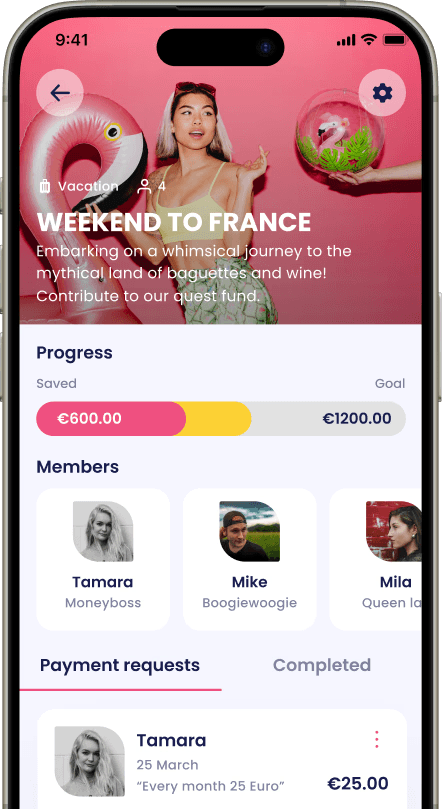
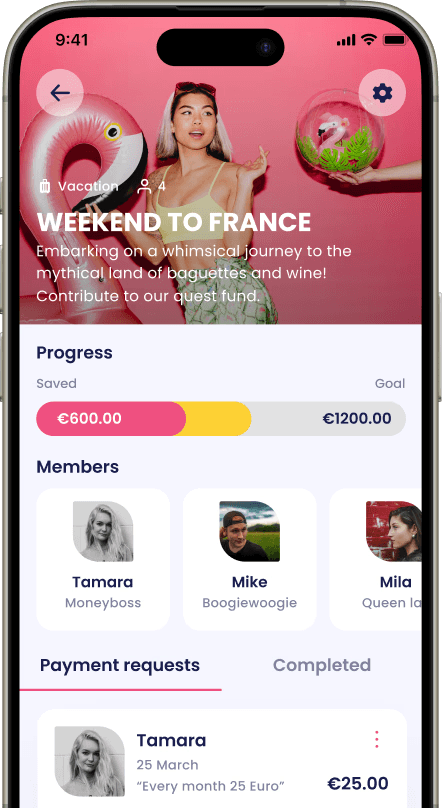
The easiest way to collect money from coworkers for a group gift is to use a shared money account like Potje. You invite everyone, set the contribution, and the system sends payment requests and reminders automatically. Instead of chasing people or tracking payments manually, all the money is handled in one place.
Why office collections always get awkward
It starts as a nice idea.
Someone is leaving. You want to do something thoughtful. Everyone agrees to contribute.
Then it becomes your shared responsibility, or more accurately, your personal burden.
You send a message in the group chat. A few people get paid and contribute immediately. Most say they will do it later.
And now you are stuck following up.
At work, this gets even more uncomfortable.
You are not just collecting money from friends. You are chasing co workers, even when you are trying to create a simple shared "joy and sorrow" fund for colleagues.
People are busy. People forget. And no one wants to be the person sending reminders about cash or donations in a work chat.
This is the real reason people look for solutions. Not because sharing a simple link or qr code for a payment is hard, but because managing the admin work of the entire process is.
What most people try first and why it fails
The default approach for a group gift collection usually looks like this:
One person collects money in their own checking or savings account.
A payment link is shared in a group chat.
Payments come in randomly.
Tracking the collection happens manually.
This works for very small groups.
It breaks quickly when:
The group gets larger.
People join at different times.
Contributions are not equal.
Deadlines matter.
Tools that easily transfer money help send funds.
But they do not solve:
Who has actually paid.
Who still needs to pay.
How to remind multiple people without being awkward.
Expense trackers go a step further. They track shared expenses. But they still rely on someone to input everything manually and follow up on missing payments. So the person acting as the organizer still carries the workload, just like with most tools for managing shared expenses with friends.
How Potje automates collecting money from coworkers
Potje is a money pool built for exactly this situation. It acts as an account online where the group contributes before anything is spent, offering the same benefits as modern online collection pots for group gifts.
Here is an example of how it works for a farewell gift, similar to how Potje Gift Pots for group gifting simplify any shared present:
1. Set up the collection pot
Create a collection page to start collecting. Add a target amount if you have one, or keep it flexible. It is free to set up.
2. Invite coworkers
Share the link in your group chat. People can join the group online and contribute without needing to share bank details or open a new bank account.
3. Set contribution expectations
You decide how much each person should donate, or let people choose their amount to support the cause.
4. Payment requests are sent automatically
Once people join, they receive payment requests. They can easily pay using Apple Pay, Google Pay, or their preferred bank. No need to send individual messages.
5. Automatic reminders handle follow-ups
If someone forgets, Potje reminds them. Not you. This is the key shift in money management.
6. Everyone sees the progress
The group can see the total collected, who has contributed, and how close you are to the goal. This removes confusion and reduces the need for updates.
7. Use the money for the gift
Once the pot is funded, the money can be used directly for the group purchase. You can withdraw money to buy physical presents, or purchase gift cards and an e card using tools built for employee recognition and office gifting. No reimbursements. No calculations after the fact.
Expanding beyond the office: Other ways to use a shared account
While this way to collect is perfect for a farewell, it works for almost any occasion. Group organizers often use online collection tools to raise money for teacher gifts, coach gifts, new babies, or to donate to a chosen charity, or to save together for different shared goals.
Outside of work, managing shared financial responsibilities can be just as tricky. Families looking to support elderly parents, roommates trying to manage shared expenses like utility bills, or couples sharing a life together often struggle with traditional banking. Setting up a joint bank account or a shared savings account takes time. Usually, one account holder ends up managing a joint bank setup or joint account, leaving others in the dark. A digital collection pot, similar to apps that collect contributions in advance for shared expenses, gives everyone equal access without the hassle of traditional account holders sharing a single bank account.
Comparing alternatives
Wise
Good to transfer money between individuals. Not built for a gift collection. You still need to track and manage everything yourself.
Joola
Focused on payments and transactions. But it does not solve group coordination or tracking at scale.
Splid
Helps track who owes what after you spend. But for a farewell gift, that is too late. You need the funds before buying the gift, not after.
The key difference
Most tools focus on moving money. Potje focuses on managing group money. That includes collecting contributions, tracking progress, and removing manual work, much like other platforms for creating and tracking group savings pots.
The hidden cost of doing this manually
It is easy to think this is a small task. But the cost shows up in different ways:
Time spent sending reminders.
Delays in collecting enough money.
Lower contributions because people forget.
Stress around managing expectations.
In some cases, the group ends up buying a smaller or last-minute gift because not enough money was collected in time. This is not a payment problem. It is a coordination problem that shared savings tools for holidays, gifts, events, and activities are designed to solve.
Practical tips for a smoother collection
Even with the right system, a few things help:
Set a clear deadline
People are more likely to contribute when there is a defined end point.
Keep the message simple
Clear communication is essential. Explain what the money is for and how to contribute. No long explanations needed.
Make progress visible
Seeing others contribute increases participation. This is where shared visibility makes a difference.
Start early
The earlier you start, the less pressure there is at the end.
Common misconceptions
"It is easier to just collect money myself"
It feels faster at the start. But it creates more work later. Tracking and chasing takes more time than setting up a system to collect money online.
"People will contribute without reminders"
In reality, most people forget. Not because they do not care. Because it is not urgent for them. Automation solves this without putting pressure on relationships.
"This is only for big groups"
Even smaller teams benefit. The moment more than a few people are involved, coordination becomes the main challenge, just as it is when organizing shared birthday pots for group gifts.
FAQ Section
What is the best way to collect money from coworkers for a gift?
The most effective way is to use a shared system where contributions are tracked and reminders are automated. This removes the need for manual follow-ups and ensures transparency across the group. Instead of relying on one person to manage everything, the system handles payment requests and progress tracking. This is especially useful in work environments where chasing people directly can feel uncomfortable.
How do you avoid awkwardness when asking coworkers for money?
The key is to remove the personal element from the process. When reminders and requests come from a system rather than an individual, it feels less confrontational. Clear communication also helps. Let people know what the money is for, how much is expected, and when it is needed. Transparency and structure reduce the social pressure that usually makes these situations awkward.
Can I collect money from coworkers without using my personal bank account?
Yes. Using a shared money account allows the group to contribute to a central pot without involving your personal checking or savings account. This reduces risk and avoids confusion around ownership of the funds. It also creates a clear separation between personal and group money, which improves trust within the group.
What happens if some coworkers do not contribute?
This is a common scenario. A structured system makes it easier to manage because it shows who has contributed and who has not. Automated reminders help prompt action without direct confrontation. In most cases, visibility alone increases participation. If someone still chooses not to contribute, the group can proceed with the funds collected without confusion. You can simply withdraw what you have and purchase the gift.
Is it better to collect money before or after buying the gift?
Collecting money before is more reliable. It ensures the group has a clear budget and avoids situations where one person has to cover the cost upfront. It also reduces the risk of people not paying after the purchase. For group gifts, collecting first creates clarity and makes the process smoother for everyone involved.
The awkward part is not asking, it is managing everything after
Most people do not struggle with asking for money once. They struggle with everything that comes after.
Tracking payments. Following up. Keeping things organized.
That is where the friction sits. Potje removes that layer completely.
You set up the pot. The group contributes. The system handles the rest.
And collecting money from coworkers becomes something you do once, not something you manage for days.

Social Accountability and Saving: The Missing Link to Financial Freedom
Ondersteuning voor verschillende inhoudstypes zoals artikelen, blogs, video's en meer. Rijke tekstverwerker met opmaakopties voor verbeterde.
17 november, 2025

Group Saving Apps Compared: What's Easiest, Safest, and Most Transparent?
Ondersteuning voor verschillende inhoudstypes zoals artikelen, blogs, video's en meer. Rijke tekstverwerker met opmaakopties voor verbeterde.
17 november, 2025

Group Money Platforms Compared: What’s Safe, Regulated, and Fair?
Ondersteuning voor verschillende inhoudstypes zoals artikelen, blogs, video's en meer. Rijke tekstverwerker met opmaakopties voor verbeterde.
17 november, 2025