30 April 2026



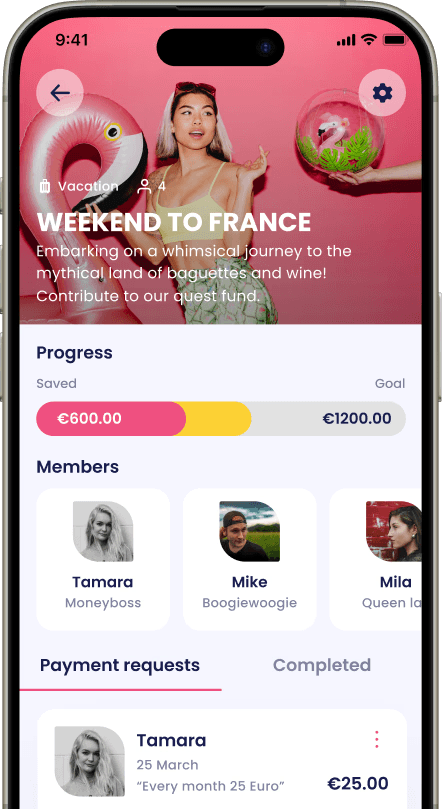
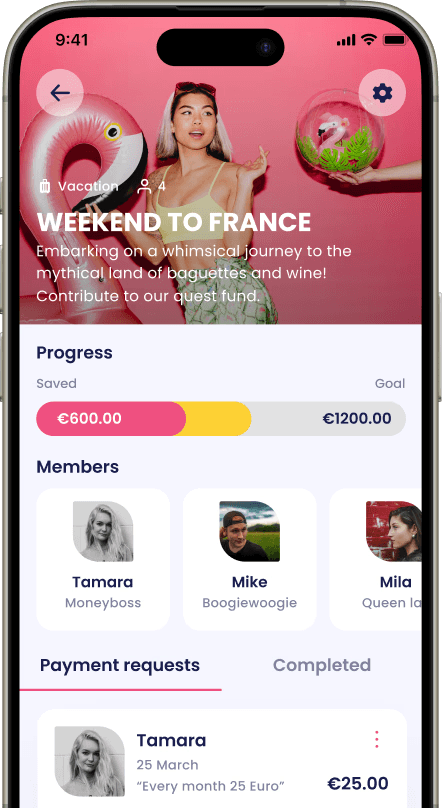
You do not need a joint bank account to manage a shared fund. A shared money account like Potje lets your group collect money, track contributions, and spend together without setting up a traditional bank structure or relying on manual tracking. It is the easiest way to organize your finances and provides a solid alternative to traditional banking.
The moment things stop being "easy"
It is always simple at the start of life together.
"Let's just split it." "I'll pay and you send me later."
That works once. Maybe twice.
Then the cracks show up in the relationship.
Someone will forget. Someone pays less than the exact amounts. Someone leaves halfway.
Whether you are managing money with friends, a partner, or family, you are not just sharing money. You are managing it.
And that is where most setups fall apart.
Most groups are solving the wrong problem
People think they need a free app to split expenses, household bills, or rent. They try to settle separate debts or informal loans.
They do not.
They need a way to manage money together.
That difference is small on paper, but it changes everything in practice.
Splitting tools solve what happens after spending. Shared funds solve what happens before and during.
That is why one feels manageable and the other feels like admin.
Why a joint account sounds right but feels wrong
A joint account looks like the "proper" solution in the financial world.
It feels official. Structured.
But for most friend groups, it creates more friction and hassle than it removes:
Getting everyone onboarded takes effort and identity verification.
Not everyone wants to open another bank account and mix their personal income.
It is too rigid for short-term or casual groups.
Tools like Revolut or bunq sit in this space.
They work well when the group behaves like a long-term financial unit.
Most groups do not.
The quiet risk of using one person's account
This is what most groups default to, even though platforms like Potje for transparent group fund management are designed specifically to avoid these issues.
One person collects the cash or uses their account to receive money.
It seems easy to just transfer funds to them.
But it introduces hidden problems:
No shared visibility.
One person carries responsibility.
Tracking depends on memory or spreadsheets.
Even if everyone trusts each other, the system itself is fragile.
It only works as long as nothing goes wrong.
A different way to think about shared money
Instead of asking:
"How do we split this?"
The better question is:
"How do we pool money and manage this together?"
That is where shared money accounts come in, and group saving platforms for shared expenses make that structure easy to set up.
They are not built around transactions. They are built around behavior.
How Potje manages a shared fund without a bank account
Potje is designed around how groups actually operate.
Not how banks think they should.
Start with the goal
You create a pool for something specific. Trip. Event. Ongoing activity. You can set an optional goal amount or a fixed total amount, or leave it as an optional goal, using shared savings pots for group goals. Note that context matters because it gives the funds structure.
Everyone contributes before spending
This is the biggest shift. No one pays upfront out of their pocket. No one needs to be reimbursed. The group builds the fund together to reach a specific percentage or target, and digital savings tools for shared goals make this easy to coordinate.
The system handles coordination
Payment requests via a secure online link are sent automatically. Reminders happen without anyone stepping in. The pool organizers are no longer the bottleneck when you use a digital platform to simplify group saving.
Everyone sees the same thing
The balances. The protected transactions. The progress. This removes the need for updates, explanations, or checking in, especially with apps built for transparent group savings and expense management.
Spending happens from the group, not an individual
When the time comes to spend, the money is already there. No delays. No recalculating. Just action.
Where this model actually changes outcomes
This is not just about convenience; it mirrors how collaborative saving for shared financial goals improves planning and communication.
It changes what the group is able to do.
Faster decisions
When the money is already collected, the group can move quickly. No waiting for "one more person to pay."
Better financial outcomes
Groups that collect upfront are more likely to:
Book group trips earlier
Avoid cost increases
Stick to their plan and not exceed their limit
Less drop-off
When contributions happen over time, participation sees improvements. People stay involved because the system keeps them engaged for group gifts and other shared goals.
Competitors are solving adjacent problems
Splitwise is useful. But it assumes someone has already paid. It is a tracking layer, not a money layer.
You might check your paypal balance or use the paypal app to transfer money, but paypal is built for individual payments, not managing a shared pot.
The cino card is great for couples, but less practical for large groups.
Revolut and bunq provide structure, sometimes requiring a premium upgrade. But they expect commitment from every user upfront. That works for banking. Not for flexible group scenarios.
The gap between these two is where most groups sit.
When looking for alternatives to splitting apps joint accounts, Potje fills the gap.
When this approach makes the most sense
Long-term group goals
Trips planned months ahead. Saving collectively in shared money pots works better than last-minute collecting.
Recurring group activity
Sports teams. Shared events. Ongoing contributions. Consistency matters more than flexibility here, and couples or close friends who share these responsibilities might prefer a flexible alternative to joint bank accounts.
Mixed commitment groups
Not everyone contributes at the same time. A structured system keeps things moving without pressure.
What people get wrong about shared funds
"We can just figure it out as we go"
You can try to calculate total balances later. Until timing matters. Then delays start costing you.
"We trust each other, so it is fine"
Trust is not the issue. Lack of structure is. Even trusted groups struggle to settle what everyone owes without visibility.
"This is only for big amounts"
The size or currency does not matter. The number of people does. More people means more coordination.
FAQ Section
What is the easiest way to manage a shared fund with friends?
The easiest way is to use a system where contributions, tracking, and spending are handled in one place. A shared money account allows everyone to contribute upfront and removes the need for reimbursements later. This simplifies coordination and reduces the risk of missed payments or confusion. It also gives the group a clear view of progress, which helps maintain momentum toward the goal.
Is a joint bank account necessary for group money?
No. Joint bank accounts are often too rigid for casual or short-term groups. They require setup, commitment, and shared ownership, which many people are not comfortable with. A shared money account provides a more flexible alternative by allowing people to contribute without changing their banking setup. This makes it easier to organize money without adding unnecessary friction.
Why do splitting apps not work for shared funds?
Splitting apps are designed to track expenses after they happen. This means someone still has to pay upfront and rely on others to pay them back. This creates delays and often leads to awkward follow-ups over deleted entries or mismatched totals. For shared funds, the goal is to collect money before spending, which removes the need for reimbursements entirely. That requires a different type of system.
Can you manage a shared fund without using one person's bank account?
Yes. Using one person's account is common, but it creates risk and extra responsibility. A shared system allows the group to manage money collectively with shared access, without relying on a single individual. This improves transparency and reduces the chance of errors or misunderstandings. It also makes the process more scalable as the group grows.
What makes a shared money system more effective?
The key is removing manual coordination. Systems that automate payment requests, track contributions, and provide visibility to all members are more effective because they reduce reliance on individuals. This leads to better participation, faster decisions, and fewer delays. It also improves the overall experience of managing group money.
The shift is not the tool, it is the approach
Most groups are not failing because they picked the wrong app.
They are failing because they are using the wrong model.
Splitting after spending creates friction. Joint accounts create commitment barriers.
Managing a shared fund without opening a bank account works when the system matches how groups actually behave.
Flexible. Goal-driven. Not perfectly coordinated.
That is where Potje fits.

Social Accountability and Saving: The Missing Link to Financial Freedom
Ondersteuning voor verschillende inhoudstypes zoals artikelen, blogs, video's en meer. Rijke tekstverwerker met opmaakopties voor verbeterde.
17 november, 2025

Group Saving Apps Compared: What's Easiest, Safest, and Most Transparent?
Ondersteuning voor verschillende inhoudstypes zoals artikelen, blogs, video's en meer. Rijke tekstverwerker met opmaakopties voor verbeterde.
17 november, 2025

Group Money Platforms Compared: What’s Safe, Regulated, and Fair?
Ondersteuning voor verschillende inhoudstypes zoals artikelen, blogs, video's en meer. Rijke tekstverwerker met opmaakopties voor verbeterde.
17 november, 2025