6 May 2026

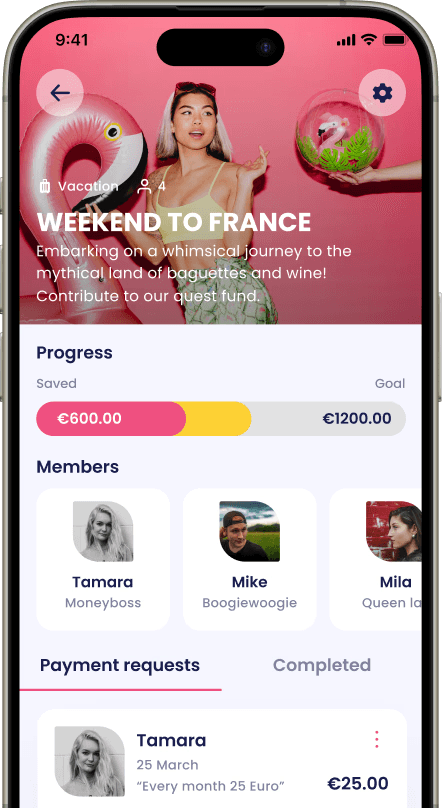
The safest way to hold group savings in Europe is to use a shared money account where funds are held with regulated financial institutions and visible to the entire group. This reduces reliance on one person, removes manual tracking, and ensures the money is managed transparently and securely to protect your assets.
The real risk is not theft, it is the setup you choose
Most people think about safety in extremes.
“Will someone steal the money through fraud?”
That is rarely what actually goes wrong. The truth is, the real risks are quieter:
One person holds all the money
No one else has access or visibility
Payments are tracked manually
Mistakes go unnoticed
This is how most group savings are managed today in the real world. One person volunteers to take on the responsibility. Everyone decides to send money. That person keeps track of the income.
It works until it does not. And when an organization or casual group fails to plan, and something goes wrong, there is no system to fall back on.
Why traditional methods feel safe but are not
Using one person’s bank account
This is the most common setup for online banking. It feels simple to rely on one person. But it creates:
A single point of failure
No shared oversight or control over the cash
Full liability on one person’s bank
Even if everyone shares deep trust, the structure itself is fragile.
Splitting apps like Splitwise
These tools track who owes what. They do not actually hold money or manage payments. That means:
Transactions happen after spending
Someone still carries financial risk and debt
The group relies on repayment behavior
This does not solve security. It just delays it.
Payment tools like Tikkie
These services are built for moving cash quickly. But they do not create a shared environment or provide confidence in a long-term position. Money moves between individuals, but there is no central place where funds are managed collectively to benefit everyone.
Bank solutions like bunq
These provide structure, protection, and regulation for clients. But they require:
Everyone to commit to a shared account setup
More effort to onboard employees or friends
A level of formality most groups do not need
They work best for long-term finances, not flexible group scenarios where you just want an app to handle things easily.
What actually makes group savings safe
Safety is not just about where the money sits. It is about how the system behaves and your ability to control it. A safe setup has three things:
Shared visibility
Everyone in the group can see the balance and transactions. This removes uncertainty and builds confidence.
No dependency on one person
The system manages the money, not an individual. This reduces risk and diffuses responsibility among the users.
Regulated infrastructure
Funds are held with financial institutions that follow European law and regulations. This ensures proper safeguarding of the value of your pool.
How Potje is designed around safety
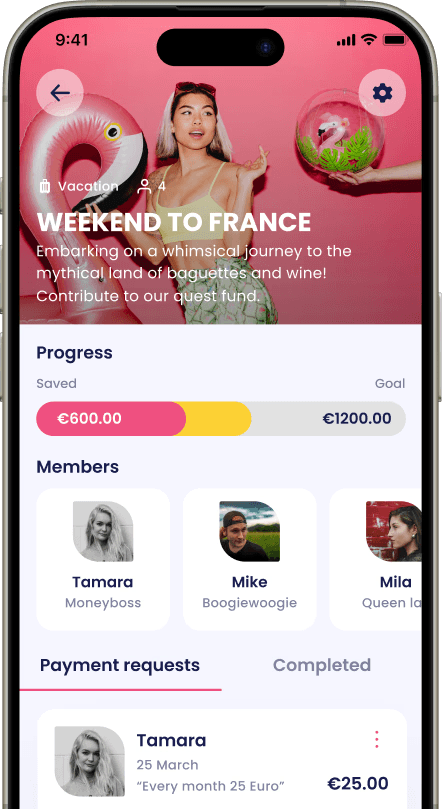
Potje is built as a secure, digital money pot for groups to remove the weak points in group money management. It does this by combining structure with flexibility.
Funds are held with regulated financial institutions
The money is not sitting in a personal account. It is held in a regulated environment in line with European financial rules, giving you peace of mind.
The group has full transparency
Everyone can see:
Total balance
Individual contributions
Recent transactions
This removes blind spots and establishes the truth about your progress.
No need to trust a single person
The system handles tracking and visibility. The organizer is not responsible for managing everything manually or doing a personal audit of the payments.
Automated structure reduces human error
Payment requests and reminders are handled automatically. This reduces missed payments and inconsistencies.
When Group Savings Become Group Investments
Sometimes, a group decides to pool their money for a formal investment portfolio. For example, if you and your friends want to back a new business or startup, your finances become subject to much stricter rules than those that apply when using a regulated platform like Potje to create shared savings pots.
During the fundraising process, when a company raises capital, they might issue a simple agreement for future equity (often known as a SAFE note). Unlike convertible notes issued by creditors, a SAFE is neither debt nor equity at the date of signing. SAFEs were first developed by Y Combinator in 2013 as an alternative to convertible notes, and they do not accrue interest or have a maturity date, making them attractive for early-stage startups. Instead, it offers safe holders the right to future equity that converts into stock when priced equity rounds (or a single priced round) occur.
The company's valuation, often guided by a pre-money valuation cap, determines the percentage of ownership the investors receive on the cap table when SAFEs convert into equity during a priced round. Recent data shows that SAFEs comprised 90% of all pre-seed deals and 64% of all seed rounds in early 2025, highlighting their dominance in early-stage fundraising. The distinction between pre-money and post-money SAFEs affects how ownership is calculated during a priced round, with post-money SAFEs becoming the standard for early-stage fundraising.
While safe holders generally lack voting rights, they might negotiate an mfn clause (Most Favored Nation) to qualify for better terms if later investors receive them. Whether you are managing simple savings or hoping your shareholders see a massive return, having the right agreement and legal structure in place is crucial for several reasons. If the business were to fail, you want to know exactly where you stand.
Why this matters beyond “feeling safe”
Safety has a direct impact on how groups behave. When people trust the system:
They contribute earlier
They commit more confidently
They stay engaged longer
This is not just about security. It is about removing hesitation. Groups that feel secure are more likely to reach their savings goal, avoid delays, and make decisions faster. This is especially important for higher-value goals like travel or managing group assets.
Practical scenarios where safety becomes critical
Group travel savings
Large amounts of money are collected over time. Without structure, trust becomes a major concern, which is why many people now use a digital money pot for group trips and vacations.
Long-term group goals
Saving over months increases the need for visibility and consistency in your position, making a shared savings pot for ongoing group goals especially useful.
Larger groups
More people means more complexity. Without a group savings platform that manages pooled funds securely, errors become more likely.
Mixed familiarity groups
Not everyone knows each other well. Creating a shared money pot for your group goals helps the system replace basic trust with transparency and a solid plan.
Common misconceptions about group money safety
“We trust each other, so it is fine”
Trust helps. But it does not replace structure. Even trusted groups struggle with tracking and coordination, which is why many compare different apps for secure, shared savings and expense management before choosing a setup.
“As long as the money is in a bank, it is safe”
Where the money sits is only part of the equation. If only one person controls it, the group still lacks visibility and shared control, instead of benefiting from a shared money pot for holidays, gifts, and group activities.
“This only matters for large amounts”
Small amounts still create friction. The issue is not the size of the income. It is coordination and clarity.
FAQ Section
What is the safest way to hold group savings?
The safest approach is to use a system where the money is held with regulated financial institutions and visible to the entire group. This reduces reliance on a single person and ensures transparency. A shared money account provides both structure and oversight, which are critical for managing group funds safely. It also removes the need for manual tracking, which is a common source of errors.
Is it safe to use one person’s bank account for group savings?
It is common, but not ideal. Using one person’s account creates a single point of failure and limits visibility for the rest of the group. Even if everyone trusts each other, the lack of transparency can lead to confusion or mistakes. A shared system provides better oversight and reduces the burden on any one individual.
Are splitting apps like Splitwise safe for group savings?
Splitting apps are safe for tracking expenses, but they are not designed to hold or manage group savings. They rely on individuals paying each other back after spending, which introduces risk if someone delays or does not pay. For actual savings, a shared savings pot where everyone can contribute upfront toward specific goals like trips or gifts is more effective.
How do I know if a group money system is secure?
Look for three things: where the money is held, how visible it is, and whether the system relies on one person. If funds are held with regulated financial institutions, visible to all members, and managed collectively, the system is more secure. These factors reduce both financial risk and coordination issues.
What is Potje and is it safe to use?
Potje is a shared money account designed for groups to save and spend together, including personalised shared money pots for birthdays and big wishes. It allows users to create a pot, invite others, and manage contributions in one place. Funds are held with regulated financial institutions and follow European financial regulations, which ensures they are safeguarded. The platform also provides full transparency, so all members can see the balance and transactions, reducing reliance on any single individual.
Safety comes from structure, not just trust
Most group setups rely on trust alone. That works until something breaks.
Safety in group savings comes from structure. Clear visibility. Shared control. Regulated handling of funds.
That is what turns group money from something informal into something reliable. And that is the difference between hoping everything works out and knowing it will.

Social Accountability and Saving: The Missing Link to Financial Freedom
Ondersteuning voor verschillende inhoudstypes zoals artikelen, blogs, video's en meer. Rijke tekstverwerker met opmaakopties voor verbeterde.
17 november, 2025

Group Saving Apps Compared: What's Easiest, Safest, and Most Transparent?
Ondersteuning voor verschillende inhoudstypes zoals artikelen, blogs, video's en meer. Rijke tekstverwerker met opmaakopties voor verbeterde.
17 november, 2025

Group Money Platforms Compared: What’s Safe, Regulated, and Fair?
Ondersteuning voor verschillende inhoudstypes zoals artikelen, blogs, video's en meer. Rijke tekstverwerker met opmaakopties voor verbeterde.
17 november, 2025