2 October 2026



Someone in your group agreed to collect the money for the trip.
They set up a bank transfer, everyone paid in, and now the Airbnb deposit is due. Then they go quiet. No replies. No updates. Just silence.
It is one of the most stressful situations in group planning. And it happens more often than people like to admit.
The real question is this: when one person holds all the group money, does that money actually belong to the group?
The short answer is yes, legally it does. But getting it back without a proper system in place is a different story entirely.
This article explains what actually happens to group money when the organiser disappears, who has legal control over a shared pot, and how to protect your group before it ever becomes a problem.
The Old Way Creates a Real Risk
Think about how most groups handle shared money.
One person volunteers to collect contributions. Everyone sends them the money directly. The organiser holds it all in their personal bank account and spends it when the time comes.
This is the default approach. And it has a fundamental flaw.
The money sits in one person's personal account. It is mixed in with their own finances. There is no separation, no transparency, and no formal record of who contributed what.
If that person goes silent, gets into financial difficulty, or simply loses track of what was group money versus their own, the group has very little recourse. Recovering money sent to someone's personal account is slow, awkward, and sometimes impossible without legal action.
According to consumer finance guidance from Kiplinger, informal money arrangements between friends carry real financial risk precisely because there is no documentation or structure protecting contributors.
The problem is not that the organiser is untrustworthy. Most of the time, they are not. The problem is that the structure itself creates vulnerability.
Who Legally Controls Group Money?
This is where it gets important.
When everyone contributes money toward a shared goal, that money does not legally become the organiser's property. It is held on behalf of the group. In legal terms, this is sometimes described as a trust arrangement: the organiser is holding the money for a specific purpose, not keeping it as their own.
What that means in practice
Contributors retain a legal claim to their share of the funds
The organiser cannot legally spend the money on anything other than the agreed purpose
If the organiser misuses the money, contributors may have grounds for a civil claim
The challenge is proving it.
Without a clear record of who paid what, when, and for what purpose, any dispute becomes a "he said, she said" situation. Bank statements help. WhatsApp messages help. But they are not a substitute for a proper system.
The safest approach is to never let the money sit in one person's personal account in the first place.
That is exactly the problem a dedicated shared money pot is designed to solve. When group money lives in a separate, structured account that everyone can see, the question of "who controls it" has a clear, transparent answer.
What Happens With a Dedicated Money Pot?
A dedicated group money pot changes the dynamic completely.
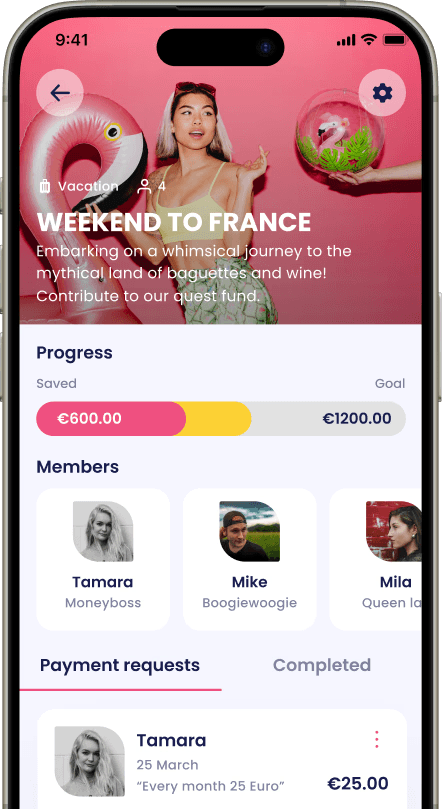
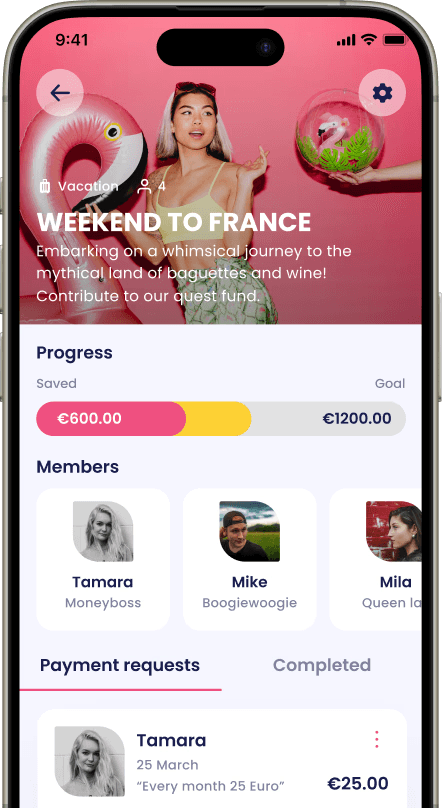
Instead of everyone sending money to one person's account, contributions go into a shared pot that is separate from anyone's personal finances. The group can see the balance. Everyone knows what has been contributed. And the money is only accessible for the purpose the group agreed on.
One platform taking a different approach to this is Potje. Rather than focusing on repayments after the fact, Potje helps groups collect money upfront into a dedicated shared pot. Everyone contributes before the spending begins.
How Potje protects your group money
Transparent balance: Every member can see how much is in the pot and who has contributed
Separate from personal finances: The money never sits in one person's bank account
Instant payouts of any amount: When the group is ready to spend, funds can be paid out immediately, with no minimum threshold
No fee on partial payouts: The group can withdraw part of the pot at any time without being charged extra
First month free: Groups can try Potje with no cost for the first month
This structure means that even if the organiser becomes unreachable, the money is not lost inside their personal account. It sits in the shared pot, visible to the group, and accessible through the platform.
The cost is shared too. At €5.00 per month total, split automatically across the group, a group of five people each pays just €1.00 per month. For a group of ten, that drops to €0.50 each. You can see the full pricing breakdown on the Potje homepage.
For anyone planning a group trip, a birthday collection, or a shared savings goal, this is a significantly safer way to manage the money than the old bank transfer approach. Take a look at how group money management works in practice to understand the difference it makes.
What To Do If the Organiser Has Already Gone Silent
If you are already in this situation, here is a practical checklist.
Steps to take if your group organiser disappears
Gather your payment evidence. Screenshots of transfers, bank statements, and any messages confirming the amount and purpose.
Contact the organiser through multiple channels. Sometimes it is a genuine emergency rather than intentional disappearance.
Reach out to the platform if money was held in an app. Regulated platforms have processes for disputed or inaccessible funds.
Document everything in writing. If the situation escalates, having a clear written record is essential.
Seek legal advice if the amount is significant. A civil claim is possible when there is clear evidence of contribution and misuse.
The most important step, though, is the one you take before this happens: choosing a group money structure that does not depend on one person's reliability or availability.
Key takeaway: Group money disputes are almost always harder to resolve than they are to prevent. The right structure protects everyone from the start.
Frequently Asked Questions
What happens to group money if the organiser stops responding?
If the money was sent to a personal bank account, it becomes very difficult to recover without direct communication or legal action. If the money was held in a dedicated group money pot on Potje, the funds remain in the pot and are accessible through Potje's regulated infrastructure, provided by Quantoz.
Does the organiser legally own the group money?
No. Money collected from a group for a shared purpose is not the organiser's personal property. They hold it on behalf of the group. However, proving this without proper documentation can be challenging, which is why using a transparent shared pot is strongly recommended.
Can I get my contribution back if the group trip is cancelled?
This depends on how the money was held. If it was in a personal account, you would need to request a transfer back from the organiser. With a platform like Potje, the group can agree to pay out the balance at any time, with instant payouts of any amount and no fee on partial withdrawals.
What is the safest way to manage money for a group trip or event?
Using a dedicated shared money pot where all contributions are visible to the group, held separately from personal finances, and accessible through a regulated platform. This removes the single point of failure that comes with one person holding all the money.
How much does Potje cost?
Potje costs €5.00 per month in total, shared automatically across the group. A group of five pays €1.00 each per month. Your first month is completely free. There are no fees on partial payouts, so the group can withdraw funds whenever needed.
Stop Relying on One Person. Start Your Free Month Today.
Group money should belong to the group. Not to one person's bank account.
The old way of collecting money puts all the trust, all the responsibility, and all the risk on one person's shoulders. When that works out, great. When it does not, recovering the money is painful, slow, and sometimes impossible.
Potje is built for exactly this. Everyone contributes upfront into a shared pot. The balance is visible to the whole group. Payouts are instant. There are no fees on partial withdrawals. And your first month is completely free.
Start your free month with Potje and give your group the structure it deserves.

Social Accountability and Saving: The Missing Link to Financial Freedom
Ondersteuning voor verschillende inhoudstypes zoals artikelen, blogs, video's en meer. Rijke tekstverwerker met opmaakopties voor verbeterde.
17 november, 2025

Group Saving Apps Compared: What's Easiest, Safest, and Most Transparent?
Ondersteuning voor verschillende inhoudstypes zoals artikelen, blogs, video's en meer. Rijke tekstverwerker met opmaakopties voor verbeterde.
17 november, 2025

Group Money Platforms Compared: What’s Safe, Regulated, and Fair?
Ondersteuning voor verschillende inhoudstypes zoals artikelen, blogs, video's en meer. Rijke tekstverwerker met opmaakopties voor verbeterde.
17 november, 2025