5 May 2026



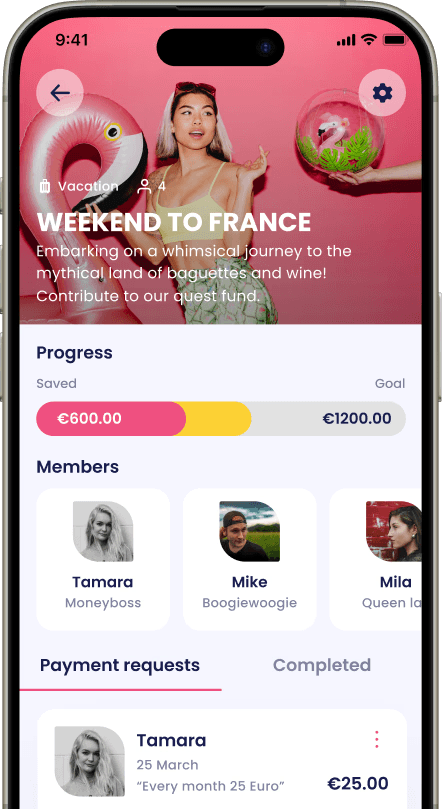
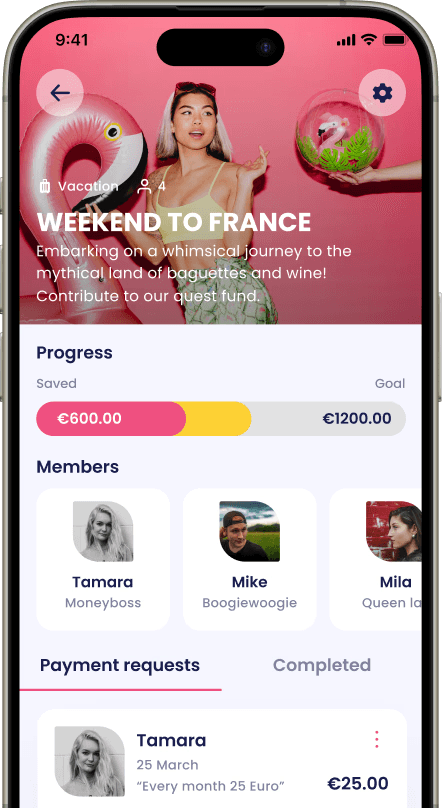
A virtual debit card is a digital card you can use online or with Apple Pay or Google Pay without needing a physical card. For group spending, it connects to a shared balance so multiple people can add money and spend from one place instead of one person paying upfront and chasing everyone later. Once you set it up, you can start spending right away.
Why group spending always ends up messy
You know how it goes.
Someone books the Airbnb. Someone else handles the online payments for activities. Then the group chat fills up with endless communications:
“Who still owes what?”
At first, it feels manageable. Then:
Payments come in late
People forget to pay their share
You lose track of various expenses and bills
Now you are not just spending. You are trying to manage group money, acting as financial support for family members or friends. Tools built for simple, transparent expense management among friends help avoid those tensions, but most ad hoc setups still break.
What a virtual debit card actually is
A virtual debit card is just a digital version of a regular card, often issued by a bank or credit union.
No plastic. No waiting for mail delivery.
You can:
Use it for online shopping and online purchases
Add it to a digital wallet like Apple Pay or Google Pay
Pay in a physical store using your phone or device
It gives you a virtual card number, an expiration date, and a CVV code, just like a standard Visa or Mastercard. It works exactly like any other debit card or credit card for cash transactions or purchases at any merchant where cards are accepted.
Using virtual cards provides an extra layer of security. Because you do not share your primary card details or direct bank access with every service provider, you get an added layer of built in protections against fraud. It is also much easier to control your funds, track your balance, and set limits to keep your money secure.
On its own, that is incredibly useful. But the real value shows up when it is connected to group money.
The missing piece: where the money comes from
A virtual card is only as useful as the bank account behind it.
If it is linked to one person’s account, nothing really changes.
One person still pays. One person still carries the cost.
That is why business tools or apps like Revolut only partially solve the problem for everyday customers in the real world. They give you a card, but they do not fully solve how groups actually manage money together.
How virtual cards work for group spending
To make this work properly, two things need to happen:
The group needs a shared balance
The card needs to spend from that balance
This is the exact model Potje uses to create a shared money pot and prevent all the usual confusion around who has paid what.
Step 1: The group contributes first
Everyone adds money into a shared pot. This removes the need for one person to front the cost or drain their own funds.
Step 2: The virtual card connects to the pot
Instead of linking the card to one person, it connects to the group’s balance. Now the money belongs to the group, not an individual.
Step 3: Spend using Apple Pay or shop online
You can use your virtual card easily:
For bookings and online purchases
For recurring payments or group subscriptions
In stores using Apple Pay or Google Pay just by using tap to pay
No splitting later. Every purchase draws from the pooled money.
Step 4: Everyone sees what is happening
The group has visibility into:
Every single transaction
The remaining balance
Overall spending activity
This removes confusion, provides clear details, and avoids follow-ups.
Important: Potje’s virtual card is coming soon
Potje already allows groups to collect and manage money together. To create a pot is completely free.
The virtual debit card feature is the next step. It will allow groups to:
Spend directly from their shared pot
Just tap add to put the card in an Apple wallet or Google wallet for real-world payments
Avoid reimbursements entirely
This feature has not launched yet. You can join the waitlist here: https://www.potje.app
Why this changes how groups behave
This is not just about payments. It changes the flow of group money.
Without a shared card
One person pays
Others pay back later
Delays happen
With a shared card
Everyone contributes upfront
The group spends together
No one carries the cost
That shift removes financial risk, awkward follow-ups, and manual tracking. And that is where most friction disappears.
Comparing alternatives
Revolut
Revolut offers virtual cards and strong payment features. But it often requires everyone to use the platform, and it is not built specifically for flexible group contributions.
bunq
bunq provides shared accounts and virtual cards. But setup can be more involved, and it is designed more like a traditional bank than a quick, flexible group app.
Splitwise
Splitwise does not offer cards. It simply tracks expenses after spending. You still need to pay upfront and request money back.
Potje
Potje, a digital money pot for groups, focuses on the full flow:
Collecting money
Managing the group balance
Soon enabling shared spending via virtual cards
This makes it closer to a complete system to control your group money.
Practical use cases
Group travel
Book accommodation and activities directly from the shared pot using a shared savings pot for group goals. Shop online for flights or use Apple Pay at your destination.
Shared events
Pay for group dinners, tickets, or experiences without splitting the bill later at the merchant by funding a shared pot for group expenses in advance.
Recurring group spending
Sports teams, roommates, or family can use one card for ongoing costs or monthly subscriptions, powered by a digital savings pot for shared goals.
Mixed groups
People from different banks or countries can contribute without friction, making it easy for everyone to add money into a shared money pot for birthday wishes or big goals.
Risks and misconceptions
“A virtual card solves everything”
It does not. If the money is not shared, the problem remains. The system behind the card matters more than the card itself.
“We can just split costs later”
You can. But it creates delays and dependency on repayment.
“This is only useful for large groups”
Even small groups of friends or family feel the friction. The difference is just how quickly it shows up.
FAQ Section
What is a virtual debit card and how does it work?
A virtual debit card is a digital card that can be used online or through mobile wallets like Apple Pay and Google Pay. It features a card number, expiration date, and CVV code, just like a physical card, but exists entirely online. It can be created instantly and used for cash transactions or purchases in stores and online.
How does a virtual card help with group spending?
It allows the group to spend from one shared balance instead of relying on one person to pay. When connected to a shared fund, everyone contributes first, and you use your virtual card for group expenses, whether that is day‑to‑day costs or birthday wish pots for trips or gifts. This removes the need for reimbursements.
Can I use a virtual card with Apple Pay?
Yes. Most virtual cards can easily be added to your digital wallet. You simply tap add to place it in Apple Pay or Google Pay, allowing you to pay in stores using your phone.
Are virtual cards better than splitting apps like Splitwise?
They solve different problems. Splitting apps track who owes what after spending, while virtual cards allow spending directly from a shared balance. By using a virtual card connected to a shared pot, you bypass the need to constantly request money back.
What is Potje and how will its virtual card work?
Potje is a shared money account designed for groups to save and spend together, including online collection pots for group gifting and special occasions. You can collect money, track contributions, and manage a shared balance. The upcoming virtual debit card will connect directly to this pot, enabling groups to spend using Apple Pay, Google Pay, or online without needing to split costs later.
The card is not the solution, the system is
A virtual debit card is just a tool. On its own, it does not fix group money. What matters is what it is connected to. If it is linked to one person, nothing changes. If it is linked to a shared system, everything changes. That is the shift Potje is building toward.

Social Accountability and Saving: The Missing Link to Financial Freedom
Ondersteuning voor verschillende inhoudstypes zoals artikelen, blogs, video's en meer. Rijke tekstverwerker met opmaakopties voor verbeterde.
17 november, 2025

Group Saving Apps Compared: What's Easiest, Safest, and Most Transparent?
Ondersteuning voor verschillende inhoudstypes zoals artikelen, blogs, video's en meer. Rijke tekstverwerker met opmaakopties voor verbeterde.
17 november, 2025

Group Money Platforms Compared: What’s Safe, Regulated, and Fair?
Ondersteuning voor verschillende inhoudstypes zoals artikelen, blogs, video's en meer. Rijke tekstverwerker met opmaakopties voor verbeterde.
17 november, 2025