27 October 2026



Group lessons are one of the best deals in leisure and fitness. A private padel coach might charge €80 an hour. Split between four people, that same session costs €20 each. A yoga teacher running a ten-week term for six students will charge a fraction of what six individual memberships would cost.
The problem is never the price per person. It is always the same: someone has to pay the full invoice first.
One person transfers the entire fee, the instructor confirms the booking, and then the organiser spends the next two weeks chasing everyone else for their share. It creates unnecessary friction every single time.
The fix is simple: collect everyone's contribution before you confirm anything. Pay the instructor once the pot is full. Nobody fronts the money. Nobody chases anyone. That is exactly what Potje is built for.
How Group Lessons Actually Work (and Where the Money Gets Complicated)
Group lessons come in many forms across Europe, but they share one common payment pattern. The instructor sets a price for the full block, the group agrees to split it, and then reality sets in.
The most common group lesson setups
Here are the setups where this problem shows up most often:
Tennis or padel coaching: A coach books a court and offers a block of six or eight sessions. The group rate is significantly cheaper than individual lessons, but the full fee is due before session one.
Yoga or Pilates: A freelance instructor running small-group sessions at a studio or community space typically requires full-term payment to secure the slot.
Cooking classes: A chef or culinary school offering a four-week course for a group of friends or colleagues needs to confirm numbers and pay for ingredients in advance.
Dance or movement workshops: Whether it's salsa, contemporary, or a bespoke corporate team activity, the choreographer wants financial commitment before rehearsals begin.
Language classes: A private language tutor running a small group course will often require the full block paid upfront, particularly for intensive formats.
Why instructors want payment upfront
Independent instructors are essentially small businesses. When they agree to run a group course, they are blocking time slots, turning away other clients, sometimes pre-paying for venue hire, and taking on the risk of a participant dropping out. Upfront payment protects them. The problem is entirely on the group's side.
What usually happens instead
Someone gets volunteered to pay the full invoice. They transfer the fee, confirm the booking, and then message everyone else for their share. A few people pay immediately. One says they'll do it at the weekend. Another forgets. By the time everyone has settled up, the organiser has been out of pocket for weeks and the group dynamic has absorbed unnecessary friction.
It is not a character flaw. It is a structural problem: the group has no shared place to put money before the booking is confirmed.
Collect First, Book Second: The Smarter Approach
The fix is simple in principle: collect everyone's contribution before you confirm anything with the instructor. Only pay the instructor once the pot is full.
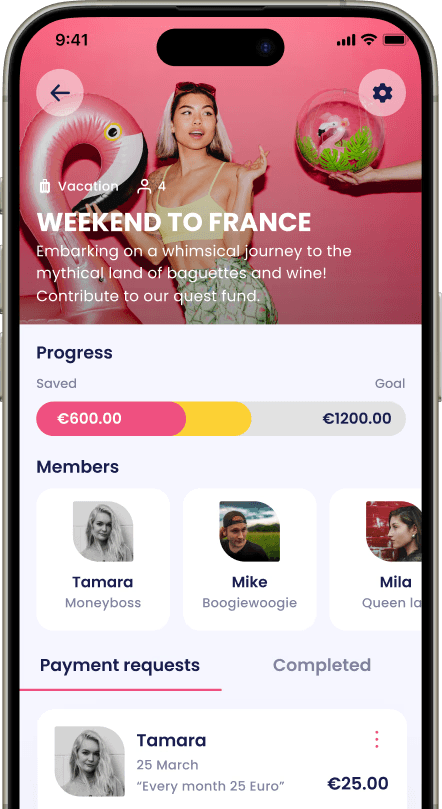
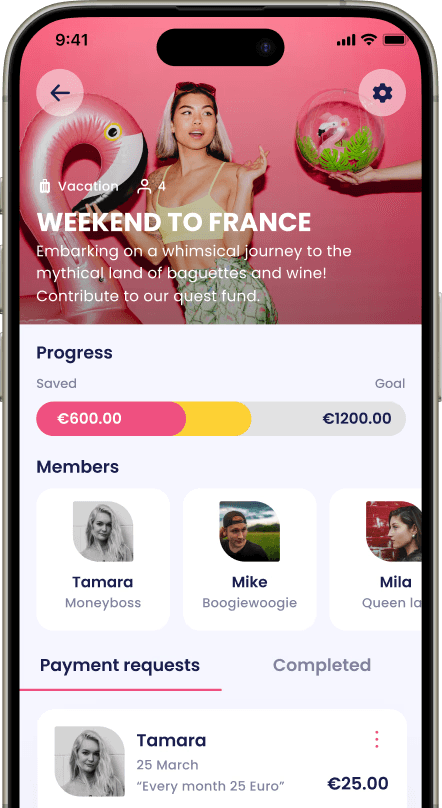
Potje makes this straightforward. You create a shared money pot, set the goal amount (the full instructor fee), share the link with your group, and everyone contributes their share directly. When the pot hits the target, you pay the instructor from it. No one person ever carries the full amount.
How to set it up, step by step
Agree the total fee with your instructor. Get a confirmed quote for the full block before creating the pot.
Create a Potje money pot. Set the goal as the total instructor fee. Give it a clear name, something like "Yoga Block - Autumn Term."
Share the pot link with your group. Everyone in the class gets the link and contributes their share directly. You can see who has paid and who hasn't, without having to ask.
Wait until the pot is full. Do not confirm the booking until the full amount is collected. This protects everyone.
Pay out from the pot and pay the instructor straight away. Potje offers instant payouts of any amount, so you can transfer the full fee to the instructor the moment the pot reaches its goal.
Key point: Potje's instant payouts mean there's no delay between the pot filling and you being able to pay the instructor. You're not waiting for a bank transfer to clear. The money is available immediately.
Why this works better than paying first and chasing later
The old approach puts one person in a financially and socially uncomfortable position, essentially lending money to friends with no guarantee of when they'll be repaid. The new approach removes that entirely. Nobody is owed anything. The instructor gets paid on time. The group moves forward without awkwardness.
Collect before spending. It applies just as well to a twelve-session padel block as it does to a group holiday or a birthday gift. For more on how the collect-first model works, see how to collect money from friends online effortlessly.
What to Do About Missed Sessions, Drop-Ins and Mid-Term Departures
Life happens. People get ill, work trips appear, and occasionally someone decides the class is not for them. How you handle this depends on what you agree upfront. The pot model helps, but only if the group sets a few ground rules before the first session.
Missed sessions
The clearest approach is also the simplest: the instructor's fee is fixed regardless of attendance. If someone misses a session, their contribution to the pot does not change. This mirrors how most instructors operate. When you book a block, you are paying for the instructor's time and the slot, not just the sessions you personally attend.
Agree this before you create the pot. A single message in your group chat is enough: "The total fee is split equally. If someone misses a session, the cost stays the same for everyone." No ambiguity, no awkward conversations later.
Drop-ins
Some classes allow a friend to join for a one-off session if there is space. If that happens, you have a couple of options:
The drop-in pays their share directly into the pot
The group charges the drop-in separately and uses that money to offset the next term
Either way, the pot gives you a transparent place to put the money. Everyone can see the balance. Nothing gets lost in a personal bank account.
Someone leaving mid-term
If a participant drops out after the instructor has been paid, the group cannot reclaim their share. The fairest approach: the departing member forfeits their contribution, the group looks for a replacement who pays into the pot, and if no replacement is found, the remaining members absorb the shortfall proportionally.
What Potje provides is a shared, transparent record of what has been collected and paid out, so there is no dispute about the numbers. For more on managing shared contributions fairly, see how to collect money for a group trip without the awkward chasing.
Key point: Agree on missed session and drop-out rules before the pot is created. A short conversation at the start saves a much longer one later.
Using a Monthly Pot for Ongoing Classes
Not every group lesson is a one-off block. Some classes run on an ongoing basis, with no fixed end date. A weekly padel session that carries on indefinitely. A monthly cooking class that the group has been attending for two years. A language group that meets every fortnight.
For these situations, a single upfront collection does not make sense. Instead, a monthly pot works far better.
How a monthly pot works for recurring classes
The idea is straightforward. Rather than collecting for a full term in advance, the group runs a rolling monthly contribution. Everyone pays into the pot at the start of each month. The organiser pays the instructor from the pot once the month's contributions are in.
Here is what that looks like in practice:
Setup | How it works |
Monthly padel coaching | Each member contributes their share on the 1st of the month. The pot reaches the target. The organiser pays the coach. |
Weekly yoga group | Contributions go in at the start of each month covering all sessions that month. No need to collect per session. |
Fortnightly language class | Some months have two sessions, some have three. Adjust the monthly target accordingly and collect once. |
This approach removes the need to handle money every single week. It also means nobody forgets to pay for a session because contributions happen on a predictable schedule.
Why monthly pots reduce friction over time
The biggest source of tension in long-running group activities is inconsistency. A monthly pot with a clear goal and a visible progress bar changes that. The pot shows who has contributed and who has not. The organiser does not need to send individual messages.
Potje's pricing is designed for exactly this. The total cost is €5.00 per month, shared across the whole group. For five people, that is €1.00 each. For ten, it is €0.50. Your first month is free, so you can try it before committing to anything.
For a deeper look at how shared money pots work in practice, this step-by-step guide to setting up a group money pot with Potje covers everything from creating the pot to paying out.
What about classes that pause for holidays?
Most ongoing classes take breaks over summer or during public holidays. When that happens, simply pause contributions for that month. There is no need to close the pot and start again. The balance carries forward, and you pick up where you left off when classes resume.
This is one of the practical advantages of a digital money pot over a bank transfer arrangement. The pot sits there, visible to everyone, ready to receive contributions when the term restarts.
Frequently Asked Questions
What is the best way to split group lesson fees?
The best approach is to collect everyone's share before confirming the booking with the instructor. Create a shared money pot, set the goal as the total instructor fee, share the link with your group, and pay the instructor once the pot is full. This means no one person has to front the full amount, and there is no chasing after the fact.
Can I use Potje for a one-off class block rather than ongoing lessons?
Yes. Potje works equally well for a single block of sessions or for ongoing monthly classes. For a one-off block, you set the pot goal as the total fee and collect contributions until the pot is full. For ongoing classes, you can run a fresh monthly pot that the group contributes to at the start of each month.
What happens if someone in the group drops out mid-term?
If the instructor has already been paid, the group cannot recover the departing member's contribution from the instructor. The fairest approach is to agree upfront that contributions are non-refundable once the booking is confirmed. The group can look for a replacement who pays into the pot for the remaining sessions. If no replacement is found, the remaining members may need to cover the shortfall proportionally.
Does Potje charge fees on partial payouts?
No. Potje does not charge fees on partial payouts. You can pay out any amount at any time without incurring additional charges. This is useful if you want to make a partial payment to the instructor while still collecting the remaining balance from the group.
How quickly can I pay the instructor once the pot is full?
Potje offers instant payouts of any amount. The moment your pot reaches its goal, you can transfer the full fee to the instructor immediately. There is no waiting period and no delay for bank transfers to clear.
How much does Potje cost to use?
The total cost is €5.00 per month, shared across the entire group. For a group of five, that works out to €1.00 each per month. For a group of ten, it is €0.50 each. Your first month is completely free, so you can try it with your group before paying anything.
Is Potje suitable for groups that do not all know each other well?
Yes. Potje is designed for exactly this situation. The group organiser creates the pot and shares a link. Contributors do not need to be friends or have each other's bank details. They simply follow the link and contribute their share. The progress is visible to everyone, which encourages timely contributions without the organiser having to chase individually.
Can I use Potje for more than one class at a time?
Yes. You can run multiple pots simultaneously. If your group attends both a weekly yoga class and a monthly padel session, you can create a separate pot for each. This keeps the finances for each activity completely separate and transparent.
What other group expenses can Potje help with?
Beyond group lessons, groups use Potje for holidays and group trips, group gifts and birthday collections, sports team fees, and workplace collections. The principle is always the same: collect before spending.
Stop Fronting the Money. Start Collecting Together.
Group lessons are supposed to be enjoyable. The class itself usually is. It is the money side that causes friction, and almost all of that friction comes from one structural problem: someone pays first and chases later.
The fix is not complicated. Collect the money before you confirm the booking. Use a shared pot that everyone can see. Pay the instructor the moment the pot is full.
Your first month with Potje is free. No upfront cost to try it. No fee on partial payouts. Instant payouts of any amount the moment your pot reaches its goal.
Whether your group is booking a six-week padel block, a term of yoga, or a monthly cooking class, Potje gives you a shared place to collect, track and pay out, without anyone having to carry the financial burden alone.
Create your group lesson pot today and start your first month free.

Social Accountability and Saving: The Missing Link to Financial Freedom
Ondersteuning voor verschillende inhoudstypes zoals artikelen, blogs, video's en meer. Rijke tekstverwerker met opmaakopties voor verbeterde.
17 november, 2025

Group Saving Apps Compared: What's Easiest, Safest, and Most Transparent?
Ondersteuning voor verschillende inhoudstypes zoals artikelen, blogs, video's en meer. Rijke tekstverwerker met opmaakopties voor verbeterde.
17 november, 2025

Group Money Platforms Compared: What’s Safe, Regulated, and Fair?
Ondersteuning voor verschillende inhoudstypes zoals artikelen, blogs, video's en meer. Rijke tekstverwerker met opmaakopties voor verbeterde.
17 november, 2025