4 November 2026



Every choir and band has the same conversation at some point.
Rehearsal night is over. The room was booked. The music was good. Then someone mentions the invoice sitting in the treasurer's inbox and the mood shifts slightly.
Who's paying? Has everyone transferred their share? Did the new soprano know she owed anything at all?
Group music costs money. That part is unavoidable. Rehearsal room hire, sheet music, instrument maintenance, concert venue deposits, recording sessions. The bills arrive on a schedule whether the group is ready or not.
The groups that handle this well are not necessarily the most organised. They are simply the ones who collect money before they need to spend it.
The core idea is simple: set a monthly contribution, collect it into one shared Potje pot, and pay costs from that pot as they arise. No chasing. No one person covering the group out of their own pocket. No awkward conversations after rehearsal.
This guide covers exactly how to do that, including how to save towards bigger goals like a concert or studio recording alongside covering regular running costs.
What Does It Actually Cost to Run a Music Group?
Before you can set a fair monthly contribution, you need a clear picture of what the group actually spends.
Rehearsal Room Hire
This is usually the biggest recurring cost. In the Netherlands, rehearsal rooms in cities like Rotterdam typically cost €13 to €18 per hour, or €40 to €50 for a three-hour block. In Germany, rehearsal rooms in Berlin start from €7 per hour for a single room, rising to €14 to €20 per hour for band and session rooms depending on size.
A group rehearsing weekly for 50 weeks a year in a mid-range room pays somewhere between €2,000 and €3,500 annually just on room hire.
Split across 15 members, that is roughly €11 to €19 per person per month. Manageable, but only if everyone actually pays.
Sheet Music and Arrangements
A single choral score for a 20-voice choir can run to €40 to €80 for a licensed set of parts. Most active groups spend €200 to €600 on music per year.
Instrument Upkeep and Equipment
Choirs: Piano tuning, microphone hire, PA hire for outdoor events
Bands: String replacements, drum heads, amplifier servicing
Both: Music stands, folders, storage
Budget roughly €300 to €800 per year for a group of 10 to 20 people.
Concert Venue and Performance Costs
Hiring a church hall or small venue typically costs €200 to €600 for an evening. Add a sound engineer and programme printing and a single concert can reach €800 to €1,500 before ticket revenue.
Studio Recordings
A half-day in a decent studio in the Netherlands or Germany runs €300 to €800. Not every group records, but it is worth building into the budget if it is on the roadmap.
A realistic annual budget for an active choir or band of 15 people looks something like this:
Cost Category | Estimated Annual Cost |
Rehearsal room hire | €2,000 to €3,500 |
Sheet music and arrangements | €200 to €600 |
Instrument upkeep and equipment | €300 to €800 |
Concert venue and performance costs | €800 to €1,500 |
Recording (if applicable) | €300 to €800 |
Total | €3,600 to €7,200 |
Per person per month, that works out to roughly €20 to €40. That is your starting point for setting monthly dues.
Setting Monthly Dues That Actually Work
The most common mistake is setting dues too low, then scrambling every time a bill arrives. Getting it right means being transparent about what the money covers.
How to Calculate a Fair Monthly Contribution
Work backwards from your annual budget. Take your total expected costs for the year, divide by 12, then divide by the number of active members.
Example: A 15-person choir with annual costs of €4,800 needs €400 per month. Divided equally, that is €27 per member per month.
If that feels high, consider whether some costs could be reduced (booking rooms in advance often gets you a better rate) or whether the group could bring in additional income through ticket sales or small fundraisers.
Build in a Buffer
Collect slightly more than you expect to spend. A 10% buffer covers unexpected costs like an emergency repair or a last-minute venue change.
Review Dues Annually
Costs go up. Review dues at the start of each season and adjust if needed. Being transparent about this builds trust.
Three things to communicate clearly when you set dues:
What the money covers each month (room hire, music, equipment)
What the group is saving towards (the next concert, a recording project)
Where the money sits and who can see the balance
Collecting Dues Into One Shared Pot
Once you know what each member owes each month, you need somewhere to collect it.
The old way: one person volunteers their personal bank account. Money trickles in at different times. The treasurer spends evenings cross-referencing transfers. Someone always pays late. Nobody else can see the balance.
Why a Shared Money Pot Works Better
A dedicated group money pot separates the group's finances from anyone's personal account. Everyone contributes to the same place. Everyone can see the balance. The person paying the rehearsal room invoice is not doing so from their own pocket while waiting to be reimbursed.
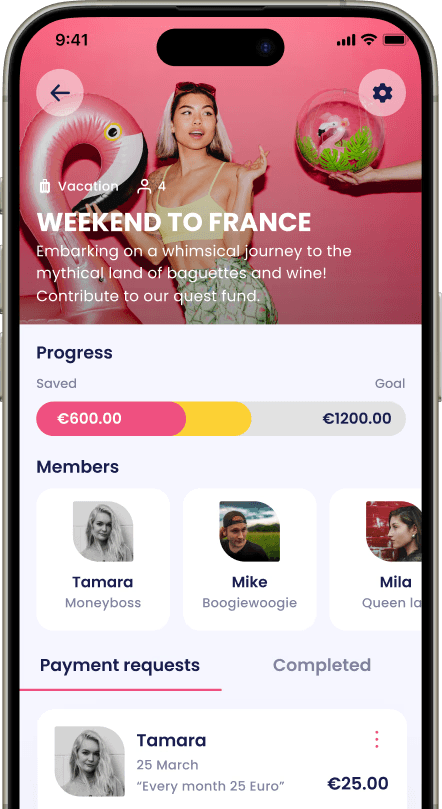
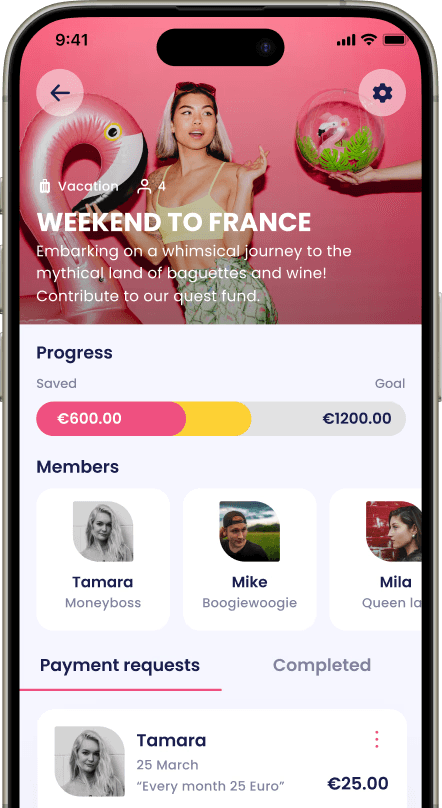
Potje is a shared money pot built specifically for this kind of group collection. Members contribute their monthly dues via a payment link. The balance is visible to the group. When the rehearsal room invoice arrives, the organiser pays out from the pot to cover it.
What makes this approach work for music groups:
No single member carries the financial risk
The balance is transparent, so there are no surprises
Contributions can be collected automatically each month
Payouts can be made instantly, in any amount, with no fee on partial payouts
The first month is free, so there is no cost to try it
For groups that rehearse weekly, this removes the single biggest source of admin friction: collecting money and reconciling who has paid.
What About Groups Without a Club Bank Account?
Many smaller choirs and bands operate informally, without access to a business or club bank account. A shared money pot solves this directly. You do not need a registered organisation or a treasurer willing to act as the group's unofficial bank.
The guide on club fundraising without a bank account covers the broader picture if your group is in this situation.
Paying the Rehearsal Room From the Pot
Once the pot has a balance, paying costs becomes straightforward. The person who books the rehearsal room, or whoever handles group admin, pays out from the shared pot to cover the invoice.
Transparency Is the Key
When members know the pot stands at €320 and the monthly room hire is €180, they can see the group has roughly seven weeks of runway. If contributions slow down, that is visible. If the balance is growing, members can see their money is being managed responsibly.
This transparency changes the dynamic. Members who can see where their money goes are more likely to pay on time. It is not about trust. It is about information.
How to Handle Payout Timing
Most rehearsal rooms invoice monthly or require payment at the time of booking. With instant payouts available in any amount, the group is never waiting on a bank transfer to clear before they can confirm a booking.
A simple monthly rhythm for a music group:
Contributions collected by the 5th of the month
Rehearsal room invoice paid by the 10th
Balance visible to all members throughout the month
Any surplus rolls forward into the group's savings goal
This rhythm takes about 20 minutes a month to manage once it is set up. Compare that to the hours spent chasing late payments, reconciling bank statements, and fielding questions about where the money went.
For more on how to collect money from friends online without the awkward chasing, see our guide. The same principles apply equally to music groups.
Saving Towards a Bigger Goal Alongside Regular Costs
Covering monthly costs is one thing. Saving for a concert, a recording session, or a tour is another challenge entirely.
Most groups wait until the event is confirmed, then try to raise the money quickly. The better approach is to save a small amount every month alongside regular dues.
Running Two Pots Simultaneously
The cleanest way to do this is to run two separate pots:
Running costs pot: Covers monthly rehearsal room hire, sheet music, and equipment. Members contribute their standard monthly dues here.
Concert or project pot: A separate savings goal for the next big event. Members add a smaller top-up contribution each month.
This separation keeps the finances clear. Members know exactly what each contribution is for. The concert pot grows steadily, and by the time the event is confirmed, the money is already there.
Example: A 20-person choir saving €10 per member per month towards a Christmas concert accumulates €200 per month. Over six months, that is €1,200 sitting ready before a single invoice arrives.
What to Save Towards
Common savings goals for choirs and bands:
Annual public concert or performance (venue hire, sound, programmes)
Studio recording project
Festival entry and travel costs
New shared equipment (microphones, stands, a portable PA system)
Instrument repairs or replacements
Name the goal clearly and show members the progress. When people can see the concert pot growing, they are more motivated to contribute. The guide on group saving apps compared covers the main options available across Europe.
How to Set This Up With Potje
Setting up takes less than ten minutes.
Step One: Create the Pot
The organiser creates the pot on Potje, gives it a name, sets a goal amount if saving towards something specific, and sets the monthly contribution.
Step Two: Share the Payment Link
Potje generates a payment link to share with the group. Members pay their monthly contribution directly from the link, no app download required.
Step Three: Pay Costs From the Pot
When a rehearsal room invoice arrives, the organiser pays it from the pot. Everyone sees the updated balance.
Step Four: Watch the Savings Grow
If you are running a second pot for a concert or project, members see that balance growing alongside the running costs pot.
Potje pricing for a music group:
Group Size | Monthly Cost Per Person |
5 members | €1.00 per month |
10 members | €0.50 per month |
15 members | €0.33 per month |
20 members | €0.25 per month |
The total pot cost is €5.00 per month, shared automatically across the group. At those amounts, the cost of running the pot is negligible compared to the admin time it saves.
Your first month is free. There is no commitment required to try it, and no fee on partial payouts, so you can take money out at any point without waiting for the pot to reach a specific threshold.
For groups new to digital money management, the step-by-step guide on setting up a group money pot walks through the full process in detail.
Frequently Asked Questions
How much should a choir or band charge in monthly dues?
It depends on your group's actual costs. As a starting point, calculate your total annual expenses, divide by 12, then divide by the number of members. Most active groups of 10 to 20 people find that €20 to €40 per member per month covers regular running costs including rehearsal room hire. Add a small top-up if you are saving towards a concert or recording.
Do we need a registered club or association to use a shared money pot?
No. A shared money pot works for informal groups that are not registered associations and do not have a club bank account. One person sets up the pot and shares the payment link with the group. No formal structure is required.
What happens if someone does not pay their monthly contribution?
The pot balance reflects what has actually been collected. If contributions fall short, the balance drops and the group can see it. Automated reminders reduce manual chasing, and the transparency of a shared pot motivates members to pay on time.
Can we use the pot for both regular costs and savings at the same time?
Yes. Many groups run two separate pots: one for monthly running costs like rehearsal room hire, and one for a specific savings goal like a concert or recording. This keeps the finances clear and lets members see exactly what each contribution is for.
How quickly can we access the money in the pot?
Payouts are instant and available in any amount. There is no minimum threshold to reach before you can take money out, and no fee on partial payouts. This means you can pay a rehearsal room invoice the same day the contributions come in.
Is Potje suitable for music groups outside the Netherlands?
Yes. Potje operates across Europe and payment links can be shared with members regardless of which country they are in.
What does Potje cost?
The pot costs €5.00 per month in total, shared automatically across all group members. For a group of 10 people, that is €0.50 per person per month. The first month is free.
Stop Chasing. Start Playing.
The best rehearsals happen when the only thing anyone is thinking about is the music.
Agree on a monthly contribution. Collect it into one shared pot before costs arise. Pay invoices from the pot. Let everyone see the balance.
Music groups that collect before they spend stop having money conversations at rehearsals. The room is booked. The concert savings are already there.
Your first month is free. Create your free money pot now

Social Accountability and Saving: The Missing Link to Financial Freedom
Ondersteuning voor verschillende inhoudstypes zoals artikelen, blogs, video's en meer. Rijke tekstverwerker met opmaakopties voor verbeterde.
17 november, 2025

Group Saving Apps Compared: What's Easiest, Safest, and Most Transparent?
Ondersteuning voor verschillende inhoudstypes zoals artikelen, blogs, video's en meer. Rijke tekstverwerker met opmaakopties voor verbeterde.
17 november, 2025

Group Money Platforms Compared: What’s Safe, Regulated, and Fair?
Ondersteuning voor verschillende inhoudstypes zoals artikelen, blogs, video's en meer. Rijke tekstverwerker met opmaakopties voor verbeterde.
17 november, 2025